Editor’s note:
Each week, our team carefully curates the latest news from the Middle East to keep you informed about the region’s most important developments.
Subscribe so you don’t miss our weekly roundups.
Have friends who want to stay informed, too?
In another thoughtful conversation with Faisal Saeed Al Mutar , we come to acknowledge a harsh reality: that the war isn’t just back on — it seems to be widening. We talked about how the fighting is increasingly spilling beyond Iran itself, with the Red Sea emerging as one of the most consequential fronts. The Houthis’ threat to target ships transiting the Bab al-Mandeb raises the prospect of another global shipping crisis, even as Washington appears intent on keeping U.S. forces out of direct confrontation by empowering Saudi Arabia to manage the threat on their own.
We also looked at the changing nature of the targets. Recent strikes have increasingly focused on civilian infrastructure — from power plants in Iran to water desalination facilities in Kuwait. But do these attacks actually weaken public support for Tehran, or do they produce the opposite effect?
Our conversation, as always, dipped into the human aspect of this war, which is what Iran War Dispatches and Middle East Uncovered do best. What are people across the region thinking about renewed hostilities? Faisal, who closely follows Arab media and diaspora communities, described a growing ideological fork in the road. While frustration with the Iranian regime remains, there’s noticeably less optimism than before that renewed military pressure will lead to regime change.
And that’s not even the half of it. Listen to our conversation for more.
Editor’s note:
Each week, our team carefully curates the latest news from the Middle East to keep you informed about the region’s most important developments.
Subscribe so you don’t miss our weekly roundups.
Have friends who want to stay informed, too?
The latest news at this hour:
By: Myroslava Tanska-Vikulova
U.S. THREATENS STRIKES ON IRANIAN NUCLEAR BUNKER: Donald Trump announced a possible imminent strike on Iran’s Pickaxe Mountain nuclear complex, where, according to Israeli intelligence reports, centrifuges and enriched uranium are stored. Earlier, Tehran warned that an attack on its infrastructure would amount to a direct escalation of the war in the region.
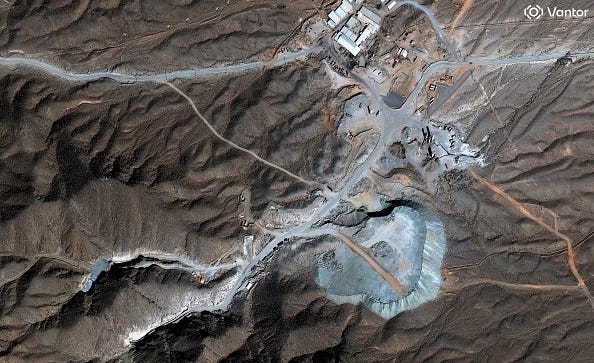
The facility itself is hidden deep within a mountain range at a depth of over 100 meters and is heavily fortified, making it an extremely difficult target for airstrikes. Construction of the bunker accelerated significantly following the attacks on nearby Natanz during the 12-day war in 2025, raising concerns that Iran is developing a uranium enrichment facility.
…MEANWHILE U.S. PLANS TO BUILD SAUDI NUCLEAR PLANTS: Donald Trump approved a 30-year civilian nuclear agreement with Riyadh worth tens of billions of dollars, which guarantees the U.S. companies will be the primary developers of the country’s nuclear infrastructure and sidelines Russia and China. The agreement also provides for the possibility of building a uranium enrichment plant on Saudi territory under strict U.S. oversight.
The initiative has sparked a wave of criticism due to the risks of a new arms race amid the conflict with Iran, as Saudi Arabia has refused to allow expanded IAEA inspections. Despite concerns in Congress, it will be extremely difficult for lawmakers to block the agreement due to the high vote threshold required to override a potential presidential veto.
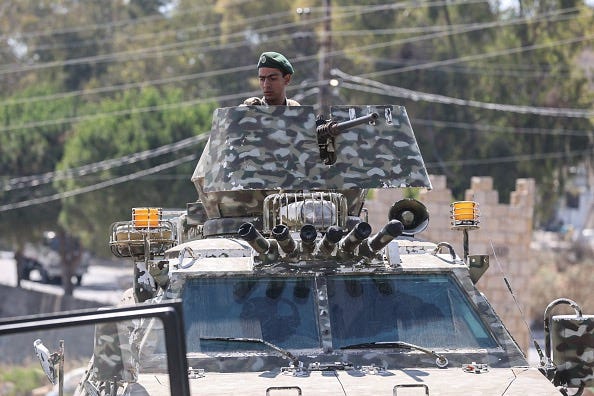
U.S.-SUPPORTED LEBANESE TROOPS TO PUSH FOR ISRAELI WITHDRAWAL: Lebanese forces have begun deploying in a ‘pilot zone’ in the south of the country. The goal is to gradually push Israeli forces to withdraw and ensure the complete disarmament of the Iranian-backed group, Hezbollah. These steps are expanding the U.S. presence in Beirut. Although Hezbollah is resisting demands for disarmament, Trump is open to holding direct negotiations even with representatives of the group to ensure stability and facilitate Lebanon’s reconstruction.
HOUTHI BLOCKADE TURNS SHIPS AROUND: Since the Iran-backed Houthis announced the blockade of the Bab el-Mandeb Strait, at least six vessels have been turned around, one of which was bound for Saudi Arabia, according to Lloyd’s List, a company which collects maritime data. However, several other vessels have managed to transit the strait.
Protecting merchant ships off the coast of Yemen will require the deployment of significant air and naval resources and the reallocation of intelligence assets. Tim Waterer, chief market analyst at KCM Trade, warned that the need to simultaneously strike Iran and patrol the Red Sea is placing an excessive strain on U.S. resources.
Since traffic through the Strait of Hormuz has already plummeted due to the blockade of the Hormuz Strait, the threat to the alternative route in the Red Sea puts an additional 7% of global oil supplies at risk.
HEGSETH: IRAN WAR HAS COST ALMOST $40 BLN…AND WE NEED MORE: The U.S. has spent $37.5 billion on the war in Iran, Defense Secretary Pete Hegseth said at a Senate Appropriations Committee hearing. However, CNN’s reporting suggests that the real figure could be around $890 million per day. At the hearing Hegseth pushed for the allocation of an additional $87.6 billion in funding for the U.S. military.
During the hearing, lawmakers from both parties pressed Hegseth on the absence of a clear end game and the skyrocketing costs for American taxpayers. While the Defense Secretary defended the budget as necessary for force protection and mission execution, senators expressed growing skepticism over how long the administration can sustain such heavy military expenditures without a defined strategy to end the conflict.
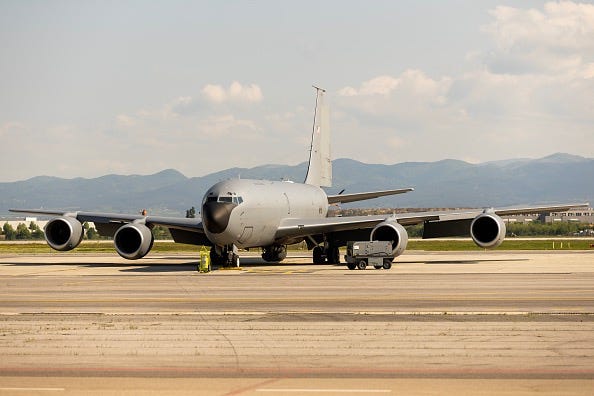
SOFIA APPROVES U.S. DEPLOYMENT AT BULGARIAN BASE: The Bulgarian Parliament has approved the temporary deployment of up to eight U.S. refueling aircraft and 250 U.S. military personnel at the Bulgarian Bezmer Air Base. The aircraft will remain in the country from July 24 to October 1 under bilateral security agreements between the two countries amid the escalating conflict between the U.S. and Iran.
The decision was made despite a sharp reaction from the Iranian Foreign Ministry, which accused Sofia of being “complicit in aggression and war crimes”. Bulgarian Defense Minister Dimitar Stoyanov rejected Tehran’s accusations, assuring that no offensive weapons systems would be deployed on Bulgarian territory and that Bulgaria is merely fulfilling its alliance obligations within NATO and under its agreement with the United States.
U.S.-IRAN STRIKES CONTINUE FOR 11TH CONSECUTIVE NIGHT: The U.S. Central Command has completed its eleventh consecutive night of airstrikes on Iranian territory. This wave of strikes targeted command posts, maritime infrastructure, aircraft hangars, drone depots, and logistics hubs of the Iranian military. Meanwhile Iran struck sites across Kuwait, Bahrain and Jordan.
Previously, the strikes had been concentrated mainly in the south of the country, but last night, explosions and air defense system activity were recorded near Tehran, as well as in northwestern Tabriz and the southwestern province of Khuzestan.
U.S. LIFTS 40-YEAR BAN ON DIRECT FLIGHTS TO LEBANON: Donald Trump ordered the lifting of the ban on direct flights by U.S. airlines to Lebanon, which had been in place since 1985 following the hijacking of a passenger plane by Hezbollah militants. This decision was announced during a first meeting in Washington with Lebanese President Joseph Aoun since 2009, who called on the White House to provide diplomatic and military support to the Lebanese Armed Forces. The U.S. Federal Aviation Administration (FAA) has already confirmed its readiness to cooperate with airlines to safely resume regular service.
U.S. CONFIRMS IDENTITIES OF FOUR U.S. SOLDIERS KILLED IN JORDAN AND IRAQ: The Pentagon has confirmed the identities of four U.S. service members killed in the Middle East over the weekend. Three of them were killed in an Iranian airstrike on a base in Jordan, while a fourth died during the controlled detonation of a downed Iranian kamikaze drone in Iraq.
The total number of U.S. military personnel killed since the start of the conflict with Iran has risen to 18.
Stay safe out there!
Best,
Jacqueline