

At the bottom of this page: Latest news at this hour.
Iran hits back after U.S. strike... Another Israel, Lebanon peace agreement signed and immediately on the rocks... U.N. works to evacuate ships from the Hormuz Strait.
Featured subscriber comment:
Thank you for offering this bundle. I want war coverage, as local and as human as possible.
By: Ann-Marie Gardner.
Do you want more local and human stories as well? Subscribe for free today!
OUR LEAD STORY:
Twenty-year-old travel influencer Sophia Lee, was sitting in a cafe in Lithuania’s capital Vilnius, when a strange message landed in her Instagram inbox: it was an offer for a free, all expenses-paid trip to Iran — in the middle of the war.
“I was surprised at first,” she said. “And then honestly suspicious.”
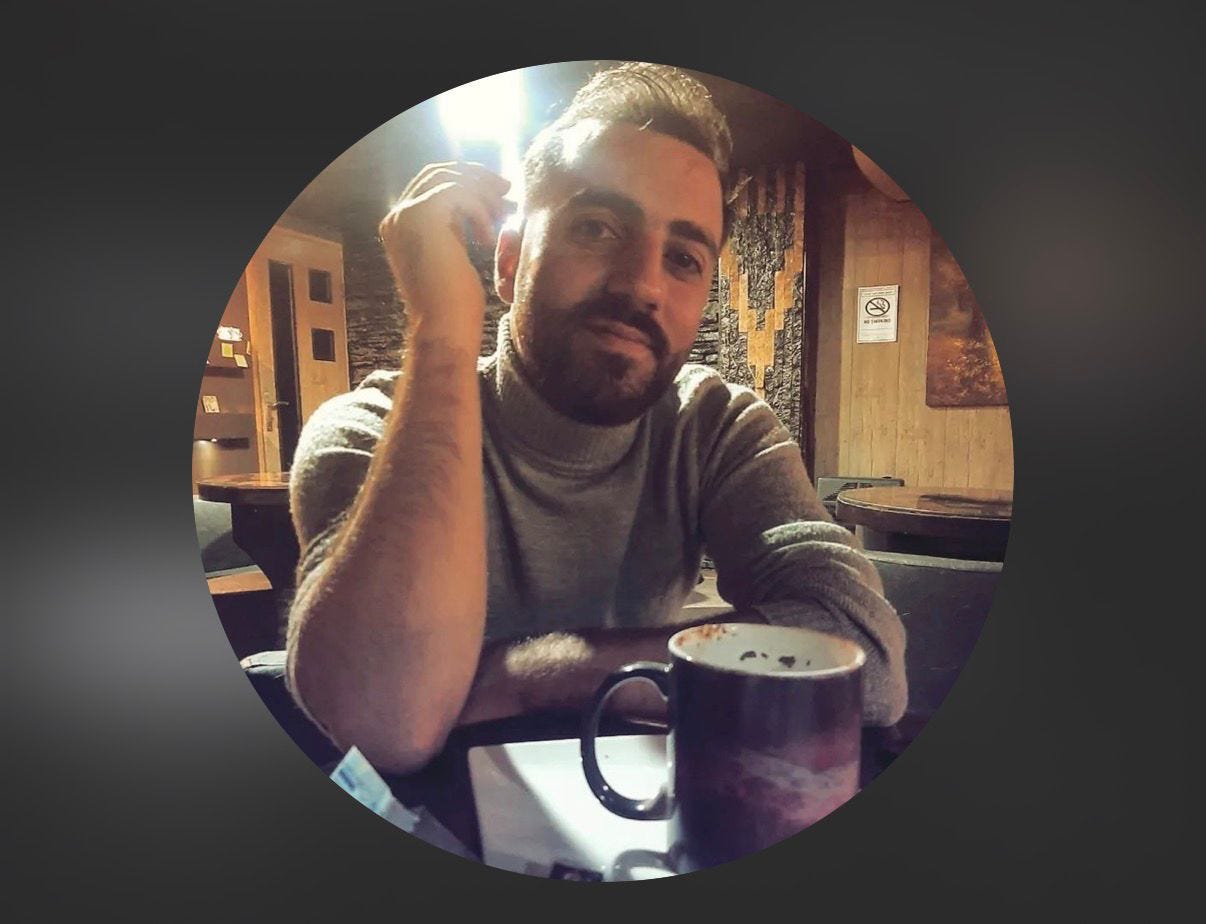
Sophia instinctively zoomed in on the account’s profile picture, showing a man with large headphones and a black baseball cap looking down at a laptop with a concentrated expression.
The message read as follows:
“Hello. Im Meysam translator and journalist in Iran. (sic)
It would be a free trip with everything included. You would visit places damaged in the war, and also see interesting places in Tehran, Shiraz, and Hormuz.
The trip could happen in the next two or three weeks. We would take care of the visa and all bookings in advance.
Would this be interesting for you?
+98xxxxxxxxxx”
Bemused but also concerned, she wondered what this strange offer was, and who it was actually from.
The answer would soon become clear that the Iranian government was attempting to recruit Sophia as part of a coordinated and highly effective operation to control public opinion.
Sophia, who has built a social media brand around trying to become the youngest person to visit every country in the world, had just been offered a front-row seat in the propaganda campaign of the Supreme Leader himself.
When asked why she thought she had been chosen, Sophia guessed, “maybe because they thought that as a smaller creator there’s more potential to kind of shape the message that I would share.”
Since the war began, Iran has dramatically shifted its social media tactics amid an escalating battle over the information space designed to outplay the US and Israel on the very platforms they host and seek to control, The Guardian recently reported.
Anonymous accounts touting regime views have flooded comment sections and Iranian activists abroad have been threatened into silence. In the first 50 days of the conflict, official Iranian government accounts racked up nearly 900 million views and 22 million likes — a thirtyfold jump in engagement compared to before the war, according to one study. Some analysts have called that media dominance Iran’s most significant victory of the war, winning the battle for attention and public opinion even as control of the Strait of Hormuz has remained a competing measure of success.
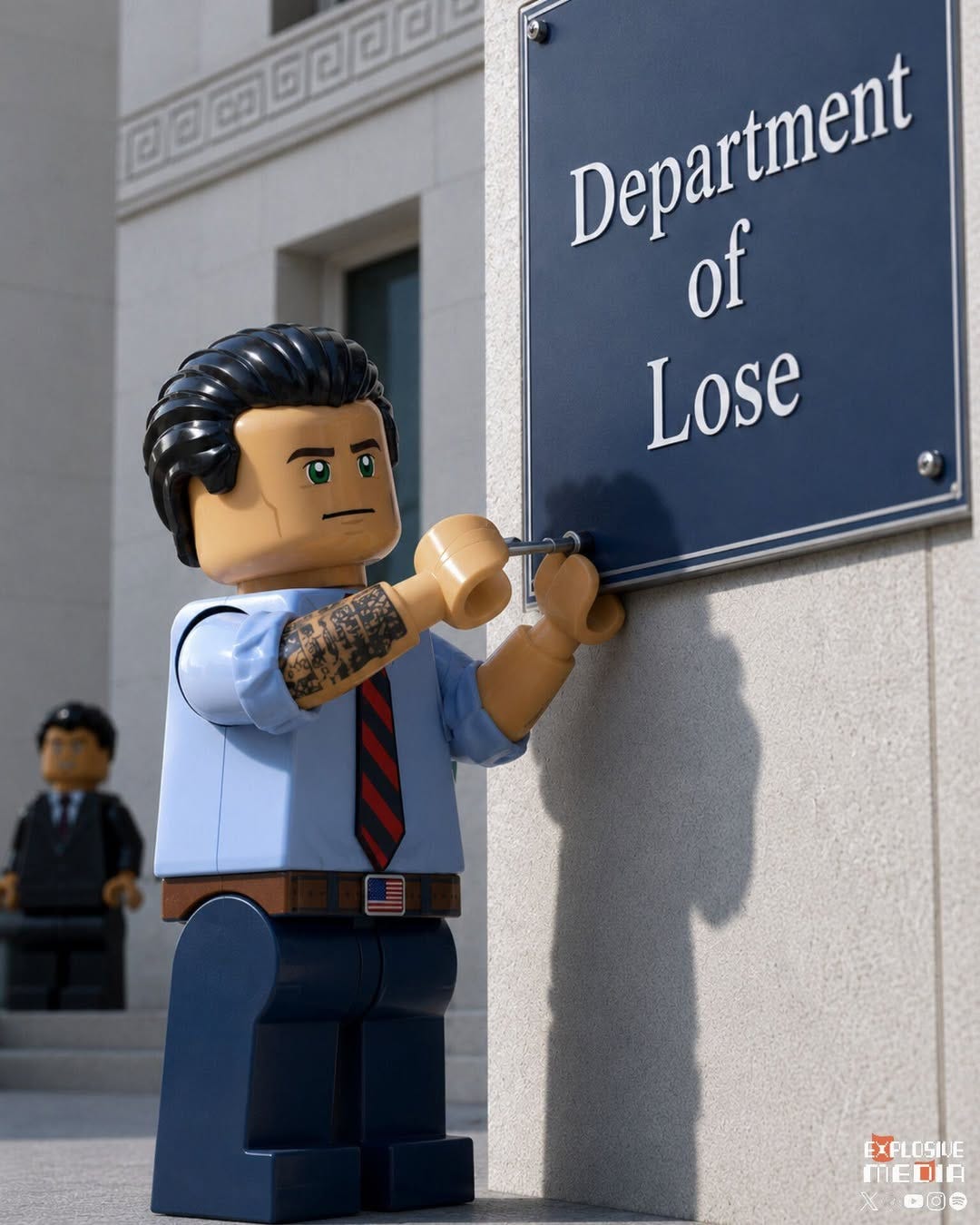
The propaganda has been creative: AI-generated, filled with childhood motifs and soft animation styles to push the regime’s messaging.
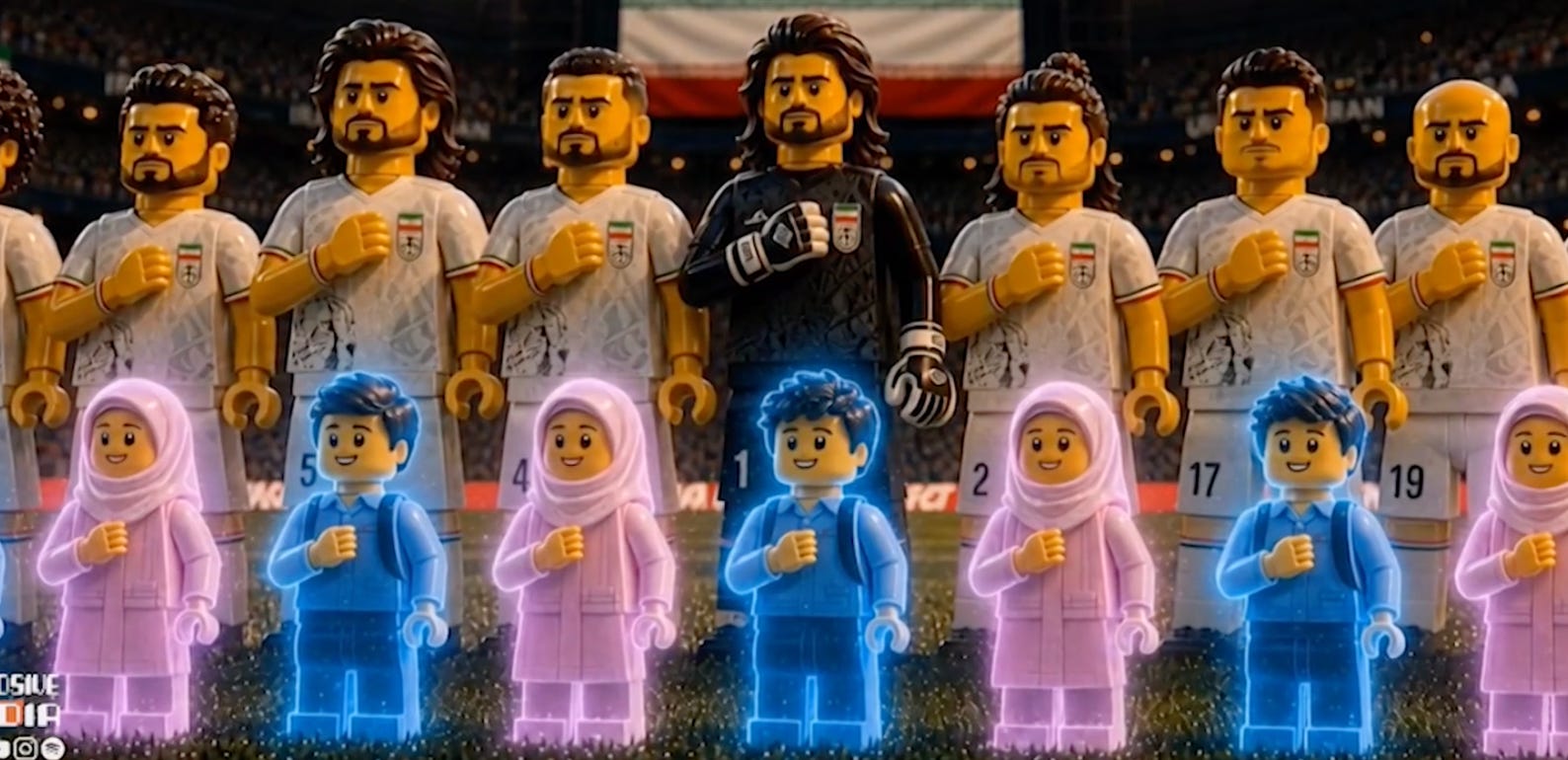
One recurring motif: Lego. One viral clip showed the Iranian national football team walking out alongside ghost-mascot renderings of the 120 children killed at Al Minab, destroyed on the first day of the war by an American Tomahawk missile. If Ukraine rewrote the rules of modern kinetic warfare, Iran is rewriting the rules of weaponizing wartime information.
This battle over monopolizing the narrative was waiting inside Sophia’s Instagram DMs.
Sophia has one large claim to fame: she is attempting to be the youngest person ever to visit every country in the world. Holding dual US and German citizenship, she was raised between Alaska and New York. Sophia told Iran War Dispatches she skipped formal schooling and started solo travelling at 13 years old, with a trip to Costa Rica that kicked off more than a decade on the road.
She has explored Somalia with armed security, traveled alone into wartime Ukraine,, was the only tourist at the America’s largest fortress in gang-controlled Haiti, bribed her way across the Congo River, and slept in a yurt in Kyrgyzstan in -27°C weather.
Funding her adventurous travel through random opportunities here-and-there, she started with volunteering and work exchanges as a teenager, eventually teaching yoga and photography at hotels around the world until she transitioned to social media.. She’s seen 186 of roughly 195 countries - with about five months left to finish in order to beat the previous record holder Lexie Alford. The odds are in her favour.
Iran was one of the countries last left on her list. So she did what she always does: she posed the question to her followers. Was it possible to visit Iran, mid-war?
A screenshot of the conversation, posted to her close-friends story, raised alarm bells and soon enough further investigation uncovered more about her would-be benefactor.
A LinkedIn profile matched the name and face: Meysam Ahmadi — student, football analyst, journalist, at the Mehr News agency, an ostensibly semi-independent organisation owned by the Islamic Development Organisation, which was formed by Khomeini after the 1979 revolution. According to the Iranian media organisation Hamshari, the IIDO was created to promote Iranian Islamic ideology, and is directly overseen by the Supreme Leader. Who reputedly, incidentally, is responsible for picking the director of the MNA.
In other words, this wasn’t a scam or a joke.
This was Iranian state media, recruiting an influencer with 125,000 followers to help carry its message out of a war zone.

Iran has spent decades building an asymmetric playbook against its militarily stronger opponents like the U.S. and Israel: by arming Hezbollah, Hamas, and the Houthis with homemade weapons, and running a perpetually quasi-nascent nuclear program.
When attacks on-the-ground finally came the regime’s leadership quickly took heavy losses.. Missiles flew at Arab states accused of colluding with the U.S., low-level terror plots surfaced in Western countries, and the Strait of Hormuz closed, sending oil prices —and global anxiety — climbing.
Sophia replied to Meysam’s message, asking for more information:
“Is it possible to get a rough idea of what the itinerary of the trip will be?”
He responded quickly:
“Of course. The trip is about 7-9 days with a groupe of bloggers and journalists. We plan to visit civilian sites damaged in the war and we ask you to tell your audience about these or talk to people who were damaged in the war”.
Al Minab — the bombed school referenced in the Lego World Cup video — was on the list.
Curiosity and confusion has been the driving force for Lee continuing the conversation.
“More than anything,” she said, “I was curious why someone would be organizing a trip like this during a war.”
Not one to accept a free trip from a stranger online, she wanted to know the real motivation.
Lee never replied to Meysam. But, with the clock ticking on the world record attempt and a deep curiosity to see the situation for herself, she went anyway, weeks later on her own, telling no one at Mehr News she was coming.
She spent three days in Tehran. The war had left less of a mark on the skyline than she expected. “It was lovely and modern,” she said, aside from the occasional ruined building.
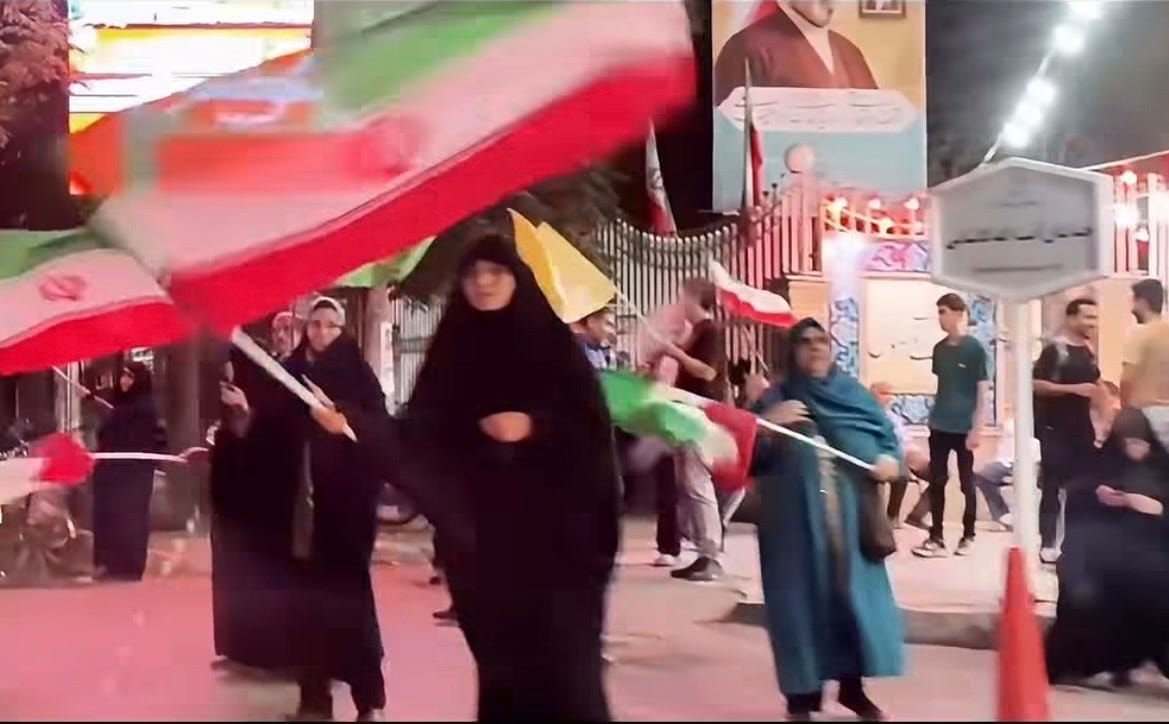
Life was busy and the streets were full. “During the day there was such a casual energy, people were just walking around. Nobody had their hair covered.” But at night, it was a different story. Because every night, there were organised protests. Not like those that had reportedly seen tens of thousands callously slaughtered in January, but where instead they waved the regime flag and chanted slogans.
According to Sophia, those who were heavily religious had originally been instructed to attend, and now they came of their own volition, believing the government needed their support. Ringing the protests was a heavy police present, armed and watchful. Sophia said they were “quite shocking”, and the “only time” she felt uncomfortable as a foreign tourist. She clearly stuck out here, and the atmosphere was charged. She filmed content quickly and secretly for her social media, aware that being caught meant phone confiscation or even arrest.
Away from her guide, in quieter moments, Sophia talked to locals using Google Translate.
Most people she spoke to disliked the regime, and hadn’t even seen its new leader Mojtaba Khamenei, the son of the previous Ayatollah, creating an atmosphere of uncertainty as to who was even leading the country. The January protests had raised hopes of change; when those failed, people anticipated the war itself might finish the job. As neither happened, and the regime kept absorbing blows without buckling, that hope curdled into something closer to dread.
Sophia left Iran the weekend of the 13th, just before the latest ceasefire in the war. She left with love for the Iranian people, and deep concern for their plight. Under the friendliness and what she described as the best hospitality she has ever experienced, she sensed fear.
Whether through nuclear showboating, arming proxy groups, or finding people to take selfies at bombed schools, her story shows how Iran seeks to use whatever asymmetric tool they can to keep the regime in power.
Iran has made a huge noise about the terrible, unforgivable but nevertheless accidental bombing of Al Minab, whilst they themselves have in the last half dozen years imprisoned, shot and hung untold tens of thousands of activists and protestors who want to see change in their country and greater freedoms from the regime.
And that is where the strangest detail of this story emerges: Meysam Ahmadi shares the exact name and probable birth year of another man — one who was killed by security forces as he walked home from work during a protest.
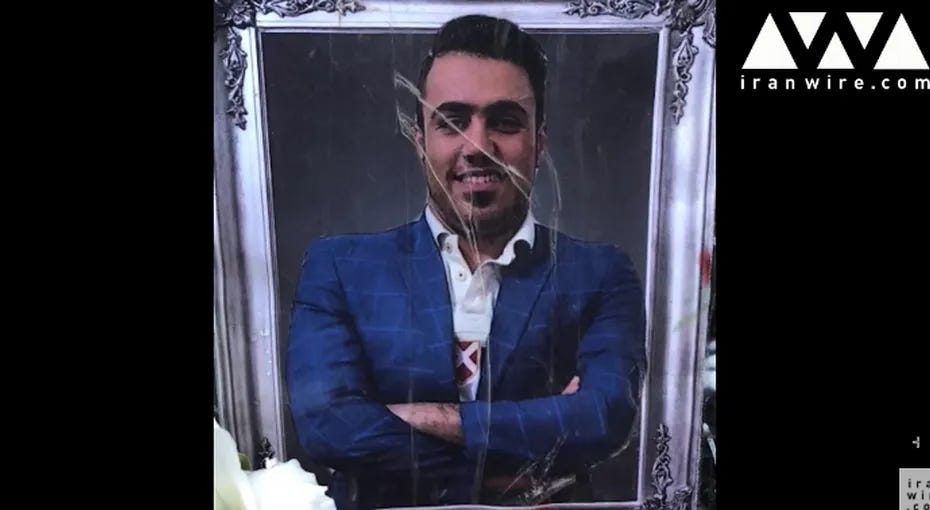
One Meysam Ahmadi promotes the regime. Another was killed by it. Somewhere between these two men is the actual story of modern Iran — the question is, will all these efforts and spilt blood pay off, or is the regime just delaying the inevitable?
Note: It is unclear at the moment if Iran found other people willing to go on the tours organised by Meysam. He has since deleted his Instagram. Iran War Dispatches reached out to Mehr News and its president for comment, and have received no response.
Featured subscriber comment:
Thank you for offering this bundle. I want war coverage, as local and as human as possible.
By: Ann-Marie Gardner.
Do you want more local and human stories as well? Subscribe for free today!
DIVE DEEPER:
A few weeks ago, Iran War Dispatches spoke with Caroline Orr Bueno, PhD about the influencers, propaganda networks, and information campaigns shaping perceptions of the war — and why the narrative fight may matter almost as much as the military one.
If you enjoyed today’s piece, we think you’ll be fascinated by our conversation.
Watch or listen here!
THE LATEST NEWS AT THIS HOUR:
By: Oleksandra Khelemendyk
IRAN HITS BACK AFTER U.S. STRIKE: On Saturday, the Iranian Foreign Ministry stated that Iran targeted regional U.S. military objects in retaliation for U.S. air strikes on surveillance facilities on Iran’s southern coast. In the early morning, Bahrain announced that the country had also been targeted by Iranian drones.
Iranian officials said that the U.S. attacks, launched after Iran had hit a cargo ship in the Strait of Hormuz on Thursday, breached the UN Charter and the Iran-U.S. Memorandum of Understanding (MoU) for ending the war.
ANOTHER ISRAEL, LEBANON PEACE AGREEMENT SIGNED AND IMMEDIATELY ON THE ROCKS: On Friday, Israel, Lebanon, and the U.S. signed a preliminary trilateral agreement to stop attacks from Israel and Iranian-backed Hezbollah.
The U.S. Secretary of State Marco Rubio said that the U.S. will oversee the agreement’s implementation through a trilateral Military Coordination Group for Lebanon. He pledged that the U.S. and the UN would immediately send $100 million worth of humanitarian assistance and over $30 million in funds to Lebanon to improve its defense capabilities.
Israeli Prime Minister Benjamin Netanyahu claimed that, if Hezbollah remains armed, the document lets Israel occupy southern Lebanon. On Friday, Lebanese state media reported that the IDF warned the residents of Mansouri in the south of the country to flee for the first time since a ceasefire took effect earlier this week. On Saturday, a day after the agreement, Israel bombed the town of Markaba 1 mile away from the border and hit an amusement park in the Nabatieh area with drones.
U.N. WORKS TO EVACUATE SHIPS FROM THE HORMUZ STRAIT: The U.N.’s International Maritime Organization (IMO) will continue efforts to evacuate over 500 ships from the Strait of Hormuz. Operations were halted earlier in the week after Iran struck a cargo ship on Thursday.
The IMO Secretary-General Arsenio Dominguez said that he worked with Oman, the United States, and Iran to ensure the safety of the vessels, but the evacuation will take weeks.
In the meantime, on Saturday, the U.K. Maritime Trade Operations claimed that it had received a report of a tanker struck by an unidentified projectile in the Hormuz Strait and began an investigation. Many of the seamen on vessels in the Hormuz Strait have been there for months and have long been running out of supplies and several have died from attacks launched on tankers in the Hormuz Strait.
Stay safe out there!
Best,
Sam

Fascinating!
Such an incredibly brave, curious woman! Good luck breaking the record 🍀