

At the bottom of this page: Latest news at this hour.
Russia sharing U.S. intel with Iran… U.S. on high alert back home… Ukraine assists U.S. defense… U.S. on high alert back home… War costs $3.7 billion… U.S. futures dip… Japan considers releasing oil reserves…
Editor’s note:
As the war escalates, facts and falsehoods are moving just as quickly. Our reporters are following every development to bring you clear, reliable coverage.
If you want to support our Iran-focused work, subscribe to Iran War Dispatches!
OUR LEAD STORY:
It was 1 am in Karaj, a city just outside of Tehran, in 2016 when Reza Azadikhah got a call from an old friend inside the Iranian regime. He grabbed his passport, called a taxi and left without packing his bags.
“You have to escape without leaving signs that you left...and I didn’t want to waste any time,” Reza explained.
He wasn’t just leaving – he was defecting.
Today, Reza is one of the main organisers for protests in support of the Shah in Yerevan, the capital of Iran’s neighbour Armenia.
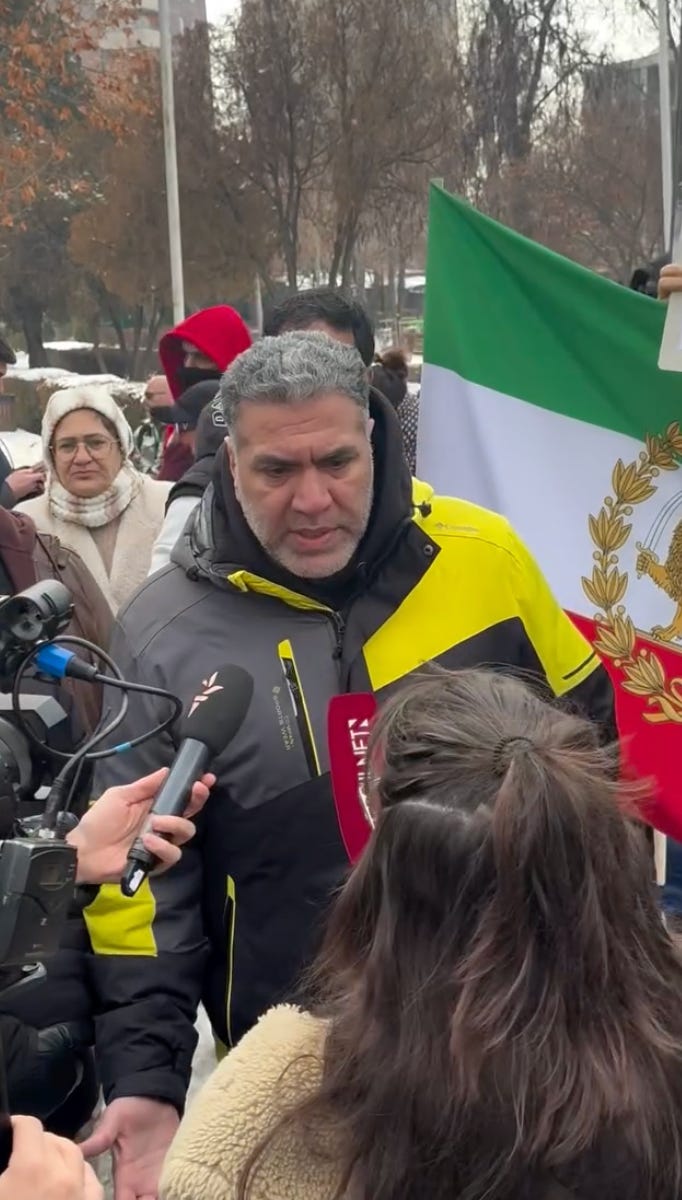
Since decapitating the Iranian regime, powers outside of Iran have pushed for members of the Iranian government to defect.
On Saturday, Trump offered amnesty to IRGC officials and Iranian military and police who are ready to switch sides. A few days later he upped the pressure, telling that if they didn’t seek immunity now, they would later be punished. But his calls to action have not been followed by any clear plan for those who wish to defect against a regime, the Iranian government which is made up of the Supreme Leader, the legislature, the judiciary, military and police and all Iran’s civil servants.
The exiled former prince, Reza Pahlavi, and face of many of the anti-regime protests (not to be confused with Reza Azadikhah mentioned above), has offered a digital platform through which members of the Iranian government can register their defection and claims 20,000 have done so. So far both, the U.S. and the crown prince, are asking regime members to take a risk which could be fatal and providing no tangible way to support them if they do defect – overlooking how perilous defection can actually be.
Reza, who worked for the Iranian regime for twenty years before leaving everything behind – knows how dangerous it can be to turn on an authoritarian regime.
Reza first got a job in the government when he was 19. He was an accomplished athlete, having done karate, MMA and boxing, but he didn’t have a high school diploma, so he was surprised when his friends offered him a job in the government.
At first, he thought it was because they saw his potential. It was only after some time that he understood why he really got the job.
“The government had been observing me and my family for years…and they thought that I was similar to them,” Reza said.
Reza’s grandfather had fought in the Iran-Iraq war, when Iraq invaded Iran following the 1979 Iranian Revolution, and they were certain Reza’s family aligned politically with the regime.
And for years, Reza did work in the Iranian government.
At first he said he really got paid for just sitting behind a desk – it was a good deal he thought.
After some time, he took a job where he was sent to monitor state-owned factories on behalf of the regime. His work included making sure that prices were in line with what the regime wanted; he would look through payments for suspicious transactions; investigate their relationships with foreign clients; identify corruption and keep tabs on CEOs of private companies.
But after a few years he realised that what he was involved in was much bigger.
When you work for the Islamic regime after sometime they start to trust you, they give you more access to information, and that was when he realised – he was collecting information for Iranian intelligence, Reza explained.
The information Reza was collecting could later be used as blackmail or to track people if they tried to flee Iran. He claims that at the time he had no idea of the broader uses of his work.

Ultimately this is when Reza started to take issue with his work and saw that things weren’t right behind the scenes.
“I realized that I was helping the regime steal more…and if I continued, I would either have to steal or do terrible things like killing people,” he said.
“When they took me for training, I would deliberately ruin it so that they would say that I was not suitable for this job.”
He started to understand that a lot of the CEOs of the companies and factories that he thought were against the Islamic regime because of the comments they made about Ayatollah Khamenei were actually connected to the regime.
The longer you work for the Iranian regime the more dangerous it becomes to defect from it, Reza explained. It’s not that easy to just turn your back on the government at America’s request.
Before Reza got the call that he would soon be arrested, he knew he was already on thin ice with the authorities. After he had started to realise what was really going on around him, he started protesting in the street.
He had been causing trouble for the authorities in Iran for about four years – he knew that it was only a matter of time before they came to arrest him.
“Often they will wait until they can get more evidence on you, so they can charge you with a more serious crime,” Reza explained.
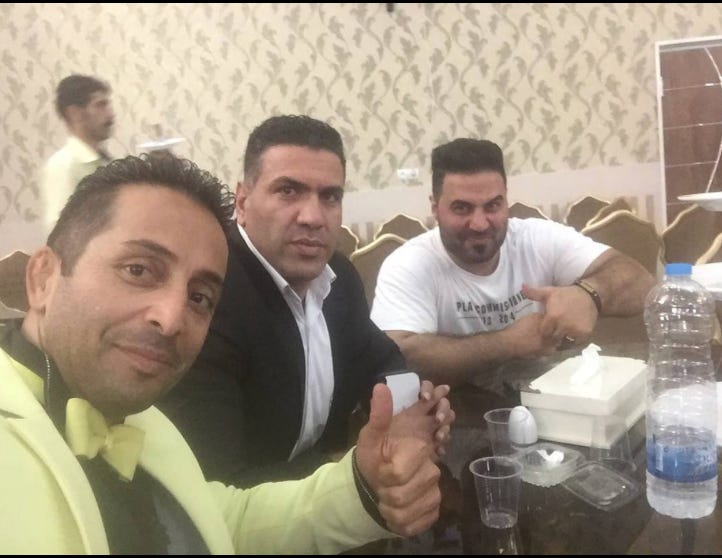
Reza’s call telling him that he would be arrested the next morning came from a friend who was high up in the government..
Reza’s friend has helped a lot of people leave the regime, but he’s too deep inside now, they know everything about him but he can’t leave himself or he’ll risk everything, Reza explained.
Iranian defectors living in exile often continue to get targeted by the people backed by the Iranian governmentIRGC. Masoud Molavi Vardanjani, a former intelligence operative turned defector, was shot dead in Turkey in 2022, in a plot allegedly orchestrated by the Iranian government.
The issue of where regime officials go after they defect from the government in Iran poses another problem.
In 2022, Canada introduced a new federal policy after the Mahsa Amini protests, banning senior Iranian officials from residing in Canada.
However, only one has actually been deported, while 26 have been located in Canada.
Canada’s Iranian community has taken issue with the regime officials still residing in Canada. They have claimed that the Iranian government has threatened members of the Iranian diaspora in Canada and that top-ranking regime officials have “infiltrated and taken over by persons acting on behalf of the Iranian regime.”
For Reza, it was also difficult to leave and he lived his life in Armenia, constantly worried about being spied on.
Reza also feels conflicted about the nearly two decades he spent working for the regime: “I don’t regret anything because I didn’t violate anyone’s rights…but I am just upset that I was in the system and didn’t recognise it sooner.”
Editor’s note:
As the war escalates, facts and falsehoods are moving just as quickly. Our reporters are following every development to bring you clear, reliable coverage.
If you want to support our Iran-focused work, subscribe to Iran War Dispatches!
THE LATEST NEWS AT THIS HOUR:
By Anastasiia Lutsenko
Good morning to readers; Iran wakes up to another day of war.
RUSSIA SHARES INTEL ON US WITH IRAN: Russia is providing Iran with intelligence that could help target U.S. forces in the Middle East, according to The Washington Post.
The intelligence reportedly includes the locations of U.S. warships and aircraft in the region. If confirmed, the move could mark the first sign that another major U.S. adversary is indirectly involved in this war. Until now, Russia has been relatively quiet.
UKRAINE HELPS U.S. DEFENSE: Zelenskyy announced that Ukraine will help the U.S. counter Iranian Shahed drones. In exchange, Kyiv is requesting U.S. Patriot missile systems. Ukrainian specialists and intercepting drones, developed during the war with Russia, will be deployed to American bases in the coming days to protect personnel and infrastructure.
Zelenskyy emphasized that this support will be carefully coordinated to ensure operational effectiveness.
US ON HIGH ALERT BACK HOME: US officials have increased patrols and counterterrorism measures across the country over fears that Iran or its supporters could attack in retaliation for the US-Israel attacks. Cities like New York, Los Angeles, and Miami are protecting schools, cultural centers, and places of worship with increased police presence. Experts warn Iran could act through operatives, inspire lone attackers, or launch cyberattacks on banks, energy, and water systems.
WAR ON IRAN COSTS U.S. $3.7 BILLION IN FIRST 100 HOURS: The U.S. has spent an estimated $3.7 billion during the first 100 hours of the war, according to the Center for Strategic and International Studies.
Only a small portion of these costs was included in the Pentagon’s budget, meaning the U.S. Department of Defense will likely need to request additional funding from Congress. The Pentagon may also seek up to $50 billion to replenish missile stocks and other equipment used in the first phase of the conflict. All of this could have implications for public support in Washington.
U.S. FUTURES DIP: U.S. futures fell down between roughly 0.7% and 1% Friday as oil and gas prices get higher. Shipping through the Strait of Hormuz slowed, and Qatar said restoring gas deliveries could take weeks. Gas prices haven’t been this high since 2024, according to the AAA motor club.
JAPAN CONSIDERS RELEASING OIL RESERVES AMID IRAN CRISIS: Japan is considering releasing part of its national oil stockpile, according to Kyodo news agency.
Japan depends on the Middle East for about 95% of its oil imports, with around 70% passing through the Strait of Hormuz, a key shipping route now affected by the conflict. The country currently has 146 days of oil consumption, and officials said there were no plans to release these stockpiles.
Stay safe out there!
Best,
Alessandra
Thank you for your incredible reporting and informative stories.
So many of these ultra-rightwing monarchists were regime stooges until very recently...
I'm suspicious of this man. He sounds like he's still working for the Islamic Republic. It's well established that their agents have extensively inflitrated the (frankly pathetic) foreign opposition.
Never trust these late detectors.