

At the bottom of this page: Latest news at this hour.
U.S. blockade has halted Iranian oil exports from Kharg Island; the U.S. Senate passes the Graham Sanctions Act against Iran; Saudi Arabia, Turkey, and Pakistan have signed a mutual defense pact.
Editor’s note:
Dear readers,
Note that we’re taking next week off to collect more interesting stories from new and unexpected perspectives across the region.
Subscribe so you don’t miss us when we’re back with more human lives written on paper.
OUR LEAD STORY:
KYIV, Ukraine — The temperature in Tehran reached 95° Fahrenheit, but Arash* kept working in his lab. It’s full of filament tools and 3D printers that he uses to produce Iranian Shahed-136 drones — but tiny ones, only 15 cm long.
His customers don’t send them into battle. They put them on shelves, desks and display cases.
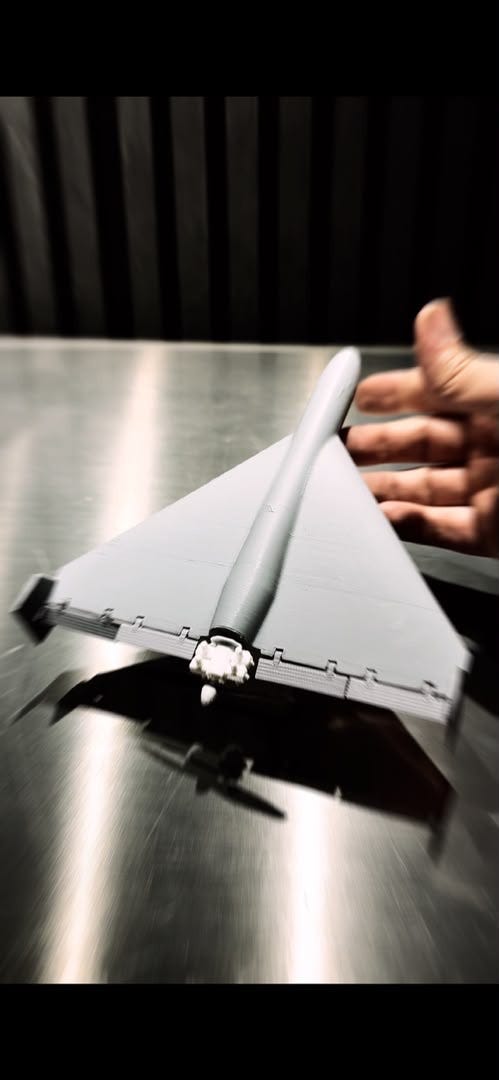
After the U.S. and Israel launched their joint war in Iran on the last day of February 2026, Tehran immediately activated its vast drone fleet. These drones have been making headlines for years, as Iran supplies Russia with these cheap, one-way kamikaze attack drones, namely the Shahed-136, to wage its war on Ukraine. At the beginning of the Iran war, Tehran showed a capacity to produce about 10,000 drones per month. Iran and its proxies launched about 120 drones every day of the war through the April ceasefire, according to data from the Washington Institute, and then used the first few weeks of the memorandum of understanding to replenish its drone fleet. Iran now says it has tripled the size of its drone fleet compared to the pre-war arsenal. But these instruments of war, so widely used to fight, are now being woven into everyday civilian life in Iran, too. Street vendors can be found selling small replicas of Shahed drones, which people purchase to decorate their homes. The trend could offer a window into how prolonged conflict is reshaping Iranian identity, patriotism, and public consciousness.
“We have to defend [ourselves] so more of the people of my country these days like tools of defense,” Arash said.
Just seven months ago, Arash didn’t think much about the Iranian military. He coached teenagers at a football academy in Tehran. But Iran’s fragile economy forced him to reconsider his main source of income and reduce football coaching to a side hustle. By the end of 2025, Iran was already grappling with inflation exceeding 50 percent.
By February 2026, Iran reported a new historic high, approaching 70 percent. By late spring, the minimum wage had fallen to less than $90 per month, according to Iran International, accompanied by massive layoffs.
“My friend told me this job [3D printing] is amazing and you can make good money there without spending much time on it,” Arash said.
A friend of Arash’s also filmed different celebrations in Tehran with a drone and suggested that he give it a try.
“I tried an FPV drone operating at one wedding, but I wasn’t very good at it, so I eventually decided to focus on 3D printing instead,” Arash said.
The first object Arash ever printed was a small boat. Later, he expanded to include PSP consoles and figurines inspired by video games.
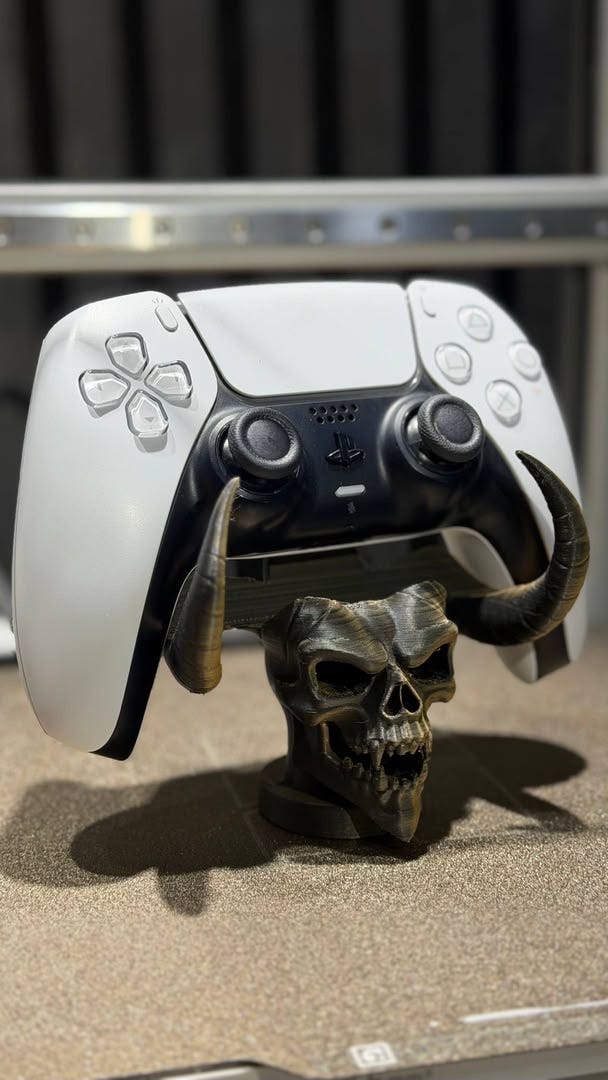
He usually spends an hour or two making a figure.
“We make everything that is welcomed by people,” he said. “It could be eggs, flowers, sheep, balls,” Arash listed.
He sells them at prices that vary from $5.82 to $10.91 USD.
Arash works directly with his clients — most people hear about him through word of mouth.
After February 28, the night the war was launched, Arash noticed that his customers’ requests grew awfully specific.
The most popular request became drone models, particularly 3D-printed replicas of the Iranian-made Shahed-136. Also in demand were 3D-printed busts of Iranian leaders.
“People fell in love with the new symbols of their country,” Arash said.
In March, Arash’s lab’s windows were shattered by the shockwaves from a bomb landing nearby, but that didn’t stop him from continuing his usual routine of creating his customers’ orders.
Signs of Iran’s growing military culture became particularly noticeable in May, when a newlywed couple was spotted on the streets of Tehran arriving in a car decorated with military-themed ornaments.
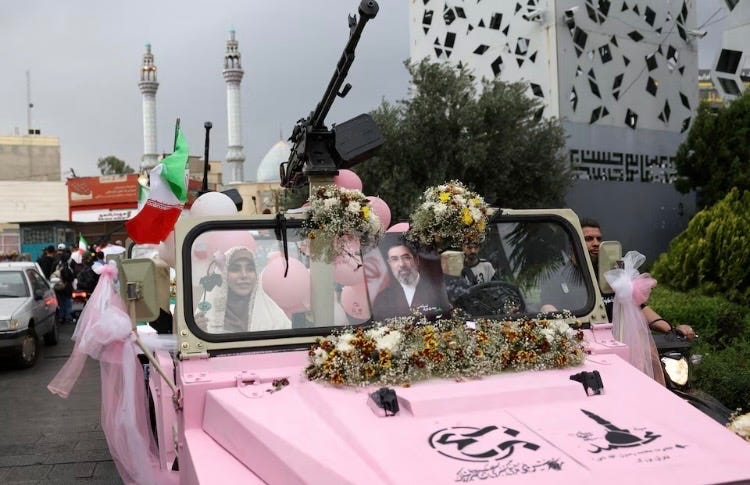
By summer, the trend had taken on even more diverse forms.
In the beginning of July, Muhammad*, an American Studies student at the University of Tehran, noticed a truck parked in one of Tehran’s central squares.
The truck driver had popped up at a market with some handicraft ballistic missiles, Muhammad said. When he mentioned what he’d seen on the phone, Muhammad’s friend, a public health student, was enthused. “Get one for me,” he said.
The street vendor economy is great for Arash’s business — he cooperates with them, and they place orders directly to him. “We have supplied them with various products, which are being sold in the streets and public places,” Arash said.
Time passed, and this weapon-replica economy gradually expanded.
Muhammad spotted another vendor appearing on the street in Tehran, occupying a much smaller space than the truck driver. He worked quietly, without shouting slogans or displaying bright signs. Yet on his chest-high table, a striking assortment of goods was laid out: little drone replicas of various colors, as well as keychains shaped like weapons.
Muhammad saw this vendor’s small drones priced at around $1 USD and larger sizes at $3 USD. “You have to consider that this is the price of a normal lunch in Iran,” he said.
Arash’s target audience is young people, “because most young people have more information about these [3D printing] tools,” he said.
Recognizing this younger audience, the business began to modernize, creating Instagram pages and actively promoting its products online.
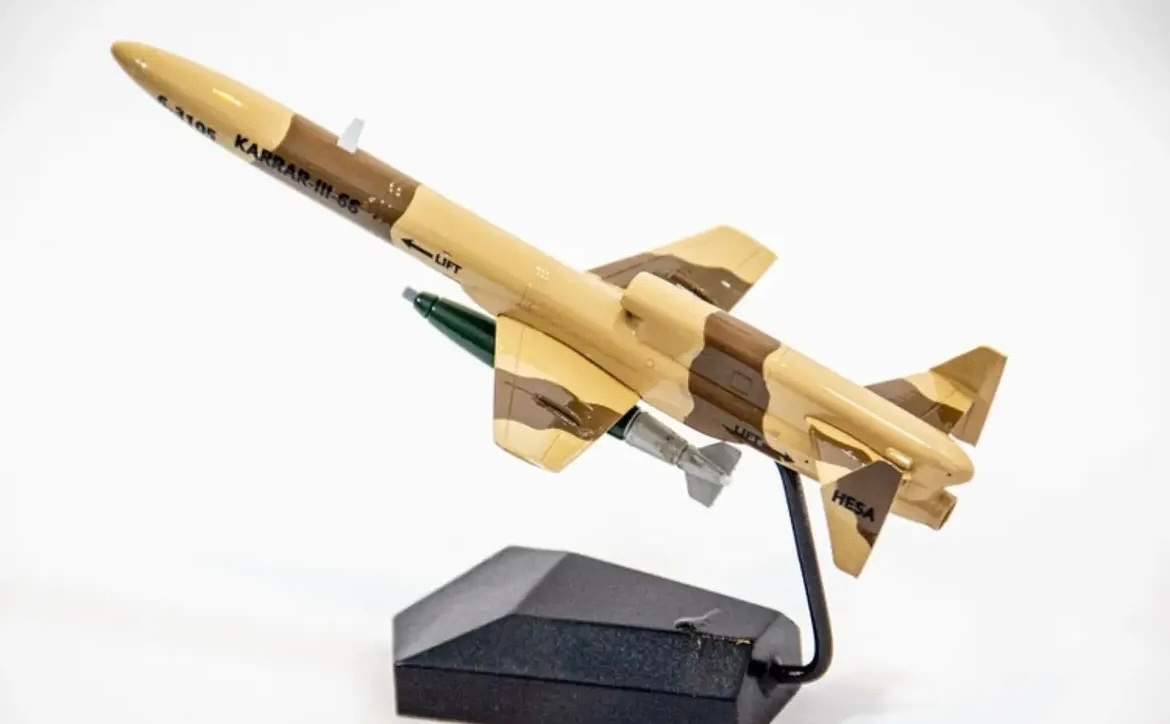
Arash, and the other stall nearby, aren’t the only people who noticed a demand for these toy weapons. Even eBay sells them.
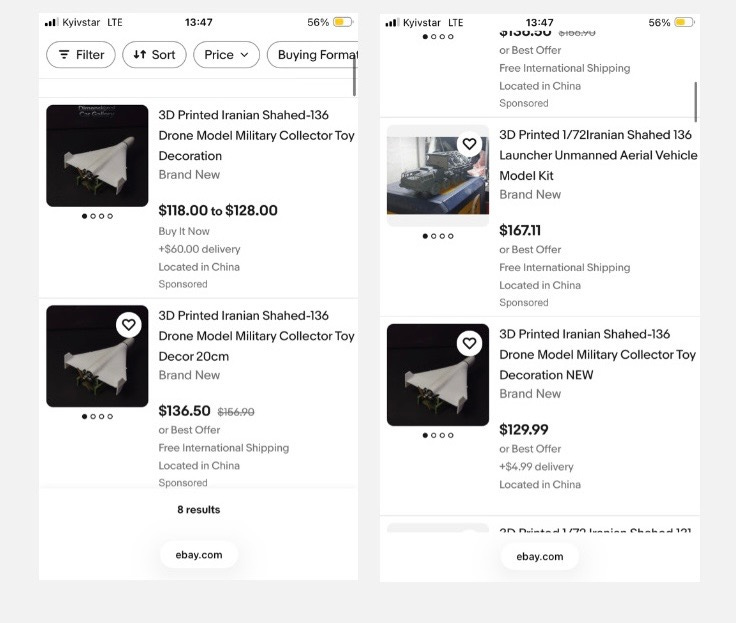
The buyers are mostly located in China, offering international shipping. The average price for the popular Iranian Shahed-136 model is around $120. 3D printing is allowing casual replicas to pop up, but it is a serious tool used on the battlefield, too. In May, The Guardian reported that Iran-backed Hezbollah was using 3D-printed components in its cheap drone models.
That is why, for Muhammad, the small drone replicas are not just decorations. They represent a belief that Iran’s military strength has helped protect the country from a worse fate.
“If it wasn’t for these drones and missiles, there was going to be a lot more damage to our already broken economy,” Muhammad said. “Because of having these missiles and drones, my country doesn’t have a completey failed economy.”
*Both named sources were given pseudonyms due to security concerns.
Editor’s note:
Dear readers,
Note that we are taking next week off to collect more interesting stories from new and unexpected perspectives all over the region.
Subscribe so you don’t miss us when we’re back with more human lives written on paper.
THE LATEST NEWS AT THIS HOUR:
By: Oleksandra Poda
U.S. BLOCKADE HALTS IRANIAN OIL EXPORTS FROM KHARG ISLAND: According to the Financial Times, no tanker has loaded at the Kharg terminal for at least a week since the U.S. naval blockade was reinstated.
The Kharg terminal is Iran’s main oil hub, through which about 90% of all Iranian oil exports passed before the conflict began.
As of August 7, only 16 vessels were anchored near Kharg — the lowest number on record. According to Kpler’s estimates, each day of downtime at Kharg represents a loss of about $200 million per day for the Iranian budget.
THE U.S. SENATE PASSES THE GRAHAM SANCTIONS ACT AGAINST IRAN: On August 7, the U.S. Senate passed the Lindsey O. Graham Sanctioning Russia and Iran Act of 2026 by a vote of 86 to 11. At the last minute Trump added measures to the act to impose restrictions on funds headed for Iran’s energy and weapons sectors. This comes at a moment when Iran and the U.S. are still negotiating over the Strait of Hormuz and Iran’s nuclear program.
SAUDI ARABIA, TURKEY, AND PAKISTAN SIGN A MUTUAL DEFENSE PACT: On August 7 in Mecca, Prince Mohammed bin Salman, President Erdogan, and Prime Minister Shehbaz Sharif signed the “Mecca Joint Defense Agreement” — a trilateral defense pact based on the principle of “an attack on one is an attack on all,” which mirrors Article 5 of the NATO Charter.
The document was signed against the backdrop of the ongoing regional conflict with Iran, following a series of Iranian missile and drone strikes on Saudi Arabia, Kuwait, and Bahrain. The new alliance brings together distinct military capabilities: Turkey has the second-largest army in NATO; Saudi Arabia one of the world’s largest oil exporters and a regional military power; and Pakistan is the only Muslim country with nuclear weapons.
Stay safe out there.
Best,
Anastasiia.

Thank you for your update on what is happening re oil exports. As to collections, um,....I collect shoes.
Thank you for the interesting personal story. Not enemies, people with hopes and dreams too. We shouldn’t forget.