

Editor’s note:
When The New York Times revealed a quiet U.S.-Israeli plan to prop up Iran’s former president as the country’s next leader, we asked the classic Iran War Dispatches question:
How does this actually feel inside Iran? What are Iranians saying about it?
That’s the kind of on-the-ground perspective you’ll only find here. To support independent reporting that brings you the stories otherwise lost in the headlines, subscribe for free!
OUR LEAD STORY:
The June heat had cooled into an easy summer’s night by the time Mahla* arrived to cast her ballot in Iran’s 2009 presidential election. “I was very young then, around 21, and it was my first time casting my vote. I was excited and…thought my vote was influential,” Mahla said.
But the events that took place over the next few days were so discouraging that Mahla never voted again.
The reformist candidate Mir-Hossein Mousavi was running against the incumbent Mahmoud Ahmadinejad in Iran’s 2009 presidential elections. Mousavi had energized people, bringing voter turnout to an unprecedented 80-85%.
“I came after work, so there were less people…but I remember people said the polling stations had been busy since morning,” Mahla said.
When the day came, Mousavi announced that the interior ministry had confirmed his landslide victory. But not long after, government officials announced that Ahmadinejad, who had been in power since 2005, had won the election with 83% of the vote.
People knew the election had been stolen.
In 2009, when Iranians, like Mahla, went to cast their votes, they still believed in the system’s ability to self-correct: they weren’t seeking regime change, they wanted reforms.
But since then, the situation has dramatically changed. Over the last years, Iranians have increasingly called for a total regime change — many even going so far as to cheer on a war in their own country.
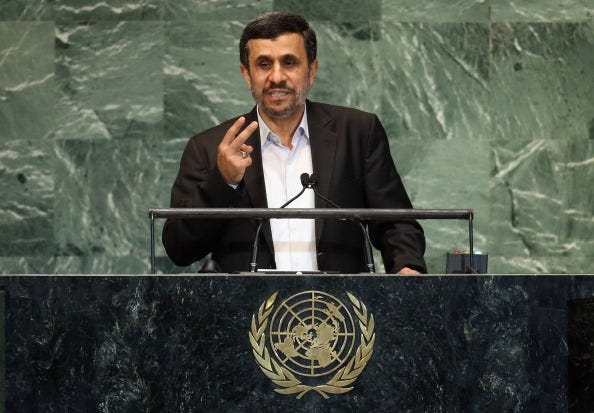
For a short period of time it appeared that Reza Pahlavi, the son of Iran’s former Shah, was the leader that the U.S. and Israel wanted to prop up in the case of regime change. However, on May 19, the New York Times reported that at the start of the war, the U.S. and Israel had plotted to reinstall Mahmoud Ahmadinejad as the leader of Iran.
At the start of the war, a few days after the U.S. and Israel had taken out much of Iran’s leadership, they bombed Ahmadinejad’s residence. But unlike the previous attacks targeting Ayatollah Ali Khamenei, this attack was not intended to kill the former Iranian president — but rather to free him from house arrest.
Trump had decided that the successor should be “someone from within.” But the attack injured Ahmadinejad, Trump decided against the regime change plan, and the former president has not been seen since.
While many Iranians have hoped that the war could bring about a more democratic future for Iran, Trump’s secret plan highlights a key fact of the U.S. agenda in Iran: democracy in Iran is not necessarily a priority for the U.S. or Israel.
The day that Mahla realized that the election had been stolen was a dark day.
The hopeful pre-election atmosphere disappeared, as offices of the reformist opposition figures, Mousavi and Karroubi, were closed.
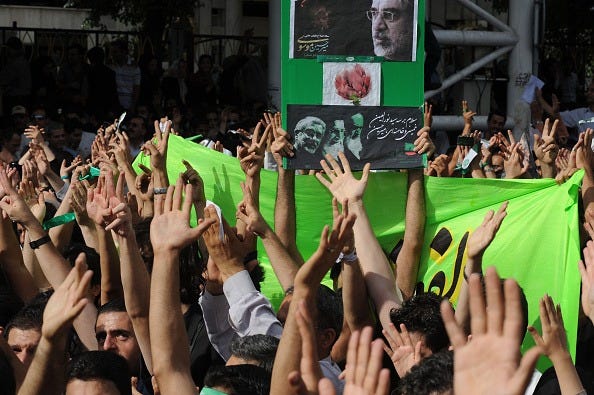
Protesters, like Mahla, wore green clothes, the color of Mousavi’s election campaign, and poured out onto the street. They were demanding a vote recount, chanting “Where is my vote?” and calling for the government to follow the constitution. This was the start of what was to be known as the ‘Green Movement.’
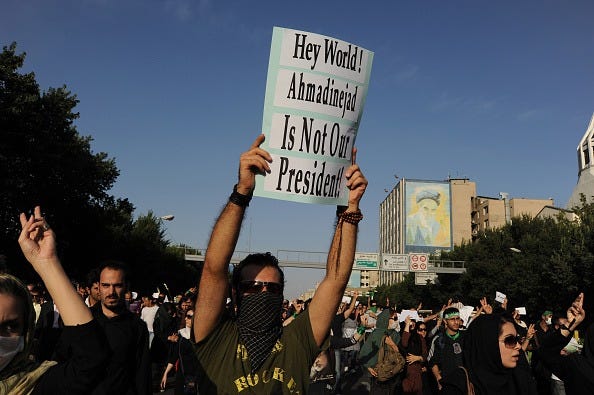
“We went to the streets in hope of better economic conditions and freedom of expression, thinking we could make a difference,” Mahla explained.
Mahla was only 21 when she went out onto the streets in Tehran to protest in June 2009. It was the first protest she had ever been to.
“All my colleagues were going, everyone was talking about it. It seemed like we all had a lot of hope for better conditions in Iran,” Mahla said.
In the lead up to the 2009 election, the economic conditions in Iran had been difficult even for highly skilled people. Mahla’s brother, who was an academic overachiever with a master’s degree, couldn’t find any skilled work and had to work as a laborer in a company that installed emergency signs. Mahla, who knew the manager, was also able to find work there. The conditions got so bad that many of Mahla’s friends started to leave Iran.
“As young people at the time [of the Green Movement], we just wanted a house, a job — something reasonable. I don’t think anyone had unrealistic expectations. We just wanted a normal life, with safe and stable conditions in our country,” Mahla said.
The initial protests were calm and peaceful, but after a few hours everything changed. Security forces were sent out into the street, ordered to crackdown brutally on the protesters.
Quickly, the streets became chaotic — if a car honked, the car would be attacked by security forces. Other cars were smashed in at random.
“What I personally saw with my own eyes is something I will never forget… I saw officers shooting at many people with my own eyes… I saw many people being beaten with batons almost to death… I ran away,” Mahla said.
Mahla and her older brother ran home from the protests, where they thought they would be safe. But when they returned home, they realized that her uncle was missing.
“We couldn’t find my uncle that night. We searched for him in all that chaos. We called everywhere, no one was home,” Mahla said. Mahla and her family went to hospitals, searched through their neighborhood but couldn’t find him.
After they stayed up the whole night, Mahla’s uncle returned home at noon the next day. He had been caught near the demonstrations, and the security forces mistook him for a protester. They’d arrested and interrogated him, and held him until the morning.
When he returned, he was traumatized. “[The security forces] had threatened him and told him not to tell anyone anything that had happened. I remember that after this, people were really scared,” Mahla said.
The protests continued for a few days, but ultimately the crackdown was too brutal, and the movement fizzled out, leaving Ahmadinejad in power.
For Mahla, now 39, Iran became much worse under Ahmadinejad.
Ahmadinejad’s leadership fundamentally changed Iran, many, like Mahla, blame his presidency for many of the problems Iran faces today.
Ahmadinejad has been associated with hardline conservatism since the beginning of his political career. In 2005, Ahmadinejad succeeded the previous president Mohammad Khatami (1997-2005), a former culture minister whose eight presidential years were defined by policies rooted in incremental economic change and diplomatic rhetoric: Ahmadinejad couldn’t have been more different.
Khatami had drawn the ire of the Supreme Leader and hardline factions in Iran, many of whom then threw their weight behind Ahmadinejad. As a result, Ahmadinejad empowered the IRGC and Basij; Ahmadinejad appointed a record-breaking number of IRGC members to government positions. During his two terms, the IRGC became increasingly embedded in Iran’s economy, benefiting from preferential access to government contracts and assets.
Ahmadinejad’s economic policies were populist, focusing on handouts and loans rather than sustainable economic reforms. They resulted in short-term economic benefits, but had long-term consequences: inflation and a rising unemployment rate in Iran.
Internationally, Ahmadinejad’s presidency was defined by his extreme anti-Western rhetoric and his strong support for accelerating Iran’s nuclear program, to which the U.S. responded with sanctions. His foreign policy approach was criticized for being provocative and inflammatory, losing him support domestically and internationally.
“Many people [joined the Green Movement] not necessarily out of strong support for Mousavi, they were more looking for things to get better and calmer,” Mahla said.
In recent years, Mahla said, it has reached a point where foreign goods are barely available in Iran, and if they are, they are extremely expensive. “For a young Iranian, for example, someone just getting married, owning something like a Samsung or LG refrigerator feels like a dream — something unattainable,” Mahla said.
Under a suffering economy, even more people started to leave the country. “I remember that it was exactly from that period that migration increased significantly,” Mahla said.
After watching her friends leave Iran for years, in 2018, the economy became so strained that Mahla was forced to leave for Armenia. Mahla’s brother also left for Dubai, where he now lives and works.
“In reality, things in Iran kept getting worse day by day, up until today when there is really nothing left to say,” Mahla said.
But it wasn’t just Ahmadinejad that changed the country — the chaos of the crackdown on the Green Movement and the brutality people experienced also had a lasting impact.
“People never imagined the government would treat them with such brutality,” Mahla said.
More and more Iranians felt their votes were meaningless and stopped voting, Mahla explained. It had crushed the youthful movement to reform the system.
Mahla struggles to understand why the U.S. would want Ahmadinejad in power. She thinks he is a disastrous choice. “Practically speaking I don’t see Ahmadinejad as an appropriate option at all…that’s why during his second term people weren’t supportive of him anymore, because during his first presidency he pushed Iran into many crises and difficult conditions,” Mahla said.
Mahla isn’t the only one who finds the plans incredulous. Many of Trump’s aides and other American officials, also reportedly, found the plan difficult to believe in.
For Akbar Mohammadi, who was also protesting in the Green Movement in Tehran, the plan exposes what Trump really wanted from his war in Iran. “If [the U.S.] wanted to help Iranians, they would take all the politicians out, but if they want to put Ahmadinejad back in, it’s because Trump wants to make a good deal for the U.S.,” Akbar said.
The plan exposes that the war is really for the benefit of the U.S., not the Iranian people, he added.
“People asked for Trump’s help to take these assholes out, not to bring more in,” Akbar said.
Mahla said the crackdown on the Green Movement caused people, fearing their own safety, to become passive and silent.
“I only voted that one time, but after that, I never voted again. My family was the same way. No one in my family — at least in presidential elections — ever participated again,” Mahla said.
*Mahla’s name has been changed for security reasons.
If you enjoyed this story or learned something from it, help us out! Share it with 3 friends who might appreciate our human-interest reporting, too.
The latest news at this hour:
By: Olekasndra Khelemendyk
U.S. CONFIDENT ABOUT PEACE PROGRESS; IRAN LESS SO: BBC cited U.S. Secretary of State Marco Rubio saying that the U.S. might reach a “solid” deal with Iran on Monday. Still, he warned that the potential deal is not a final settlement of the war. Iran responded by saying that some progress had been made but the deal is “not imminent.”
According to Axios, the ‘Memorandum of Understanding’ that the two sides are close to signing would give a 60-day ceasefire extension, in which Iran would be allowed to sell oil freely. For this period, the Hormuz Strait would be opened and cleared of mines and talks on Iran’s nuclear program would take place.
OIL PRICES DROP AHEAD OF POTENTIAL U.S.-IRAN AGREEMENT: According to Bloomberg, crude oil prices are going down amid the expectations that an upcoming agreement between Iran and the U.S. will restore oil flows through the Strait of Hormuz. Brent crude benchmark dropped by more than 4%, way below $100 per barrel.
In recent days, three liquefied natural gas tankers and a supertanker carrying Iraqi crude have headed from the Gulf through the strait to Pakistan, China and India. Bloomberg also reported that Abu Dhabi National Oil Company has been quietly transporting oil through the strait, clearing both U.S. and Iranian warships. A Qatari liquefied natural gas tanker Al Rayyan was also seen in Oman after passing Hormuz.
BAHRAIN JAILS NINE FOR COOPERATION WITH IRAN: On Sunday, nine people were sentenced to life in prison for alleged cooperation with the IRGC, Al Jazeera reported. Two more were convicted of espionage and terrorist activities and received three-year jail sentences. The accusations include photographing strategic objects in Bahrain or the IRGC and carrying out cryptocurrency transactions from Iran to Bahrain.
Earlier this month, Bahraini authorities detained 41 more people amid the crackdown on people accused of being Iran-linked agents. Similar tendencies are in place across other Gulf states: Last month in the UAE a group of suspects were also arrested for what was deemed terrorist acts.
Stay safe out there!
Best,
Alessandra
When I was young, my Prime Minister, Yitzchak Rabin, decided to negotiate peace with our worst enemies, the terror organisation then known as the PLO. I was young and very patriotic then, and opposed the move. I joined the massive protests, organized by the opposition leader back then, Benjamin Netanyahu, who replaced Ariel Sharon as the leader of Likkud.
Later Rabin was assassinated. I already had a computer with a Modem back then, and engaged with political debate with many young people in the percursor of social media, the Fido-technology-based Echomail exchange that networked Bulletin Board Systems across my country. My political views gradually underwent a radical change.
When I became aware of the injustice of our legal system, which discriminates against Arab citizens, and that policy manifested itself in an evacuation order against residents of the neighborhood of Sheikh Jarrakh near my home, I joined the protests every Friday afternoon. I never sought to confront the law enforcemnt forces and never got hurt, though some of my fellow protesters did encounter violence. Eventually some Extreme Right youngsters identified me and tried to stalk me on my way back from such a protest, and I decided the risk wasn't worth it. I also realized that the evacuated residents declined generous offers to settle their dispute and chose to turn their personal plight into a political struggle.
Several years ago, when my government tried to force an unconstitutional regime change (that's my personal take. Our country doesn't really have a constitution so technically the government could do it), I again joined the protests. I was careful to avoid areas known to stage violent clashes with the police and only joined peaceful protests. This struggle was partially successful, as the regime change was slowed down and most of it hasn't been achieved yet.
My country now faces elections, and I support one of the many opposition leaders, hoping he wins. It's sad that while the Right wing has an established leader, Bibi, around whom they all rally, our side is divided and the leader of every faction only cares about his own party and position. And they refuse to cooperate with the Arab parties, because the Jewish opposition here is entirely Zionist while the Arabs oppose Zionism (And no two parties totally agree on the exact meaning of "Zionism"). This is just sad.
First, thanks for your reporting. In 1969 while at the University of Colorado, I attended a protest against the Viet Nam war. (Yes, I'm old.) Recently, I have been attending the No Kings Day protests to voice concerns about unprecedented corruption, ICE and the authoritarian drift of the U.S. Living in a small town in a red state, there aren't very many of us, and most of the people we're trying to help don't turn out because of fear of being picked up by ICE. Citizenship doesn't seem to be a factor in who gets arrested, and even if the person arrested is a citizen, it's likely a family member is undocumented. We get supportive honks from passing cars which is an indication that there is more support than is obvious.