

At the bottom of this page: Latest news at this hour.
No result from Trump’s ‘final determination’ meeting on Iran… Israel crossed the Litani River in Lebanon… Guyana emerges as an unexpected winner in the Iran war.
Featured subscriber comment:
“You have been the best coverage of the Iran war I’ve read (and I’ve read a lot and speak Farsi). Rather than relying on commentary or basic reporting you get to the heart of how the conflict is impacting people and communities. I’m impressed and grateful for your coverage.”
By: Bryce Turner
With access to Iran still limited, it takes significant effort to report on the people whose lives have been upended by the war. Your support helps us continue bringing these human stories to light and sustain our independent reporting.
Upgrade your subscription to support our mission.
OUR LEAD STORY:
KYIV, Ukraine — In a small town in Iran, a young woman and her stepfather nervously smoke cigarette after cigarette on their way to a pharmacy. They’re hoping to find medication for him before the inevitable shortage hits.
Samira’s stepfather, diagnosed with a heart condition and diabetes, requires heart pills and insulin to stay alive.
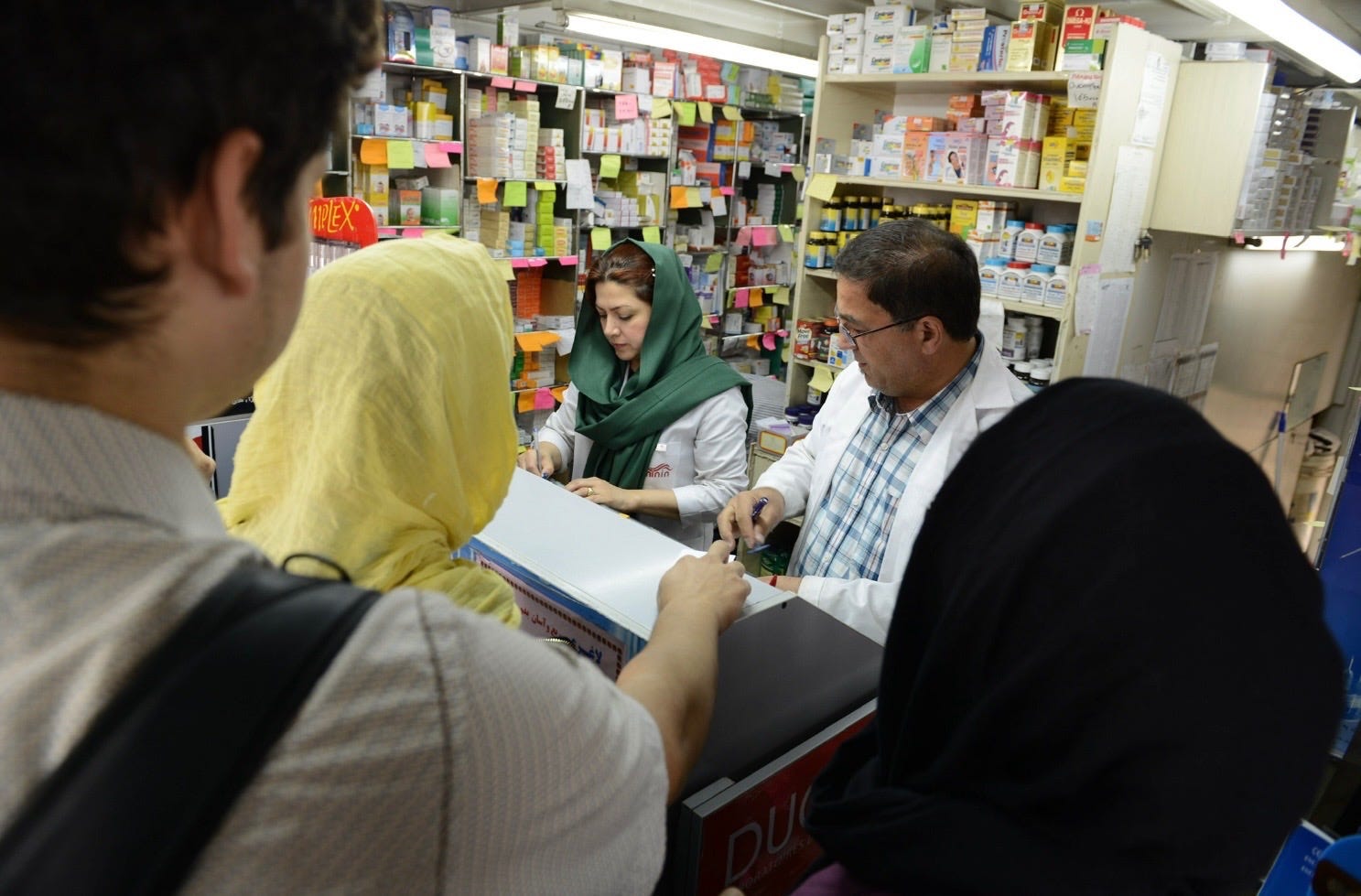
They enter a pharmacy, and at first glance, the shelves look abundantly stocked. But upon closer inspection, it’s an illusion — bottles and packages of skincare and vitamins.
“It looked full of things that nobody needed. The diabetes and the heart things that we needed were not there,” said Samira.
Medication shortages are not new for Iran.
It had faced medical shortages long before the 2026 war — largely due to sanctions — the current conflict has pushed the crisis into a new, far more severe phase.
Although the medicine itself is not formally subject to sanctions, frozen banking operations and logistical restrictions have severely disrupted Iran’s healthcare system. The consequences have gone far beyond medicine shortages and rising prices, contributing to the broader weakening of medical infrastructure across the country.
After the European Union designated the Islamic Revolutionary Guard Corps (IRGC) as a terrorist organization, many European pharmaceutical companies and banks effectively stopped conducting transactions with Iranian partners due to the risk of secondary U.S. and EU sanctions. The growing prices and shortages have directly affected more than 6 million patients in Iran.
The consequences are already visible inside hospitals, where outdated or unsuitable anesthetics are increasingly being used. Such indirect restrictions risk triggering a humanitarian crisis by undermining both emergency and planned surgical care. Doctors are forced to delay life-saving operations due to shortages of anesthesia and medical supplies, while disruptions in cold-chain delivery systems threaten the storage of vaccines and insulin, putting millions of chronically ill patients at risk. At the same time, the crisis has accelerated the spread of counterfeit medicine on the black market.
During previous periods of regional escalation, Iran’s air and maritime routes largely remained operational. This time, however, the disruption of key trade corridors, including the now infamous Strait of Hormuz, has significantly affected global medical supply chains, sharply increasing, in average from 20 to 380 percent, treatment costs and forcing countries to urgently seek alternative sources of raw materials and pharmaceuticals.
Now, pharmacies across Iran are running out of life-saving drugs — especially cancer medication, insulin, and treatments for chronic illness. In more ways than just missiles and drones, the Iran war is putting new limitations on survival.
After searching pharmacy after pharmacy, Samira’s stepfather finally found his heart pills — a journey that felt, for a moment, like a matter of life and death.
But it was just one blister, not a full package, and 10 times more expensive, she said.
“We are doing you a favor,” Samira recalled the pharmacist saying. “We have kept this for one of our relatives, but since you needed more, we’re going to give it to you.”
Her stepfather wasn’t the only family member of Samira’s in need of specific medications to survive. Samira, too, requires an extremely specific medication that’s only available in certain pharmacies from a specific brand for a condition she has been living with for 11 years now — epilepsy.
At the start of the war, in early March, Samira had gotten lucky, ordering her medication from Turkey just in time.
“ For me, it was mostly stressful to know what to do after I’m going to run out of it,” she said.
Taking 600 mg in the morning and 500 mg at night is the daily routine that Samira has to maintain, regardless of circumstances, to avoid seizures.
She found out about her diagnosis on her twentieth birthday.
“Something was not okay. I just didn’t know what. I was not used to that kind of feeling. I felt like I was dissociating from the outside,” Samira recalled. “But I told myself that it’s okay, it’s my birthday,” Samira recalled.
Her next memory is of waking up in a hospital bed, surrounded by worried relatives waiting for news of her condition.
“What’s going on?” she thought.
And then the harsh journey began: being moved from room to room, changing doctors and medications, experiencing unfamiliar symptoms — and learning how to live with them.
Epilepsy exists on a spectrum. For those who have seizures less than a few times a month, medication is often enough to mitigate severe risk. For others, the disease is uncontrolled to an extent where the person is fully supervised and is having constant seizures.
“As for me, it’s somewhere in between,” Samira said. “I don’t need complete supervision. I’m doing okay. But since it’s not something that you can always be sure of.”
Samira recalls being scared to use the bathroom behind a closed door right after her diagnosis.
Ever since she was diagnosed, Samira has faced recurring medication shortages.
The first major crisis occurred between 2011 and 2013, when international financial sanctions sharply reduced pharmaceutical imports, threatening the lives of millions of patients, mainly suffering from cancer and hemophilia.
In response to the scarcity, between 2016 and 2017, there were many protests inside the country led by chronically ill people or disabled people throughout the years.
Another escalation followed in 2018 after the Trump administration withdrew from the Iran nuclear deal and reimposed banking restrictions, making the purchase of foreign medication increasingly difficult.
By 2022, the situation had turned into a full-scale domestic medical crisis. When the Ebrahim Raisi administration eliminated state subsidies for imported pharmaceutical ingredients, local producers had to pay dramatically higher prices for raw materials, triggering widespread shortages of even basic antibiotics, especially for children, such as Amoxicillin, Cefixime, Cephalexin.
After the U.S. and Israel launched their first joint strikes on February 28, medical shortages turned from episodic to a systemic occurrence.
The current Iranian administration under President Masoud Pezeshkian has implemented strict centralized control over pharmaceutical warehouses; seizing reserves for emergency and military use.
This action has critically reduced domestic medical supplies to less than two months of consumption, according to a report from AvaToday, causing severe shortages of essential medicines and driving patients to high-priced black markets.
For Samira, each wave of shortages has carried personal consequences.
One of the doctors later changed Samira’s medication, explaining that the previous treatment was designed mainly for patients with generalized epilepsy, while her condition also involved focal seizures and therefore required a different approach.
“[My doctor] changed it into something else that I still use now, which is Carbamezapine, the one that I can’t find in Iran, just to clarify,” said Samira.
By 2020, she had found another doctor whose treatment helped bring her seizures under control. For nearly three years, Samira remained seizure-free, although that stability came with a cost.
Her medication gradually became harder to obtain in Iran. Imported Carbamazepine produced by Novartis first disappeared in 2024, Samira said, from pharmacies and was replaced with Iranian-made alternatives. Even then, finding the medicine often required Samira to search multiple pharmacies, and sometimes even travel to other cities.
These conditions forced Samira to seek alternative ways of securing a stable supply of medication, including obtaining medicine through informal smuggling.
Around a year ago Samira and her family found a woman in Turkey who originally helped Iranians buy clothing from foreign brands, such as Zara. Later, Samira asked whether she could also help send medication if needed.
The woman agreed. “But the problem was that it was very expensive. You always have to think ahead, because if you don’t, you’re going to get in trouble.”
Samira tried to switch to the locally-available medication.
“I’ve tried it a few times, and it doesn’t work. Basically, after a few days, you feel the same dizziness that you have,” she said.
After the war began, Samira didn’t have access to any people who could get her the right medication from abroad. Samira was left with her savings, which was not enough to sustain her long-term medication.
A countdown on her medication began, and she had to make a difficult decision — fleeing her home country.
She created a packing list. “I just had written, ‘get three T-shirts, get your medication.’ And I just packed everything into one backpack and a carry-on, and I just left,” she said.
After one month of war, in the beginning of April, she and her family fled Iran by bus and settled in another country.
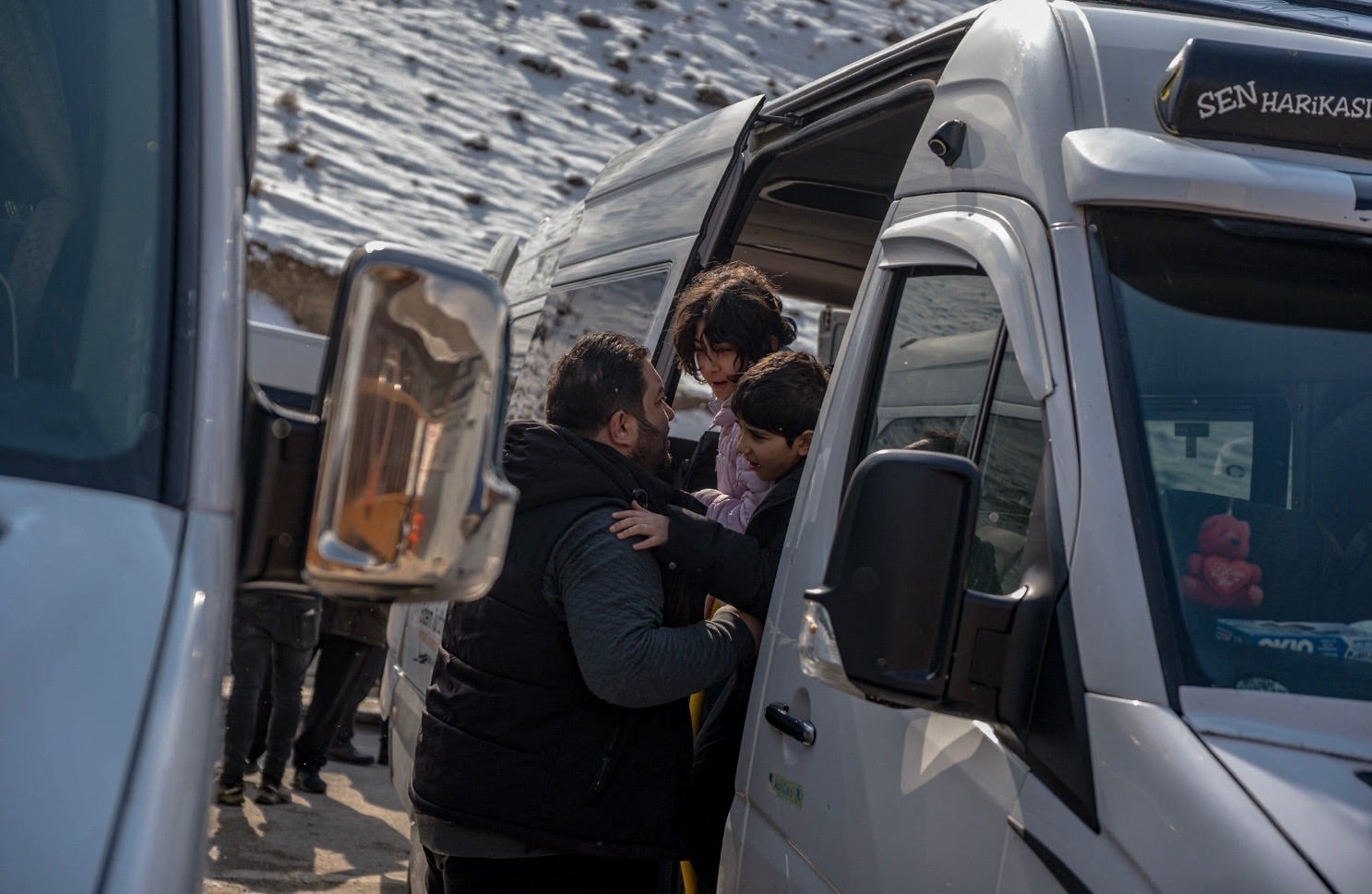
“When you come out of Iran in general… [you] find everything within your reach,” said Samira.
She felt relieved that she found the medication, even without a prescription, which she couldn’t obtain during the war.
“I don’t want to even imagine what someone with no savings would do, with, you know, a chronic illness. Because this is what I’m doing as someone who has a family to support her to an extent. I have a husband that supports me,” said Samira.
In Iran, where over 32 million people make less than $8.30 a day as of 2023, only the upper class has the chance of a way out.
The middle class, like Samira, must live like squirrels, storing medication before winter comes.
*Samira’s name has been changed for security purposes. The country she fled to was undisclosed for similar reasons
Featured subscriber comment:
“You have been the best coverage of the Iran war I’ve read (and I’ve read a lot and speak Farsi). Rather than relying on commentary or basic reporting you get to the heart of how the conflict is impacting people and communities. I’m impressed and grateful for your coverage.”
By: Bryce Turner
With access to Iran still limited, it takes significant effort to report on the people whose lives have been upended by the war. Your support helps us continue bringing these human stories to light and sustain our independent reporting.
Upgrade your subscription to support our mission.
THE LATEST NEWS AT THIS HOUR:
By: Oleksandra Poda
NO RESULT FROM TRUMP’S ‘FINAL DETERMINATION’ MEETING ON IRAN: On Friday, Trump held a meeting in the White House’s Situation Room, after he announced that he would make a final decision on the memorandum of understanding, concerning the ceasefire with Iran. However, the meeting ended without making tangible progress on the issue.
On Thursday, U.S. and Iranian negotiators reached a preliminary memorandum of understanding that, if it receives final approval from Iranian and U.S. heads of state, will allow for a 60-day extension of the ceasefire.
Before the Friday meeting, Trump restated his conditions: Iran must permanently renounce nuclear weapons, the Strait of Hormuz must be immediately reopened without restrictions or fees.
ISRAEL CROSSED THE LITANI RIVER IN LEBANON: On May 29, Prime Minister Netanyahu announced that Israeli forces crossed the Litani River in Lebanon, approximately 30 km (18.6 miles) north of the Israeli-Lebanese border, as part of an expanded ground operation. Lebanese state media reported that at least 14 people were killed in Israeli airstrikes on towns in southern Lebanon.
Israeli forces crossing the Litani River are breaching a red line established by UN Security Council Resolution 1701 in 2006, which created a buffer zone between the Litani River and the UN-demarcated Blue Line in which entities — excluding those carried by Lebanese forces and United Nations Interim Forces in Lebanon — are forbidden to carry weapons.
GUYANA EMERGES AS AN UNEXPECTED WINNER IN THE IRAN WAR: The Iranian war paralyzed the Strait of Hormuz and cut off middle eastern oil from global markets. Meanwhile, Guyana, which was once one of the poorest countries in South America, is benefiting from the search for new oil suppliers.
Before the war, Guyana was the world’s fastest growing economy, and now the rise in global crude prices has given a significant boost to the country’s economy. In 2024, Guyana became Latin America’s fifth-largest oil exporter after Brazil, Mexico, Venezuela, and Colombia. Reuters predicts that the revenue from Guyana’s oil industry will increase by 67% in 2026 compared to last year.
However, many worry that the energy boom won’t last and warn that Guyana’s economy needs to take measures to build resilience to mitigate against energy market disruption. For example, the opening of the Strait of Hormuz would cause oil prices to plummet and deal a blow to the Guyanese budget.
Stay safe out there!
Best,
Anastasiia

I Pray tRump stops playing games with people’s lives here and in Iran.