

At the bottom of this page: Latest news at this hour.
Iran war high on Trump-Xi meeting agenda… Iran: Hormuz Strait is open to those who cooperate with Iran…Saudi Arabia launched attacks on Iran during war…UAE denied Israeli claim that Natanyahu took trip to UAE…U.S. Senate fails for the 7th time to stop war in Iran.

Editor’s note:
The Strait of Hormuz is constantly in the headlines, but our reporting focuses not on the geopolitical angle, but on bringing the people living there into the spotlight. If you think that kind of reporting matters, subscribe.
OUR LEAD STORY:
YEREVAN, Armenia – Zahra moved quickly between tables, balancing trays of mojitos as music drifted through the boutique hotel where she worked on the Iranian tourist destination Qeshm Island.
Wealthy tourists from across Iran laughed under fairy lights as they conspicuously added alcohol to their drinks, while women in shorts wandered back from the beach in their bikinis and shorts.
For Zahra, 36, who had grown up in a strict religious family, and left Tehran searching for freedom, the island felt intoxicating.
“In Qeshm, nobody really cared about hijabs,” Zahra said. “Even in front of the police, people dressed however they wanted. Tourists even wore bikinis to swim, something that seems surreal to someone in Tehran.”
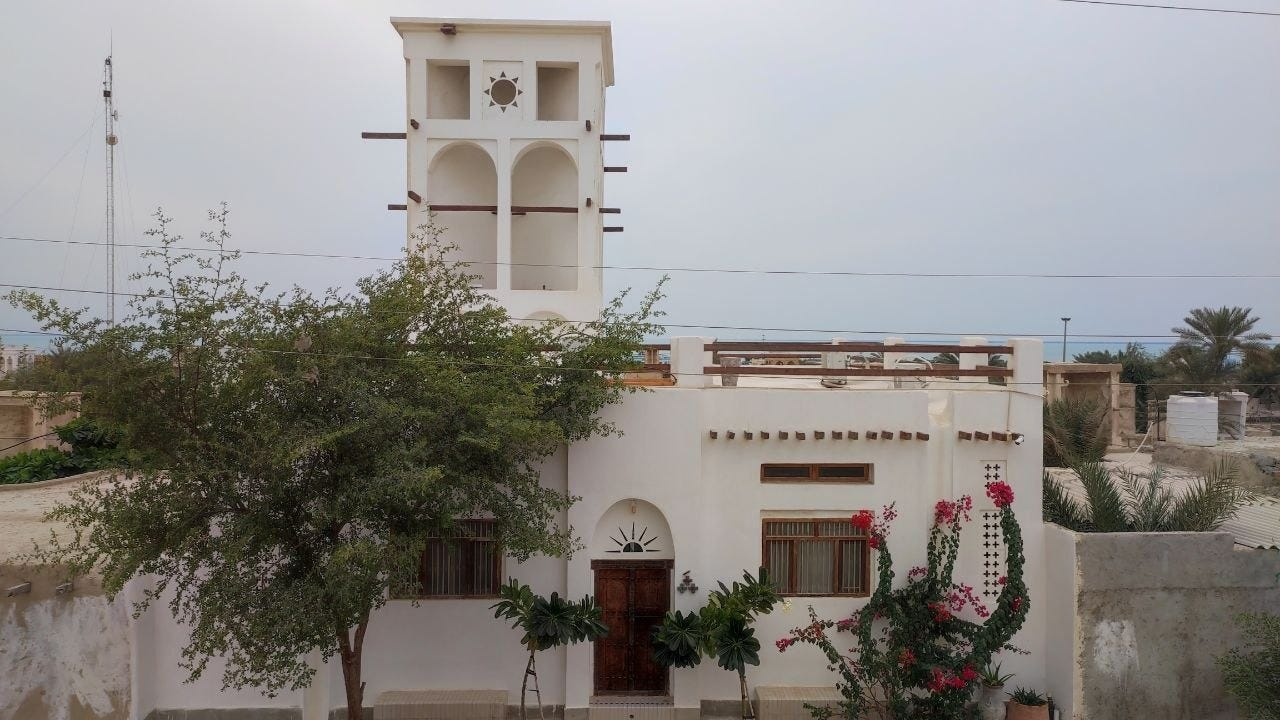
That was before the war washed up on the island’s shores. Soon, the beaches emptied, cafes closed, and the energy that once defined Qeshm faded into silence.
Many of Iran’s islands in the Persian Gulf — such as Qeshm, Qish, and Hormuz — were once major tourism destinations. In 2025, more than 10 million domestic and international travelers visited Qeshm. But as the conflict between Iran, the United States, and Israel has increasingly shifted from Tehran to the Strait of Hormuz following the ceasefire a crucial local industry has run dry.
Qeshm sits squarely within the Strait of Hormuz, the narrow corridor carrying roughly one-fifth of the world’s oil supply.
On May 8, explosions were heard near Bandar Abbas, the key port city on the mainland overlooking the strait, further deepening fears across the region and forcing many workers like Zahra to leave the island.
For Zahra, moving to Qeshm in September 2025 was an adventure, with very little planning and an impulsive idea that started with her hitchhiking from Tehran to Yazd, and then a ferry to the city of Bandar-e Laft.
“I always get into adventures,” she says with a laugh. “That’s how I want to live.”
Despite growing up in an Islamic household in Tehran, Zahra became an atheist during her teenage years and lived a life defined by freedom and protest. After a devastating heartbreak and betrayal by her boyfriend, who also stole some of her money and left her financially insecure, she decided to start over on an island.
Unlike much of mainland Iran, Qeshm has more relaxed social rules. Tourists can walk by the beach without strict dress codes, women can wear shorts and sleeveless tops openly, and parties can stretch late into the night.
The island has quietly built a reputation as a loophole inside the Islamic Republic, a place where the rules are softened and people can briefly experience another version of life.
But Zahra said that freedom came with a cost; tour operators frequently pay bribes to local authorities or officials linked to the Islamic Revolutionary Guard Corps (IRGC) so tourists could enjoy fewer restrictions during their stay.
“If you had money, you could escape the rules,” Zahra says.
In her last months on the island, Zahra worked in a cafe owned by an architect where she bartended.
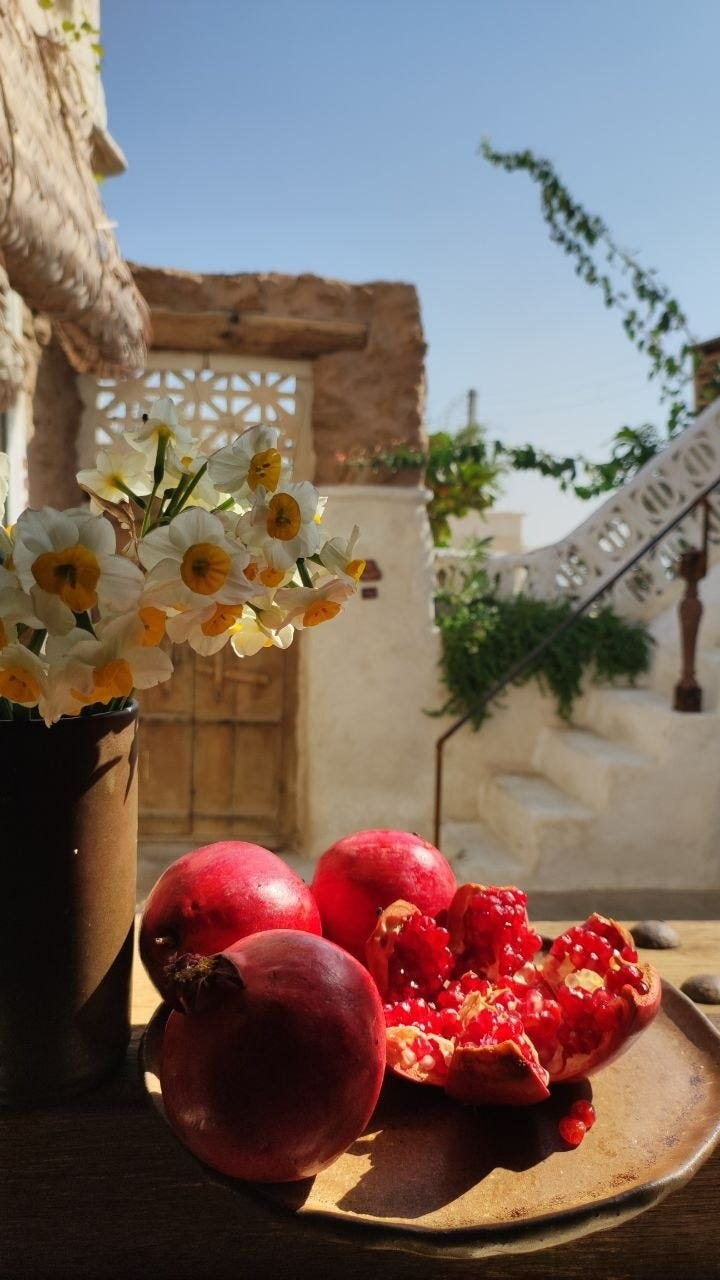
Most visitors loved the mojito she made, which she would make without alcohol to adhere to Iran’s strict alcohol ban. Guests would sneakily pour alcohol in it afterwards.
Despite Iran’s strict alcohol ban, Zahra says drinking was quietly tolerated in places like Qeshm, especially among tourists.
“It was an unwritten rule,” she says. “As long as people added the alcohol themselves, nobody saw anything. We all pretended not to notice — the staff acted like nothing was happening.”
What she enjoyed most, however, was talking to people.
She spent hours talking to tourists, listening to their stories and telling them about the best spots on the island.
The people who came through the cafe doors each day were often very affluent people, as the cafe was located in an expensive hotel overlooking the beach. Many came from Tehran or northern Iran looking for a brief escape to the beach, but some were visiting the town from European countries, mainly Germany.
One of Zahra’s favorite memories from the island involves an Iranian family, a father and daughter, who barely spoke any Farsi that visited from Germany in December 2025. She remembers serving them coffee and spending hours talking to them about Qeshm, its beaches and hidden corners.
Before leaving, the family handed her a large tip — something she still remembers months later, as the tips she earned on the job would later help her escape wartime Iran.
But beneath the postcard image of sun-soaked beaches, sunsets, and palm trees, Qeshm is also known for its underground military infrastructure connected to the IRGC — including missile facilities reportedly built into the island’s mountains and coastline.
Everything changed when the U.S.-Israeli attacks on Iran began on February 28.
“In Bandar Abbas, a strategic city on the strait, there was a bombing on the first day, and that’s how it started,” Zahra recalls. “At first many of us thought maybe this would weaken the government, but very quickly we realized ordinary people would suffer the most.”
The war transformed the island overnight.
Rumors spread across the island that the area near the coastline was allegedly connected to underground missile facilities and therefore one of the first targets.
“We heard the sounds of explosions. People were terrified, but not me. I always knew it was going to happen at one point.”
Despite the danger, Zahra says she did not panic immediately; but fear metastasised across the island. Tourists fled and businesses shut down.
At the same time, she reports that the IRGC increasingly moved into civilian spaces on the island. According to her, members of the force requested rooms in hostels and occupied schools and public facilities after the conflict escalated.
“They asked hostel owners, including a place where I used to work, to give them rooms so they could stay safely. That meant ordinary people were put at risk too.”
Refusing the IRGC, she adds, was nearly impossible.
“It is very hard to turn them down. They have total control over everyone.”
IRGC’s practice of occupying civilian spaces is not specific to Qeshm; in March, London-based Iran International published an investigative report stating that Iran’s military forces have used at least 70 civilian sites during the airstrikes — putting civilians in harm’s way during aerial attacks.
Since 1989, Qeshm has been one of Iran’s eight economic free trade-industrial zones, meaning it operates under special regulations designed to encourage investment, trade, and tourism through reduced tariffs, simplified customs procedures, and more flexible business rules compared to mainland Iran.
Once the war began, the flow of tourists and commercial goods in the Strait of Hormuz constricted along with that of oil traffic.
“The ships from Dubai were being sent back,” Zahra says. “One shipment carrying clothes crossed the Strait of Hormuz for the last time and then returned to Qeshm. Those were the last ships we saw coming from Dubai.”
At the same time, many Iranians living or working in the UAE were also returning. Zahra says authorities in the Emirates have imposed increasing restrictions on Iranians during the conflict, making it harder for them to remain in the country.
“People were coming back because the UAE was making more and more restrictions for Iranians,” she says. “Eventually, many could no longer stay there at all.”
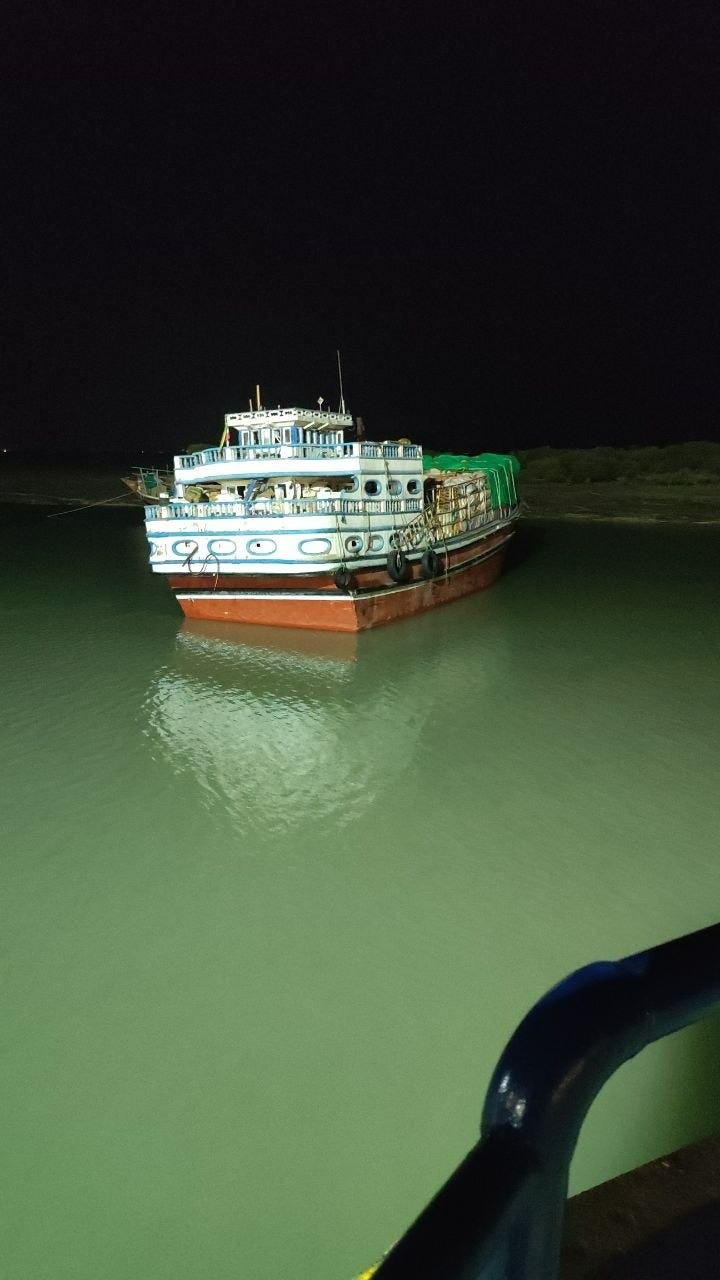
As military tensions intensified, the island’s economy collapsed. Tourism disappeared within days as trade routes slowed and many residents lost their source of income.
“The island became empty,” she says. “The cafes closed, beaches became deserted as tourists left.”
For Zahra, the hardest part was watching the island lose its spirit.
“It was a vibrant city when I arrived,” she says. “When I left, it was completely quiet.”
She remembers walking through once-crowded streets, but all that remains is a ghost town.“The last three days were too heartbreaking,” Zahra recalls. “We had been playing music, singing, and suddenly nobody was there anymore.”
As the economic crisis deepened and the island emptied out, food prices soared, leaving Zahra unable to afford staying on the island without a job.
“Just like the way I moved to the island, my departure happened the same way — impulsively,” Zahra says. “At 12 at night, my friend and I suddenly decided to leave. By 4 a.m., everything was packed.”
She called her landlord to say she was leaving, but never had the chance to properly say goodbye to her friends. Together with a friend, she left Qeshm for the desert city of Yazd in central Iran before eventually returning to Tehran.
“I left most of my belongings with friends who stayed on the island,” she says. “I left with a light suitcase and a heavy heart.”
Returning to Tehran did not bring comfort either. Zahra says she never truly liked the capital and had moved to Qeshm precisely to escape its heaviness.
In early May, she left Iran entirely and moved to Yerevan, Armenia, where she is trying to find a job in the service industry.
“War ruined everything for us,” she says, “There was nothing left to stay for in Iran.”
Editor’s note:
The Strait of Hormuz is constantly in the headlines, but our reporting focuses not on the geopolitical angle, but on bringing the people living there into the spotlight. If you think that kind of reporting matters, subscribe.
THE LATEST NEWS AT THIS HOUR:
By Serafima Melnychuk
IRAN WAR HIGH ON TRUMP-XI MEETING AGENDA: The Iran war was a key topic in the long-awaited meeting between Trump and Xi in China.
A White House official said that Xi made it clear during his meeting with Trump that he opposes Iran’s militarisation of the strait and how Iran has monetised transit through the key waterway.
Xi also spoke about potentially turning to U.S. oil to reduce China’s dependence on Iranian oil. China is currently the largest buyer of Iranian oil. In recent weeks the U.S. has sanctioned Chinese oil refineries relying on imports of Iranian oil.
IRAN: HORMUZ STRAIT IS OPEN TO THOSE WHO COOPERATE WITH IRAN: On Thursday, Iranian Foreign Minister Abbas Araghchi said that the route remains blocked due to U.S. activity. He added that from Iran’s perspective “the Strait of Hormuz is open to all commercial vessels, but they must cooperate with [Iranian] naval forces.”
Iran said that at least 30 vessels have transited the Strait of Hormuz since last Wednesday. Bloomberg has also reported that some ships are now transiting the strait.
However, the UK Navy announced that a vessel 38 nautical miles off the coast of the UAE was seized on Thursday and is now headed for Iran. The UK Navy did not disclose the vessel’s identity.
SAUDI ARABIA LAUNCHED ATTACKS ON IRAN DURING WAR: Saudi Arabia attacked Iran several times in response to Iranian attacks against the country, which targeted Saudi energy infrastructure, the Financial Times reported. Saudi Arabia made it clear to Tehran that the attacks were intended to signal that Saudi Arabia was ready to defend itself — not that the country was acting in coordination with the U.S. and Israel in their war on Iran. Saudi Arabia also launched attacks on Iran-backed militias based in Iraq during the Iran war, Reuters reported. Saudi Arabia has repeatedly pushed for a diplomatic resolution to the war and prevented the U.S. from using its airspace to attack Iran.
Despite the warnings and the reluctance to get involved in the conflict, Iranian sabotage groups continue to be detained in the region. On Tuesday, Kuwait’s Interior Ministry carried out an operation to capture half a dozen men who turned out to be members of Iran’s Islamic Revolutionary Guard Corps and accused them of trying to infiltrate Kuwait’s largest island.
UAE DENIED ISRAELI CLAIM THAT NETANYAHU TOOK TRIP TO UAE: Netanyahu’s office released a statement claiming that the Israeli leader secretly visited the UAE in spring. The UAE has denied these claims.
This comes as the tensions between the UAE and Iran reach new highs. Iran recently launched a mid-ceasefire attack on the UAE, while reports emerged of the UAE secretly attacking Iran during the war. However, the Emirates recently stepped up efforts to align itself with Israel. The UAE has suffered more Iranian drone and missile strikes than any other country since the Iran war began.
U.S. SENATE FAILS FOR THE SEVENTH TIME TO STOP WAR IN IRAN: The U.S. Senate has made its seventh attempt to limit the president’s authority to conduct military operations against Iran. Despite three Republicans joining the Democrats, the resolution was blocked by a narrow margin of 50 votes to 49.
Stay safe out there!
Best,
Arpine
I doubt the change came overnight, but having grown up in a small town that had 3 grocery stores, a handful of clothing shops, cafes, and various other retail offerings, I was shocked to return years later to see the effects of Walmart's presence. I remember it was hailed as a boon for the community - people would come from miles around, there would be jobs, etc. Nope. They just priced everyone else out of business. Grocery stores, including a Safeway's were closed. Clothing stores, gone. There were a few cafes on a revamped "historic district" but the town looked pretty dead. Walmart usually doesn't pay its fair share in taxes - usually cutting deals with local politicians - so not only can they undercut the small business owners, but they contribute little to the community either in tax revenue or quality of life, i.e. funding youth sports teams, libraries or cultural events that often depended on local merchant sponsorship.