

At the bottom of this page: Latest news at this hour.
Israeli official says Pakistan to mediate the war, no confirmation from Iran… oil prices fell, then rose above $100 again… Iran replaces security chief killed in strikes… UK plans emergency meeting over economy… Kenya fuel shortages worsen amid Iran war.
Featured subscriber comment:
War asks us to see enemies. Independent journalism asks us to see people. When stories remind us that those caught in conflict are human beings — not ‘them’ — they protect the empathy from which peace can grow.”
By Steward Sandstrom
OUR LEAD STORY:
Last October, when one of Maryam’s* students asked her what she thought about the hijab, which is mandatory in Iran, Maryam knew it was risky to answer.
“Do you really want to know?” she asked them, wondering if they would be able to keep her reply a secret.
For an hour and a half, the dozen or so young girls, aged 12-15 asked Maryam in hushed tones all sorts of questions that are usually forbidden in Iran — about the hijab, marriage, Iran’s history, and Maryam’s thoughts on the current Iranian government.
A week later she was summoned to court.
Maryam’s conversation with her students had been reported, and she had been accused of jeopardizing Iran’s national security. The judge told her if she were reported again, she would lose her job.
Although educational institutions in Iran are tightly controlled, they have also been spaces where young people come to understand the world around them.
But during the war, these spaces of exploration have become more restricted and more dangerous.
On the first day alone, a U.S. strike destroyed a school in southern Iran that was an old IRGC base, killing around 170 people. This was followed by a U.S. and Israeli bombing campaign less than a week later in which two schools in the southwest of Iran were damaged. In some cases, schools have also reportedly been used by regime officials for meetings, raising concerns that they could be further targeted by the U.S. and Israel.
In response, schools were remote during the war, and important discussions about why things are the way they are, like the ones that happened in Maryam’s classroom, are only becoming more impossible to have.
Maryam herself has experienced how during times of turmoil, like wartime Iran, these spaces are closed off but also the most needed, raising questions about how education is being reshaped by the war.
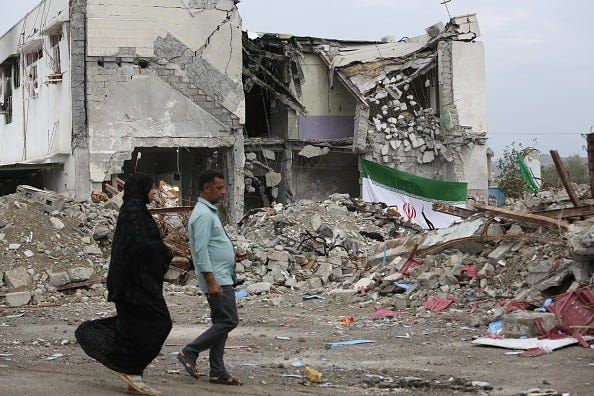
Since the start of the war, school in Iran has been closed and will be for the foreseeable future.
Maryam, a teacher in southwest Iran in her 40s, believes that in a few weeks the war will end and schools will reopen.
But if they don’t, the future is uncertain.
“If they try to reopen the schools during the war, parents won’t send their kids there. The regime will just use the schools as a human shield,” Maryam said.
For Maryam, school has always been an oppressive place, even during her student years: “I remember [the school] used to say if they could see any hair coming out of your hijab, they would hang you from it,” Maryam said.
When she became a teacher, it was clear that schools were not just places of control, but they were also actively targeted.
During the massive wave of protests in 2022 sparked by the death of Mahsa Amini, a 22-year-old Kurdish girl in Iran, girls’ schools were repeatedly subjected to chemical attacks, including the school neighboring Maryam’s daughter’s school. Iranian authorities arrested people in connection with the attack, which affected around 300 schools.
As a teacher, Maryam still found herself running up against all sorts of rules.
Last summer, Maryam’s students found themselves stuck in the sweltering heat: “There were 20-25 girls in the classroom, and it was suffocating. I told them, ‘It’s very hot, there are no men here, you can take off your headscarves,’” Maryam explained. But later she found that a complaint had been filed against her—she was accused of discrimination against the more conservative students.
During the protests in January 2026 that started over Iran’s spiraling economy, at least 128 university students died following the violent armed crackdown, making this the “biggest massacre of university students” under the current Iranian government, according to Ali Taghipor, an expert who tracks the Iranian student movement.
When protests in Iran reignited across Iran just 40 days after the first wave of violent crackdowns, university students poured out onto their campuses to protest the regime. Human Rights Activist News Agency (HRANA) had recorded 36 universities involved in protesting from late December 2025 to February 2026.
One former student at Tehran University of Art even said that during the protests, her university actively protected the students, only allowing people with student cards onto the campus, in an attempt to keep the IRGC off the university grounds.
Even younger school students were involved in the protests. HRANA has recorded 555 children, teenagers, and school students were arrested in connection with the protests.
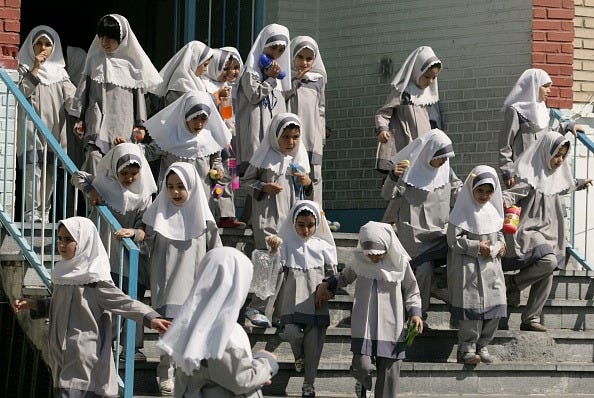
For Maryam school was similarly a paradox — for all its restrictions, the classroom was one of the few places that Maryam could have an impact.
In October of last year, a few months after the complaint had been filed against her for discrimination, one of Maryam’s students asked her about the hijab. She was initially hesitant, but she felt moved by her students.
They pleaded with her, “’Please talk to us. Don’t teach us today. Talk about Iran, about the past, about the current government!’ The students were so passionate to know the reality…[the conversation] was like a window had been opened to them,” Maryam explained.
She talked about everything from politics, homosexuality, and religion to life choices facing a young woman. “I told them not to get a boyfriend before the age of 18 and not to get married before the age of 25,” Maryam said.
Maryam was married at age 17 and had seen generations of women make that decision and knew the potential consequences.
When the students pressed Maryam for her views on the Iranian government, she gave them her honest opinion: “I said they’re telling lies. They’re a group of robbers.” But she also told them that they were too young to be thinking about these kinds of things.
After the class, she gave one of her students a ride home, because she knew they were headed in the same direction.
The girl confessed to Maryam that she was gay.
“I told her not to be embarrassed of who you are, just be yourself and don’t hurt anybody. I think it really helped her to feel understood…her studies really improved after that,” Maryam said.
But again, this small act of comfort could come at a high cost.
“If [the Iranian authorities] find out about that conversation, it would be like a bomb went off,” Maryam said.
Not every child in Maryam’s class felt reassured by the open-minded views she had expressed in class. Maryam thinks one of the girls whose family supported the regime told her parents about her outspoken teacher, and Maryam was eventually summoned to court.
She believes she knows which girl reported her, but she holds no grudges against her.
“I feel sad because I believe that she is just a child who has been deceived [by the regime]. I really feel that sometimes I could cry for them because they have just been taught wrong.”
A few months after this incident, the infamous January 2026 protests took grip in Iran, including in Maryam’s city. For two nights she heard gunshots as armed regime officials murdered protesters. Schools in Iran closed for ten days in January.
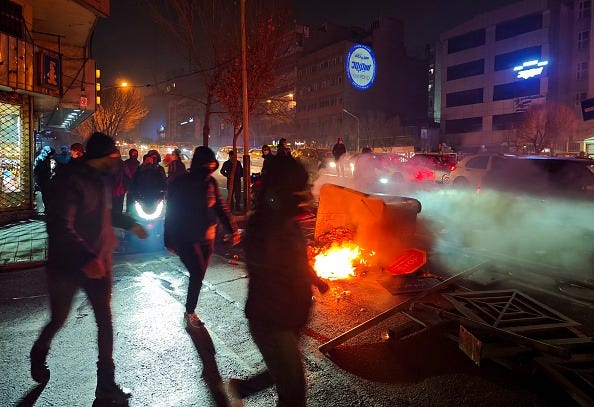
When they reopened, the atmosphere was totally different: “People were so angry – so angry and sad,” Maryam said.
These brutal weeks left people shaken. There was so much to talk about, but it was more dangerous than ever to say anything.
Maryam’s daughter restarted university, and some of her fellow classmates returned to class wearing black shirts commemorating their loved one who had died, while others were absent. Maryam’s daughter could only assume this meant they had been arrested.
At her school, Maryam could feel that her students wanted to talk about what had happened.
“This time I was a different person. I was afraid to talk to them. They wanted to talk to me about the protesters, the people that have been killed, but I didn’t let them,” Maryam said.
One student waited until the end of class and tried to spark casual conversation. “She was looking for an excuse to start a long conversation, but I told them we could only talk about the books they were studying,” Maryam said.
“I wanted to talk to them, I felt sorry for them. I was under so much pressure, I was about to cry, but I controlled myself,” Maryam said.
Featured subscriber comment:
War asks us to see enemies. Independent journalism asks us to see people. When stories remind us that those caught in conflict are human beings — not ‘them’ — they protect the empathy from which peace can grow.”
By Steward Sandstrom
THE LATEST NEWS AT THIS HOUR:
By: Anastasiia Lutsenko
PAKISTAN TO MEDIATE U.S.-IRAN TALKS, SAYS ISRAELI OFFICIAL; NO CONFIRMATION FROM IRAN: Pakistan joins Turkey and Egypt in the list of countries trying to mediate between the countries, Axios reported. The White House confirmed that Trump spoke with Pakistan’s army chief on Sunday to discuss the conflict.
This comes after yesterday, when President Trump said the U.S. is working on a deal with Iran to end the war, in a Truth Social post.
Iran has denied Trump’s claims of peace talks yesterday and earlier today the head of Iran’s central HQ said that his country would “continue until complete victory.”
OIL PRICES FELL, THEN ROSE ABOVE $100 AGAIN: Oil prices went back above $100 per barrel after a sharp drop on Monday following Trump’s announcement of productive talks with Iran, according to BBC.
Brent crude rose to about $103, while U.S. oil also rose again.
IRAN APPOINTS NEW SECURITY CHIEF: Iran named Mohammad Baqer Zolqadr as head of the Supreme National Security Council (SNSC), which coordinates security and foreign policy. This comes after the former head, Ali Larijani, died in the U.S.-Israeli strikes, Reuters reported.
Previously, Zolqadr was a former IRGC commander who held senior security roles.
UK PLANS EMERGENCY MEETING OVER ECONOMY: Prime Minister Keir Starmer called for a rare meeting on Monday night involving the UK’s emergency response committee, COBRA, over concerns of the economic fallout of the war in Iran, according to Politico. This team includes the UK’s senior ministers and intelligence officials and is intended to help the government to make fast decisions in times of crisis.
The UK now faces rising energy prices, inflation, and pressure on the economy, with experts warning the impact could last for months.
KENYA FUEL SHORTAGES WORSEN AMID IRAN WAR: Unlike other countries with domestic reserves, Kenya receives all of its fuel from the Middle East. Fuel stations in Kenya are running low as the war with Iran pushes oil prices up.
About 20% of Kenya’s 3,100 retailers are affected and petroleum dealers are expected to start hoarding in anticipation of consumer price spikes, according to Reuters.
Stay safe out there!
Best,
Alessandra