


At the bottom of this page: Latest news at this hour.
Yemen’s Houthis join war after strikes launched at Israeli military sites … strike on U.S. base in Saudi Arabia injures 10 troops… Russia sends updated drones to Iran… U.S. and Iraqi: Iraqi territory won’t be used to launch anti-U.S. attacks… UAE turns to Ukraine for help with drones… Pakistan to host regional de-escalation talks.

Editor’s note:
This is the work we do best — getting beneath the headline to show what “Hormuz” really means to real people on the ground.
But human interest reporting has become a near-impossible task with the internet blackout in Iran. For today’s story, we pieced together brief calls and messages before they disappeared to paint a picture for you.
If you value that reporting, subscribe now for full access!
OUR LEAD STORY:
A few weeks ago Mehrdad*, who is from Tehran but now lives in Turkey, worked as an import-export manager for a company that had an annual trade turnover of nearly $100 million and exported goods to China, India and Dubai through the Strait of Hormuz.
But now Mehrdad is looking for a side hustle.
After the Strait of Hormuz closed, his company’s operations were hit dramatically and now he is looking for a side hustle.
“If the strait doesn’t open in a week or two, many people, including my friends, will lose their jobs,” Mehrdad said .
Iran’s closure of the narrow chokepoint — the Strait of Hormuz — has sent governments globally scrambling to contain the fallout.
Around 20 million barrels of oil, roughly a fifth of global supply, passed through the strait each day in 2025, along with key materials used in fertilizer and medical equipment production. This means the price of almost everything in the world will be affected.
Diplomatic efforts to push Iran to open the strait have proven fairly fruitless. Just yesterday, Trump once again postponed his latest ultimatum.
To mitigate the situation, Trump has weaned sanctions on Russian oil, while other countries have reached into their strategic oil reserves. China has also dipped into its reserves of fertilizer to ease the disruption as around a third of the world’s fertiliser travels through the strait.
But not every industry has this luxury of the world rushing to its rescue.
“What people like us export — pistachios, dates, everyday goods — that is completely stopped,” Mehrdad said.
While the closing of the strait is aiming at having a global impact, a less known, domestic struggle is emerging for Iranian exporters. If that continues to grow, Iran’s tactic to keep the strait closed as a point of wartime leverage could end up backfiring, too.
“Oil is different,” Mehrdad said. Iran’s government will always find a way to export its own oil, he added. But other less lucrative industries cannot pay the high fees Iran is charging to cross through the strait.
For years, the strait served as the backbone of Mehrdad’s operations, enabling a constant flow of goods across markets. And it’s not just him.
“A lot of my friends are not working,” he said. “They used to do mainly exports. Now everything has stopped.”
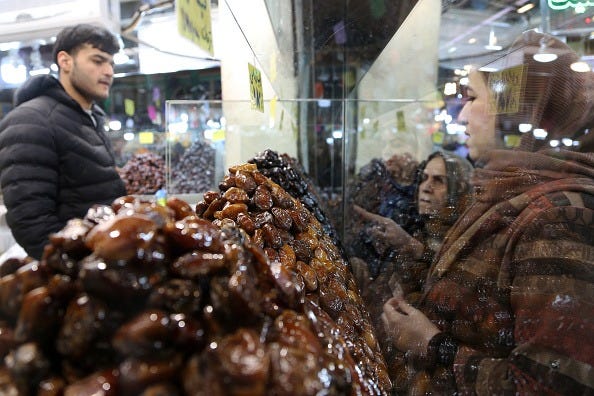
Another exporter, the founder and CEO of Tari Trading Co., Nuts and Dried Fruits, Hossein Salami, who ships dates, pistachios, and raisins from Iran, saw his business stall almost instantly when the war began.
Hossein’s company prides itself on exporting a wide variety of dates from different regions across Iran: Mazafati dates, the dark, soft, sweet kind, or Zahedi dates, a lighter variety that originates from Iraq.
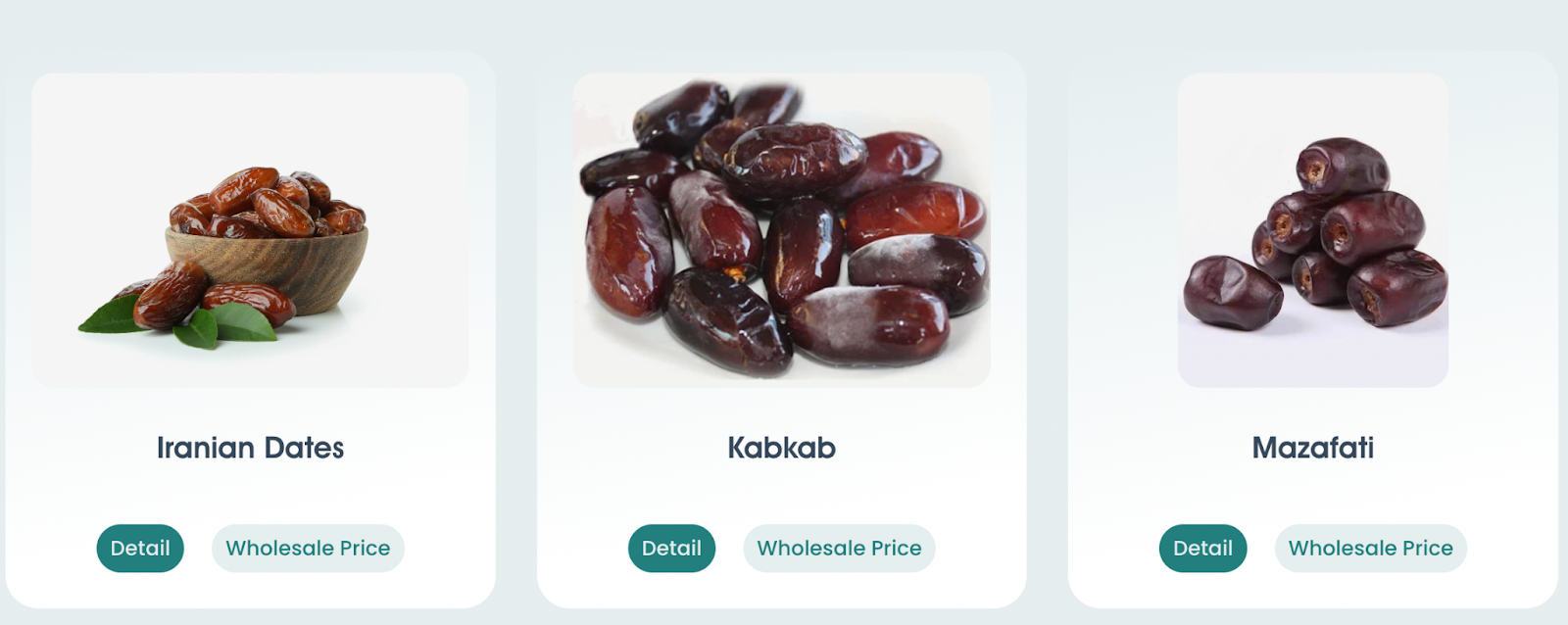
He recently sent samples to a potential buyer in New York, hoping to break into the U.S. market.
But when the strait closed, Hossein’s negotiations halted.
“We still hope to return to our work quickly and are sorting things out so that, God willing, the conditions will be balanced a little so that we can have a strong start,” he said.
For Mehrdad, the routes to his main buyers – China and Dubai – have been closed off.
Iran has positioned itself as a top exporter of nuts globally. Apart from oil exports, China also imports various nuts, mainly pistachios, from Iran. In 2024 alone, Iran exported $268 million worth of nuts to China
The stress of his company’s operations drying up is not Mehrdad’s only stress.
Mehrdad was in Tehran when the war broke out. At 11 a.m. on February 28, he saw the first strikes hit the city. “The city went crazy,” he said, and everyone started fleeing, many to relatives’ homes who lived outside the city to seek safety.
His family lives in Mashhad, in the far east of Iran, but he moved to Tehran for work. Knowing that his parents aren’t in Tehran is a comfort to Mehrdad.
Trade isn’t the only domestic industry the strait has frozen — local tourist economies have also been hit by the conflict.
Around 30 nautical miles directly across from Iran’s southern coast is the community of Khasab, Oman.
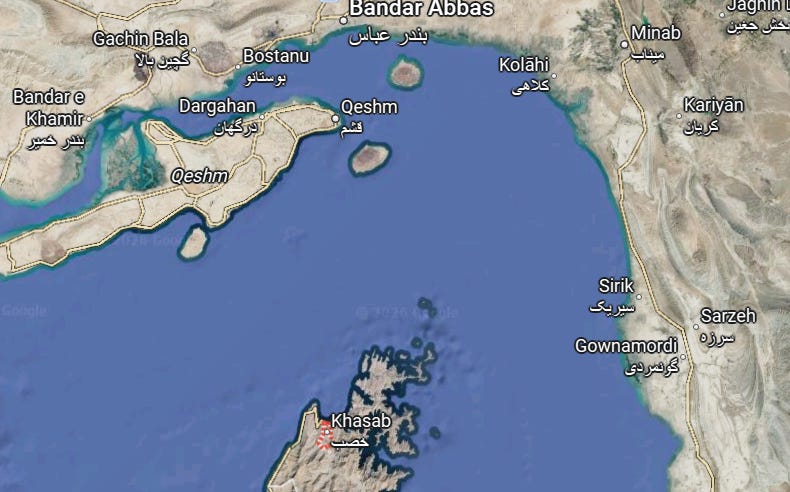
Abu*, a restaurant worker in Khasab right up along the Hormuz choke point watched drones fly overhead just a few days ago, he told Iran War Dispatches on Thursday March 26.
In the 17th century, Khasab was a key route for supplies for Portuguese colonizers who fortified the area to control the trade routes.
But today, it’s a hot tourist spot, known for steep, rocky cliffs that descend into turquoise water and traditional wooden boats that set sail alongside dolphins through the khors, or fjord-like inlets. That’s what earned Khasab the nickname of Norway of Arabia.
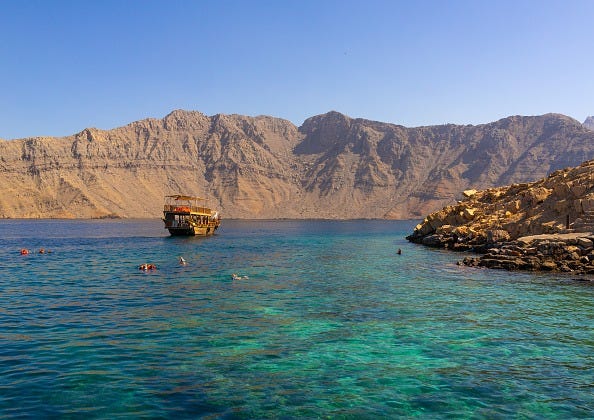
Khasab remained a popular tourist vacation spot — until the strait closed.
Since the war started there are almost no tourists coming to Khasab and businesses are suffering, said Abu*, a restaurant worker in Khasab.
More recently, the mood on Khasab is calmer, Abu explained. But it was really tense when they could hear the first attacks being launched on Iran.
The region’s image as a luxurious vacation spot has taken a hit. In 2025, tourists spent $194 billion in the region, but this year the potential loss for tourists is set at $23 million to $38 million.
But calculating the extent of the damage is hard, as conversations surrounding the strait and the war’s impact on tourism have been restricted by some Gulf governments.
The states are anxious to protect their identity as a safe tourist destination. The UAE announced on Friday March 20 that they had arrested more than 100 people for posting about Iranian strikes on the country.
Today, the closure of the Hormuz Strait has also changed the course of Mehrdad’s life, but being outside Iran is almost worse.
Now, Mehrdad is living outside of Iran for a bit, but when he was inside Iran, the war, and its consequences on his business, felt strangely normal.
He compared the experience to watching football. “When you are playing, you don’t feel the stress as much. But when you are watching, when you have no control, it’s much worse.”
*Mehrdad and Abu’s names have been changed to protect their identities.
Editor’s note:
This is the work we do best — getting beneath the headline to show what “Hormuz” really means to real people on the ground.
But human interest reporting has become a near-impossible task with the internet blackout in Iran. For today’s story, we pieced together brief calls and messages before they disappeared to paint a picture for you.
If you value that reporting, subscribe now for full access!
THE LATEST NEWS AT THIS HOUR:
By: Oksana Stepura
YEMEN’S HOUTHIS JOIN WAR AFTER STRIKES LAUNCHED AT ISRAELI MILITARY STIES: The Houthis, an Iran-aligned group in Yemen, claimed responsibility for launching ballistic missiles at Israeli military sites, marking their first strike since the start of the conflict in Iran, Al Jazeera reported. They stated the attack was in response to strikes on infrastructure, and civilian casualties in Lebanon, Iran, Iraq and Palestine, vowing to continue operations “until the declared objectives are achieved … and until the aggression against all resistance fronts ceases.”
STRIKE ON U.S. BASE IN SAUDI ARABIA INJURES 10 TROOPS: At least 10 U.S. troops were wounded in an Iranian strike on a heavily defended Prince Sultan Air Base in Saudi Arabia, The Washington Post reported. This attack shows that Iran still maintains significant drone and missile capabilities. While Trump claims the U.S. is winning the war and the negotiations are reaching progress, deployed U.S. forces report difficulties with drone defense.
RUSSIA SENDS UPGRADED DRONES TO IRAN: Russia is reportedly sending upgraded drones to Iran. They are based on Iranian Shahed models that Russia has refined during the war against Ukraine, adding improved navigation, anti-jamming systems, and AI capabilities, the Associated Press reported. These more advanced drones could pose a greater challenge for the U.S. and its allies, particularly jet-propelled models, which are significantly faster and harder to intercept.
U.S. AND IRAQ: IRAQI TERRITORY WON’T BE USED TO LAUNCH STRIKES AT U.S.: The U.S. and Iraq agreed to intensify cooperation in a meeting, which was focused on preventing terrorist attacks and ensuring Iraqi territory isn’t used to launch aggression against the U.S. or their partners, The Washington Post reported. This agreement comes after Iran-linked Iraqi militias launched dozens of attacks on U.S. bases since the start of the war in Iran.
UAE TURNS TO UKRAINE FOR HELP WITH DRONES: Zelenskyy met with the UAE’s President, Sheikh Mohammed bin Zayed Al Nahyan, to discuss a forthcoming security and defense cooperation, Al Jazeera reported. The UAE expressed a growing need for advanced drone defense capabilities, particularly following a month of Iranian missile and drone attacks on Gulf countries. Several years of defending against Russian drone attacks has positioned Ukraine to become one of the world’s leading producers of sophisticated drone interceptors.
PAKISTAN CONFIRMS IT WILL HOST REGIONAL DE-ESCALATION TALKS: Pakistan has said it will host a meeting of foreign ministers from Turkey, Egypt, and Saudi Arabia in Islamabad to discuss regional developments, particularly surrounding the U.S.-Iran conflict and de-escalation efforts. Pakistan has taken on a significant diplomatic role in the conflict, backing a U.S.-proposed peace plan to Iran.
Stay safe out there!
Best,
Aprine, Jacqueline and Alessandra
Effect of the blockade: Gas is $1.00 more a gallon than it was a month ago.