

At the bottom of this page: Latest news at this hour.
The UAE is set to leave OPEC in May, risking disruption to global energy markets.… UAE will bypass Hormuz to deliver oil.… U.S., Iran clash at UN over Iran’s role in nuclear conference… A sanctioned Russian billionaire’s superyacht crossed the Strait of Hormuz… Trump unlikely to accept Iran’s recent peace proposal.
Editor’s note:
Few voices are more important than those living through war.
In Armenia, just across the border from Iran, recent arrivals are telling us their stories — accounts of life inside Iran they can now share on non-Iranian soil.
This is one of them.
We need your support to keep providing the local perspective on the war. It’s simple: subscribe for free below.
OUR LEAD STORY:
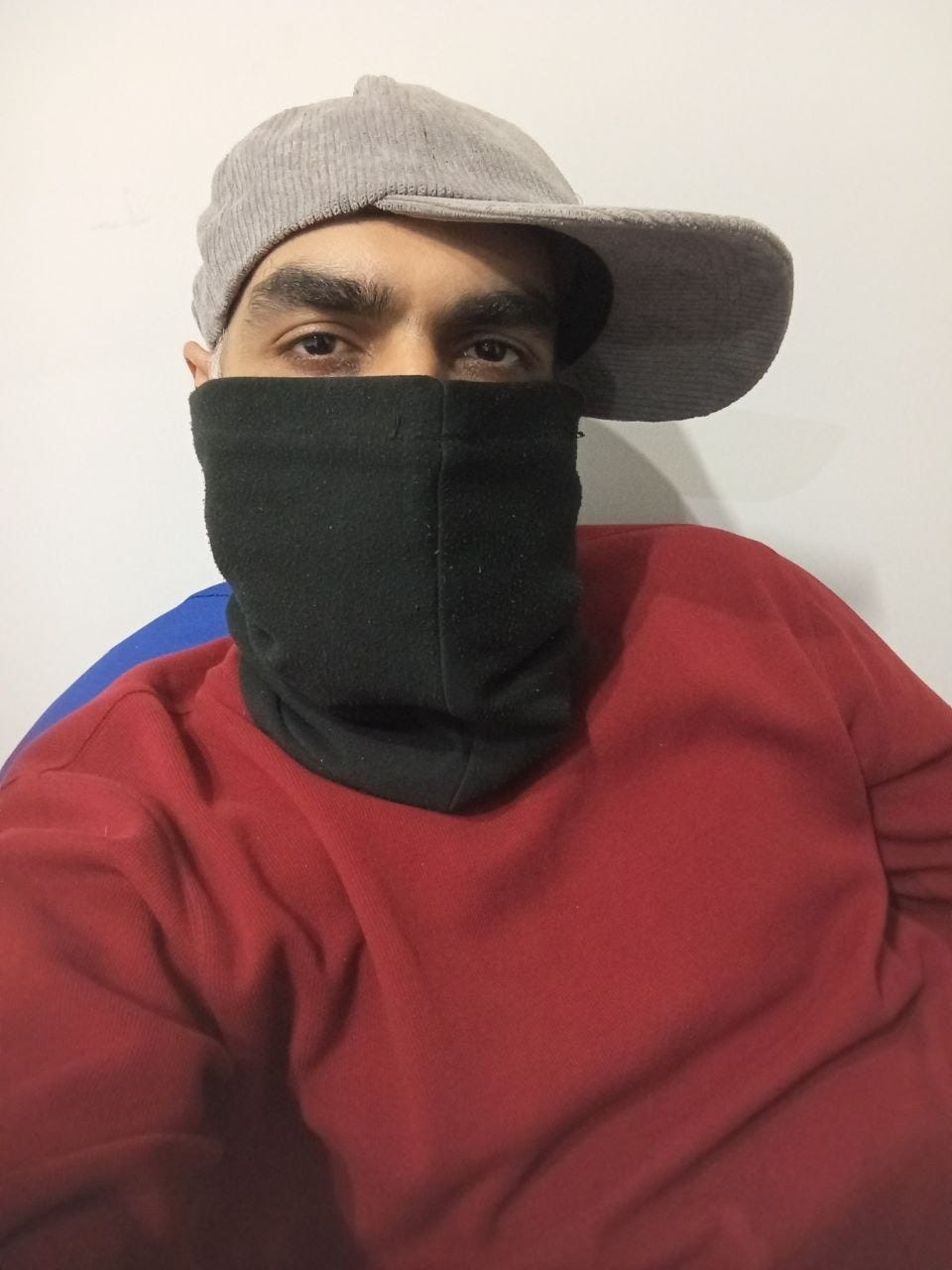
YEREVAN, Armenia – AnyFox, 41, can count the number of people who know he is gay on one hand. But he has known it himself since he was 5.
In his Islamic studies class in elementary school, he learned what would happen if he were romantic with another boy.
“People like me are sentenced to death by God?” he remembers thinking.
That’s the Iran he grew up in, and that is the Iran he fears he will see forever.
When the war started, U.S.-Israeli strikes appeared to decimate Iran’s political leadership, which for many, brought the conversation about regime change into the limelight.
Recently, President Donald Trump has extended America’s ceasefire with Iran and signaled interest in a deal. Days later, Iran’s foreign minister showed up in Pakistan, where the second round of negotiations was supposed to be held, but Trump cancelled his delegation’s departure.
Despite the disruption, both sides seem interested in resuming peace talks.
Meanwhile, Donald Trump has repeatedly said that his military operation has achieved “regime change.” But the government, led now by successors who are tied to the same Islamic Republic and are believed to be more hardline than their predecessors, is still intact.
While the world holds its breath for a potential peace deal, focused on nuclear deals, the Strait of Hormuz, and frozen assets, for AnyFox, as for many Iranians, the outcome already feels clear: the regime they hoped would fall is likely here to stay.
If the war ends in a deal, AnyFox, a name he uses professionally in the animation and art industry, doesn’t expect much to change for marginalized communities in Iran.
“Once [the Islamic Republic] is done with this war, they are going to hunt people,” he said, “and they have their own nasty, sneaky ways to try to monitor everyone.”
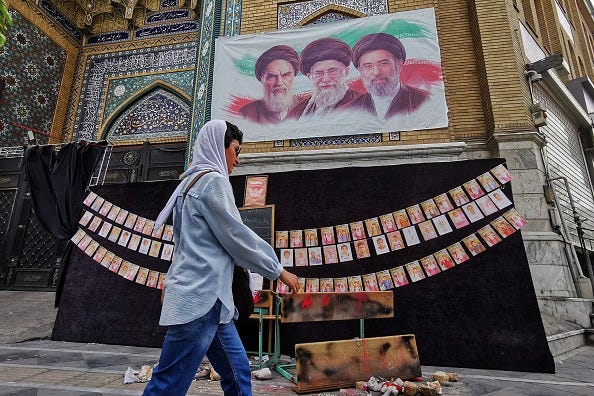
In his experience, the system only tightens its grip under pressure. The regime is put on the defensive, given ample opportunity to label people spies, enemies, or traitors. Executions in Iran have spiked since the start of the war.
AnyFox was born in Tehran in 1985, just a few years after the Islamic Revolution brought the Ayatollahs to power.
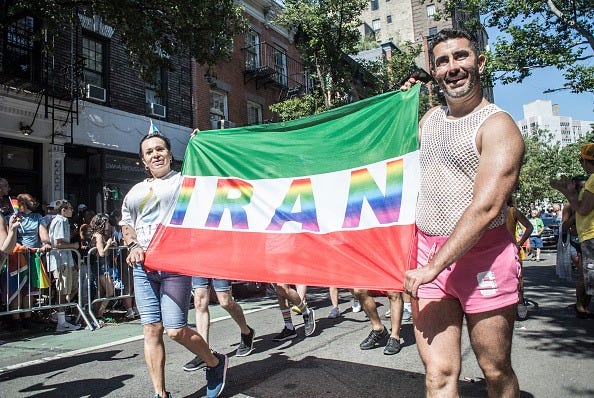
At a young age, he suspected he was different. Now, at 41, AnyFox knows he is gay — a sexual identity that is explicitly illegal in Iran under Sharia law and can be punishable by death.
“I had to stick to living in the closet and to always try to hide my identity,” he said, afraid of the threat of execution.
AnyFox was never close to his family. When he was a toddler, his mom died from a seizure — she suffocated from the blankets she was wrapped in on their couch. AnyFox was the only one with her, as his brother and sister were out of the house, but at 3 years old, he couldn’t understand what was going on.
His dad was always violent. He lived with his grandparents for a while, until they both passed away, too.
From a young age, he turned to painting and drawing as a form of expression, but he was troubled. “I remember how I used to hate people,” he said. “I felt like drawing them was something they didn’t deserve to receive, some sort of attention they didn’t deserve.”
So he drew animals instead, and he cared so much about them that he became a devout vegetarian.
“Having a job as an artist is like a fantasy in Iran,” AnyFox said. But he pursued it anyway, and ended up in the animation industry as a storyboard designer for cartoons.
When he was older, he picked up English through talking to men on dating apps. Some of these conversations revolutionized the way he understood himself. Just a year ago, a man in Canada introduced him to the word ‘nibling,’ a gender-neutral term for a niece or nephew. “I felt tears in my eyes,” he said, uncovering a vocabulary that allowed people to feel understood. These were not words he had access to in Farsi.
Inside Iran, there was no such vernacular, no such space to discover himself, and with his Iranian passport, his dream of going to Europe or North America was an impossible wish.
Despite his stifled relationship with his family and the danger of getting close to people as a gay person in Iran, when he was 20, AnyFox met a “very handsome boy” and fell in love with him. They met working different jobs in the same building.
When the man, who is straight, discovered AnyFox’s feelings for him, he pulled away at first. But eventually, the two became incredibly close.
“He’s the most important and caring person in my life,” AnyFox said. “Without exaggeration, if I’m alive and breathing, it’s because of him.”
That man is still in Iran, as are most of the people AnyFox knows. His own fate feels safer, now living in Armenia, but his best friend, his lifeline, is still there.
AnyFox lights up when he talks about the Iran they experienced together in their little bubble, reminiscing over the beautiful vacation they took to Qeshm Island in the Persian Gulf. They were just friends — the man was married at this point — but they shared an incredible bond.
Their trip was a glimpse into the life AnyFox could’ve had in Iran if things were different, but it couldn’t change the loneliness and tragic reality of his day to day life.
Then came the moment where everything in AnyFox’s life collapsed.
Two days before he left Iran in the summer of 2025, AnyFox learned his neighbor had killed himself.
When the police arrived to report the suicide, they left without wrapping or removing the dead body. He and his hallmates had to do it themselves. This launched AnyFox into days of not eating, pacing his room with a blank, traumatized stare.
His life in Iran was too depressing, too suppressed, and too gory to stay. If he stayed, he might not ever make it out alive, he said. This was rock bottom.
Having witnessed the tragic fate of his neighbor up close, he was so worried about doing the same to himself. “I had every reason,” he said.
He decided to leave fast. His crush-turned-best-friend dropped him off at the bus stop. He had about $1500, a laptop, some clothes, and his digital drawing tablet, on which he designs animations.
While he waited at the bus stop, security forces stopped him. They asked him for documents and questioned his intentions.
AnyFox had done everything he could to conceal his identity — he had wiped his phone, deleting any apps, messages, or videos that might suggest he was queer.
The journey itself was dangerous, but there were few alternatives.
“If you try to run away, you throw yourself at risk. If you try to stay, you also put yourself at risk because of the Islamic regime,” he said.
After around eight months of living in Armenia, the U.S. and Israel launched their first strikes on Iran.
When he woke up that Saturday morning and heard news of air strikes across his home town, he became glued to the news. “It was so heartbreaking; I was so conflicted, to be honest,” he said.
On one hand, outside powers attacking the Iranian regime was something he dreamed about his whole life, and for that, he was happy. “They finally lost their temper on this Islamic regime and decided to step in, to do something about it,” he said.
On the other hand, he knew it would come at a horrible cost. “Poor little girls, so many casualties,” he said, referring to an American tomahawk missile that struck an Iranian girls’ school, killing more than 160 people.
Now, in Armenia, he is pursuing his dream, designing storyboards for animation productions. He walks around feeling safer than he did back home, but Armenia is no fairytale for AnyFox.
“Today in Iran, I can easily imagine I would have killed myself finally. Right now in Iran, people like me cannot afford their own rent. They cannot afford a minimum portion of food,” he said, voice shaky.
Then, a long pause. “It breaks my heart, sorry.”
But so long as the Islamic Republic stays in power in Iran, AnyFox will continue to watch from a distance.
“They systematically execute gay people, so I could never have a place,” he said. “I could never find a place for myself.”
Editor’s note:
Few voices are more important than those living through war.
In Armenia, just across the border from Iran, recent arrivals are telling us their stories — accounts of life inside Iran they can now share on non-Iranian soil.
This is one of them.
We need your support to keep providing the local perspective on the war. It’s simple: subscribe for free below.
THE LATEST NEWS AT THIS HOUR:
Byline: Anastasiia Lutsenko
UAE TO LEAVE OPEC, RISKING GLOBAL ENERGY DISRUPTION: The United Arab Emirates said it will leave OPEC and OPEC+ on May 1, a major blow to the groups of oil producing nations as the Iran war disrupts global energy markets, according to Al Jazeera.
Gulf producers face difficulties exporting oil through the Strait of Hormuz and there is frustration in Abu Dhabi over weak regional support against Iranian attacks. Trump has long criticized OPEC over high oil prices.
UAE WILL BYPASS HORMUZ TO DELIVER OIL: The UAE’s Abu Dhabi National Oil Co. (ADNOC) has told buyers that they can collect crude via ship-to-ship transfers off Fujairah, located on the UAE’s east coast along the Gulf of Oman, according to Bloomberg.
This new route would allow for cargoes to be delivered without transiting through the Strait of Hormuz. The shipments are mainly for May, and ADNOC has not commented publicly.
Similar rerouting has already taken place in the region. Saudi Arabia has sent oil from the Gulf to the Red Sea port of Yanbu, where cargoes were loaded and shipped to customers such as India and South Korea. However, security concerns and high costs near Fujairah remain key constraints.
SANCTIONED RUSSIAN BILLIONAIRE’S SUPERYACHT CROSSED HORMUZ STRAIT: A superyacht linked to sanctioned Russian billionaire Alexey Mordashov has sailed through the Strait of Hormuz, one of the few vessels to transit the heavily restricted waterway at the center of the U.S.-Iran conflict, according to Reuters.
Nord, the 142-meter yacht, left Dubai and crossed the strait on Saturday, and arrived in Oman, according to shipping data.
Traffic through the strategic route has been sharply limited since Iran imposed restrictions amid heightened tensions, with only a small number of mainly merchant vessels transiting daily.
Iran and Russia have a long standing relationship which has deepened in recent years. On Monday, Iran’s FM arrived in Russia for talks with Putin.
U.S., IRAN CLASH AT UN OVER IRAN’S ROLE IN NUCLEAR CONFERENCE: The U.S. and Iran clashed at the UN over Tehran’s appointment as a vice president of a month-long summit reviewing the Nuclear Non-Proliferation Treaty, according to Reuters.
Washington called the move an “affront” to the treaty, citing Iran’s alleged non-compliance, while the conference said it was nominated by non-aligned states.
Iran rejected the criticism as politically driven and accused the U.S. of double standards. The dispute comes amid ongoing tensions over Iran’s nuclear program, which Western countries suspect could have military dimensions, while Tehran insists it is peaceful.
TRUMP UNLIKELY TO ACCEPT IRAN’S RECENT PEACE PROPOSAL: President Donald Trump is unlikely to accept Iran’s latest proposal to end the conflict, according to sources familiar with the matter, according to CNN.
The proposal reportedly suggested reopening the Strait of Hormuz and ending the war, while postponing negotiations concerning Iran’s nuclear program.
The proposal was discussed in a White House meeting with national security officials, where concerns were raised that it could reduce U.S. leverage in talks.
I hope AnyFox will find real happiness and peace - he truly deserves it.