
At the bottom of this page: Latest news at this hour.
Trump declared the war with Iran “terminated”… U.S. warns against paying Iranian tolls in Hormuz Strait… U.S. will withdraw 5,000 troops from Germany… Spirit Airlines shuts down due to Iran war impacts… U.S. sold $8.6 billion in weapons to Middle East allies without congressional approval.
Editor’s note:
It takes committed independent journalism to show what a “ceasefire” actually feels like for the people living through it.
If you care about the people behind the headlines, you’re in the right place. Subscribe now, and share our independent journalism with people who value this work.
OUR LEAD STORY:
In the hours after President Donald Trump announced the April 16 truce in Lebanon, tens of thousands of displaced people headed cautiously back to the south, to find out what the war had wrought in their absence.
Some returned to homes devastated by strikes, said Lilian Hawila, a 29-year-old from the southern city of Tyre, and among them was her aunt. “She came back… and she found half of her house on the ground,” Lilian said. “And then whatever she was able to take from the house, she took, and she went back with my cousins to Beirut.”
Others found there was no longer electricity, gas or running water, and still others were unable to reach their homes at all because they lay within the “buffer zone” now occupied by Israeli troops.
Soon, Israeli bombing began again, so many returnees chose, like Lilian’s aunt, not to stay long.
“Most of the people are coming back, and they’re going again,” Lilian said. “They switched clothes from winter to summer outfits, then left.”
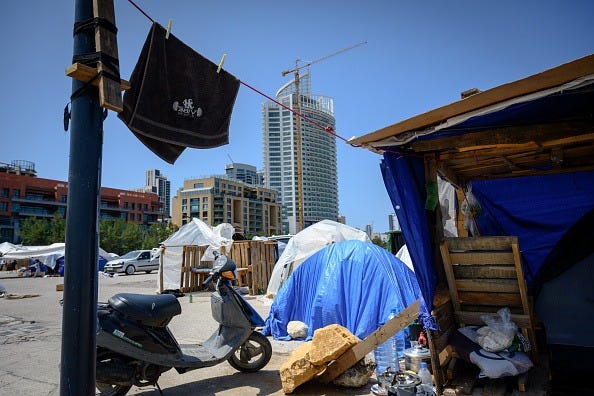
On March 4, two days after Lebanese militant group Hezbollah entered the war to support its patron Iran, Israeli forces ordered civilians living south of Lebanon’s Litani River to evacuate their homes immediately. Lilian’s family, including her elderly grandmother, her aunt and her cousins, joined the mass flight north.
The Israeli air campaign that followed has killed more than 2,500 people across the country, including 177 children and 100 medics, Lebanon’s health ministry says.
With a fragile ceasefire with Iran now in place, U.S. President Donald Trump announced last week a 3-week extension to the initial 10-day agreement in Lebanon. Yet Israel is continuing military operations there and refuses to withdraw its forces from occupied areas, where it is now demolishing towns and villages. Hezbollah commanders have also made their intention to keep fighting clear.
Lebanese civilians who fled the south are reluctant or unable to return home, skeptical of the so-called “ceasefire,” and awaiting what many expect to be a resumption in full-blown hostilities.
A stable truce in Lebanon is likely to be a crucial component of any long-term peace deal reached between the U.S. and Iran, as officials in Tehran have repeatedly made clear.
At around 1 a.m. on March 2, Lilian heard a series of explosions somewhere out in the darkness. She assumed, at first, that it was air defense batteries across the border in Israel engaging the Iranian missiles that had been streaking across the night skies since the U.S. and Israel attacked Iran three days earlier. Soon, though, she learned that it was outgoing Hezbollah fire, and she watched from the windows of her high-rise apartment as neighbors fled their homes in fear of the inevitable Israeli retaliation.
Lilian, her mother and brother grabbed a few urgent possessions and left for her grandmother’s place nearby. It was not long until the Israeli bombardment began. “We heard everything,” Lilian said. “Our entire house was shaking, and the windows that were facing [the location of a strike] were blown away.”
On their journey north, Lilian and her mother called anyone they knew who might be able to help them find a safe place to stay. Because her family, like Hezbollah, are Shia, they and their neighbors were sometimes met with suspicion by people of other faiths who believed the new arrivals might make them all Israeli targets. Beyond that, rents were often inflated by orders of magnitude. In Tyre, Lilian said, people of different creeds and backgrounds happily co-exist and look out for one another, so it stung to discover that this tolerance did not extend throughout the country. “There were a lot of people who welcomed us,” she said. “But… a lot of people were afraid of us too because we’re Shia. And as a Shia citizen, that was really painful, but I tried my best not to take it personally.”
Her family eventually found a place in the Chouf district north of the Litani River. It was unfurnished and freezing, but they had no other option. After making sure her family was secure, Lilian, who is also a teacher and human rights activist, began working as a local producer with international media and roaming around the country reporting. She had not wished to leave Tyre in the first place, so she traveled between Chouf and wherever else she was needed, then returned to Tyre when she could.
Then, Israel announced that it would begin targeting bridges across the Litani River, and Lilian was scared she would be cut off from her city. “I’d rather be isolated and in my own hometown,” she said. “Rather than being outside.”
Israel went on to strike a number of major bridges, which made access to the south more difficult. Lilian and a friend went to see if a small crossing where they’d heard one car could pass at a time was still passable. They wanted to find routes into Tyre for people delivering medicine, food and other basic supplies for the dwindling population that remained, as well as the displaced residents of villages closer to the Israeli border who could not or would not go any further north.
While she was there, the ever-present rumble of Israeli jets in the skies above grew louder and Lilian sensed what was to come. They ran back towards the car they had arrived in. “I heard the sounds of the warplanes,” she said. “And I immediately jumped into the car… and I was like, ‘let’s drive.’” Moments later, an airstrike slammed into the position where she had been standing. “We felt everything, she said, but that didn’t stop us from continuing.” The two of them made it back to Tyre via another route.
On April 7, Trump announced that a two-week ceasefire with Iran had been agreed. A cautious relief spread across Lebanon until hours later when, without warning, Israel launched a series of massive airstrikes that killed 303 people and wounded 1,150 others around the country, according to Lebanese officials. Israeli leaders said the ceasefire applied only to Iran.
Two days later, work had taken Lilian to the capital, Beirut, when Israel bombed the Qasmiyeh Bridge — the last remaining link between southern Lebanon and the rest of the country. Lilian heard it was still possible to cross on foot where the bridge had stood, so she and a friend raced there. They parked their car on the approach road and continued on in the spring sunshine carrying their bags and suitcases.
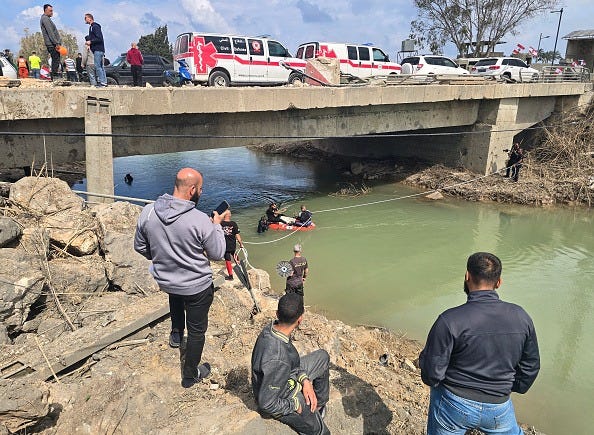
The explosion had been enormous. A massive crater was torn into the brown earth, and chunks of rock and concrete strewn alongside steel girders and railings bent crazily in on themselves. A makeshift path ran along the edge of the crater next to a bridge segment and an electricity pylon lay draped in a tangle of lines. Lilian and her friend made their way carefully along it. One man ahead of them bumped a scooter across with him. Another coming the other way carried a white goat kid under his arm.
Lilian could not bear the thought of being completely cut off from Tyre again and decided after that she would remain there.
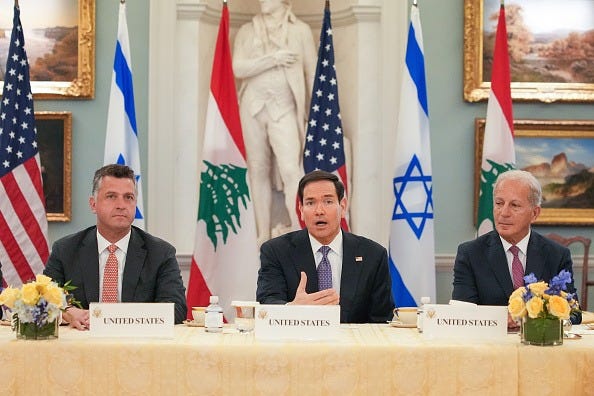
It was not until a separate agreement announced April 16 — after the first direct diplomatic talks between Israel and Lebanon in decades — that Israel agreed to halt offensive military action in Lebanon. They would not, however, pull back from occupied areas.
Israeli strikes have continued almost every day since then. On April 26, one killed 14 people and wounded another 37, Lebanese officials said. Israel also issued fresh evacuation orders for seven more border towns. In the occupied areas, it has continued to bulldoze Lebanese towns and villages.
Hezbollah, meanwhile, said it would continue to attack Israeli forces as well as northern Israel, and on Monday, its leader Naim Qassem said the group would not surrender its weapons, which Israel has demanded as a condition to end the war.
“I don’t think it’s a ceasefire,” Lilian said. “I don’t like the word ‘ceasefire,’ it’s not one.”
In Tyre, she described waking each morning to the sound of the constantly circling Israeli attack jets and the buzz of drones. Elsewhere in the city, workers were still searching through the rubble of strike sites to retrieve the bodies of missing people. For her, life under the latest supposed ceasefire is reminiscent of the similar agreement reached between Israel and Hezbollah in November 2024 after a year of fighting.
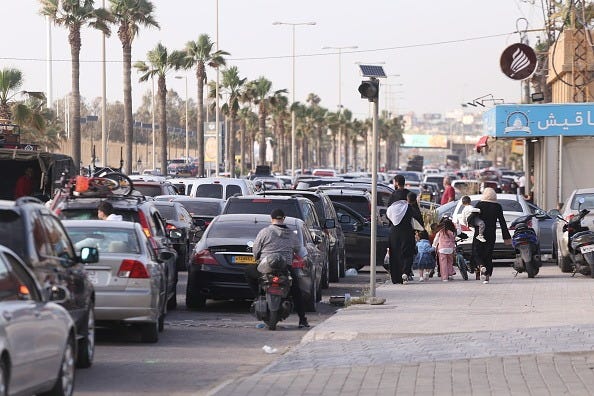
Then too, there were areas of Lebanon that Israeli forces blocked access to, and then too there were near-daily Israeli strikes and exchanges of fire with Hezbollah, as well as the constant anxiety and stress that comes with not knowing when or where the next bomb or missile would land. Her neighborhood was struck on a number of occasions in 2024 and remains badly damaged. “Every day we would be saying goodbye to our friends and family,” Lilian said. “We left them with the idea that we might not come back.”
March 2 shattered that frequently violated ceasefire, and few of the many people Lilian discussed the newest agreement with expected more from it, she said. The main difference of view is when the full-scale violence will resume. Tomorrow, next week, six months, a year.
“Most of them think that it’s going to escalate,” she said. “We have different opinions… but what’s different between them is the duration of time before it does.”
Editor’s note:
It takes committed independent journalism to show what a “ceasefire” actually feels like for the people living through it.
If you care about the people behind the headlines, you’re in the right place. Subscribe now, and share our reporting with people who value this work.
THE LATEST NEWS AT THIS HOUR:
By: Oleksandra Poda
TRUMP DECLARED WAR WITH IRAN “TERMINATED”: On Friday, the White House sent a letter to Congress stating: “The hostilities that began on February 28, 2026, have terminated.” This was just in time for the deadline set by the War Powers Act of 1973, which required Trump to either obtain congressional authorization for the war or cease hostilities by May 1. But in the same letter, he added that “the threat from Iran remains significant” and the naval blockade has not been lifted. Congress went on a week-long recess starting May 1, which means no vote on war authorization can take place until the Senate returns the week of May 11, according to CNN.
Democrats, represented by Senator Blumenthal, responded, saying that there is no “pause button” in the Constitution and that the blockade itself constitutes an act of war. Republicans, represented by Collins, agreed with the Democrats, stating that the 60-day deadline to seek congressional authorization for the war is not a recommendation but a requirement.
U.S. WARNS AGAINST PAYING IRANIAN TOLLS IN HORMUZ STRAIT: A U.S. Treasury Department agency, the Office of Foreign Assets Control, issued a warning that paying Iranian tolls to pass through the Strait of Hormuz, regardless of form (cash, cryptocurrency, or charitable contributions to the Iranian Red Cross), is considered a violation of U.S. sanctions. Under U.S. sanctions, American companies and U.S.-owned foreign companies are legally not allowed to do business with the Iranian government, so paying these fees in any capacity could cut them off from the U.S. financial system.
As of May 1, 45 ships had already been forced to turn back or return to port.
U.S. WILL WITHDRAW 5,000 TROOPS FROM GERMANY: The Pentagon announced that the U.S. will withdraw approximately 5,000 troops from Germany over the next 6 to 12 months. This comes after Chancellor Merz publicly criticized the Trump administration’s military campaign in Iran. More than 30,000 American troops will remain in the country.
This is not the first time the U.S. has punished its NATO allies for dissent. Last week, the Pentagon circulated an internal email outlining options to suspend Spain from NATO after Madrid refused to grant base access for strikes on Iran.
SPIRIT AIRLINES CLOSES DUE TO IRAN WAR IMPACTS: The American low-cost carrier Spirit Airlines announced its closure after 34 years of operation and the immediate cessation of flights. The airline went bankrupt twice in less than two years — the second and final time was due to the sharp rise in jet fuel prices caused by the Iran war. About 17,000 people will lose their jobs, according to CNN.
Spirit is the first major American airline to shut down due to the Iran crisis. Jet fuel prices in North America have risen by 95% since the start of the war.
U.S. SOLD $8.6 BILLION IN WEAPONS TO MIDDLE EAST ALLIES WITHOUT CONGRESSIONAL APPROVAL: On May 1, the Trump administration bypassed congressional review and approved arms sales totaling over $8.6 billion to allies in the Middle East — Israel, Qatar, Kuwait, and the UAE. Secretary of State Rubio invoked emergency powers to bypass the standard congressional review process and fast-track the arms sales.
On the same day, Trump told Congress that hostilities with Iran had ended.
It's horrible what the Lebanese people are living through, but condemning Israel will do nothing to stop it. The article doesn't mention Hezbollah's extensive infrastructure in South Lebanon --- tunnels under houses, weapons in the houses. The people have no choice. And how many of the children killed were 15-year-old Hezbollah operatives? By writing articles that inflame people's passions against Israel, you are delaying peace and contributing to violent attacks against Jews all over the world. That's not to say I agree with how the Israeli government is conducting itself right now. But your bias is showing. You've had only 1 second-hand account of how Israelis in the north are affected by the war, ever since October 7. You are feeding a narrative of hate, not peace.
The things these people are dealing with are horrific. Israel is out of control.