


At the bottom of this page: Latest news at this hour.
U.S. and Iran launch more strikes… Senator Lindsey Graham has died… Mojtaba Khamenei calls for revenge at father’s funeral… Iran has closed the Hormuz Strait, again.
Editor’s note:
Here at IWD, we believe the people living through war deserve as much attention as the wars themselves. Thank you for supporting journalism that keeps those stories at the center.
Will you subscribe (for free) today so we can keep up this work?
OUR LEAD STORY:
YEREVAN, Armenia — Niloofar* emptied her emergency backpack onto the floor: a passport, prescribed medications, a toothbrush, a change of clothes, and documents proving ownership of her home.
The well-known Iranian children’s writer chuckled sarcastically, looking at the remnants of her previous life.
‘Will there even be a home left to return to?’ she thought.
For decades, Niloofar created fairy worlds full of kindness, beauty, and tomorrow. One of Iran’s most respected children’s authors spent her life writing stories about hope. And now, after years of protests, repression and two wars in less than a year, she said she no longer knows how to write about the future.
Now, it has been almost five months since the U.S. and Israel launched their first strikes on Iran, sparking a regional war and a peace deal process that repeatedly promised a ceasefire, only to collapse under renewed violence. Most recently, after Iran allegedly attacked commercial vessels in the Strait of Hormuz, the U.S. launched fresh strikes on Iran, followed by additional attacks later that week, effectively ending the 60-day ceasefire outline in the June memorandum of understanding. Some Iranians, including Niloofar, are no longer waiting for a better future — they have lost any faith that the situation will ever improve. A new wave of emigration is emerging among people who once believed leaving their homeland was unimaginable.
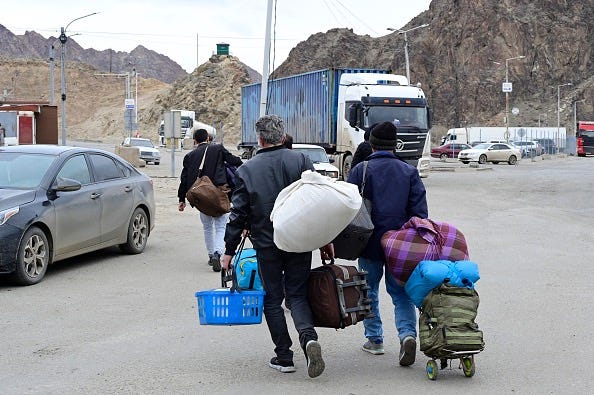
Iranian migration patterns reflect this uncertainty, shifting from young professionals seeking better opportunities abroad or an activist escaping political persecution to people like Niloofar who once couldn’t imagine spending their lives out of their motherland. According to the Baker Institute for Public Policy, more than 3 million people are internally displaced, primarily fleeing from the capital city of Tehran into the northern, mostly rural areas. Those who cross international borders are heading first to neighboring countries including Armenia, Turkey, Azerbaijan and Iraqi Kurdistan. What begins as thousands of individual decisions to leave may soon become one of the defining migration shifts of this conflict.
Niloofar began writing as a child. She always looked at the world differently, she said, questioning the things around her and searching for deeper meaning.
Her career was strongly inspired by folklore, a lifelong passion that has also influenced her interest in translating literature from English, Russian and German into Persian and folk tales from neighboring countries.
But much of her career was devoted to writing for children because she believed they are “the core of the world” and will shape the future of humanity. Children’s literature, according to her, is a space of a unique sense of freedom and creativity, where a writer can imagine new worlds while helping young readers navigate future adulthood.
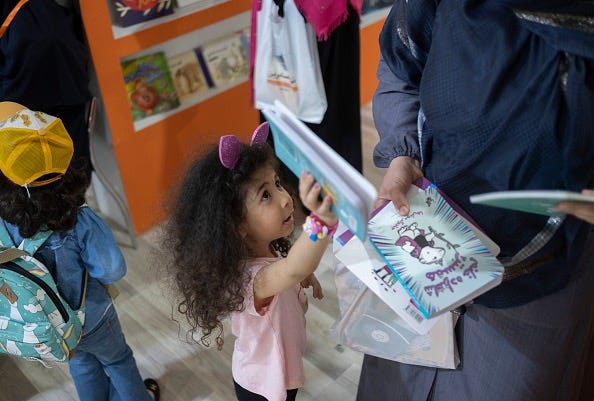
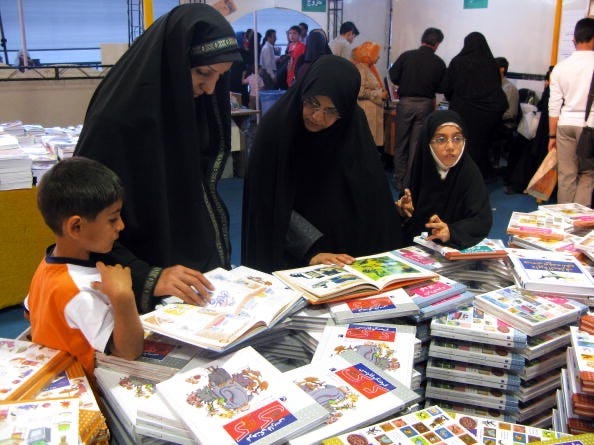
Over the years, she became one of Iran’s best-known voices in children’s literature and Persian language education. Niloofar wrote dozens of books for children, parents and teachers, researched Iranian folklore and storytelling traditions, and organized creative writing workshops for young people across the country. Many generations of young readers were inspired by her work.
All her life, she believed that more than anywhere in the world, writers are needed in their own country. Leaving her home in Alborz, a province in northern Iran, had never been part of the plan.
“For years, I believed I had chosen to stay,” she says. “Then I started asking myself whether it had ever really been my choice. People in the Middle East don’t know what choosing means. We are taught that we choose, but most of the time our choices are made for us.”
The latest Iran-Israel-U.S. war forced her to think differently.
“War fills your body with stress,” she said. “All you want is to lift your house onto your shoulders and carry it somewhere safe.”
She began to see her apartment as no longer a home, but more as a place to survive. A shelter. The bathroom seemed safest until she realized it had no window, which for her, meant no way out.
“It would become my death trap,” she said.
The kitchen windows could shatter into blades, so she covered them with tape.
Eventually she had to admit, “the only real safety is having a way to escape,” she said. “And legs that can still run.”
Thus, she started preparing her emergency backpack, turning this into an act of salvation not just a practical exercise. It became an inventory of her life.
One by one, she began removing everything that would slow her down.
“I got rid of the bricks and columns of my home, – everything around us becomes an obstacle to survival. Even love. I only took the documents to my property so that, when I came back, I could prove it was mine,” she says.
“Then I looked at them and laughed.” The questions running through her mind: Will I even be allowed to come back? Will there still be a home?
Her son, who now lives in Oman, has been urging her to leave for years. During the latest escalation, he stopped asking whether she was safe. Instead, he asked how he could transfer money to Armenia if she managed to cross Iran’s northern border.
Armenia had long occupied a special place in Niloofar’s imagination, but she never had thought of it as a place of refuge. She grew up with the Armenian neighbors, studied Armenian and Russian literature, and even collaborated with artists and translators across the region. When one of her former students moved to Yerevan and struggled to find work, Niloofar persuaded her to visit libraries, photograph books, and translate them together into podcasts.
“You live in one of the world’s greatest reading cities,” she told her student. “I grew up surrounded by Armenian culture.”
But as the bombs started hitting the soil of her homeland, Iran, Armenia was no longer a place of literature and friendship. It became an evacuation route.
And this route is now well-known among many Iranians, as many are arriving with similarly unfinished lives.
Among them is a retired schoolteacher who never imagined she would spend her old age anywhere but Iran. She left behind her house, her neighbors and the country she calls beautiful: “We have such a rich and wonderful country,” she said. “I never thought I would leave it.
Her son and daughter remain in Iran. She urges them to join her, but for now work and university keep them there.
“My daughter is an artist and photographer,” she said. “She believes she can become a better artist in her own country and in her own language. But everything is getting worse. At any moment, they may have to leave everything behind.”
But for many, crossing the border is not the end of displacement but the beginning of uncertainty. Some immigration research describes the current movement as fluid rather than permanent: many families leave without knowing whether they will stay abroad, move on, or return home if the fighting stops.
Aid organizations warn that the conflict is placing additional strain on a region already hosting millions of refugees and displaced people after the beginning of Russia’s war in Ukraine. A new wave of displacement from Iran risks stretching humanitarian resources across the South Caucasus and the wider Middle East, where many neighboring countries are already coping with earlier refugee crises.
As for Niloofar, for many years she believed that pain was a part of her profession.
“I always thought the Middle East was the center of literature, and that a writer is supposed to live through pain to be able to write.”
But the latest war has forced her to reconsider that belief, as there comes a moment when staying is no longer a question of loyalty or belonging, but becomes a question of survival, she confesses.
“In the Middle East we don’t have time to write anymore.”
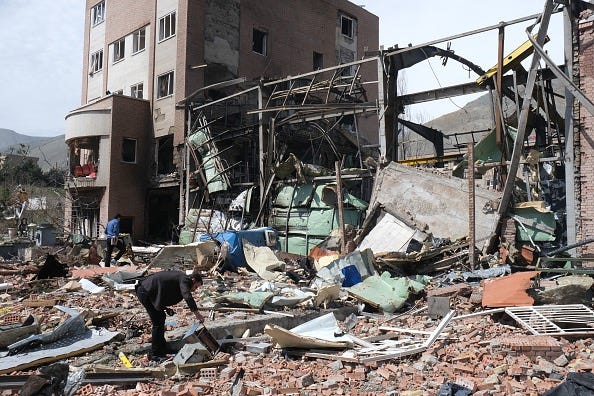
During the days of bombardment in early March, she realized that she was writing less and listening more to her own thoughts: “My little sparrow heart has become too talkative. It keeps beating against the walls of my chest. My mind is calm, but my little sparrow heart keeps saying: this cage is not where I belong. I am a bird from another garden.”
Not long before the latest escalation, she had bought equipment for a small home recording studio for the podcasts. She called it 3000.
“I wanted to think beyond wars, beyond politics, imagining the year 3000, when I would no longer be here, and children would record bedtime stories for their parents.”
The project embodied everything she had spent decades believing in: that stories could outlive fear, that imagination could survive violence, and that every generation deserved to inherit something gentler than the one before it.
Today the room that was meant to become a podcasting studio has become another space where she stacks her emergency bags.
This story is not entirely unique — for an Iranian Armenian art student living in Yerevan, the war pushed her family to make up their minds and leave Iran.
“Finally my mother managed to move to me, and we are building a new life,” she says. “Since the war happened, I was so worried for her. Now I can finally breathe.”
The move was extremely difficult because although her family is ethnically Armenian, Iran had long become home. “There is no time to think about the meaning of home anymore,” Elen says.
The concept of waiting for all the Iranians interviewed for this story is a pivotal everyday feeling, be that waiting for the next ceasefire, a phone call from relatives still in Iran, or news about their apartment to know if it is still standing.
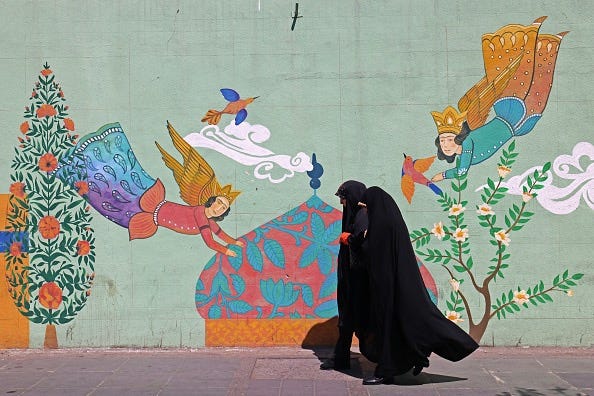
Back in Alborz, Niloofar walks into a storage room lined with decades of magazines she edited over the whole of her career. Nearby sits the equipment for her unfinished project, the home studio she named 3000, after a future she hoped children would inherit. She looks around the room, filled with stories written in more hopeful years, and waits. So does her packed emergency backpack by the door.
*Niloofar’s name has been changed for security reasons.
Editor’s note:
Here at IWD, we believe the people living through war deserve as much attention as the wars themselves. Thank you for supporting journalism that keeps those stories at the center.
Will you subscribe (for free) today so we can keep up this work?
THE LATEST NEWS AT THIS HOUR:
By: Oleksandra Poda
U.S. AND IRAN LAUNCH MORE STRIKES: In the early hours of July 12, the IRGC attacked a Cyprus-flagged container ship in the Strait of Hormuz, causing it to stop due to an onboard fire. In response, the U.S. launched its third round of strikes this week, hitting 140 Iranian targets.
Iran retaliated by launching attacks on the Gulf states, including Kuwait, Bahrain, Qatar, Oman, Jordan and the UAE. This is Iran’s most intense barrage of strikes since the signing of the U.S.-Iran MoU.
This week the U.S. has struck more than 300 targets in Iran, including missile and drone sites, naval capabilities, ammunition storage facilities, communication networks, and coastal surveillance locations.
This comes after Trump wrote on Truth Social on July 10 that the U.S.-Iran ceasefire is “OVER”.
SENATOR LINDSEY GRAHAM HAS DIED: On July 12, U.S. Senator from South Carolina Lindsey Graham died at the age of 71 following a sudden illness.
Graham served in Congress for more than 30 years and was known for advocating for isolating Tehran, limiting its missile and nuclear programs and pursuing a hardline stance against Iran. He was also a key supporter of Trump’s war on Iran and was reported to be an important adviser to Trump on foreign affairs.
Iran’s Prince Reza Pahlavi said Graham’s support for the Iranian monarchist opposition movement had earned him the title “Uncle Lindsey”. During Khamenei’s funeral in Tehran last week, posters of Graham appeared alongside other Western officials with red crosshairs over their faces.
MOJTABA KHAMENEI CALLS FOR REVENGE AT FATHER’S FUNERAL: On July 11, during his father’s funeral ceremonies, Iran’s new Supreme Leader Mojtaba Khamenei called for revenge against the U.S. and Israel in a written statement. Iran’s leader said, for the second time since the former Supreme Leader’s death, that his father’s death should be avenged, saying that it was “the demand of the nation, which will certainly be carried out. On July 11, Trump said that 1,000 missiles were ready to “decimate and destroy” Iran, if Iran attempted to assassinate Trump.
Since the funeral of the former Supreme Leader started, Iranian authorities have intensified calls for revenge against the U.S. and Israel. On Saturday the IRGC’s Commander-in-Chief said that revenge against Iran’s aggressors would long be a priority for Iran. Iran authorities also instructed mourners attending Ali Khamenei’s funeral and pro-government demonstrators to continue gathering until Mojtaba Khamenei calls for them to end.
IRAN HAS CLOSED THE HORMUZ STRAIT, AGAIN: On July 11, the IRGC declared the Strait of Hormuz completely and indefinitely closed. Iran said the decision came after vessels had used unauthorized routes, one which had been attacked by Iran.
However, the Joint Maritime Information Center said the southern route was still open and now even allowed two-way traffic. Although the Center said threats for those transiting the strait remain, they also said that there was no authority controlling passage through the strait or demanding fees.
Stay safe out there!
Best,
Alvan and Anya