

At the bottom of this page: Latest news at this hour.
The U.S. is targeting civilian infrastructure… Eighth consecutive night of U.S. strikes on Iran… The U.S. may launch a ground assault on Iran.

Editor’s note:
We tell stories that focus on the people living through so that you, our readers, can seize a more empathetic, more human understanding of a war that might feel far away.
Want to read more human-interest stories?
We are reader-funded, which means we rely on your support to keep reporting. Will you upgrade today?
OUR LEAD STORY:
YEREVAN, Armenia — Every morning begins the same way. Naz brews herself a large cup of coffee after another late night of work, then sits down at the main table in the apartment. A laptop, a notebook filled with customer orders, a phone plugged into its charger.
Then she reviews new orders, messages her co-worker and begins preparing another collection of Kurdish-inspired clothing, hoping the power and internet will not disappear before the day is over.
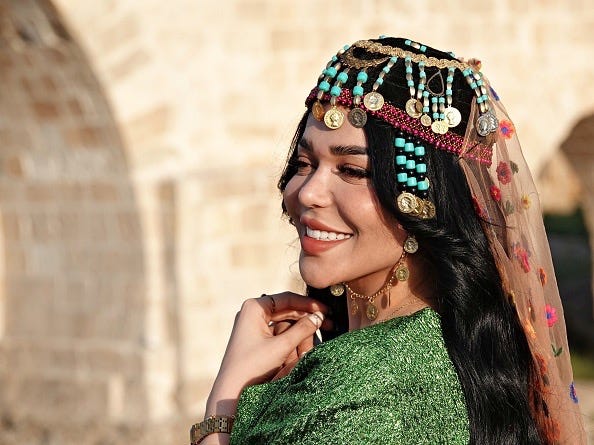
Naz* sits in Tehran every day creating clothing of shimmering silk, sheer fabrics and bold splashes of color. She creates these gowns not only for parties, weddings and birthdays, but also to add some color to everyday life. Gold and silver fabrics sparkle under the sun just as easily as they do beneath nightclub lights, she said.
In July, U.S. President Donald Trump declared the June ceasefire over and threatened Iran’s civilian infrastructure, including energy targets. Over the course of the eight consecutive days of renewed U.S. strikes on Iran, American forces have expanded their campaign beyond military sites, striking bridges, power infrastructure and port facilities in southern Iran. Iran responded with missile and drone attacks on U.S. military bases across the Gulf, killing two servicemen in Jordan, as well as strikes that damaged Kuwait’s power and desalination plant.
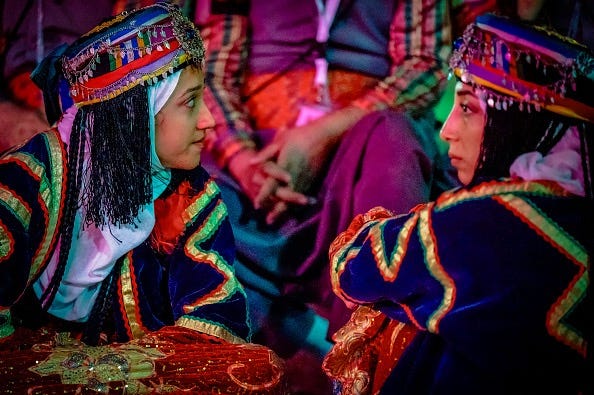
As for July 14th Iran’s grid has since lost an estimated 4,200 megawatts, according to the CEO of Tavanir, Iran’s state-run Power Generation, Distribution, and Transmission Company, leaving ordinary Iranians in Tehran, Karaj, Ahvaz and other cities without power for several hours a day.
For thousands of Iran’s small businesses, the consequences of war are measured in interrupted workflow. Orders are delayed, workshops fall silent, and years of work can collapse within days — especially when layered on top of months-long state-controlled internet blackouts across the country.
Naz’s own workshop rarely loses power, but the tailors she works with often do. When electricity cuts hit, sewing machines fall silent for hours, sometimes until the next day.
But at the same time Naz said that the government gives them in advance a plan for electricity shortages in different areas and cities, so they adjust their working hours to the cuts.
“The worst part is my orders,” she said. “Maybe I promise someone I’ll send their order in two or four days. Because of the electricity problems, my tailor can’t work, so we can’t finish the orders on time.” Sometimes the tailors may start protesting to working without fans, and then she just tells them they can leave and go somewhere where it is cooler.
“I need electricity every day, everywhere,” she said.
The blackouts are especially difficult during Iran’s scorching summer. “If you go outside, you can feel the heat everywhere,” she said. “The trees, the streets, the cars... everything is hot. When there is no electricity, you have no fans, no cooling. Everyone is angry in the streets.”
Yet despite the outages, Naz refuses to stop creating. Her colorful Kurdish dresses have survived sanctions, censorship, and now war.
Naz grew up in Iran’s Kurdistan region, where she remembers women wearing national dresses whenever there was a reason to celebrate.
But she started making clothes long before launching her own fashion label. As a child, she would collect leftover scraps of fabric from local tailor shops and turn them into tiny dresses for her dolls.
“There was no YouTube. It was just something in my mind. I learned by myself,” she recalled.
At home, a towel thrown over her shoulders could become an evening gown, while family weddings became opportunities to style her parents, brother and two sisters.
She spent hours as a child in a second-hand shop turning coats inside out, just to study them.
“The inside was even more interesting,” she said.
Fashion was simply the way she saw the world. Even as a teenager, she stood out for her bold outfits: bright yellow jeans, plaid shirts.
“I thought I was going to rock it,” she said.
She liked experimenting, especially with emo-inspired hairstyles and accessories, despite the conservative expectations placed on the women around her to dress with humility, in muted tones, and cover as much skin as possible
Naz left Iranian Kurdistan, in the northwestern part of the country, for Tehran to study fashion design when she was 18. At that time, she dreamed of continuing her education in New York but couldn’t afford it.
“I had no choice except to stay in my country because of financial problems... and everybody in Iran has this,” she said.
Instead, she spent the next eight years working as a stylist for local fashion companies, learning every aspect of the industry, which enriched her with the necessary experience to finally create her own brand.
“But having a brand in this country from day one has been a road with thousands of challenges,” she said.
And that was long before the ongoing war between the U.S., Israel and Iran.
As a stylist for a multi-brand retailer, Naz often found herself compromising her ideas to fit the strict dress regulations. Female models had to wear hijabs, were not allowed to look directly into the camera, and sheer garments had to be covered with extra layers.
Harsh sanctions and border restrictions — most intense since the 1979 revolution that brought the Ayatollahs to power — made it difficult to rely on the same materials for more than a season. A fabric available one week could disappear the next, she said.
“Everything was ruined because of this,” she recalled.
And for a brand built around carefully selected textures, colors and linings, every shortage means redesigning garments from scratch.
Those details mattered a lot to Naz. She never wanted her brand to become an exclusive luxury label. She tried to create garments with the same thoughtful construction and attention to detail she admired in international brands, but at prices ordinary Iranians could afford.
Launching the brand itself was a gradual process. For nearly two years, Naz discussed the idea with friends and family, choosing names, concepts and business plans. She has always been an “action person,” someone who prefers to move quickly once a decision is made. By the age of 24, she was ready to take the leap.
But the first years weren’t easy. Like many young entrepreneurs in Iran, Naz could not afford to devote herself to the brand full time. She worked as a fashion stylist during the day while building the brand in the evenings and on weekends.
It was only after repeated encouragement from a mentor living in Canada that she finally quit her nine-to-five job and focused entirely on her label.
When the 12-day war between Israel and Iran kicked off in 2025, Naz considered abandoning her brand’s vivid colours and replacing them with an all-black or even all-white collection to reflect the grief and uncertainty surrounding her.
But that idea never felt right. “The identity of my brand didn’t let me do that,” she said. Instead, she asked herself, “Why not continue creating joyful items?”
So instead, she doubled down on the unique, celebratory, Kurdish style and marked the decision with a photo series, “Dancing in the Cage.” In it, a model stands expressionless inside a location resembling a cage, wearing a sheer shirt of her design. “The transparent means you can see the soul of the people,” Naz explained. And the location, the cage, is her expression ofIranian society: “Everybody is in a bad situation.”
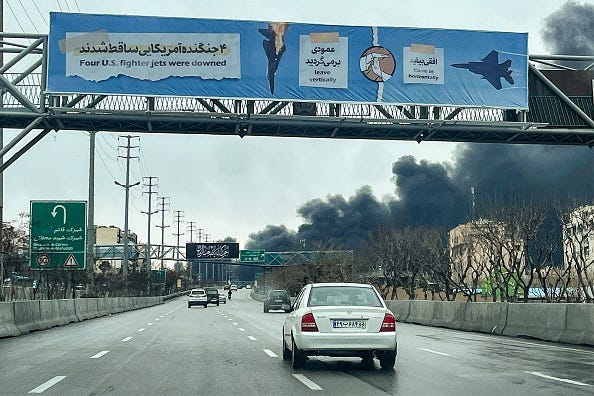
The war that started on February 28, 2026 turned Naz’s business into a battle for survival.
Like many other small business owners across Iran, Naz watched years of careful planning collapse within days. Internet access disappeared, phone service was cut and deliveries stalled, leaving her unable to reach customers or send out orders.
During the widespread internet blackout which only recently has begun to loosen, her business was forced to turn manual. “I just wrote down all my customers’ numbers to send them their orders, and then they cut the phone service. We couldn’t even make calls. My orders were just by my side, and I couldn’t give them to people,” Naz said.
For Naz, it is particularly painful to know how her customers often save for weeks before buying one of her gowns. “People really think before they buy something,” she said. “Whatever you like isn’t always accessible.” She is usually worried not only about delayed deliveries, but about disappointing people who had carefully chosen to spend their money on her work.
By the end of May, as the internet access gradually returned, she went through her messages and saw that some of them said, “Give back our money.”
“But everyone else was really warm and said that it was okay. Ninety percent of people understood,” Naz said.
Now that the internet is back, she can talk to the clients and receive new orders, but the challenges did not disappear. Sewing machines stop. Phones and laptops run out of battery. Every delay means another postponed delivery. But Naz keeps working and nourishing her brand.
“When I spend time with my friends, I see how strong they are. I see how everyone is trying not to pause the work, don’t pause the business, and just go through this. It’s a situation where we’re in the middle of it, and we can’t go back or go forward.
The only thing that keeps me going is the people of this country,” she said.
This is why she kept working even through the internet blackout with no phone service, uncertain if the next bomb would fall in her street.
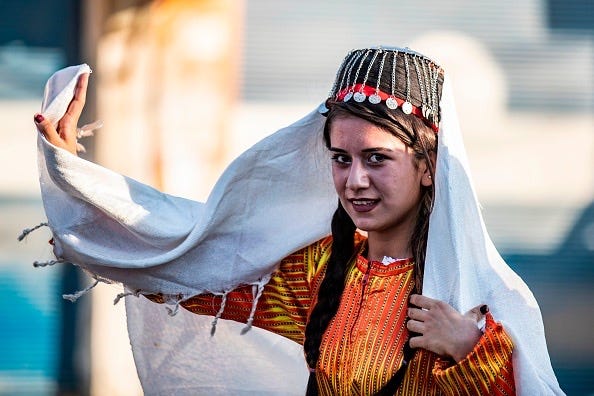
Despite the recent hits on energy, Naz is committed to continuing to create. She believes her product — creating colorful women’s clothing that represents the Kurdish minority — must continue to exist.
The linings that define Naz’s brand are still bright orange, still turquoise — the part of the garment that, as she likes to say, nobody sees at first glance.
*Naz’s name has been changed for security reasons.
Editor’s note:
We tell stories that focus on the people living through so that you, our readers, can seize a more empathetic, more human understanding of a war that might feel far away.
Want to read more human-interest stories?
We are reader-funded, which means we rely on your support to keep reporting. Will you upgrade today?
THE LATEST NEWS AT THIS HOUR:
By: Oleksandra Poda
THE U.S. IS TARGETING CIVILIAN INFRASTRUCTURE: U.S. strikes have disproportionately targeted civilian infrastructure in Iran’s southern provinces.
The strikes have damaged bridges, railways, tunnels, airports, and roads and have significantly restricted the movement of people, goods, and logistical support between the north and south of the country. The strikes have also forced hospitals to be evacuated and school exams to be postponed in the affected areas.
The U.S. campaign likely aims to reduce the IRGC’s capabilities in coastal areas, where naval operations and missile positions critical to controlling the Strait of Hormuz are concentrated.
EIGHTH CONSECUTIVE NIGHT OF U.S. STRIKES ON IRAN: On July 19, the U.S. launched its eighth consecutive night of strikes against Iran. This came after two U.S. soldiers were killed in an Iranian attack on a U.S. military base in Jordan on July 17.
According to CENTCOM, the targets included facilities linked to the IRGC, air defense systems, and missile infrastructure. Explosions occurred in Bandar Abbas, Sirik, and on the island of Qeshm. Iranian state media also said that a nuclear plant which was under construction in the southwest of Iran was targeted,
THE U.S. MAY LAUNCH A GROUND ASSAULT ON IRAN: On July 19, Iranian lawmaker Abbas Papizadeh told the ILNA news agency that Washington could launch a ground assault on Iran. It would first capture the Strait of Hormuz and then it would launch a ground attack from the south, west, and east.
Earlier, on March 30, Parliament Speaker Galibaf directly accused the U.S. of “secretly planning” a ground invasion. On July 14, Axios reported that Trump held a meeting in the Situation Room regarding a possible expansion of military operations against Iran. In an interview with Fox News on July 15, Trump did not rule out the possibility of a ground operation.
Stay safe out there!
Best,
Anya
Naz’s story is so incredibly hopeful. The determination to create cheerful, colorful clothing is a reminder to us in the US. Stay busy and determined to overcome the obstacles in the US to make Iran and the world better for all people.
As to a ground invasion by US troops, I think Trump will not commit to that before midterm elections are over given how unpopular this war is, including among Republicans. Hegseth isn't helping with his testosterone enhancing nonsense and subtle glorification of sexual assault. After the midterms, in order to bolster troop levels, he might have to reinstitute the draft, which would be REALLY unpopular going into the 2028 presidential election. But this wouldn't be the only time Trump has thrown his own party under the bus for his personal gratification.