

At the bottom of this page: Latest news at this hour.
Iran hasn’t sent delegates for talks yet… Vance still on the way to Islamabad… Iran demands release of seized ship… Iran filmed ships passing through the Strait of Hormuz… U.S. boards sanctioned tanker in the Indian Ocean.
Editor’s note:
As the ceasefire in Iran nears its expiration date, we’re here to help you make sense of what comes next.
We’re working hard to keep our human-interest reporting fresh amidst this relentless news cycle. If you care to support independent journalism, consider subscribing, and urging a few friends to do the same.
OUR LEAD STORY:
YEREVAN, Armenia– In southern Isfahan, the urban sprawl stops where Mount Soffeh starts.
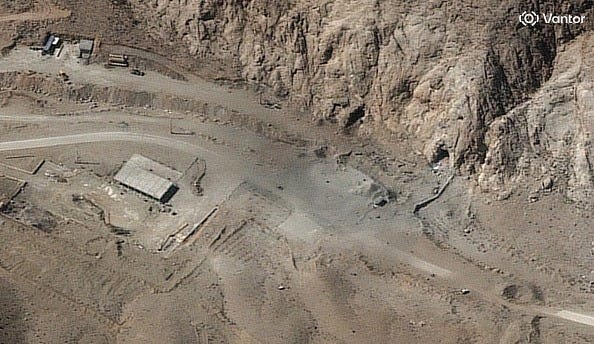
At its base is a park, one of few examples of Isfahan’s sparse greenery. On the other side of the mountain is a vast expanse of rocky, barren earth — underneath which lies an intricate network of tunnels containing a massive military weapons depot.
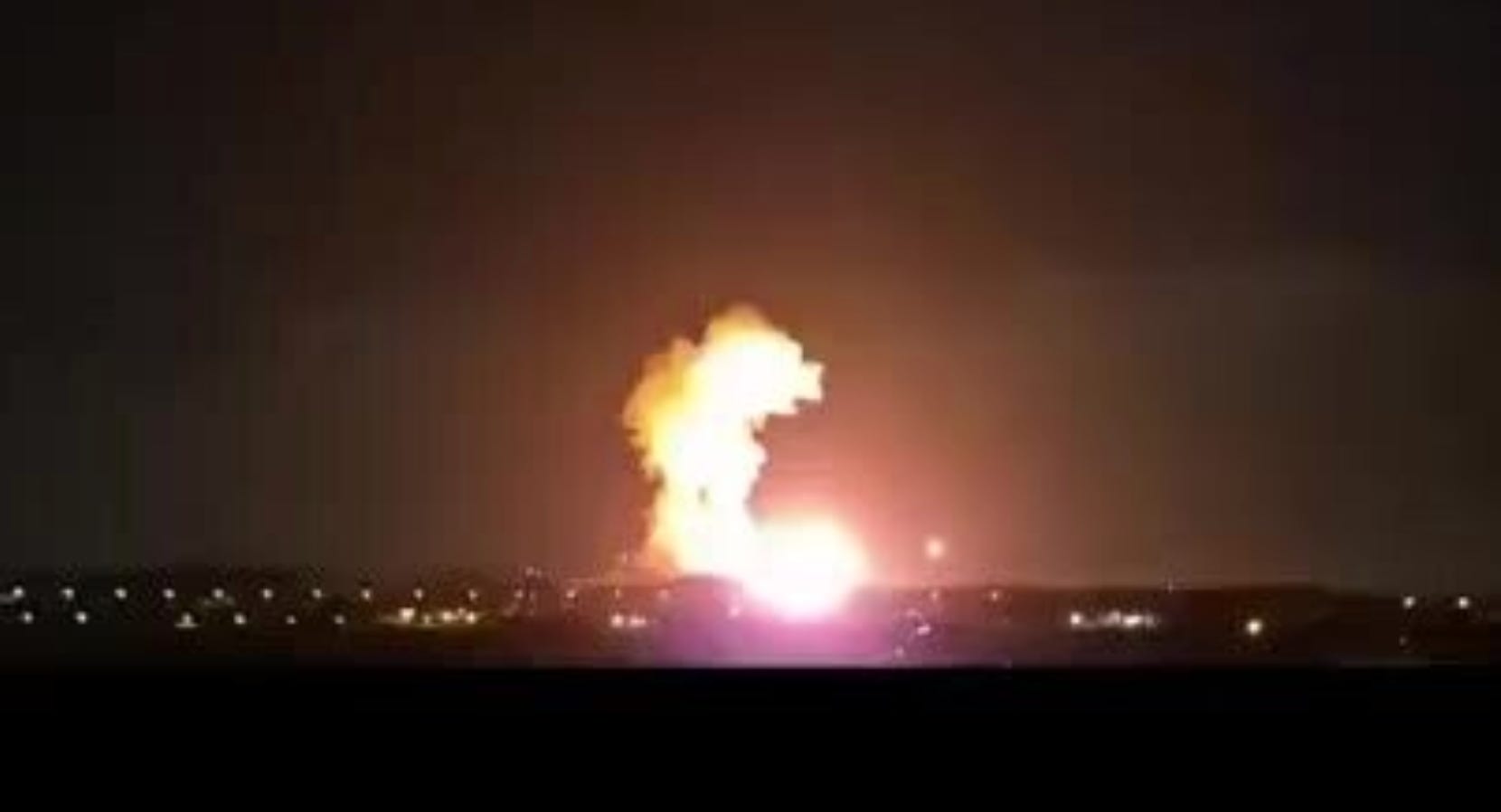
When the U.S. attacked the ammunition depot behind Mount Soffeh with 2,000-lb bunker buster bombs on March 31, Peyman*, who was living only a few kilometers away, was woken up by the massive explosion.
It was around 2.30 am, but when Peyman looked out his window, above the jagged ridge of the mountain, the night’s sky was changing color. “Everywhere was red, then we heard this big deep sound, and our house shook a little…it was like a small earthquake,” Peyman said.
The bombs had penetrated into the underground chambers and caused the ammunition to set itself off. Explosions near Peyman’s house continued for hours.
Since the start of the war, the U.S. and Israel have repeatedly claimed to have decimated Iran’s military.
On the first day of April, Trump claimed the U.S. attacks had been so destructive that Iran no longer had a military to speak of: “Their navy is gone. Their air force is gone. Their missiles are just about used up.” A week later, the U.S. boasted over 13,000 destroyed military targets, including about 80% of Iran’s air defense systems.
But the reality is far murkier.
Despite attacks on weapons depots like the one near Peyman’s home, U.S. intelligence still points to massive underground stores of weaponry in Iran. On April 16, the Pentagon said that satellite imagery shows Iran excavating weapons from underground tunnels since the start of the ceasefire.
As the end of the temporary ceasefire approaches with no deal in sight, and the prospect of a renewed war looms – begging the question: What is Iran still capable of?
Peyman, 23, and his mother have lived together, just the two of them, ever since she divorced his father. So when the attack left his mother anxious and upset, only Peyman was there to comfort her: “I was shaken too…but I told her it was going to be okay, we were together.”
They hurried out of their third floor apartment, finding their neighbors were doing the same. They knew it was safer to be closer to the ground during an attack, but as most Iranian citizens don’t have access to bomb shelters, the ground floor was the best they could do.
Once Peyman got back into his apartment, he couldn’t sleep for hours. “You know, I just wanted to know what happened next,” Peyman said.
Over the days that followed, attacks on Peyman’s city kept coming: Isfahan is not only home to the military base behind Mount Soffeh but also multiple air force bases and nuclear infrastructure.
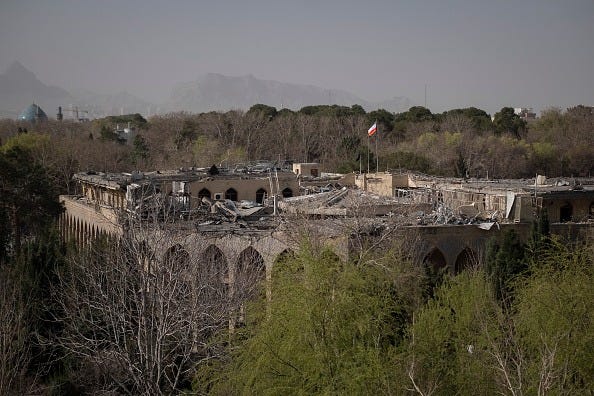
Iran’s store of missiles is one of its strongest assets — some experts claim that it has the largest and most diverse supply in the region. Iran has spent decades developing complex underground networks of tunnels, sometimes called ‘missile cities,’ to protect their weapons from adversaries.
The U.S. has claimed to have destroyed Iran’s military power, stating they have attacked 1,500 air defense targets, 450 ballistic missile storage facilities and 800 drone storage facilities. Less than a week into the war, Israeli authorities claimed to have cut Iran’s ballistic missile supply in half.
The attacks were believed to be so extensive that during his April 1 address, Trump even said that Iran is “really no longer a threat.”
But these claims drew suspicion when only a few days after Trump said that the U.S. achieved “total air dominance,” a U.S. F-15E fighter jet flying over Iran was downed by Iranian air defense. During the rescue mission for the then-missing crew member, two Black Hawk helicopters were also targeted.
It’s possible that Iran’s defenses were bolstered during the ceasefire in some ways: China allegedly provided Iran with air defense support during the ceasefire.
But about a month into the war, U.S. intelligence estimated that Iran was still armed with half of its missile launchers and thousands of drones, leading many to question whether the U.S. attacks have been as effective as the administration has claimed.
Peyman is a witness to this reality.
One day during the war, Peyman went onto the roof to check on his satellite dish, which his family had started to rely on to get around Iran’s internet blackout, but even these are not a perfect solution.
“I figured the channel switched off because of a frequency that Iran sent — they are very against channels like Iran International, BBC and VOA,” Peyman explained.
While he was on the roof of his house, Peyman heard the whistle of a missile fly overhead before it hit the ground. Later, he discovered the attack had hit an air force base somewhere else in Isfahan, near his friend’s house.
At the start of the conflict, Iran moved much of its air force capabilities into underground tunnels — some reports suggest as much as two-thirds is now underground.
Experts say these underground units are extremely strategic. “[Iran’s] ‘missiles cities’...are hard to detect and hard to destroy. They also have a psychological element, letting Iran’s adversaries know that its capacities are not easy to count and that it could hit from a variety of undeclared locations,” Arash Azizi, lecturer at Yale University and author of The Shadow Commander: Soleimani, the U.S., and Iran’s Global Ambitions, told Iran War Dispatches.
Azizi also said that while the U.S. has significantly degraded Iran’s military power, its missile capabilities remain significant.
Since the start of the ceasefire, Iranian military aircraft have been spotted, suggesting the equipment has been moved out of the underground chambers.
Over time the attacks on the military base near Peyman’s home in Isfahan were so frequent that he got used to them. Without the internet, Peyman and his friends found themselves needing new hobbies, so they started hanging out on his roof watching missiles fly overhead into the ammunition depot behind Mount Soffeh.
“I don’t want to lie there was something exciting about it…half of the reason we started doing that was because we were bored, the other reason was that we were happy to see these places of dictatorship being destroyed,” Peyman said.
U.S. and Israeli strikes are not just targeting air force capabilities: institutions at all levels of Iran’s government and armed forces. Since the start of the war, 130 buildings connected to Iran’s armed forces have been struck, 57 of which were Basiji buildings, a report by Iran International found.
The Basij — a volunteer paramilitary group within the IRGC — typically operate checkpoints and search cars passing through for contraband, operating as a form of domestic security.
Peyman thinks strikes on Basij infrastructure have not been as effective as it may seem. “The Basijis are more powerful after the war, the regime promotes them more than ever,” Peyman explained, claiming that strikes on government institutions have only empowered the group.
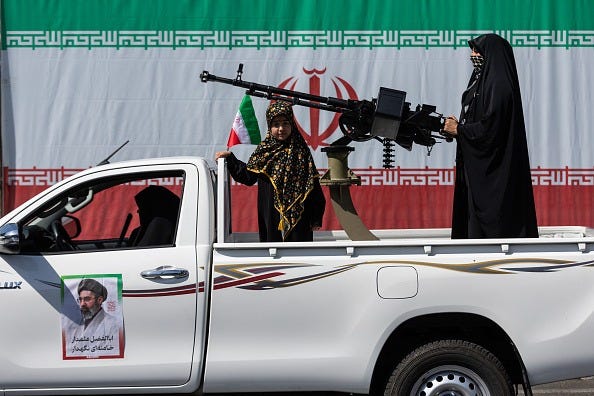
“After they killed Khamenei, they kept coming in the streets and showing off, saying that the regime is not falling even though our leader was killed...they just keep saying, we won, we won. But I think they are losers,” Peyman said.
Peyman grew up seeing the Basij members around his town, and when he was 13, he decided to join them. “When I was younger I was imagining myself wearing their clothes and going with them at night searching the city with a motorcycle and imagining all those Basij missions.”
When Peyman was part of the Basij, he spent most of his time praying at the mosque or receiving lessons on religion and ethics. But there was also a military aspect that was exciting for him.
“You know I just kind of liked the military atmosphere. They gave you military clothes…they showed us AK-47, how it works…it was kind of exciting for a 13-year-old boy,” Peyman explained.
Iran recently launched a campaign to recruit members 12 and older into the Iranian military. But, Basij members as young as 11 have been killed in U.S. and Israeli strikes while working at checkpoints.
Peyman only spent a year or two in the Basij, after that, he started to find it boring and left the group.
But he fears what the group could be capable of if it remains intact after the war. “There are some Basij groups in Iran who are very extreme. My biggest worry is after the regime falls, the leaders, the military will leave the country or die. But these Basij groups will remain and they are armed and will make the situation very dangerous,” Peyman said.
When the ceasefire was announced, Peyman was already on his way out of Iran. He found out about the ceasefire immediately after he turned on his phone after crossing the border into Armenia.
But this ceasefire has an expiration date, and is fragile as it stands. Peyman is skeptical about the war coming to an end.
The U.S. has built up so many military forces, he said, they can’t just send them all back.
*Peyman’s name has been changed for security reasons.
Editor’s note:
As the ceasefire in Iran nears its expiration date, we’re here to help you make sense of what comes next.
We’re working hard to keep our human-interest reporting fresh amidst this relentless news cycle. If you care to support independent journalism, consider subscribing, and urging a few friends to do the same.
The latest news at this hour:
By: Oleksandra Khelemendyk
IRAN HASN’T SENT DELEGATES FOR TALKS YET: It is still unclear if Iran will send its delegation for peace negotiations with the U.S. in Islamabad, the Wall Street Journal reported, citing Iranian state media.
Iran was expected to send its representatives to Pakistan today, but this information was not publicly confirmed. Foreign Ministry spokesperson Esmaeil Baghaei said that there were no plans for a second round of negotiations, adding to the uncertainty around the peace process.
…VANCE STILL ON THE WAY TO ISLAMABAD: Anonymous sources said that JD Vance will fly to Islamabad on Tuesday morning for the second round of peace talks between the U.S. and Iran, Axios reported. Trump’s envoys Steve Witkoff and Jared Kushner are also likely to participate.
This step comes as the two-week ceasefire is set to end on Wednesday evening Washington time. Until Monday night, the IRGC had been stalling the negotiations and demanding a firmer position from Iran on ending the U.S. naval blockade.
The negotiations will be mediated by the experts from Pakistan, Egypt and Turkey, sources say.
IRAN DEMANDS RELEASE OF SEIZED SHIP: Iran’s Foreign Ministry called for the immediate release of the cargo ship Touska and its crew members, which was seized by the U.S. forces on Sunday, according to CNN.
The vessel was captured when it tried to pass the U.S. naval blockade in the Gulf of Oman. Iran called this act criminal and warned the U.S. of potential retaliation for any further escalation.
IRAN FILMED SHIPS PASSING THROUGH HORMUZ STRAIT: Iran’s state-affiliated Fars News Agency claims to have filmed ships passing through the Strait of Hormuz to the Persian Gulf with Tehran’s permission.
Amid the naval blockade imposed by the U.S. on all Iranian ports, the footage was intended to show that the strait remains under Iranian control. According to Fars, the safe corridor for ships passes between Larak and Qeshm islands, close to the Iranian coastline.
After declaring the waterway open on April 18, Iran quickly closed it again to military vessels and any other ships without Iranian authorization.
U.S. BOARDS SANCTIONED TANKER IN THE INDIAN OCEAN: A tanker which was previously sanctioned for transporting Iranian crude oil was forcibly boarded by U.S. forces, the U.S. DoD announced. This comes as the U.S. enforces a blockade attempting to stop Iranian ships exiting or entering Iranian ports. Ship tracking data shows that the vessel was between Sri Lanka and Indonesia.
Thank you for providing news from local people on the ground. It is dangerous work but the perspective is essential to counter the reports coming from MSM.
Thanks for the information about Isfahan, The year I lived in Iran (many years ago), I visited there and was impressed by the ancient buildings and the engineering that went into them. They are real treasures which I hope won't be destroyed in this war. This is also true of Shiraz, and the buildings in Tajrish north of Tehran proper. There are so many marvelous sites that would be lost to humanity if they are destroyed.