


Editor’s note:
Subscribe to our weekly news roundups to get them straight into your mailbox!
Share with friends who might be interested as well.
The latest news at this hour:
U.S. AND IRAN CONTINUE STRIKES: On July 12 at 5:00 p.m. Eastern Time, CENTCOM launched another round of strikes against Iran, the fourth in a week, citing Iran’s attacks on civilian and commercial vessels as the reason for the attack. For the first time in the conflict, the U.S. deployed naval kamikaze drones. The strikes targeted Iran’s air defense systems, coastal radar stations, and missile and drone positions, as well as IRGC speedboats in the Strait of Hormuz. Explosions were heard in Bandar Abbas, Sirik, and on Qeshm island.
In response, Iran launched another large-scale attack on U.S. targets in five Gulf region countries and Jordan. In Kuwait, the IRGC targeted U.S. HIMARS launchers, which are highly mobile missile systems that are difficult to detect due to their ability to quickly change position.
The IRGC also claimed responsibility for striking the Ali al-Salem and Ahmed al-Jaber air bases in Kuwait. They asserted that they had destroyed fuel depots, a Patriot system, and FPS radars. Additionally, Iranian strikes were reported in Jordan, Bahrain, Oman, Qatar, and the UAE.
The Kuwaiti Armed Forces reported strikes on Kuwaiti border posts and on an offshore oil platform, where one worker was injured.
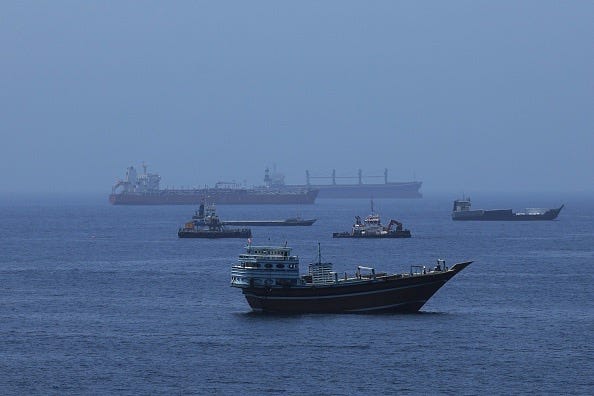
IRAN: U.S. PRESSURE ON OMAN IS PREVENTING IRAN-OMAN HORMUZ DEAL: On July 13, Iran’s foreign ministry announced that talks held Saturday between Foreign Minister Araghchi and his Omani counterpart in Muscat which focused on managing traffic through the Strait of Hormuz, failed to produce results due to pressure from the U.S. on Oman.
During the meeting, Oman proposed dividing the strait into two routes with separate control: a southern corridor through Omani waters with free passage and no fees, and a northern corridor through Iranian territorial waters that would require coordination with Tehran and also have no fees.
Shortly after these failed talks, Iran was launching drone attacks on Oman in what regional observers described as an attempt to pressure Muscat into accepting Iran’s terms for managing the strait.
On July 12, Iran declared the imminent closure of the strait “until further notice” and cautioned that vessels traversing “unauthorized” routes would lack “safety guarantees.” However, CENTCOM stated: “The Strait of Hormuz is open to all vessels seeking to lawfully transit the international waterway.”
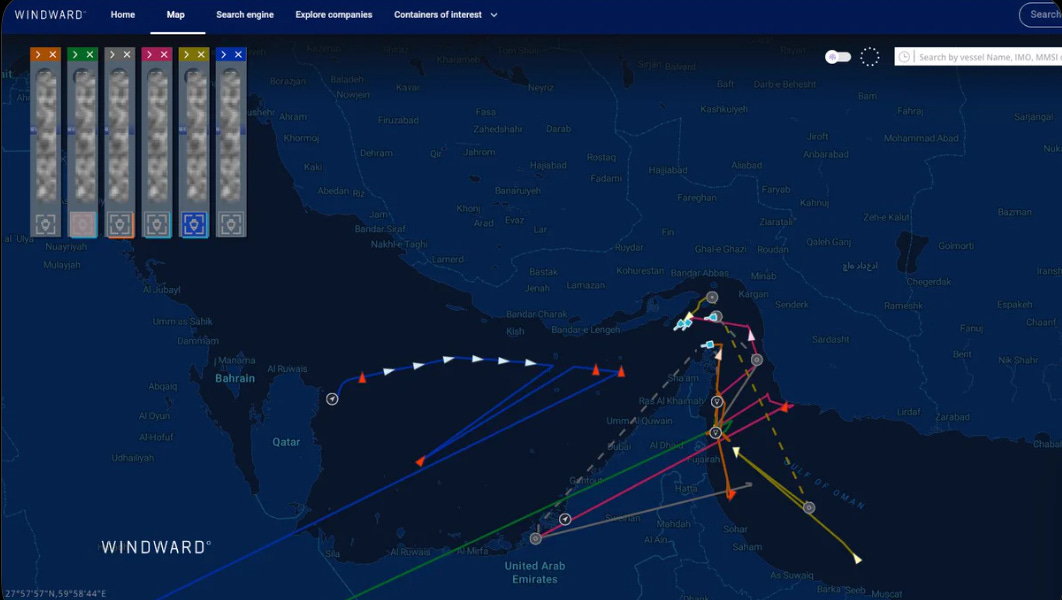
Between Thursday and Friday evening, the Windward maritime tracking platform recorded only six vessels transiting the strait compared to 15-21 on July 5-7 and 130 before the war began.
POWER OUTAGES SPREAD ACROSS IRAN: Amid the summer heat, widespread power outages and voltage fluctuations have swept across Iran, despite assurances from Iranian authorities that the power grid is stable.
This summer, Iran is projected to face a power shortage of 13,640 MW, according to the Parliamentary Research Center. This is about 17% of the projected demand and roughly one-third of the average load in 2024.
The acting chairman of Tavanir, Iran’s state-owned power company, stated that approximately 2,000 grid zones were hit by direct or indirect strikes over the 40 days of the war. The damage from the destruction of solar equipment storage facilities alone is estimated at $1.5 billion, while the total estimated direct damage to the grid is $325 million.
The authorities are proposing consumption management — essentially, rationing — as the only solution.
IRAQI PM HEADS TO WASHINGTON: On July 13, the leader of Iraq, Ali al-Zaidi, went to Washington to sign oil and gas deals which will initiate more economic collaboration between the U.S. and Iraq.
The Iraqi PM wrote that he is looking to develop the U.S.-Iraq relationship beyond “crisis management” and into a place of “opportunity creation — particularly opportunities that have a measurable economic impact”. He expects American companies to help boost oil production in Iraq.
Meanwhile, the U.S. has resumed physical cash shipments of Iraqi oil income to Iraq after freezing them in April due to attacks on American facilities by pro-Iranian groups.
ISRAEL TO HOLD FIRST ELECTIONS SINCE 2023: On July 12, the Knesset, Israel’s parliament, announced that Israeli parliamentary elections will be held on October 27, 2026 — the latest date permitted by law.
This marks the first time in the last 50 years that an Israeli government will serve a full four-year term without dissolving parliament early. Netanyahu, the current prime minister, has confirmed that he will run for re-election.
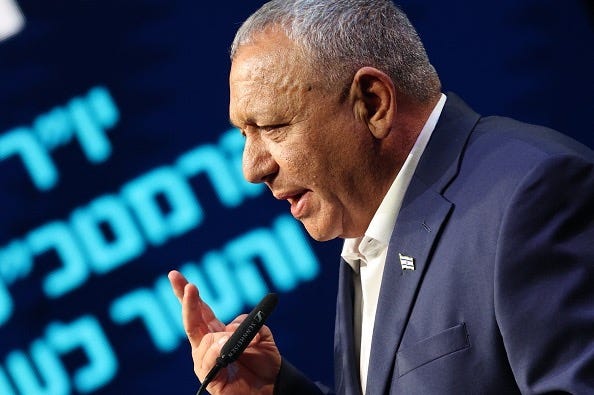
Netanyahu’s main rival is Eisenkot, the former chief of staff, who now leads the new centrist party Yashar. Eisenkot has been one of Netanyahu’s sharpest critics over his handling of the Iran war, arguing that Israel was sidelined from the U.S.-Iran negotiations and that Netanyahu’s government failed to secure key Israeli demands
Stay safe out there.
Best,
Oleksandra

Today there are news reports that Iran struck two UAE tankers, injuring Indian and Ukrainian sailors. Iran doesn’t seem to get that Trump will respond irrationally to every attack.