


Featured subscriber comment:
With so much American media run by billionaires now, I want to support independent media.
By: Amy Garber
Do your friends also want to support independent media?
The latest news at this hour:
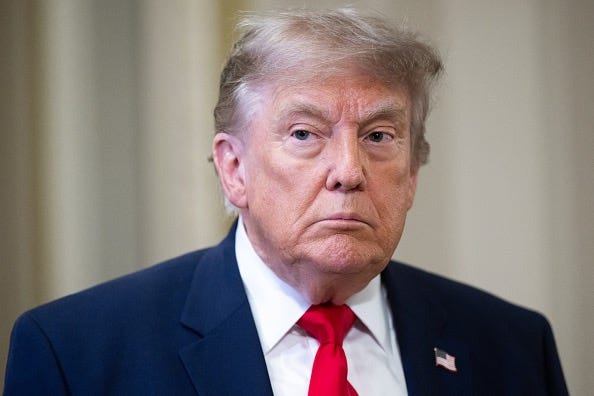
U.S., IRAN AGREE TO HALT STRIKES AND RETURN TO TALKS: The United States and Iran agreed to end the most recent spurt of attacks in the Strait of Hormuz and return to renewed negotiations, which will resume this week in Qatar, according to an unnamed U.S. official. On Monday, Donald Trump posted on Truth Social that Iran has called for a meeting and it will be held tomorrow in Doha.
On Sunday, Iran attacked U.S. bases in Kuwait and Bahrain, after the U.S. struck targets across Iran on the previous day. The U.S. stated that none of these attacks hit their targets and that there were no casualties or damage. However, some are more hopeful about the potential outcome of the talks. Despite the strikes, the first Tehran-Dubai flight is set to take place on Monday, according to authorities at Tehran’s Imam Khomeini Airport.
IRAN, OMAN HOLD FIRST JOINT HORMUZ COMMITTEE MEETING: On Monday, an Iranian deputy foreign minister said that Iran and Oman held the first Joint Hormuz Committee meeting in Muscat, Oman to discuss the future management of the Strait of Hormuz.
During the war Iran has been able to monetize its control of the Strait of Hormuz, making vessels pay for transit. Iran has reportedly pushed to maintain this source of income in the new framework it is establishing with Oman for controlling the strait, which Trump has pushed back on – at one point even threatening to attack Oman if it did not “behave”.
However, the United Nations Convention on the Law of the Sea states that coastal states do not have the right to charge fees for the transit of merchant ships through international straits.
HOW THE HORMUZ CRISIS BOLSTERED CHINA: While many Asian economies have suffered from the Hormuz crisis, it appears to have worked to China’s advantage. The country has been able to avoid inflation and the political and economic fallout from the crisis, according to an analysis published Monday by the Washington-based consulting firm The Asia Group. The analysis showed that China has learnt to adapt to economic disruption and it is able to ease economic shock, through managing exports, currency and prices as well as subsidies.
The consequences of the crisis have also called the U.S.’ reliability as a supplier into question, turning some customers towards not only China. The massive disruptions to the supply of fossil fuel have also driven up demand for green energy, a major industry in China.
IRAN WAS ELIMINATED FROM THE WORLD CUP: After a short but difficult stint in the World Cup, the Iranian football team was eliminated late on Saturday night after Austria and Algeria drew a tie.
Even before the World Cup began the road for the team was rocky. As the first football team in World Cup history to ever compete in a host country it was at war with, the team was not sure if they would be allowed to participate at all. Even when they did get the green light, the U.S. State Department blocked visas for the team’s entire administrative staff. The team was then forced to base themselves in Tijuana, Mexico, as they were not allowed to stay overnight in the U.S.
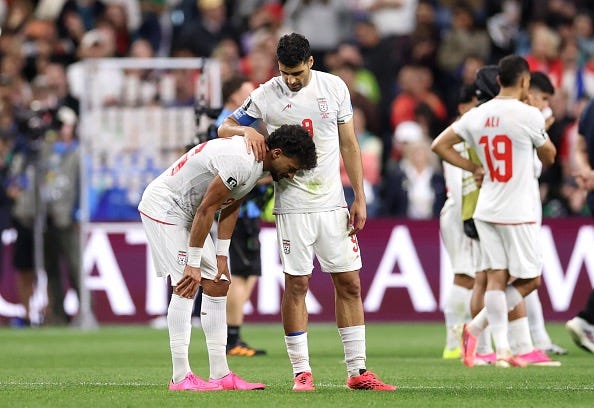
During the World Cup, the Iranian team was denied a goal in stoppage time against Egypt, and the next day, Austria dashed the team’s hopes of advancing to the playoffs by tying the score in the final seconds of a concurrent match.
In the U.S., the arrival of the Iranian team also got a mixed reception, as they were held in L.A., home to the largest Iranian population outside of Iran. For many, the game turned into a political protest: the Iranian national anthem was loudly booed, and fans wore T-shirts en masse and brought flags bearing pre-revolutionary symbols from 1979.
IRAN SAYS IRANIAN MILITARY CAPABILITIES STRONGER AFTER WAR: A spokesperson for the Iranian military stated that during the war, Iran was able to trial new defense technology which had begun development before the war. Another spokesperson said that Iran’s military has actually come out of the war stronger than it was before the war and that Iran’s attacks on U.S. military assets were more damaging than the U.S. attacks on Iranian military infrastructure,
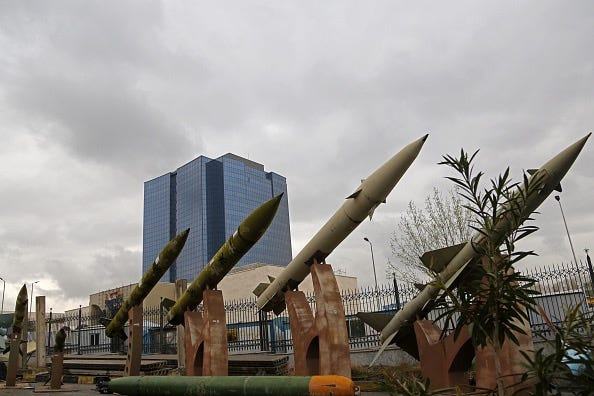
According to U.S. intelligence, Iran resumed part of its drone production as early as May during the six-week ceasefire and was progressing at a much faster rate than predicted by the U.S. This suggests that the country still has the ability to quickly replenish its combat capabilities. It also casts doubt on the claim that U.S. and Israeli strikes have weakened the Iranian armed forces.
Stay safe out there!
Best,
Kateryna

