


Editor’s note:
We write these news roundups for you, our readers, to stay informed on a jam-packed news cycle without the headache.
If you want the freshest headlines delivered to your inbox, subscribe now for free!
The latest news at this hour:
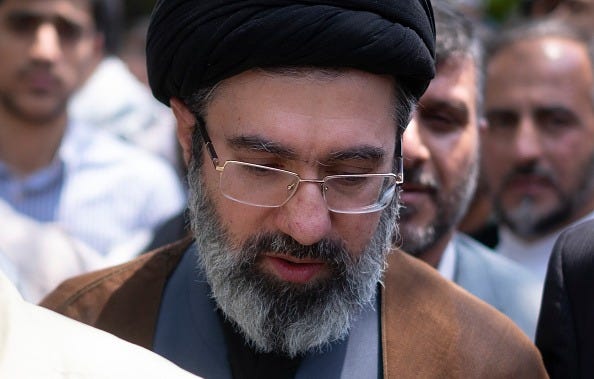
TRUMP DEMANDS A HAND IN IRANIAN SUCCESSION PLAN: Trump demands to be involved in choosing Iran’s next leader and refuses to accept one of the most likely choices, Mojtaba Khamenei, the son of the now-dead supreme leader.
“I have to be involved in the appointment,” Trump said, “like with Delcy in Venezuela.”
Iranian state media reported preparations to announce the new supreme leader as it nears the one-week mark of Khamenei’s death. The Assembly of Experts has resorted to virtual meetings since their headquarters in Qom was destroyed by Israeli strikes.
STRIKES SURGE OVER TEHRAN: On Friday morning, Israel began a fresh wave of strikes on Tehran as Hegseth warns of a dramatic surge of attacks. The Guardian reports that at least 13 hospitals and health facilities have been struck across Iran to date.
… WHILE IRANIAN MISSILES SLOW: U.S. Central Command said that Iranian ballistic missile attacks have decreased by 90% and drone attacks by 83%, according to the commander of U.S. Central Command.
STRIKES ON AMERICAN-OWNED OILFIELD IN IRAQI KURDISTAN: Two drones hit an oilfield in Iraq’s Kurdistan region on Thursday, which is operated by American firm HKN Energy, and caused a fire and could interrupt production of its roughly 30,000 barrels per day, according to Reuters.
Kurdish officials are blaming Iraqi militias for the strike, which, if true, would mean Iran-aligned militias in Iraq are not just attacking U.S. military targets anymore, but energy assets, too.
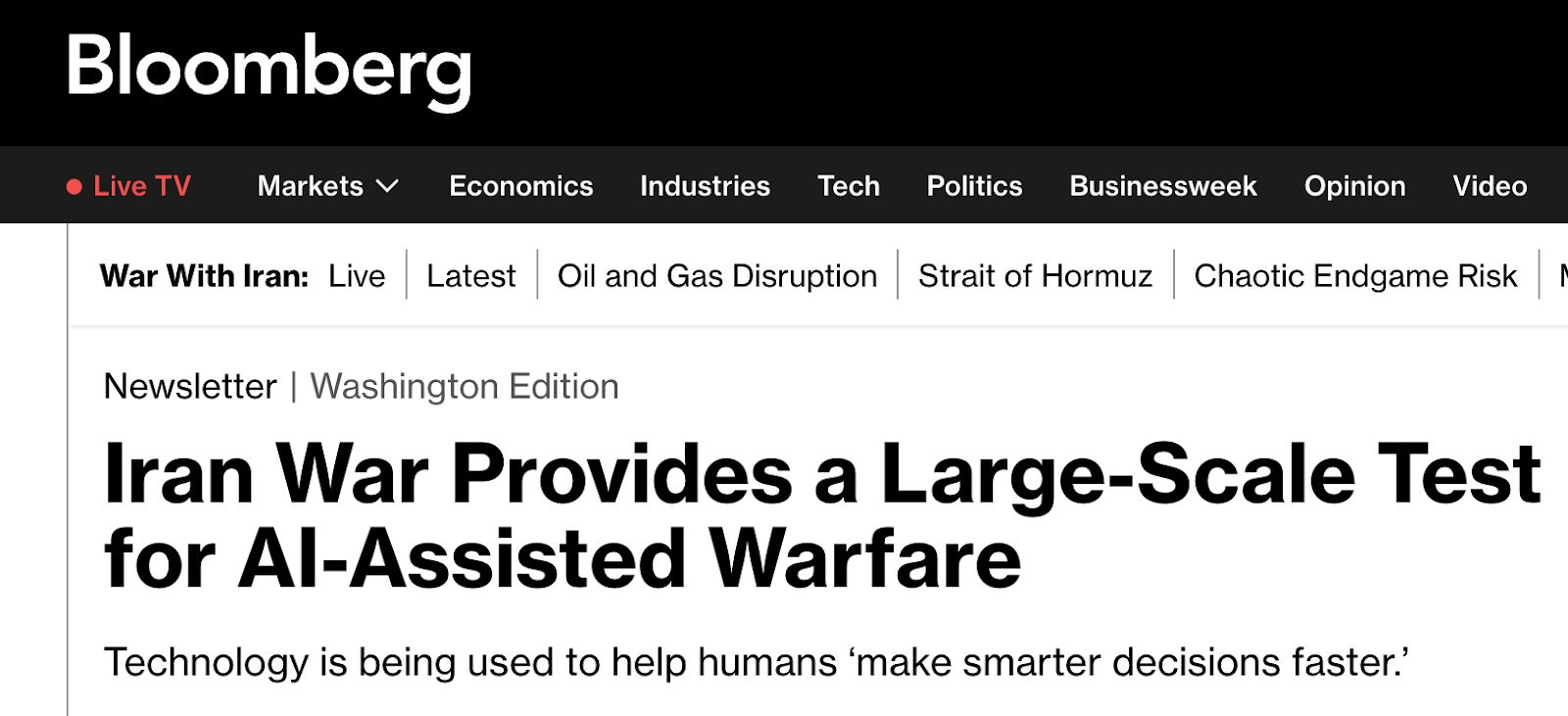
AI FUELS BLITZ OF U.S. STRIKES: A spokesperson for U.S. Central Command said that AI is helping its military “make smarter decisions faster,” Bloomberg reports. Within the first 24 hours of the war with Iran, the U.S. attacked 1,000 targets, double what it launched its initial hit on Iraq in 2003, according to the head of Central Command, Admiral Brad Cooper.
AZERBAIJAN THREATENS BACK: After two drones coming from Iranian territory struck an airport in western Azerbaijan, it is preparing to take “necessary retaliatory measures” against Iran. It temporarily closed the affected portion of airspace and banned Iranian trucks from movement through all border crossings, which span over 400 miles. Ethnic Azeris are the largest minority group in Iran, where there are about 20-25 million. Meanwhile, Iran continues to deny the attack.
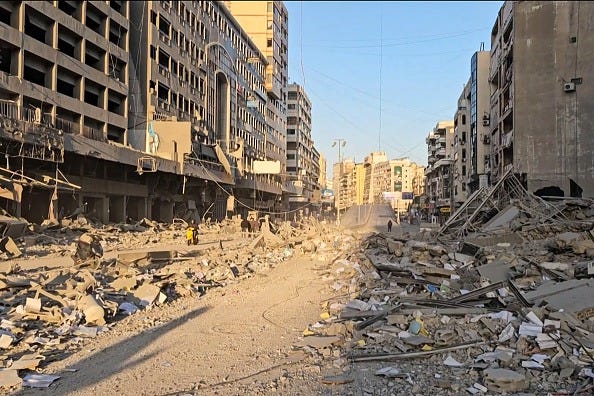
ISRAEL AND HEZBOLLAH CONTINUE TO TRADE STRIKES: Hezbollah warns Israelis to evacuate the border region between Lebanon and Israel via Telegram after Israel struck Dahieh last night, an area in the south of Beirut with a strong Hezbollah presence. The Israeli military announced yesterday that it had started targeting Beirut’s Hezbollah infrastructure, according to BBC. The two countries have been exchanging strikes since Monday.
JAPANESE CITIZENS HELD IN IRAN: Japan is calling for two of its citizens, detained before the joint U.S.-Israeli strikes, to be released. One is confirmed to be a journalist, and the other is yet to be publicly identified.
GULF STATES STRAINED BY WAR: A Gulf official told the Financial Times that three Gulf states are reviewing their foreign contracts, discussing the strain on their economies and investigating whether they can trigger force majeure clauses. This comes as the closure of the Hormuz Strait hurts oil revenues and amidst increased strikes on the Gulf states.
Stay safe out there.
Best,
Jacqueline
Please be careful with your wording. Hezbollah is not Lebanon. Lebanon wants no part of this war. Otherwise, thank you for the updates!
Great reporting.