

At the bottom of this page: Latest news at this hour.
Hormuz Blockade Lost 1.15 Billion Barrels of Oil... U.S.-Iran Talks in Switzerland Postponed... Israel-Lebanon Ceasefire, Immediately Followed by Breach Accusations.
Editor’s note:
The World Cup doesn’t feel like just soccer this year.
We wanted to tell that story: about fandom, belonging, and the politics of sport. So our reporter based in South America found an Iranian-Mexican superfan to take us inside this cultural moment.
New here? Subscribe for free today!
If this unique coverage feels like something worth supporting, help us keep our reporting machine alive by upgrading to a paid subscription today.
OUR LEAD STORY:
BOGOTA, Colombia — Art Eftekhari remembers being woken by his father one memorable sunrise when he was a boy. The two drove together through the dark, empty streets of Anaheim, California, the engine’s hum the only sound cutting through the early-morning silence, to a crowded cafe.
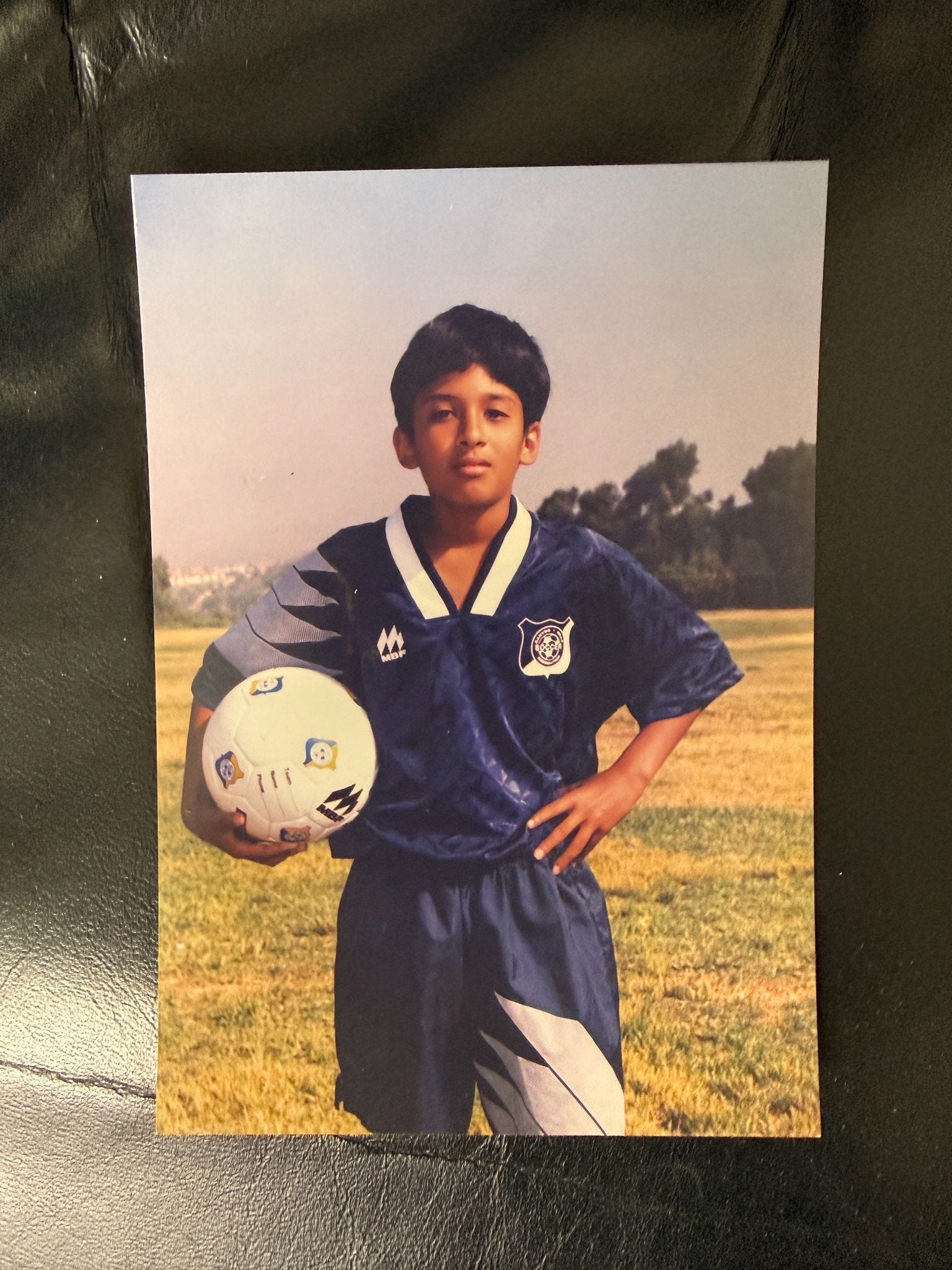
Inside, the smell of coffee wafted through the cramped cafe, father and son squeezed in alongside dozens of fans packed around a giant rear-projection television, watching Iran’s national team, Team Melli, play its first FIFA World Cup matches, broadcast by satellite from Argentina in 1978.
“It didn’t matter if it was 5:30 or 6:00 or 6:30 in the morning,” Eftekhari said. “We were all there. And when Iran scored, we just went crazy.”
On Monday, Art joined thousands of Iranian supporters in Los Angeles as Team Melli opened its 2026 World Cup campaign with a 2-2 draw against New Zealand — the eighth World Cup in which he has watched Iran play. The timing could hardly have been more pointed: hours earlier Washington and Tehran announced a memorandum of understanding that ended nearly four months of fighting.
The agreement stipulated that the Strait of Hormuz would be reopened, the US would lift its naval blockade and there would be an immediate end to military operations on all sides. That diplomatic chill has trailed Iran throughout the tournament; Visa denials for more than a dozen staff forced the team to abandon its planned US training base in Arizona for Tijuana, turning the Mexican border city into Team Melli’s unlikely home.
Nearly 50 years after watching Iran play its first World Cup match as a kid, Art is just as devoted to the national team. Now, a high school world history teacher in Los Angeles by day, he hosts the only English-language YouTube channel dedicated to all things Team Melli by night. More recently, Art witnessed how Tijuana — often described as the “political equator” between the Global North and South — embraced Team Melli, whose histories have both been shaped by complex sociopolitical tensions with the United States.
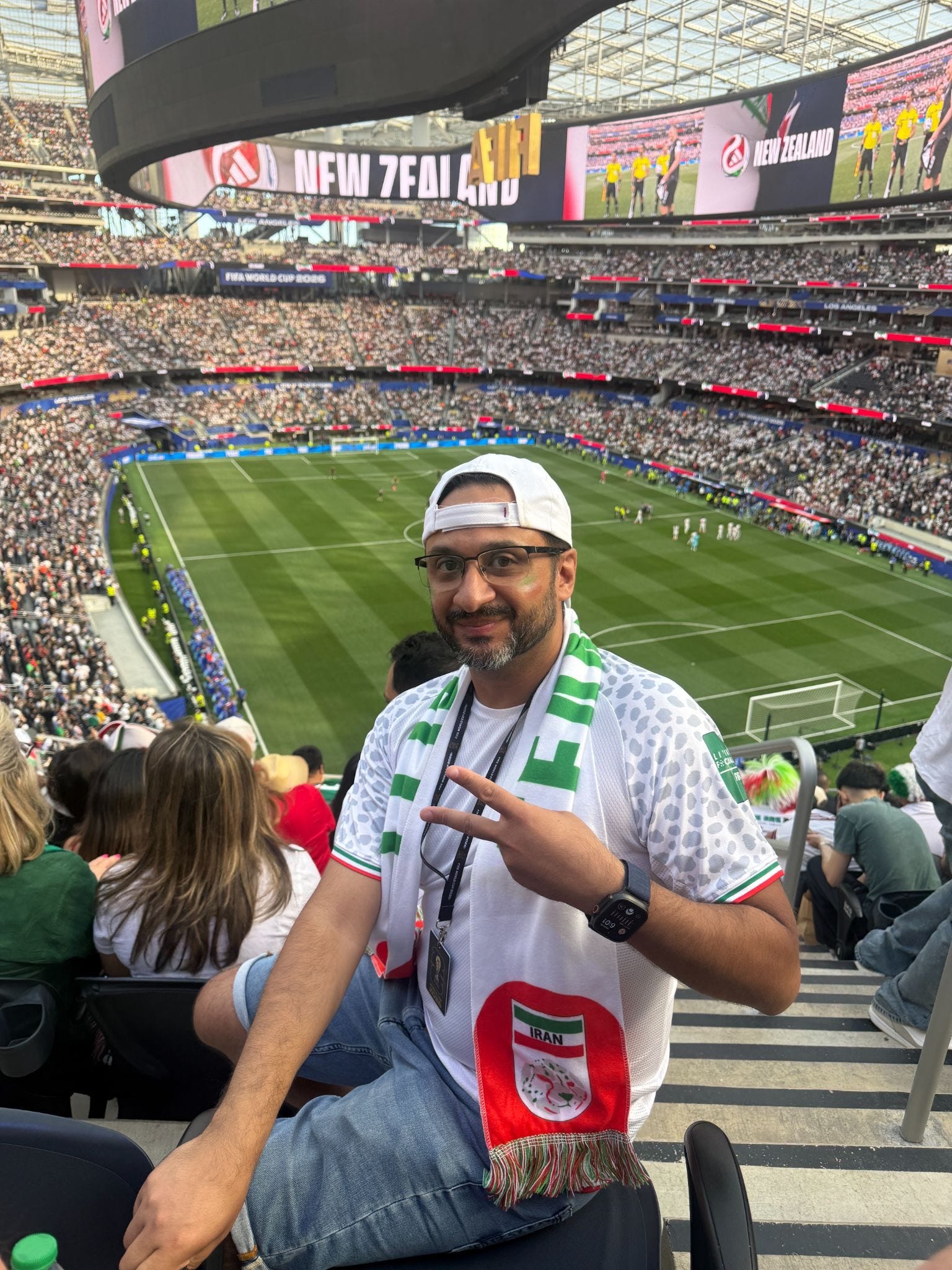
Soccer, and Team Melli, have shaped much of Art’s life beyond fandom. He didn’t even own a passport until he learned he had secured tickets to the 2006 World Cup in Germany.
“Whenever I go to a different country, I always want to watch a soccer match in person at a stadium,” he shared. “It is the most popular sport in the world and it is only fitting to connect with other people by talking about the beautiful sport of soccer.”
He has attended 11 World Cup matches across the 1994, 2006, 2018, 2022, and 2026 tournaments, describing soccer as his way of experiencing many different countries.
“I’ve even had the privilege of attending an Iran World Cup Qualifier in Tehran, 2009,” he said. “‘Till this day that’s the loudest sporting event I’ve ever attended.”
After enjoying the UEFA Euro 2012 while teaching English in Poland, Art returned to the U.S. and shortly after, started Team Melli Talk as a podcast in 2016 before building out his YouTube channel two years later.
He knows many Iranians are divided in their thoughts about the team: whether it acts as a symbol of the Iranian regime or a unifying representation of the country’s people. Though he welcomes all opinions and comments on his channel, Art only focuses on covering the gameplay and analyzing the team’s performance.
Now, Art takes much of his global experience motivated by soccer into the classroom, sometimes building lessons off his travels and knowledge of World Cup history — occasionally sneaking in Team Melli games while his students are working and he’s ‘just on his computer’.
For years, Art’s favorite jersey had been a replica of Iran’s 1978 World Cup jersey, reminding him of those early mornings watching Team Melli with his father. Now, its rival is the current Team Melli kit, signed by every player he met recently in Tijuana, Mexico.
Tijuana has become Team Melli’s temporary headquarters this year, and the city’s embrace of the team isn’t unexpected for Art — the son of an Iranian father and Mexican mother, he has blended both cultures his whole life.
“They’re both very welcoming people. They’re both very, very opinionated,” Art said about what the two communities have in common. “That’s for sure.”
When reports surfaced that Team Melli would be based in Tijuana during the tournament, Art made an educated guess about where the team would train: Estadio Caliente, home of Club Tijuana’s Xolos.
He booked a room at the nearest hotel.
“That was probably one of my best ideas ever,” he said.
The decision paid off almost immediately. Just hours after crossing the border with his wife and nearly 1-year-old daughter, Art spotted four Team Melli players outside the hotel — the same one the team itself was staying in.
Despite spending years following the national team around the world, and documenting its trajectory publicly since 2016, meeting the players still left him nervous.
“I was starstruck,” he said. “It was a dream come true.”
The morning after waking up in the same hotel as Team Melli, Art found himself standing in line at a Starbucks in Tijuana just a few heads behind star Iranian striker Mehdi Taremi.
Seizing the moment, Art jokingly called out, “I’ll add a cappuccino to that order,” as Taremi stepped up to the counter. To his surprise, Taremi went along with the joke and bought the drink before striking up a friendly conversation. Art later described the encounter as a quintessential display of “Iranian hospitality,” saying it made him “feel like a little kid again.”
Art continued to meet nearly every Team Melli player during his time in Tijuana.
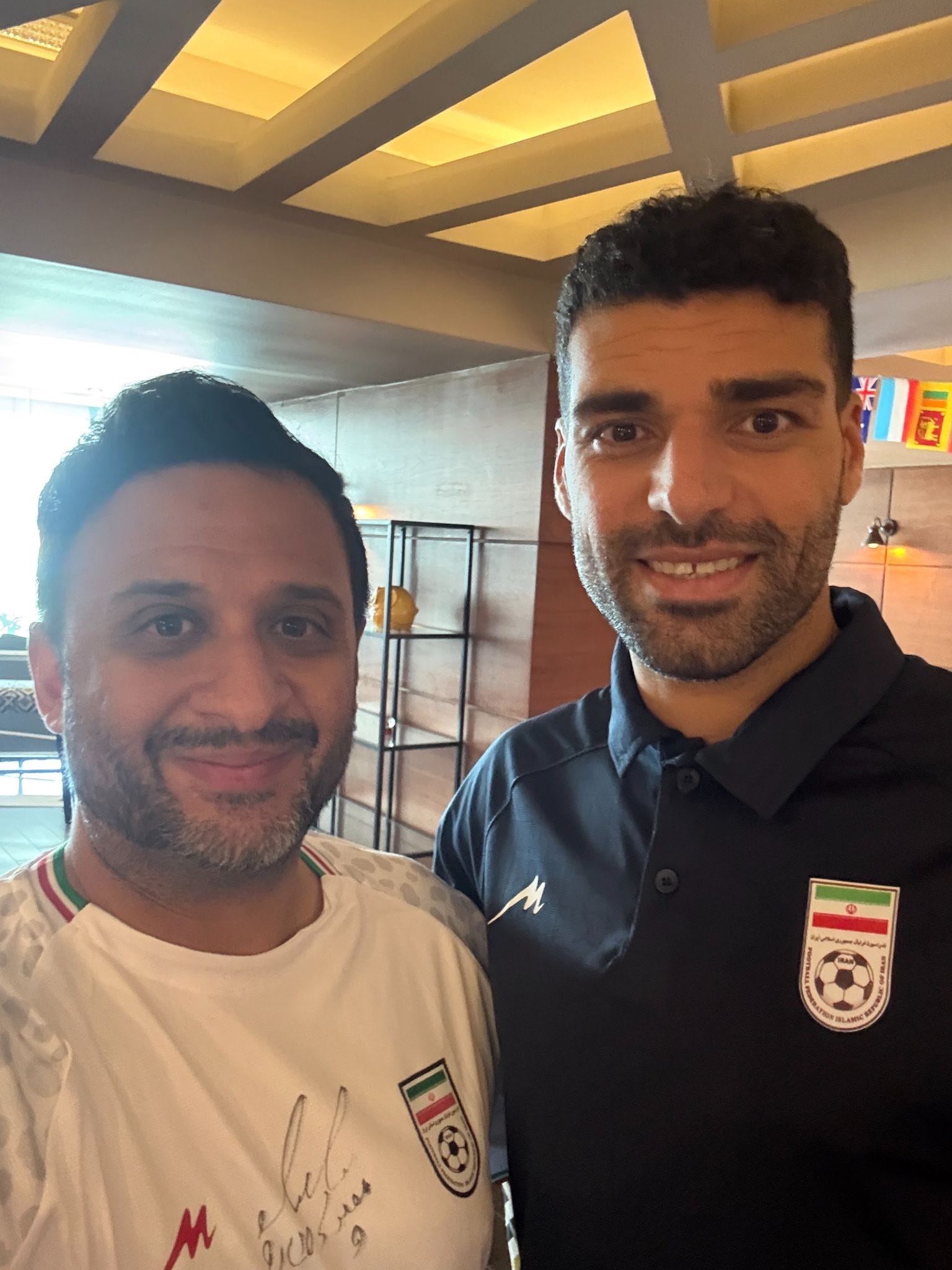
While in Tijuana, Art found himself moving comfortably between cultures, chatting with residents and reporters in Spanish, the language he speaks more fluently than Farsi, while following the Iranian team.
“The joke for a few World Cups now is that when you see the Iranian team, they could all be Mexican,” said Mariana Martínez Estens, a former journalist who covered the U.S.-Mexico border, first started living in Tijuana when she was eight years old.
Since arriving in the city, Team Melli has been serenaded by mariachi musicians outside its hotel and greeted by fans wearing Mexican jerseys customized with Arabic script.
For Martínez Estens, the enthusiasm reflects a deeper connection.
“It’s super syncretic and super telling,” she said.
Both Iranians and Mexicans, she argued, can relate to being judged through the lens of U.S. foreign policy and geopolitics.
The journey Team Melli will make crossing the border between Mexico and the U.S. during its group stage stint is one thousands of residents of Tijuana make daily.
“When you give the officer your passport, they have your balls in their hands,” she said.
Although Team Melli likely experiences a far more comfortable version of that crossing, Martínez Estens believes Mexicans understand the stereotypes of xenophobia many Iranians confront.
“One is Muhammad and the other is Pepe, but in the grand scheme of things, they’re treated the same by border agents and by people who are afraid of other people,” she explained.
She also sees Mexico’s embrace of a team rejected from staying in the United States as a subtle geopolitical statement — a “tongue-in-cheek” reminder of a complicated relationship with its northern neighbor.
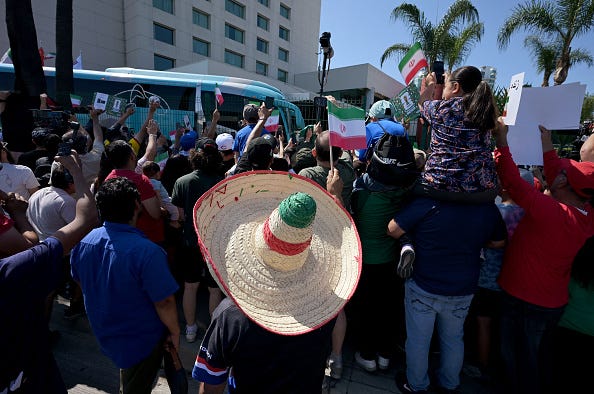
For many years, Art said he felt conflicted — almost in denial — about being more invested in Iran’s national team than Mexico’s.
In 2006, he witnessed the two countries battle each other in Germany, where Mexico defeated Iran 3-1.
“That was my form of torture. I just wanted the game to end in the tie,” he said.
But for Art, that loyalty was never about nationality at all — it ran straight back to his father.
“I’m more attached to the national team of Iran because my dad taught me how to play soccer,” he said. “That’s why. And that’s just super deep for me.”
Now Art has a child of his own: a daughter who will grow up hearing stories about how, as a baby, she met Team Melli players in a hotel lobby in Tijuana.
This Father’s Day — his first as a father himself — he’ll be back in the Los Angeles stands, watching Iran face Belgium beside the man who ignited the passion for football inside him. His father is older now and doesn’t remember things the way he once did. Still, Art hopes some part of him remembers those early mornings in Anaheim — the cafe, the crowded room, and the crowd going crazy when Iran scored.
“I’d like to think,” he said, “that somewhere he’ll be excited.”
*Correction: Iran War Dispatches made a mistake in the initial version of this article. Art and his father watched the 1998 World Cup Qualifiers together. We apologize for the errors.
Editor’s note:
The World Cup doesn’t feel like just soccer this year.
We wanted to tell that story: about fandom, belonging, and the politics of sport. So our reporter based in South America found an Iranian-Mexican superfan to take us inside this cultural moment.
If this unique coverage feels like something worth supporting, help us keep our reporting machine alive by upgrading to a paid subscription today.
THE LATEST NEWS AT THIS HOUR:
By: Oleksandra Poda
HORMUZ BLOCKADE LOST 1.15 BILLION BARRELS OF OIL: On June 17, Iran and the U.S. signed a memorandum, promising to reopen the Strait of Hormuz after nearly four months of a naval blockade. The analytics firm Kpler estimated that since the war started at the end of February oil supply losses totaled 1.15 billion barrels.
The International Energy Agency (IEA) reported that its petroleum reserves have fallen to their lowest level in nearly 4 decades. “You want to see bedlam? We run out of reserves in about four weeks,” President Donald Trump said on June 17 at the G7.
U.S.-IRAN TALKS IN SWITZERLAND POSTPONED: The U.S.-Iran talks, which aim to devise a more concrete agreement, have been postponed, with the White House citing logistics complications. Talks were scheduled for June 19.
The decision came after Israel attacked Lebanon, violating one of the terms of the Iran-U.S. agreement in which fighting on all fronts should cease. Israel has said it is not bound to the agreement and has been prevented from seeing the text by the U.S.
It was reported that Special Envoy Steve Witkoff was already on his way to Switzerland, joining Jared Kushner, who had arrived earlier. Trump stated, “If it doesn’t get done in 60 days, it’s all right. We go back to bombing.”
ISRAEL-LEBANON CEASEFIRE, IMMEDIATELY FOLLOWED BY BREACH ACCUSATIONS: Despite the announced ceasefire that was established at 4:00 p.m. on June 19, Israeli forces continued their strikes on Lebanon in the very first hours after it took effect.
Vice President Vance stated that the explosions in Beirut’s civilian neighborhoods were “not acceptable”, while President Trump said he would be able to stop Israel from striking Lebanon.
The clashes between Israel and Hezbollah could affect the agreement signed the day before between the U.S. and Iran, since Iran made the withdrawal of Israeli troops from Lebanon one of the conditions of the agreement.
Stay safe out there!
Best,
Abby

I loved reading Art’s story of 3 cultures that made him. After everything rump has thrown at the Iranian team, I hope they do really well, maybe even beat US. But I don’t know much about soccer/football