


At the bottom of this page: Latest news at this hour.
The U.S. called off new strikes against Iran; Iran is suspected of hacking water supply systems in seven U.S. states; Swedish criminal network recruits teenagers on behalf of Iran.
Editor’s note:
Each week our team produces human stories from the region to illustrate the real impact of war on people’s lives. Sometimes, we find stories from unexpected pockets of the region.
Support our work to keep reading new stories from new perspectives.
Have a friend who might be interested?
OUR LEAD STORY:
YEREVAN, Armenia — These days, Hamza Hasanat — a travel agent in Petra, Jordan — has a much quieter routine than he used to. He starts the morning by taking care of his small garden. Working there helps clear his mind and stay busy during the summer, which is a slow season for tourism in Jordan. After that, Hamza checks his emails and WhatsApp messages to see if there are any new inquiries from clients. Before February 28, 2026, if 20 people contacted him about visiting Jordan, many of them would end up booking. Now, since the first U.S. and Israeli strikes on Iran, of 20 people, maybe one will come. Maybe none at all.
These days, America’s war in Iran is undoubtedly a regional one. Jordan, wedged between Saudi Arabia, Israel and Iraq and Syria, which have all endured this war on their soil, has seen its own share of missiles and drones when Iran targets U.S. military bases in the country. Most recently, on July 29, Iran fired ballistic missiles at America’s Muwaffaq Salti Air Base in the eastern desert.
On August 1, the U.S. embassy in Jordan joined embassies across the region in issuing a warning for citizens to “consider departing, or be prepared to depart should there be an escalation.” The security alert said to prepare for airspace closures, avoid travel to military bases in Jordan, and beware that both civilian and critical infrastructure have been targeted.
Jordan’s tourism sector is starting to bleed out because of this war — in the first four months of 2026, the country’s tourism revenue was down 9.5 percent, according to The Jordan Times, citing the Central Bank of Jordan.
It’s a preview of a global problem: when headlines flatten an entire region into a war zone, economies far from direct involvement pay the price.
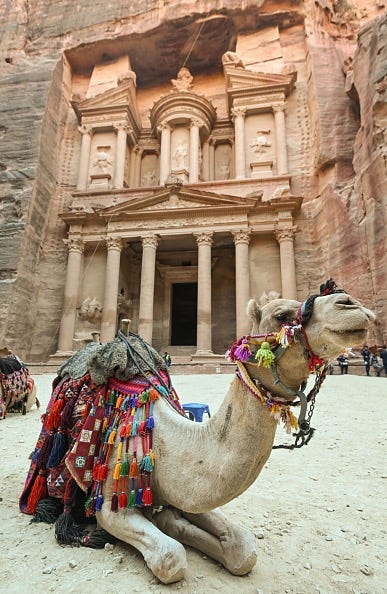
Hamza, who has been working in the tourism industry for about 20 years, currently lives in Petra, where he owns and operates Jordan Pillars Travel & Tours, a local tourism company specializing in private tours, transportation, and customized travel experiences.
“Tourism is more than just my job — it’s my passion,” he said. “I enjoy meeting people from different countries, introducing them to Jordan’s history and culture, and helping them create unforgettable memories.”
The tourism sector is highly sensitive to geopolitical instability, and Jordan’s volatile neighbors mean that, like this summer, the country often gets involved in regional conflict. According to the Journal of Travel Research, political upheavals reduce tourism not only in the countries where the events take place but also in neighboring states that are not directly involved in the conflict. Researchers describe this phenomenon as “regional contagion” or the “spillover effect.”
Throughout the Iraq War that started in 2003, the Arab Spring uprisings and the rise of ISIS in the 2010s, the Syrian civil war, which began in 2011, and most recently, the war in Gaza, Hamza watched the same pattern repeat itself: crises that happened beyond Jordan’s borders influenced Petra almost immediately.
For years, Hamza has been reassuring worried and hesitant tourists: Jordan itself remains completely safe.
An analysis of Jordan’s travel industry shows that after the Arab Spring, a wave of anti-government uprisings across North Africa and the Middle East, tourists began to perceive Jordan, which saw its own share of protests, as unsafe. As a result, the number of international tourist arrivals in Jordan fell from 8.2 million in 2010 to 4.8 million in 2015, a decline of approximately 41%.
During the COVID-19 pandemic, the world stopped. Airports were closed and people were focused on protecting themselves and their families. But even then, Hamza had hope that once travel reopened, business would return.
This current period — the war between the U.S. and Iran — feels much harder for Hamza: “Tourism is still technically open, but travelers are afraid and every new escalation brings another wave of cancellations.”
Military conflict involving Iran has been costing the regional tourism sector approximately $600 million per day, according to a report from the World Travel & Tourism Council. Losses were driven not only by declining traveler confidence but also by airspace closures.
Normally, Petra is full of energy — tour guides, drivers, restaurants, hotels, souvenir shops, horse and camel owners, and local families. “The whole town depends on tourism, Hamza said.
Tourism, in many ways, is the backbone of Petra’s economy.
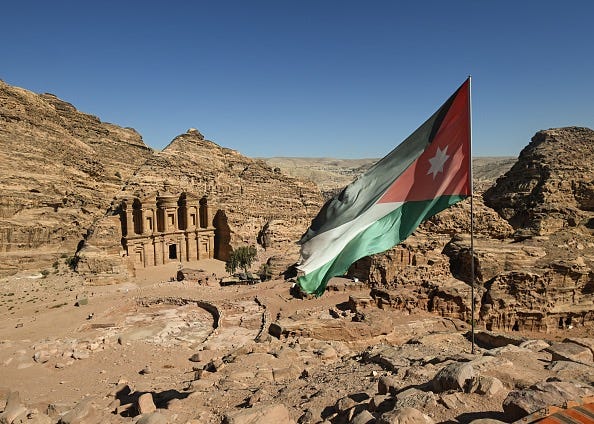
This year, Petra feels much quieter than it should during the high season, the spring, which coincided with the first few months of U.S. strikes in Iran, and the spillover of fighting that caused in the Strait of Hormuz, Israel and Lebanon, and the Gulf states.
The difference for Hamza is palpable: the streets have become quieter, hotels stand half empty, only few guests dine in at restaurants, and many local workers lose income.
“The first thing that happens is that people become afraid to travel,” he said. “We receive emails from guests asking whether Jordan is safe, even when the conflict is taking place hundreds of kilometers away.”
Compared with the same period last year, Hamza’s bookings fell dramatically. Some weeks were more than 50% lower, and during peak uncertainty the decline felt even greater.
“I would estimate that around 80–90% of people who already had reservations contacted me with safety questions before making a final decision,” he said.
He still remembers how one family had been planning their dream trip to Jordan for months and everything was already confirmed, but after seeing the news they cancelled the trip. Hamza was disappointed, knowing they would have enjoyed a safe and unforgettable experience.
Because many times those guests, who decide to head to Petra despite troubling headlines, told him how Jordan felt peaceful and welcoming. People were surprised by how normal everything was, and many later recommended Jordan to friends, he said.
Home to the iconic Treasury, the Monastery, the Siq, the Royal Tombs and the Roman Theatre, Petra experienced its golden years of tourism in 2018 and 2019, when it welcomed more than 1.1 million visitors annually from around the world. November 2019 became the busiest month in Petra’s history, attracting more than 152,000 tourists.
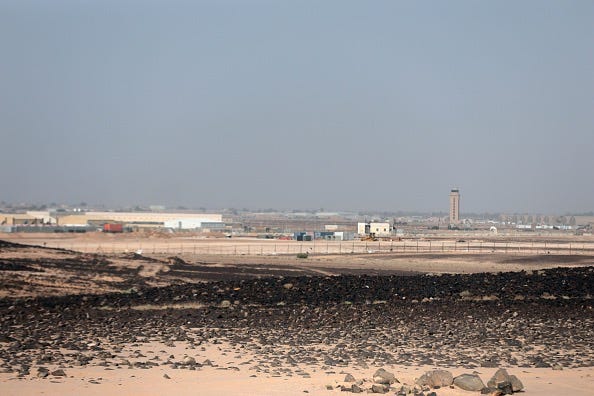
The fear of visiting Jordan is far from unfounded, though. In mid-July, the Muwaffaq Salti Air Base in Jordan, a U.S. air hub and the frequent target of attacks, was hit, and two servicemen were killed.
“My first concern was for people’s safety. Then, almost immediately, I started thinking about tourism because I knew many people abroad would see the headlines. And when something happens inside Jordan, even if it is isolated, the psychological impact is much stronger,” he said.
His work changed overnight. Instead of spending most of his hours planning trips, Hamza had to spend much more time reassuring worried clients, answering messages, explaining the situation, and showing them that daily life in Jordan continues normally.
Within a very short time of the first Iran strikes on the Muwaffaq Salti Air Base, some clients canceled, while many others contacted him asking whether they should postpone or cancel their trips, Hamza said.
“I also share real-time updates, photos, and videos from Petra, Wadi Rum, and Amman so they can see that life continues normally. Trust is just as important as providing transportation or organizing tours,” he said.
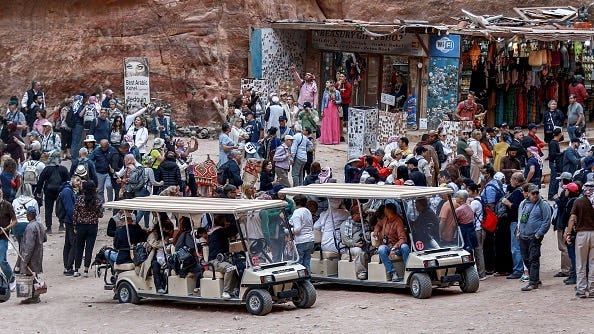
The situation exhausts him. Month after month, his savings are drained without knowing if income from his travel business will ever fully recover.
But despite difficult moments, especially after repeated crises, Hamza has never seriously considered pivoting careers. He adores his work.
“I enjoy introducing visitors to Jordan and seeing their expectations completely change after they arrive. Every satisfied guest reminds me why I continue.”
And for this purpose Hamza has created a very flexible routine of staying in close contact with hotels, camps, and tourism partners so he can quickly adjust itineraries if flights or schedules change. He’s positioning himself to allow guests to postpone, rather than cancel trips completely.
Who knows what the next high season will bring.
Editor’s note:
Each week our team produces human stories from the region to illustrate the real impact of war on people’s lives. And sometimes we find stories from the most unexpected places that were influenced by the ongoing conflict.
Support our work to keep reading new stories from new perspectives.
Have a friend who might be interested?
THE LATEST NEWS AT THIS HOUR:
By: Oleksandra Poda
THE U.S. CALLED OFF NEW STRIKES AGAINST IRAN: On August 2, Trump called off the announced strikes. These strikes were responding to Tehran’s continued attacks on commercial vessels in the Strait of Hormuz and the targets allegedly include energy infrastructure. However, the U.S. canceled strikes after Trump said Iran and other Middle Eastern countries, including Saudi Arabia, asked them to hold off. However, Iran has denied asking Trump to cancel the strikes.
This comes as Trump announced an agreement on the disarmament of Hamas. If implemented, this would deprive Iran of one of its key regional allies.
IRAN IS SUSPECTED OF HACKING WATER SUPPLY SYSTEMS IN 7 U.S. STATES: The FBI and the EPA issued a joint warning about a large-scale cyberattack on water supply systems in at least seven U.S. states. The first reports came from Minnesota, where hackers attacked more than 30 systems to reduce pipe pressure, which could lead to water contamination. A boil-water advisory was issued in some communities.
The FBI is treating Iran as the prime suspect, specifically the IRGC-backed CyberAV3ngers group, which had previously attacked U.S. water systems in 2023 and 2024. Meanwhile, Trump publicly dismissed the theory of an Iranian connection, saying that the state of Minnesota was behind the attack.
SWEDISH CRIMINAL NETWORK RECRUITS TEENAGERS ON BEHALF OF IRAN: On August 2, the BBC published a major investigation into the Swedish criminal group Foxtrot. Since 2023, Foxtrot has systematically carried out operations on behalf of Iran’s government across Europe. The group will often recruit teenagers via encrypted messaging apps, assigning them tasks – including acting as hitmen – in exchange for money without disclosing the client’s identity.
According to Europol and the Swedish police, the network is responsible for approximately 35 murders since 2022, as well as attacks on Israeli diplomatic and Jewish targets throughout Europe.
In March 2025, the UK government imposed sanctions on Foxtrot and its leader.
Stay safe out there.
Best,
Anna and Jacqueline