

Editor’s note:
Each week, our team tracks the latest developments across the Middle East so you can stay informed about the region’s most important news. Subscribe to receive our weekly roundup straight to your inbox.
Know someone who might be interested, too?
The latest news at this hour:
NEW U.S.-IRAN DEAL EXPECTED FOR WEDNESDAY: A new U.S.-Iran agreement might be announced on Wednesday, Axios reports, citing sources from both sides who are familiar with the matter. The interim agreement, discussed by U.S., Iran and Oman, reportedly aims to, once again, broker a ceasefire between the two countries and resume negotiations for a nuclear deal. Axios has also reported that the deal will likely give Iran expanded control over the Strait of Hormuz, beyond what it had before the start of the war.
The announcement comes after previous failed attempts at diplomacy, with both sides exchanging strikes since the ceasefire was put in place in April. However, on Saturday Trump held off on calling for more strikes on Iran. President Trump said in an interview with Fox News that the U.S. is having “good discussions” with Iran, while threatening to launch heavy attacks if “they [Iran] back out again”. Meanwhile, the Iranian state news outlet IRIB said that the deal won’t result in an immediate opening of the Hormuz strait, while Tehran has denied having direct talks with the United States, instead working on diplomatic solutions through the mediators Oman and Pakistan.
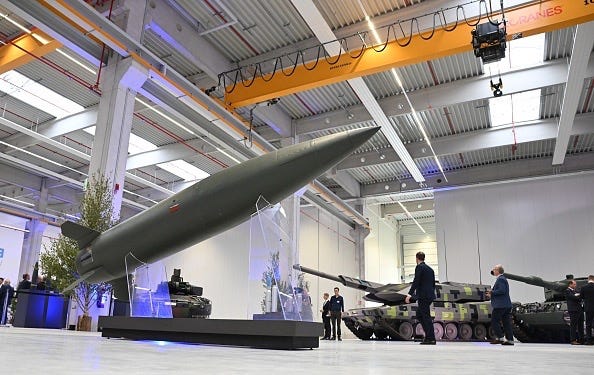
U.S. MISSILE STOCKPILE RUNNING DRY DUE TO IRAN WAR: The U.S. military is running out of its highly accurate long range missiles, according to Reuters. The military has gone through almost all of its global stockpile of Army Tactical Missile Systems (ATACMS) and its successor, Precision Strike Missiles (PrSM) during the five months of war with Iran. This raises concern about whether the U.S. military will be fully ready for future conflicts.
These munitions are effective in conducting long-range, highly precise strikes. The ATACMS, in particular, allowed Ukraine to strike targets deep inside Russia. So far, the U.S. military has relied on these types of munitions to strike Iran from far away, but if the stockpiles reach critical levels before the end of the conflict, the U.S. military could resort to riskier ways to strike Iran.
IRANIANS STRUGGLE WITH RECORD 62% INFLATION: In Iran, record annual inflation of 62 percent was reported by the Statistical Center of Iran in the latest economy assessment. The report in Iran has sparked massive debate over whether the economic downturn is the result of the war with the U.S. or of the bad government administration.
Even before the war, Iran has suffered economically for years, with many ordinary citizens already struggling to cover basic costs. Now, as the war approaches the half-year mark, stark inflation has only worsened.
PAKISTAN OPENS LAND ROUTES TO IRAN: Pakistan’s officials opened six overland trade routes to Iran, aiming at easing the pile up of cargo destined for Iran at Karachi port. Pakistan’s Ministry of Commerce issued an order, allowing goods of every origin, except India, destined for Iran to freely transit Pakistan’s territory.
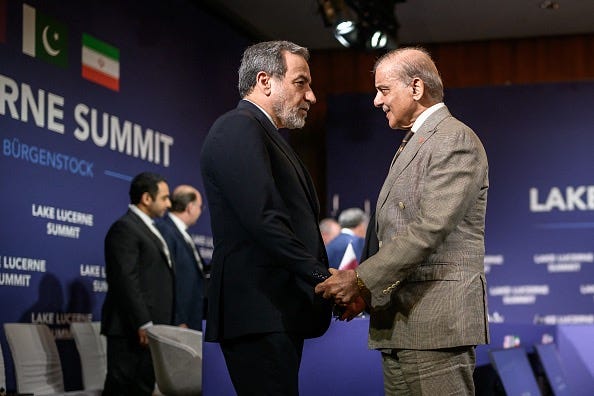
Throughout the Iran war, Pakistan has played a mediating role between the U.S. and Iran. This announcement comes as Iranian Foreign Minister Abbas Araghchi visits Islamabad for diplomatic engagements with Pakistan’s officials.
YEMEN HOUTHIS TARGET SAUDI SHIPS IN RED SEA: Yemen’s Houthis continue targeting Saudi ships that are leaving the Red Sea, claiming that it is a response to Saudi Arabia’s blockade of Houthi-controlled territories of Yemen that has remained in place since 2015. Earlier today, Houthi military spokesperson Yahya Saree said in a statement that a Saudi oil tanker called Wafa was struck in the Red Sea.
The blockade instigated by the Iran-backed Houthis is working to slow down shipping through the Bab el-Mandeb Strait, one of the most critical waterways for shippers. The Bab el-Mandeb Strait has been particularly important for countries like Saudi Arabia that have started relying on it after the disruption in the Hormuz Strait.
Stay safe out there.
Best,
Petro
