

At the bottom of this page: Latest news at this hour.
Trump may end the war with Hormuz closed… Iran denies any wartime negotiations with the U.S… Iran’s expelled ambassador refuses to leave Lebanon… Iran struck a Kuwaiti tanker… U.S. gas prices highest since 2022.
Editor’s note:
This is the kind of story that can only be told through on-the-ground reporting and through human-centered war correspondence. Putting a face to a headline is what we do best. If you agree, please support us. Subscribe today!
OUR LEAD STORY:
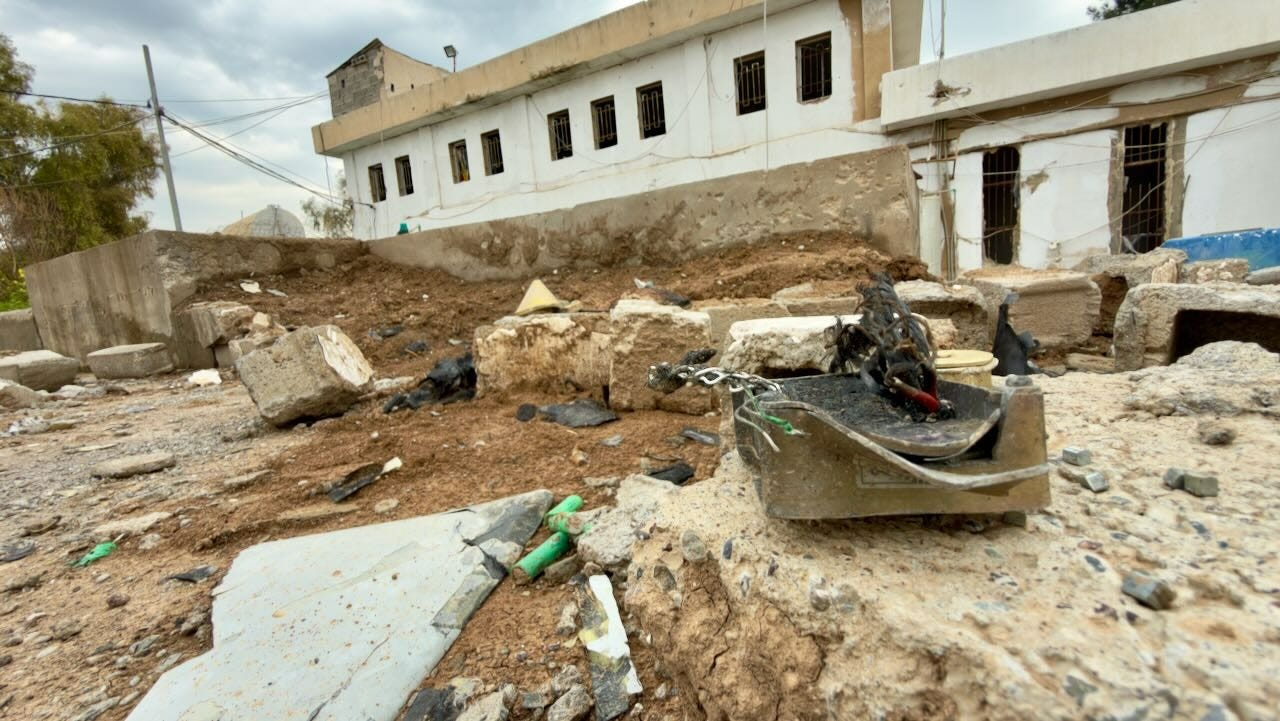
TOPZAWA CAMP, Iraqi Kurdistan—On March 5, at 7:10 in the evening, Afsaneh Rahimi was working in the media studio at the Khabat Organization of Iranian Kurdistan’s headquarters when the drone hit. She saw it hit and explode.
“The noise was so intense that two of the Peshmerga forces were deafened by the blast,” she says.
She called the noise terrifying and horrific, words that land differently when the person using it is a Peshmerga (the word for traditional Kurdish armed forces which means “those who face death”) with eight years in exile under her ammo belt. All the doors and windows in the media studio shattered. The ceilings of some rooms came down.
Her first instinct was not to take cover. “As soon as I heard the explosion, I ran toward the home of Mr. Kak Baba Sheikh Hosseini, the Secretary General of the organization, to make sure he was safe,” she said. “We moved him to a secure location as quickly as possible, and then I returned to the headquarters to check if anyone else had been injured.”
Her actions — protect the leadership, account for everyone else, then assess — is an example of who she is inside the Khabat Organization of Iranian Kurdistan, a leader in one of the Iranian Kurdish opposition groups hoping to see the end of the clerical regime across the border. She says, like other members of Khabat, she is always expecting another attack.
“We sleep with our boots on, and our ears are always tuned to the sky,” she said days after the attack. “The camp is no longer just a place to live; it has become a military fortress.”
As the war enters its fifth week, the Iranian Kurdish camps in Iraqi Kurdistan have become both staging grounds and traps — and Iran has started making that point with ballistic missiles.
Since Feb. 28, Iran and allied militias in Iraq have launched more than 450 drones and missiles against targets in Iraqi Kurdistan. At least 14 people have been killed and some 85 wounded. Most attacks have been against Iranian Kurdish opposition groups and U.S. bases, but some have targeted the Kurdistan Regional Government directly. On March 28, the residence of KRG President Nechirvan Barzani was attacked by drones, causing damage, but no injuries.
Much worse, however, was an attack on March 24, when six missiles struck a Peshmerga base north of Erbil, killing six Kurdistan Regional Government fighters and wounding 30. It was the first time Iran had struck Iraqi Kurdistan’s military directly.
That is the trap. For years, groups like Khabat, Komala, and the Kurdistan Democratic Party of Iran have kept fighters here waiting for a moment like this one. The U.S. and Israel have done serious damage to the IRGC. The regime is weakened. The opportunity the Iranian Kurdish opposition has spent decades training for may finally be arriving.
They say they are ready to cross the border, inspire the masses, and take back their land from the mullahs.
And yet, to act risks pulling the KRG — with its oil fields, its Gulf investment, and its glass towers — into a war.
“Our training has doubled,” Afsaneh told me. “From the break of dawn until late at night, we are engaged in combat and tactical drills. The time for just waiting has passed. Every one of us knows that tomorrow might be the day. We aren’t just preparing for defense anymore; we are preparing for the moment we might have to take our destiny into our own hands.”
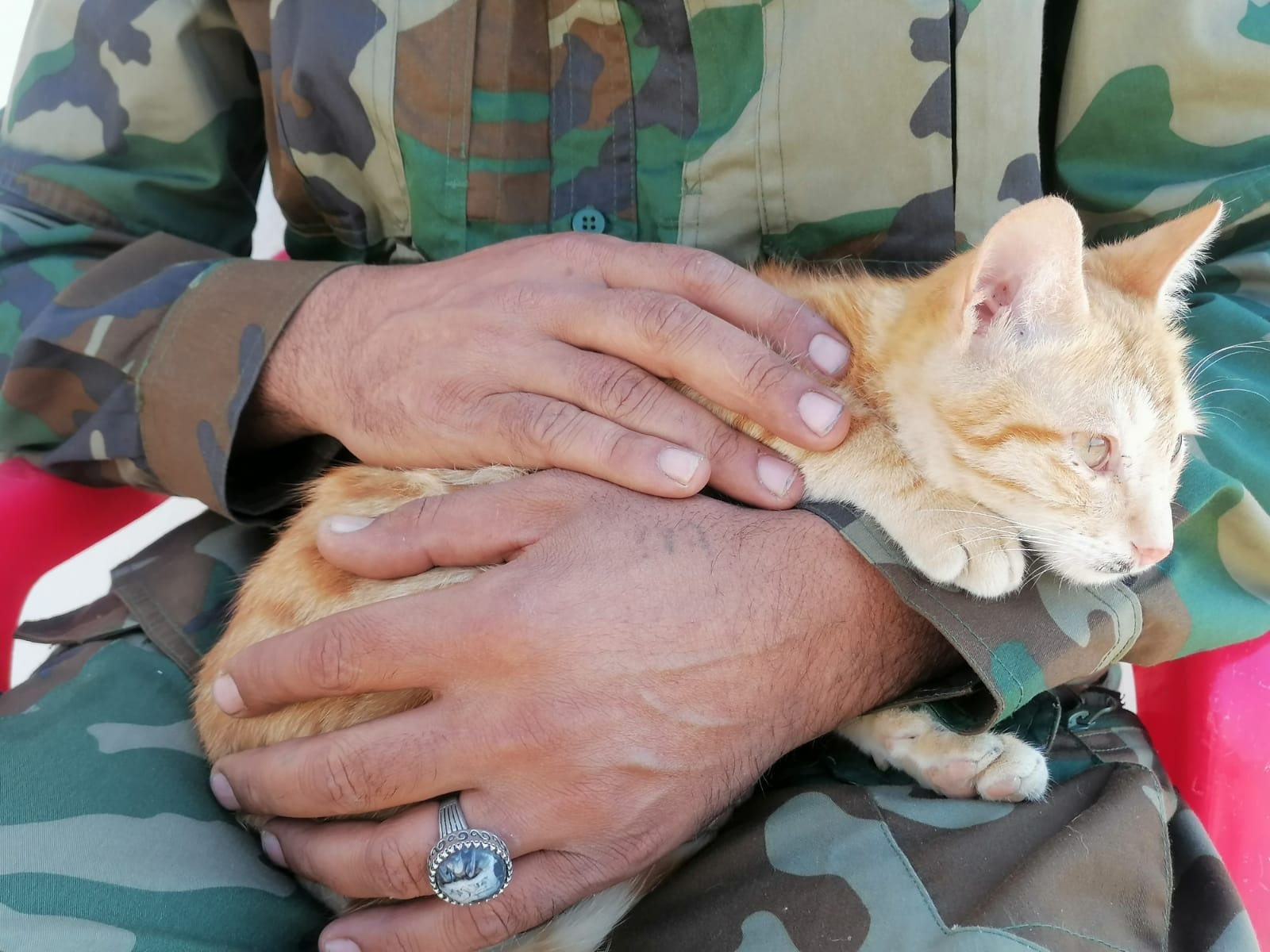
Despite the aerial threat to Topzawa camp, less than 20 miles northwest of Erbil, it had a welcoming energy. Afsaneh sat comfortably in a red plastic chair sipping tea as orange tabby cats lolled around, at ease in the shadow of war. She picked one up and cuddled it until it squirmed to be put down. She loves her cats. One had been injured in the strike, she said. It was nothing serious, just a paw wound, but enough that it needed treatment.
Topzawa was founded by Iranian Kurdish opposition fighters who fled to Iraqi Kurdistan after the harsh repression of the Iranian regime 26 years ago. It’s a strange collision of makeshift cinderblock buildings, grass pathways marked by attempts at topiary, with a note of shisha. Fighters in mismatched tactical fatigues mill about. Outside one building, a mud-caked pair of rollerblades sits abandoned by the door.
The camp was emptied of families and children some days before. A male Peshmerga — born in Iran, brought here as a child — secured the entrance, but asked newcomers minimal security questions.
The buildings were patched up, pockmarked by the drone attack, but many of them were also cheerily painted and the grounds neatly kept. There was no air of despair.
The drone attack itself left a 2-foot-wide crater against a bunker and started a fire against the wall of an opposite building, the charred remnants still visible. It blew out the glass in the kitchen, and it seemed the place had not been cleaned up yet. The media room where Afsaneh does most of her work also had the windows blown in and bits of glass litter the floor, but in the foyer to the building on the other side, an elaborate arrangement of flowers, which Afsaneh called “my flowers,” seemed untouched. This pleased her.
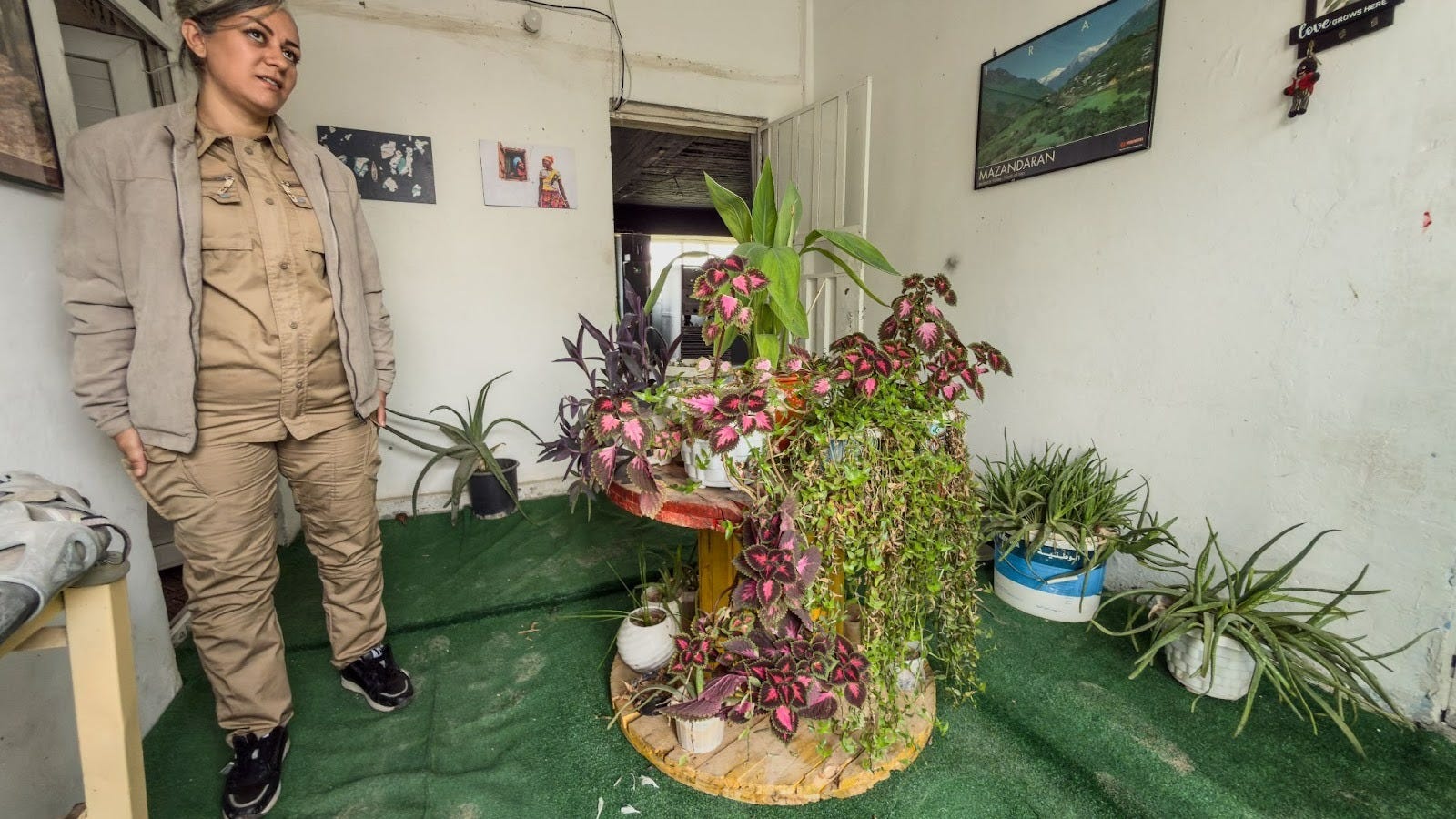
Afsaneh, 32, a Central Committee member of Khabat, has been here for the last eight years. Home lies on the lee side of the Zagros mountains about 65 miles from the border. It’s a Kurdish city where the judges speak Persian and a woman who wants a divorce from a husband who beats her finds the law stacked against her twice. Once for being a woman, once for being Kurdish. Afsaneh married young but the marriage was violent. When she wanted out, she said she had no legal recourse, no shelter system.
So she left. She arrived unannounced, she said — alone, from the city of Bukan in Iranian Kurdistan, carrying almost nothing. Khabat took her in and welcomed her, giving her a chance she never had back home.
She says she crossed the border eight years ago with her two daughters, then four and one, but has recently sent them away for their protection.
She chose Khabat deliberately, not because it was the largest or best-funded, but because it offered her, as a woman, more opportunities than some of the other six opposition parties. A woman can sit on its Central Committee, command units, make decisions that matter. “My opinion can outweigh three men’s,” she says.
That’s not a boast. Many Kurdish parties hold a more equitable stance toward women than many other political entities in the region. Kawsar Fattahi, a Central Committee member of Komala, another left-leaning Iranian Kurdish opposition group, said Komala, like Khabat, was one of the early parties to allow women into its Peshmerga units as fighters, not just as support staff.
“Do you know what our difference is?” Afsaneh asked. “Everywhere in the world, women are in politics. But having the permission to make decisions and be a part of the party’s politics and the party’s authority, that is very rare. But here, that exists. I, as a woman, can be a decision-maker.”
Should they move against the regime, Iranian Kurds would endanger everything their Iraqi Kurdish hosts have built. Ali Akbar Ahmadian, an Iranian defense official, warned the KRG it would strike everything in Iraqi Kurdistan if the opposition parties used their territory to attack Iran.
“Should their continued presence and plotting be permitted, or should these groups or [Zionist] regime elements enter the borders of the Islamic Republic through the Region, all facilities of the Kurdistan Region of Iraq … will be targeted on a massive scale,” he was quoted as saying by the Fars news agency.
The Kurdistan Regional Government, which has spent two decades building a quasi-state bankrolled by oil revenue and Gulf investment, is unwilling to risk that.
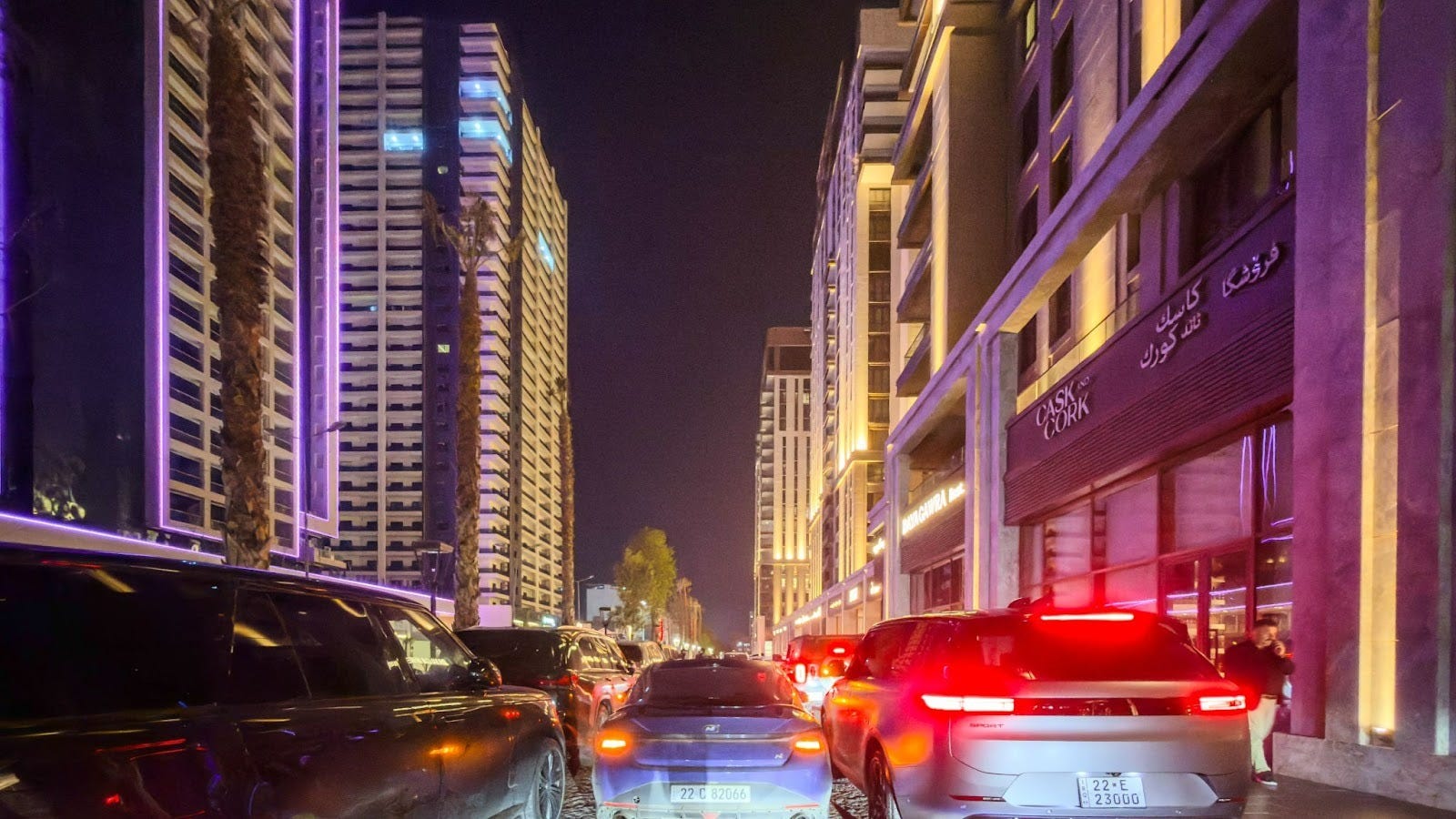
“They haven’t encouraged us to do something, and they haven’t stopped us from doing something,” says Kako Alyar, a top-ranking official in Komala. “But what I can say is that we are Kurds… We understand each other. So they know that if we get the possibility, we will go back to Iran.”
For Afsaneh, it’s personal.
“I can smell the scent of the Kurdish soil from the other side of the border more than ever,” she said. “It feels as if the mountains are calling our names. Being close to home means being close to danger, but after all these years in exile, I am ready to open my arms to any risk if it means my next step will be on the soil of my birthplace.”
It’s unlikely that the ballistic missile attack on the base near Soran was improvised. An attack with six missiles requires planning, targeting intelligence, a decision made somewhere up the chain of the IRGC that this mountain needed to be struck that morning.
Iran has so far issued no public statement, no denial, no acknowledgment, no claim that it was targeting opposition militants. According to KRG President Nechirvan Barzani, Iran privately told Kurdish officials it was a mistake and promised an investigation. But a senior security source within the KRG doesn’t believe that. The base was not an Iranian opposition camp like Topzawa, he said, but a KRG training facility used by regular Peshmerga units.
“There wasn’t any opposition there,” the security official said. “I’m sure 100 percent.” If that’s true, the question is what message Iran was trying to send, and to whom.
Afsaneh, on the other hand, has received no messages. For two months her phone has been silent. No calls, no messages, no smuggled word from family inside Iran. The regime has tightened communications in the Kurdish regions since the war started, and the networks that once carried brief, cautious calls across the border have gone dark.
“Still nothing. Absolute silence,” she says. “This two-month silence feels like a dagger.”
She does not know if her parents are alive. She does not know if they have been detained or questioned because of her. She does not know if the cousins and aunts who once passed messages have stopped because they cannot or because they are afraid.
“My prayer every day is simply that they are safe, even if I cannot hear their voices.”
Her daughters are old enough to understand why their mother sent them away. The political language — the committee member’s language of destiny and struggle — drops away when she talks about them. Her voice is a mother’s that knows the pain of absence.
“I stay here to build a future where no mother is forced to be separated from her children.”
That evening, the cats were still prowling about. Afsaneh walked me to the gate, and said goodbye the way people in these camps say goodbye when they do not know if the next meeting will come:
“God willing, I will see you in a free Iran, in a free Kurdistan … There, we will drink tea together, without the shadow of war and oppression hanging over our heads.”
Her fighters are still waiting. Afsaneh Rahimi sleeps with her boots on.
Afsaneh has no oil fields to protect. She has a concrete room, a position on Khabat’s Central Committee, and two daughters she cannot hold.
Editor’s note:
This is the kind of story that can only be told through on-the-ground reporting and through human-centered war correspondence. Putting a face to a headline is what we do best. If you agree, please support us. Subscribe today!
THE LATEST NEWS AT THIS HOUR:
By: Oksana Stepura
TRUMP MAY END WAR WITH HORMUZ CLOSED: Trump has informed aides that he’s willing to stop attacking Iran without fully reopening the Strait of Hormuz, The Wall Street Journal reported. He said the U.S. should focus on depleting Iran’s navy and missile stockpiles, and then pull out of attacking Iran and continue diplomatic pressure on Iran to open the Strait of Hormuz. However, if the pressure fails, he will try to squeeze Gulf and EU allies to reopen the strait.
Trump’s statements follow his repeated threats to bomb power infrastructure if Iran doesn’t open the strait.
IRAN DENIES ANY WARTIME NEGOTIATIONS WITH U.S.: The Iranian foreign ministry denied that any negotiations with the U.S. are taking place and said that Iran merely received a negotiation request through intermediaries, but that all Iran’s efforts are focussed on repelling U.S. military aggression. The statements contradict Trump’s claims yesterday that peace talks with Iran were progressing extremely well.
After Trump’s initial announcement of peace talks with Iran, the price of oil dropped, easing economic stress on a chaotic global market.
IRAN’S EXPELLED AMBASSADOR REFUSES TO LEAVE LEBANON: The Iranian ambassador has remained in Lebanon after he was declared persona non-grata last week and ordered by Lebanon’s foreign ministry to leave the country by Sunday. The order came during an unprecedented crackdown from Beirut on the Hezbollah militia which has close ties to Iran, after Lebanon was invaded by Israel in response to Hezbollah’s attacks on the country.
IRAN STRUCK KUWAITI TANKER: A Kuwaiti tanker was struck in Dubai’s waters, early Tuesday, in an attack which Kuwaiti Petroleum Corp. attributes to Iran, The Washington Post reported. The tanker caught fire but no casualties were reported.
Crude oil prices saw a brief surge following the attack on the tanker, which has a capacity of roughly 2 million barrels, valued at over $200 million at current market rates.
U.S. GAS PRICES HIGHEST SINCE 2022: U.S. gas prices are at an average of $4 gallon for the first time since 2022 – over a dollar more than when the war began. In other places like Paris, gas has reached $10.27 dollars a gallon. This price hike is expected to raise the cost of other goods that rely on gas. Trump responded to nations frustrated by high fuel costs by saying that they should “get their own oil” and should buy U.S. fuel because “we have plenty”.
UN PEACEKEEPERS KILLED IN SOUTHERN LEBANON: Two UN peacekeepers from Indonesia were killed and two others injured in Southern Lebanon after an explosion destroyed their vehicle on Monday. This is the second fatal incident involving UN personnel in Lebanon over the weekend, CNN reported.
France has called for an emergency UN Security Council meeting with its Foreign Minister condemning the attacks as “unacceptable and unjustifiable.” The UN body is conducting a formal investigation to identify the group responsible for the attack.
IRAN TO COLLECT TOLLS ON VESSELS PASSING THROUGH HORMUZ: Iran’s parliamentary committee has approved a plan to impose tolls on vessels passing through the Strait of Hormuz. Ships from the U.S., Israel and nations involved in sanctioning Iran would be banned entirely, The Guardian reported. However, in order for this plan to be enforced, other countries bordering the strait would need to agree to the proposal. Previously, Iran has reportedly allowed some ships through for a fee of $2 million dollars.
Stay safe out there!
Best,
Christopher

Excellent reporting. Thank you for covering this topic, on which no one else seems to focus.