


Editor’s note:
This war is pushing up food prices and shaking energy markets by the day.
Subscribe to Iran War Dispatches — and send this to three friends who need this roundup too.
The latest news this hour:
ISRAEL PLANS MASSIVE LEBANON GROUND INVASION: The plan would widen Israel’s ground invasion in Lebanon, capturing all land south of the Litani River and attacking Hezbollah’s military infrastructure, Israeli and U.S. officials said. One senior Israeli official said, "We are going to do what we did in Gaza.” This would be its largest Israeli ground invasion of Lebanon since 2006.
Since the start of the Iran war, Israel and Hezbollah have been striking one another, displacing almost 700,000 in Lebanon, according to the UN.
THOUSANDS MORE MARINES ORDERED TO MIDDLE EAST: About 2,500 Marines on board up to three warships, including the amphibious assault ship USS Tripoli, are leaving the Indo-Pacific for the Middle East, the New York Times reported. They are adding to the 50,000 plus troops that are already there. If instructed, this Marine unit would be able to conduct ground operations.
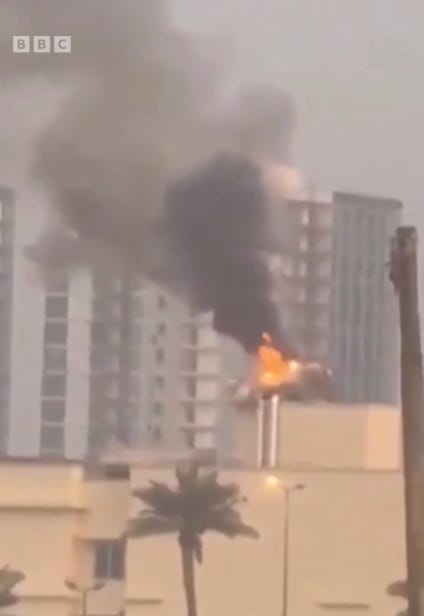
U.S. EMBASSY IN BAGHDAD STRUCK: The embassy had a column of smoke rising above the building on Saturday morning, the Associated Press reported.
The embassy has been repeatedly targeted by Iran-backed forces and is one of the U.S.'s biggest diplomatic complexes in the world.
FIVE U.S. REFUELLING PLANES DAMAGED IN SAUDI ARABIA: The aircraft were damaged during an Iranian missile strike on the U.S.’ Prince Sultan Air Base in Saudi Arabia, according to U.S. officials. This attack brings the total number of U.S. refueling planes destroyed or damaged during the Iran war to 7. Nobody was killed during the attack.
…AND ALL SIX FROM THURSDAY’S CRASH IN IRAQ DEAD: The entire crew on the aircraft that crashed in western Iraq on Thursday has died, bringing the total number of deceased U.S. troops in the Iran war to 13.
The other aircraft involved in the incident belonged to the Beale Air Force Base near Marysville, California.
The cause of the crash is still under investigation, but the U.S. Central Command said it wasn’t due to friendly or hostile fire.
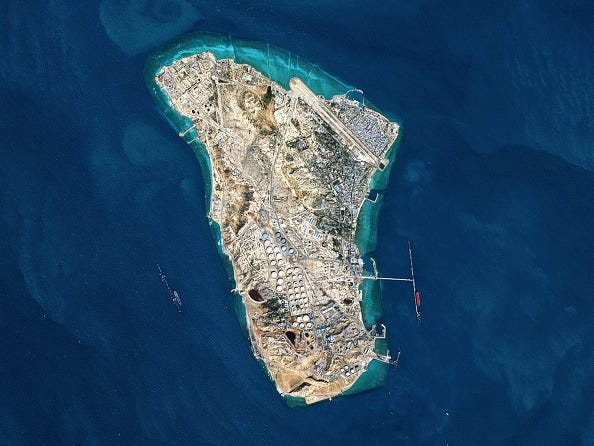
U.S. STRIKES KHARG ISLAND, IRAN’S CRUCIAL OIL EXPORT HUB: Trump announced that the U.S. had conducted a large bombing raid on Kharg Island, a crucial export hub through which 90 percent of Iranian oil transits. Trump reported that the attack had “obliterated” military targets on the island but had not targeted the oil facilities “for reasons of decency.” He did say, however, that the U.S. would strike oil infrastructure if Iran continued to obstruct the passage of ships through the Strait of Hormuz.
In response, Tehran has said that oil companies working with the U.S. will be targeted.
HUMANITARIAN CRISIS AS PRICES SPIKE IN YEMEN: The war in Iran has increased the prices on imports in Yemen, which threatens to hike the prices of everyday goods amid a serious humanitarian crisis. Yemen imports 90 percent of its food, and the shipping costs will add a likely $3,000 to each shipping container carrying imports for Yemen.
HORMUZ CHOKEPOINT THREATENS GLOBAL FOOD PRICES: One third of the world’s fertilizers transit through the Strait of Hormuz, which means that the strait’s closure threatens to drive up the price of food everywhere. Countries affected by the war in the Middle East — including Egypt, Iran, Qatar, Saudi Arabia, and the UAE — produce about 49 percent of the world’s urea and 30 percent of the world’s ammonia, key ingredients for fertilizer production, according to the American Farm Bureau Federation, NBC reported.
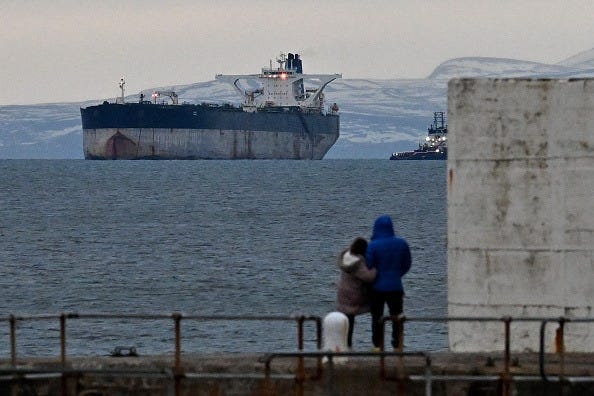
TANKER CRACKDOWN COSTS U.S. MILLIONS: President Trump’s push to seize oil tankers belonging to Venezuela, Russia, and Iran is costing U.S. taxpayers millions. The oil tankers seized are often aging and already in bad condition, and the cost of maintaining just one of them for three months has reached $47 million. Although this was framed as a profitable campaign, the U.S. cannot legally sell the oil without a judge’s permission because it is sanctioned.
Editor’s note:
This war is pushing up food prices and shaking energy markets by the day.
Subscribe to Iran War Dispatches — and send this to three friends who need this roundup too.
Stay safe out there!
Best,
Alessandra
Thanks for the clarity. Thanks for the information. Thanks for the explanation of the implications of the information.
The news summaries have really helped me keep up with everything in a very concise manner and are much appreciated.