

Editor’s note:
The independent, reader-funded war reporting that we do here doesn’t exist anywhere else, and there’s a reason for that. Without much traction, it’s simply not sustainable.
So, some news: this is our last week of original reporting on Iran War Dispatches. We’ll publish one final story this Saturday, and we’ll continue covering the war and its human toll — just through The Counteroffensive, our flagship publication.
More details soon (we have something for you, paid subscribers) but we wanted you to hear it from us first. You matter to us, and so does this reporting, so thank you for being part of it.
The latest news at this hour:
IRANIAN CYBERATTACK FORCES 4-DAY SHUTDOWN AT UK POWER PLANT: A British power plant was shut down for four days in a cyberattack by Iranian hackers targeting UK energy infrastructure, The Telegraph reported. The incident is believed to have happened at the same time as attacks on U.S. water infrastructure, which affected 12 states.
It is not clear which power plant was affected, however it is reported to be relatively small and the shutdown did not impact the UK national grid. Although the attack is the first successful cyberattack carried out against the UK’s energy infrastructure, other foreign hacking incidents have forced shutdowns at educational and healthcare facilities and on commercial production lines. In the last year, 200 attacks on UK national infrastructure have been recorded by the National Cyber Security Centre.
Alleged Iranian attacks happened in other European countries, including Germany, Poland, Finland, Belgium, and Albania.
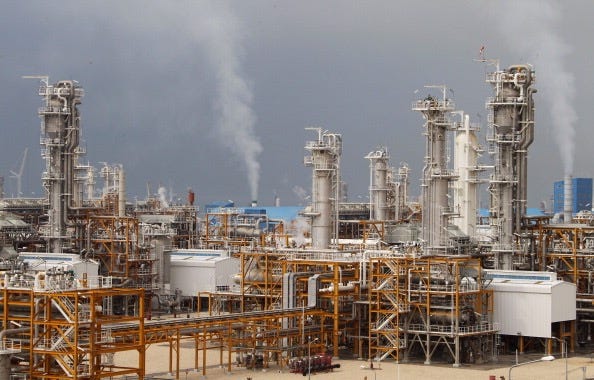
IRAN FINDS 7.5 TRILLION CUBIC FEET OF NATURAL GAS: Iran announced the discovery of massive natural gas reserves in the southwest of the country, 5.7 trillion cubic feet of which is recoverable, according to Bloomberg.
The reserves, which were discovered in Iran’s Fars province, are equal to 15 years of output from one phase of the South Pars gas field, which is divided into 24 sections known as phases. The South Pars gas field, located in the Persian Gulf, is the largest in the world and is shared by Iran and Qatar.
According to Iran’s Oil Minister Mohsen Paknejad, the reserves are to be developed “as soon as possible.” However, with about a quarter of its gas production capacity lost in the war, it would realistically take years to start production.
START-UP WITH TRUMP LINKS MAKES INTERCEPTORS FOR IRANIAN DRONES: Factories linked to a Florida-based company, Powerus, produce 3,000 low-cost interceptors to counter Iranian drones every month, The New York Times reported. One of the company’s facilities, located in the UAE, makes about 30 interceptors each day.
At the start of the Iran war, Powerus merged with golf course operator Aureus Greenway Holdings. Trump’s sons Donald Trump Jr. and Eric Trump are shareholders and advisory board members of the Dominari Holdings, which owns an investment firm which brokered the merger deal. Another company with Donald Trump Jr. as a member of its advisory board, Unusual Machines, invested $30 million in Powerus in June. In August, Powerus signed a $90 million contract with the U.S. military to supply interceptors.
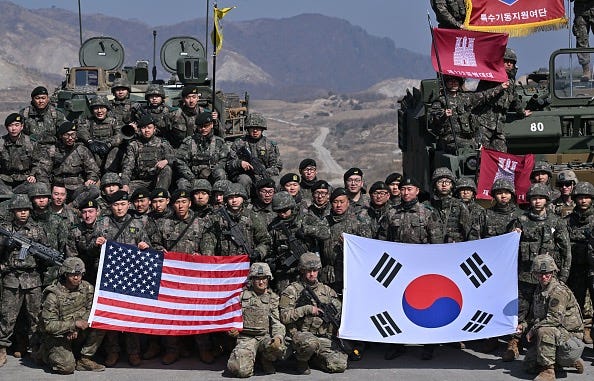
JOINT U.S.-SOUTH KOREA MILITARY DRILLS CANCELED: The U.S. called off the training with the South Korean military set for next month due to the strain on U.S. military resources amid the Iran war, Reuters reported.
Earlier, Donald Trump announced the reduction in joint drills with South Korea, referring to his relationship with Kim Jong Un and to the fact that South Korea refused to participate in the Iran war.
In June, the U.S. notified Seoul that force availability for the Ssangyong joint exercise would be limited. The South Korean Marine Corps spokesperson stated that the U.S. and South Korea continued communication on resuming training, but no measures were taken to compensate for lost training time.
IRANIAN PRESIDENT: MOU IS THE BEST ROUTE TO PEACE: Masoud Pezeshkian called the U.S.-Iran Memorandum of Understanding, which expired a week ago, the best way to end the conflict between the countries, DW reported. Pezeshkian described the relationship between the U.S. and Iran as “neither war nor peace.”
Pezeshkian underscored the importance of a peace deal for the economy, as the current risks push away the investors. The president also mentioned that members of Iran’s Supreme National Security Council backed his opinion.
Meanwhile, Pakistan’s army chief, Asim Munir, will travel to Iran this Monday and negotiate with Iranian officials as Pakistan continues its efforts to mediate the conflict. At the same time, more confrontational sentiments exist among Iran’s leadership. On Saturday, Iran’s Supreme National Security Council Secretary Mohsen Rezaei warned of retaliation against any U.S. action.
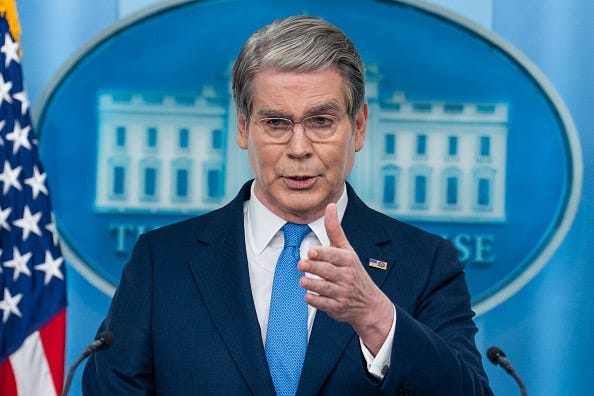
…MEANWHILE BESSENT WARNS OF “ECONOMIC D-DAY” FOR IRAN: In an op-ed for the Financial Times, Scott Bessent, the U.S. treasury secretary, warned of an “economic D-day” for Iran and “the single greatest financial offensive ever marshalled against an adversary.” Last week, Bessent warned that the U.S. would impose the “toughest sanctions in history”.
This comes ahead of a press conference which Bessent is set to hold this Monday explaining sanctions against Iran.
Stay safe out there.
Best,
Mariana.
