



Editor’s note:
Our roundups distill this wild news cycle into only the most critical developments.
If you want that curated briefing to land directly in your inbox, subscribe now for free.
The latest news this hour:
IRAN REJECTS WITKOFF CEASEFIRE PUSH: Iran has rebuffed two ceasefire messages from U.S. envoy Steve Witkoff.
The Guardian reports that even if the United States announced an end to attacks, Iranian officials signaled they would continue the conflict. This could include continuing to clamp down on trade across the Strait of Hormuz.
“Iran believes there can be no end to the conflict until it believes Trump has been shown the economic, political, and military cost is so high that it is not worth repeating,” writes diplomatic editor Patrick Wintour.
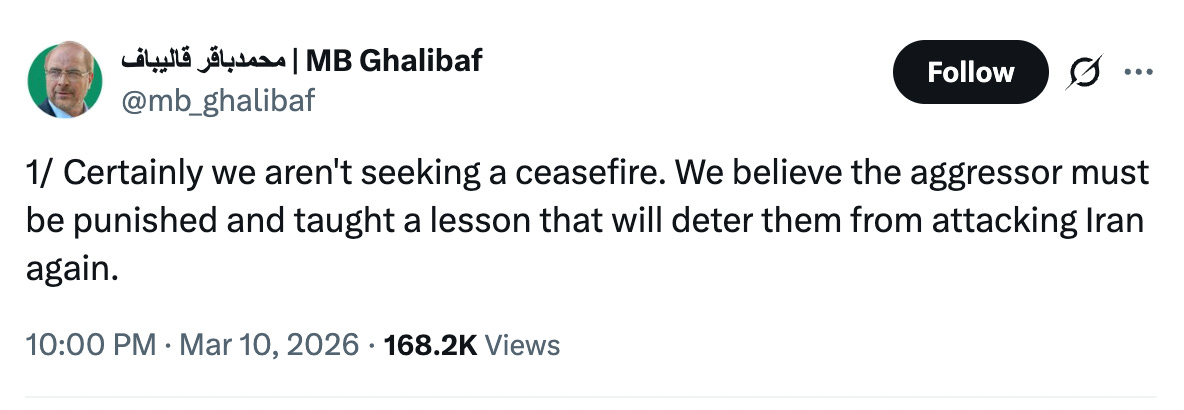
Screenshot from speaker of Iran’s Parliament on Twitter
140 U.S. SERVICEMEN INJURED DURING IRAN WAR: The Pentagon spokesperson announced that over the course of the Iran war, about 140 U.S. servicemen have been injured, 8 of whom severely. 7 U.S. servicemen were killed in an Iranian attack on a U.S. base in Kuwait.
The number of casualties will be a source of pressure on the Trump administration, which has sought to make the war a short, cost-free intervention — but costs are rising.
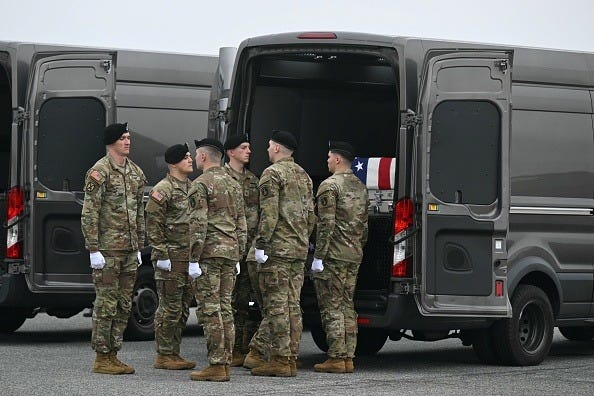
U.S. troops stand at attention in front of the flagged-drapped transfer case containing the remains of US soldier Chief Warrant Officer 3 Robert M. Marzan, in Dover, Delaware, on March 7, 2026. (Photo by SAUL LOEB / AFP via Getty Images).
DRONE HIT MAJOR U.S. FACILITY IN IRAQ: On Tuesday, six drones were launched at a major U.S. diplomatic facility in Iraq. While five drones were shot down, one struck the facility’s guard tower; however, no casualties have been reported. Pro-Iranian militias are believed to be behind the attack that hit the Baghdad Diplomatic Support Center, which provides logistics support for U.S. diplomats in Iraq. The facility has repeatedly been targeted in recent strikes.
16 IRANIAN MINELAYING SHIPS DESTROYED BY U.S.: The U.S. military said that it destroyed 16 Iranian minelaying ships near the Strait of Hormuz. Iran has essentially closed the strait, which has sent shockwaves through the global energy market. In response, Trump has suggested that the U.S. military will escort tankers through the strait but has yet to do so, according to a Tuesday press conference.
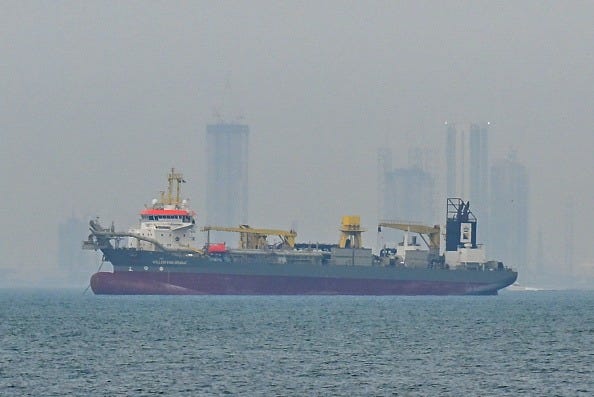
A commercial ship anchored in the Strait of Hormuz, Dubai on March 2, 2026. (Photo by Stringer/Anadolu via Getty Images)
IRANIAN FOOTBALLERS CHANGE MIND ABOUT ASYLUM IN AUSTRALIA: One of the women on Iran’s women’s football team who initially decided to seek asylum in Australia, along with six others, changed her mind and has decided to return to Iran. Australia’s Immigration Minister Tony Burke commented: “In Australia people are able to change their mind. We respect the context in which she had made that decision.”
On March 2, the team refused to sing the Iranian national anthem at the Women’s Asian Cup which sparked concerns that a return to Iran might be dangerous. The remainder of the team is heading back to Iran as of Tuesday night local time via Malaysia.
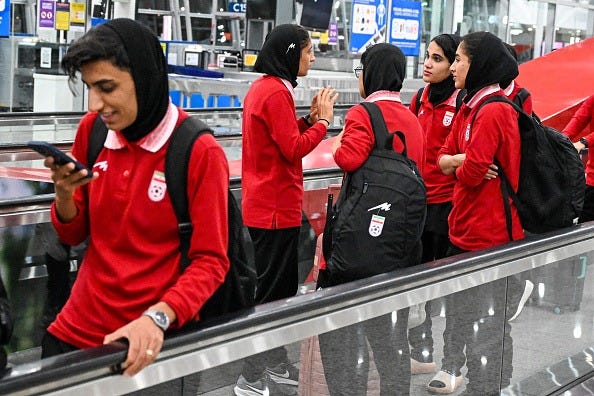
Members of Iran’s women’s football team who decided not to stay in Australia arrive in Malaysia waiting to connect back to Iran, March 10, 2026 (Photo by Mohd RASFAN / AFP via Getty Images)
PROPOSAL FOR BIGGEST OIL RESERVE RELEASE IN HISTORY: Amidst skyrocketing oil prices, which are now over $100 a barrel, the International Energy Agency has suggested the largest oil reserve release in history — even more than the 182 million barrels released in 2022 after Russia’s full-scale invasion of Ukraine.
SEOUL OPPOSES U.S. REDEPLOYMENT TO IRAN: The U.S. is redeploying a THAAD missile defense system to Iran that has been stationed in South Korea for almost a decade. Seoul criticized the move, and South Korea’s president said it would “seriously hinder [South Korea’s] deterrence strategy against North Korea.”
South Korea and Japan are among Washington’s most important allies in East Asia, and the move raises questions about Trump’s commitment to their security.
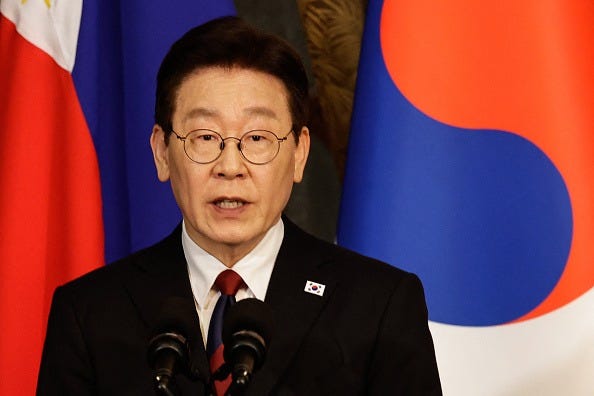
South Korean President Lee Jae Myung delivers a statement following a bilateral meeting with Philippine President Ferdinand Marco. March 3, 2026, (Photo by Rolex DELA PENA / POOL / AFP via Getty Images).
Editor’s note:
Our roundups distill this wild news cycle into only the most critical developments.
If you want that curated briefing to land directly in your inbox, subscribe now for free.
Stay safe out there!
Best,
Alessandra