

At the bottom of this page: Latest news at this hour.
Trump: U.S. held off on Iran attack due to “serious” peace talks… Iran wants U.S. withdrawal from areas near Iran… Pakistan deploys forces to Saudi Arabia.
Editor’s note:
As negotiations continue amid the looming threat of a renewed military campaign , Iran has intensified its crackdown on dissent at home and abroad. Today’s story follows one Iranian activist in exile whose life was upended by the revocation of his passport — a tool increasingly used to extend state pressure beyond Iran’s borders.
We are working to bring you stories about the human impact of conflict and repression in Iran. If you want more reporting like this, subscribe!
OUR LEAD STORY:
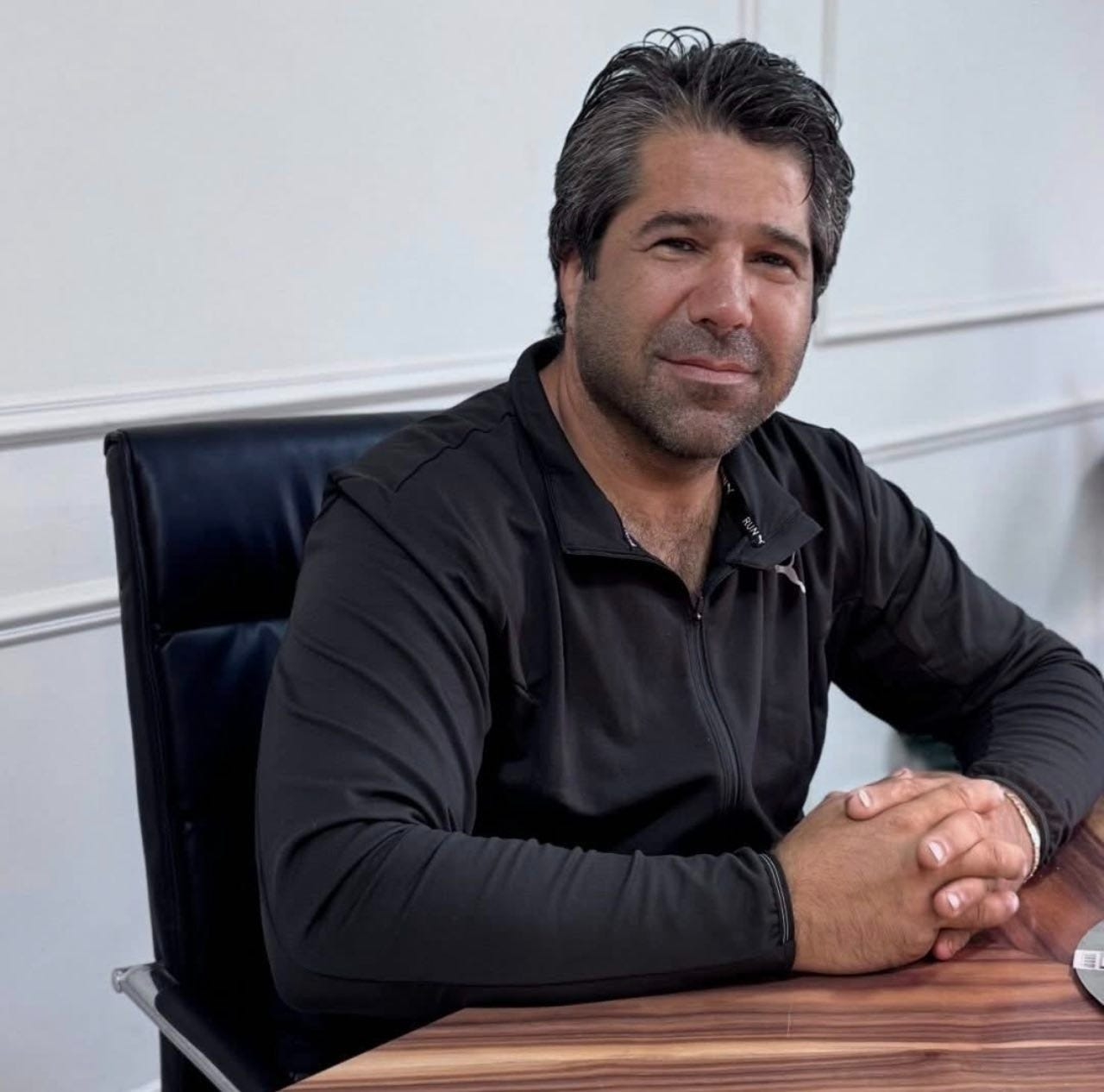
YEREVAN, Armenia – Masoud Taheri was at his carpentry workshop in his native city of Mashhad, Iran, when his life changed course.
Two men had arrived at his workplace, asking to speak to him in private. After they seized his phone, laptop, and camera, they drove Masoud away — and it was clear to Masoud’s employees that the men had been policemen in civilian clothing.
Masoud had been arrested for the crime of apostasy — converting from Islam to another religion, in Masoud’s case, Christianity, and for running a home church.
But when Masoud was arrested, he wasn’t just worried for himself. “I was worried for many of my employees…a few of them had converted to Christianity because of me.”
So when Masoud got out of prison, he didn’t reach out to his employees as he “didn’t want to cause them any problems.”
After he was released, Masoud fled Iran, leaving everything behind and started afresh over 2000 kilometers away in Armenia’s capital Yerevan.
Eight years later, Masoud, 48, has a family and his own business in Armenia. Just last week, he planned a European city break with his wife: four days in Spain, another four in Italy.
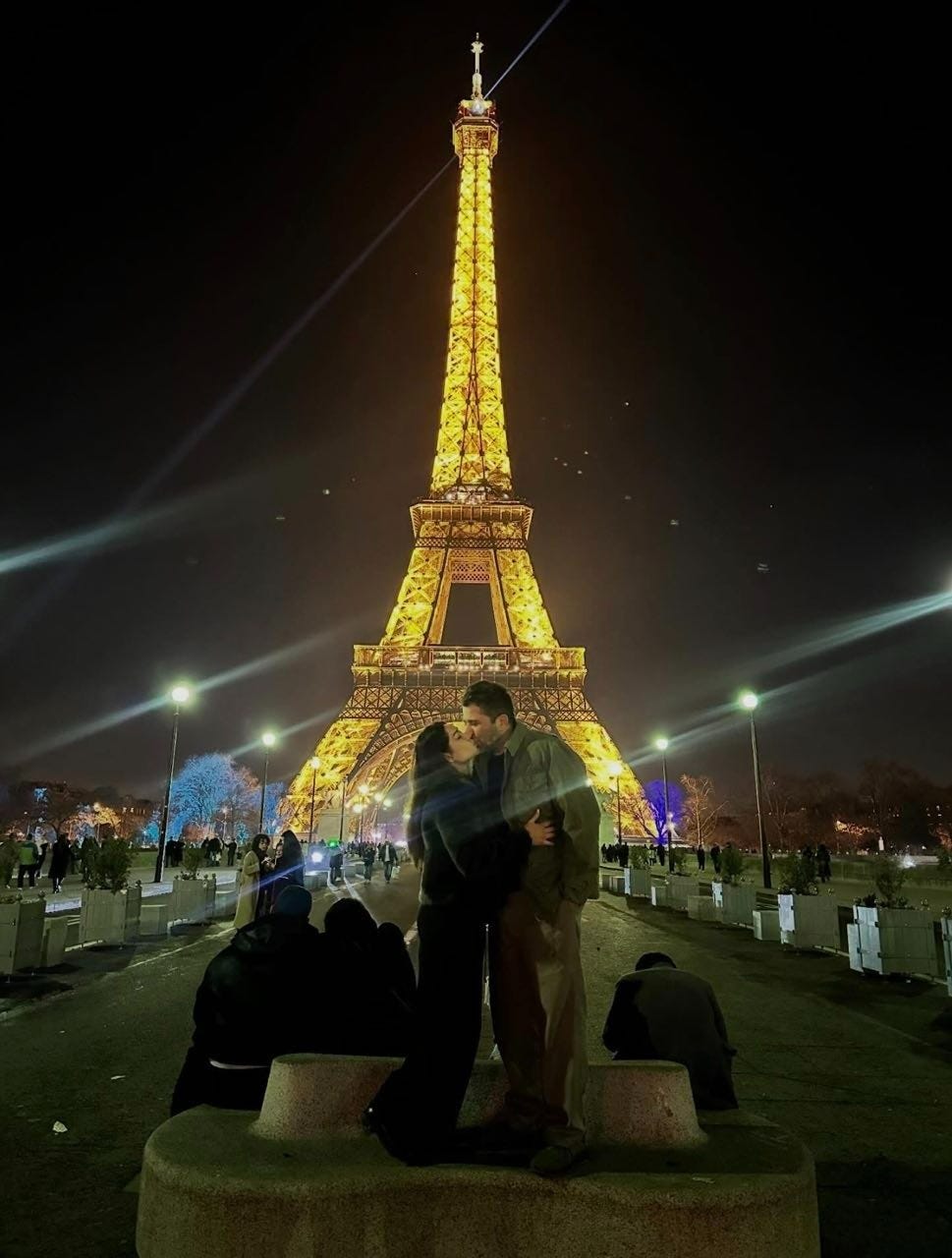
But when they got to passport control, Masoud was told there was a problem with his documents. He told his wife to go ahead without him, so she wouldn’t miss out on the trip.
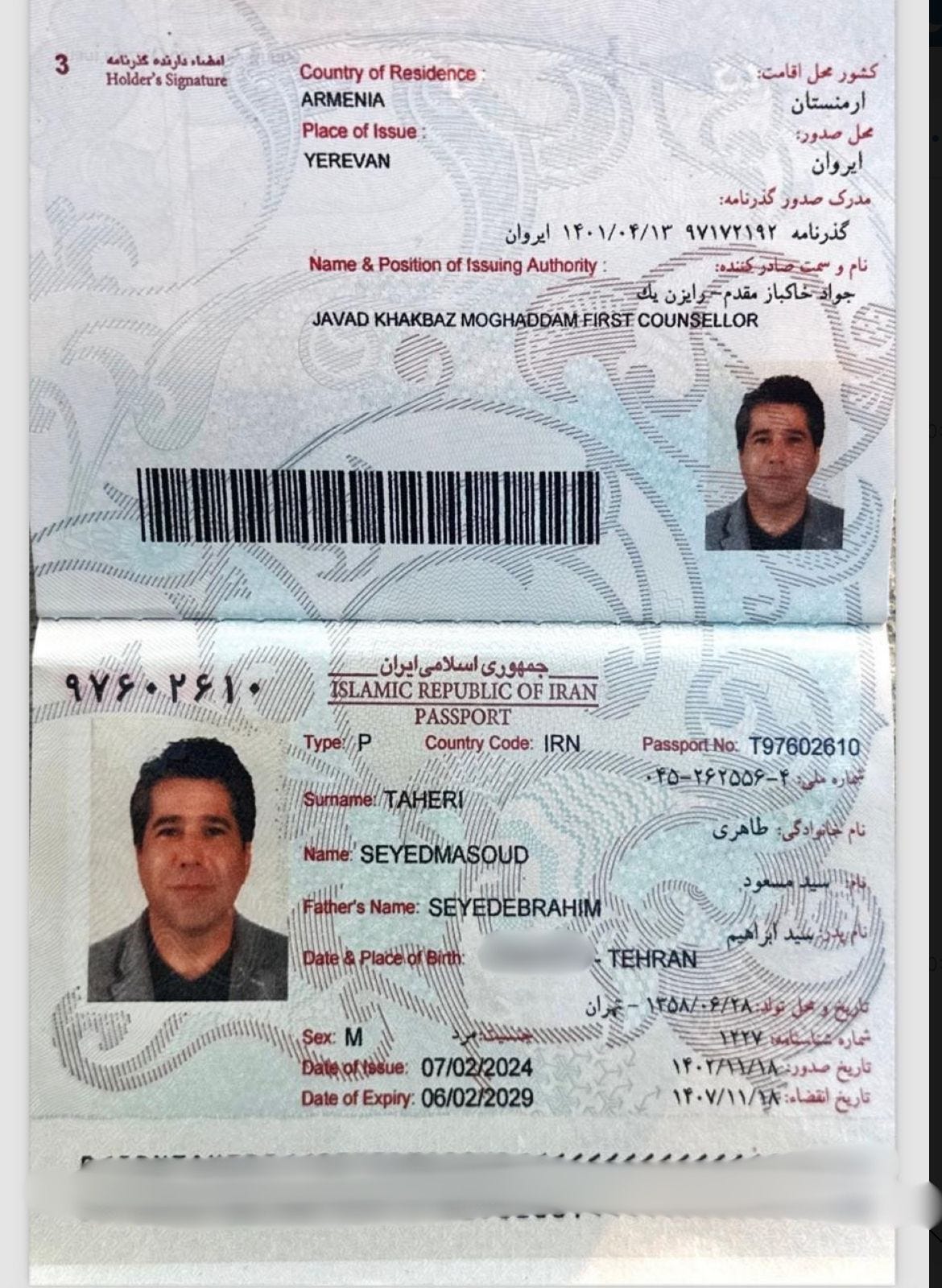
But soon Masoud learned it was more serious than he’d expected. His Iranian passport — his only passport — had been revoked, rendering him stateless.
Legally, Masoud was no longer Iranian.
By the time his wife had landed in Barcelona, Masoud had to explain that his whole world had changed. Again.
Masoud is not alone. Passport revocation is one of the Iranian regime’s preferred tools of what rights groups call “transnational repression” — the practice of authoritarian governments silencing and controlling critics even after they have fled abroad.
In recent years, the Iranian government has cracked down more than ever on opposition. On Monday, Amnesty International reported that in 2025, there were more executions around the world than there had been in over four decades, reaching a staggering 2,707 executions — and that Iran was driving the surge.
And during the war, this crackdown has only gotten worse.
For Iranian activists abroad, like Masoud, the Iranian government, which is reeling from the U.S.-Israeli attacks on its leadership, is only working harder to crack down on opposition. This is not only a threat kept within Iran’s borders — it is now a threat to the diaspora.
After he was stopped at passport control, Masoud was escorted to a separate room where he was kept for three hours. “I was really angry and sad too because my wife was really upset and crying,” he explained. “I thought at first that I would be kicked out of Armenia.”
But getting answers was difficult for Masoud, who only speaks Farsi. “I called my friend to translate my questions, but everybody there refused to answer my questions,” he said.
At first, he assumed that the issue must be coming from the Armenian government. In the past, they have given Masoud trouble for the leading role he has played in protests against the Iranian government in Yerevan. When protesters in Iran took to the streets in early 2026, Masoud and other demonstrators gathered in front of the Iranian embassy in Yerevan for 40 days straight.
Masoud claims that he had once been summoned by Armenia’s intelligence services. In the meeting, they urged him and other activists to stop their activism, believing that they were putting themselves in danger.
When Masoud was finally taken to departures, he was told that his passport had been revoked by the Iranian government and he needed to go to the Iranian embassy. But he was given no paperwork to prove what had just happened, he was only told that his passport was the property of the Iranian government — not his.
But as an Iranian activist, visiting the embassy isn’t an option: “I can’t go to the Iranian embassy, it’s Iranian soil, anything could happen there, it’s not safe,” Masoud said.
The incident had laid bare Masoud’s precarious situation: “I was sad that why for us, we are a great nation, why should we have to be in other countries, emigrated or displaced?” Masoud said.
When Masoud’s wife landed in Barcelona, he explained to her what had happened. She suggested that he stop his activism: “I can’t lose you…my biggest fear is something happening to you,” she texted him.
“I could never stop,” Masoud said…they killed so many of my countrymen, one of whom was my friend’s brother,” he said.
When Masoud moved from Iran to Armenia eight years ago, he was offered a fresh start — but it also meant starting from scratch.
After his arrest, he spent nine days in solitary confinement and before being released on a $10,000 bail — all of which he lost when he fled Iran.
“I didn’t want to leave Iran, but when I spoke to the lawyers, they told me if I showed up to court I could likely be put away for a very long time,” Masoud said.
But Masoud wasn’t a stranger to hard work.
When he was 12, he started working with his father who taught him carpentry — and by 20 Masoud had taken those skills and started his own carpentry factory. “I grew up at work with my father, I grew up in that environment,” Masoud explained.

When Masoud arrived in Armenia, his friend got him a job selling fish food. He would buy fish food cheaply in Iran and then resell it to fish farms in Armenia.
“I thought ‘first I’ll just start doing business with him and after that I’ll just learn how to do it by myself,” Masoud said.
But Masoud — an entrepreneur at heart — decided he could do even more, and opened his own fish farm.
Today the company has grown to five people and produces 40,000 kilos of fish a year. Now he fears he could be set back again, as operating the business without a passport will be extremely difficult.
Since Masoud doesn’t have Armenian citizenship, he needs his passport in order to take out large sums of cash from the bank and usually he pays somebody in cash to bring the fish food from Iran.
The challenges statelessness could pose to Masoud’s business are significant, but he is more worried about what it could mean for his safety.
“If I am honest it’s not about the passport, I am worried they have a plan to do worse things to me. It is logical that it would be better for [the Iranian government] if I left Armenia, but they are forcing me to stay,” Masoud said.
Though he’s anxious about what comes next, his faith in what he is doing hasn’t shaken.
“They just cancelled the document, the root of our identity is different…I am Persian with or without a passport..there is no way for them to take our identity.”
Editor’s note:
As negotiations continue amid the looming threat of a renewed military campaign , Iran has intensified its crackdown on dissent at home and abroad. Today’s story follows one Iranian activist in exile whose life was upended by the revocation of his passport — a tool increasingly used to extend state pressure beyond Iran’s borders.
We are working to bring you stories about the human impact of conflict and repression in Iran. If you want more reporting like this, subscribe!
THE LATEST NEWS AT THIS HOUR:
By: Serafima Melnychuk
TRUMP: U.S. HELD OFF ON IRAN ATTACK DUE TO “SERIOUS” PEACE TALKS: On Monday, Trump posted on Truth Social that leaders of the UAE, Qatar and Saudi Arabia said that “serious” peace talks were underway and urged him to scrap an attack on Iran planned for Tuesday. He added that if a deal is not reached, a large-scale assault is planned on Iran “on a moment’s notice”. Later when speaking to reporters, Trump added that the agreement had been that he would hold off the attack for “two or three days.”
Following weeks of Trump speaking about positive progress in peace talks with Iran, Trump has once again returned to threatening Iran with renewed military action.
IRAN WANTS U.S. WITHDRAWAL FROM AREAS NEAR IRAN : Iranian state media reported Tuesday that Tehran’s latest peace offer to the United States calls for an end to fighting on all fronts, including Lebanon, the withdrawal of U.S. forces from areas near Iran and reparations for damage caused by the U.S.-Israeli war.
In Tehran’s first comments on the proposal, Deputy Foreign Minister Kazem Gharibabadi said Iran also sought sanctions relief, the release of frozen assets, and an end to the U.S. naval blockade, according to the IRNA news agency.
PAKISTAN DEPLOYS FORCES TO SAUDI ARABIA: Pakistan has strengthened its military ties with Saudi Arabia by establishing a mutual defense pact, which includes deploying 8,000 troops as well as jets, drones and air defense systems, Reuters reports. This comes as Islamabad continues to play the lead role as mediator in the war involving Iran.
This is designed to support the military of Saudi Arabia in the event that the country suffers further attacks. On Sunday, there were new reports of security issues due to drones from Saudi Arabia and the UAE. According to Emirati officials, there was a fire at the nuclear power plant of Barakah after a drone attack on May 17, while Saudi Arabia claimed to intercept three drones that flew from Iraq on the same day.
Stay safe out there!
Best,
Alessandra
How awful to be stateless. Miller wants to make babies born here to immigrant mothers stateless too by denying birthright citizenship.