

At the bottom of this page: Latest news at this hour.
Iran is collapsing entrances to enriched uranium stockpiles... Iran: Trump secretly agreed to unfreeze Iranian assets... UAE to transfer billions to Tehran... India protests after 3 Indian sailors killed in Hormuz Strait.
Featured subscriber comment:
“I want to hear about real people from real people”
By: Maria Gabriella Camboni
Agree with Maria? Subscribe for free today!
OUR LEAD STORY:
CAMBRIDGE, England — In July 2015, Vienna was in a sweltering heatwave, when 600 journalists from around the world flooded the city.
Talks aiming to scale back Iran’s nuclear program had been going on for years — but now it looked as though they were about to close.
Until, suddenly, a crisis hit.
Tensions between the U.S. and Iran over Iran’s nuclear program had been worsening since the early 2000s, but they peaked in 2009 when U.S. President Obama announced that Iran was secretly enriching uranium. He was eager to avoid military action but wanted Iran to scale back their nuclear program. So, Iran and the P5+1 — the UN Security Council’s five permanent members, consisting of the United States, China, Russia, the United Kingdom and France plus Germany — set about negotiating the Joint Comprehensive Plan of Action (JCPOA): the Iran Nuclear Deal.
As the heat reached record highs, the P5+1 put forward a proposal for the Iranians. But one point was made especially clear: this would be the last offer.
But then everything took a turn.
Seemingly outraged, a lead negotiator, Iran’s Foreign Minister Mohammad Javad Zarif stood up and said they had made a grave mistake threatening an Iranian before storming out of the room.
Until then, many of the P5+1 negotiators had been optimistic, but now the prospect of signing a deal seemed far off — precisely what Robert Malley, a lead U.S. negotiator for the JCPOA talks, had feared.
Only a few days later, the Iranian delegation returned asking to review a few of the concessions. It turned out the crisis had been heralding an agreement, not a breakdown, Malley said.
The deal that followed was a breakthrough: Iran agreed to massively roll back its nuclear program, while the P5+1 agreed to lift the sanctions strangling Iran’s economy. And, crucially, war had been avoided.
But today all of Malley’s work has been undone: in 2018, President Donald Trump pulled out of the JCPOA deal, and then in February 2026, he launched a war against Iran.
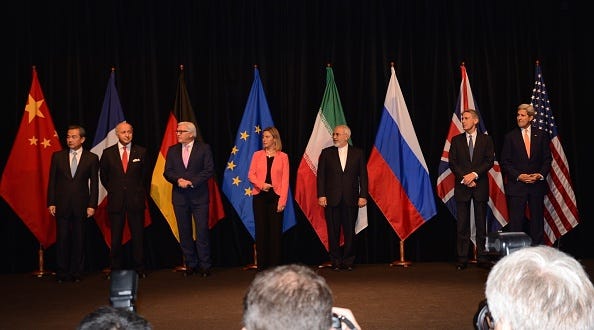
Just like in 2015 U.S. negotiators have found themselves back in the negotiating room across from the Iranian delegation, rehashing the same issues — sanctions, Iran’s nuclear program, and frozen assets. Reconciling the gap between American and Iranian interests was an arduous diplomatic endeavour in 2015, but today the two sides appear further apart than ever.
Trump’s war on Iran has done little to change the balance of power between the U.S. and Iran. U.S. and Israeli strikes on Iran’s top leadership have only strengthened the hardline elements of Iran’s regime, while Iran’s nuclear sites have seemingly withstood the barrage. Attacks on Iran and Gulf countries have continued despite the Iran-U.S. ceasefire reached in April, and now after months of fruitless negotiations, tensions have reached new highs as Defense Secretary Pete Hegseth threatened that the U.S. could “negotiate with bombs” if needed — pushing the prospect of a deal reached via diplomacy further into the distance.
Despite the years of work Malley put into the talks and the optimism from others on his team — he has often been the voice of caution.
“I was kind of the team’s ‘inveterate pessimist.’ [United States Secretary of State John Kerry] would call [National Security Advisor Susan Rice] and say, ‘I think we’re going to get a deal’… but for months, I was saying I think we’re very far,” Malley said.
When Malley heard the Iranians were ready to come back to the negotiating table, he saw the turning of the tides. “I called Susan Rice and said, ‘This time we’re going to get a deal.’ She turned to President Barack Obama, and said, ‘Rob now thinks we’re going to get a deal. We’re going to get a deal.’”
Malley offered a different perspective to those on his team; after all, the bureaucratic world he found himself in as a U.S. diplomat was light years away from his upbringing, full of anti-colonial activists and tales of resistance fighters.
Malley’s father, Simon, was an anti-Zionist Egyptian-Jewish journalist. His full cheeks, broad smile, and thick-rimmed glasses betrayed a vibrant and rebellious attitude to life. “My father almost defined himself in opposition to the setting in which he found himself,” Malley said.
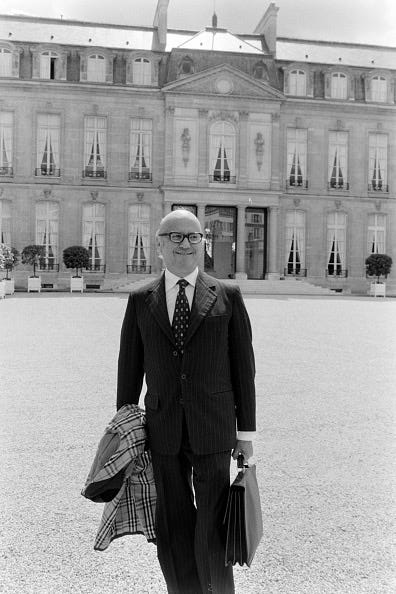
Simon saw the world through the lens of “third-worldism,” an anti-colonial ideology focused on, Malley puts it, “the global south’s struggle for independence.”
“Algerians, Tunisians, Moroccans, Palestinians who were engaged in a struggle for self-determination, held very anti-Western views often. And so I grew up in that milieu listening to that. They were sort of not your typical dinner guests at least for a Jewish Upper East Side family,” Malley said.
As a Jewish person in Egypt his father was a minority, but as an anti-Zionist he was also an outlier in the Jewish community.
This trend continued into his father’s professional life. “He was a journalist in America who was anti-American. He was a journalist in France who was anti-French. He was expelled from France as an American so he was always sort of on the outside of whatever inside there was,” Malley said.
Malley spent his adolescent years arguing vehemently with his father at the dinner table in their home in Paris. More often than not Malley and his sister would side with his mother, who tended to have more nuanced views, while his brother who was less interested in politics tended to take a back seat — often leaving his father feeling outnumbered.
Despite the fact they often disagreed, his father’s anti-colonial worldview heavily shaped his Malley’s outlook on the world. “I could always hear the voice of people who may not experience American policy the way America thinks that it’s projecting or executing it,” Malley said.
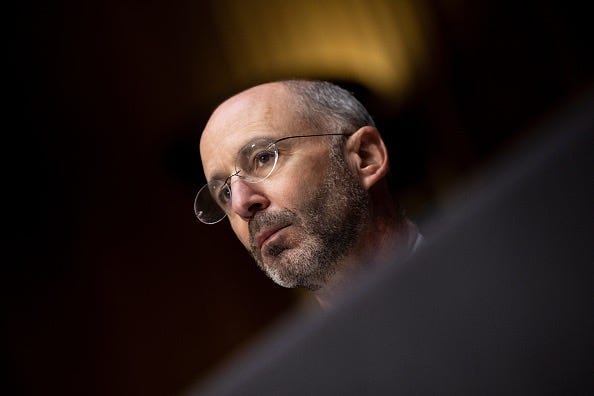
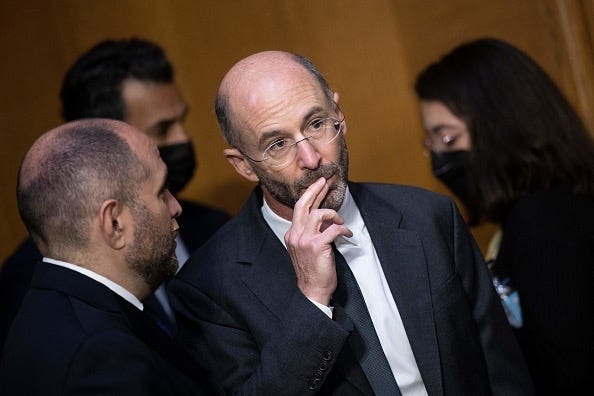
Robert Malley waits to testify about the JCPOA (Joint Comprehensive Plan of Action) during a hearing on Capitol Hill May 25, 2022, in Washington, DC. Photo by BRENDAN SMIALOWSKI/AFP via Getty Images.
Malley often took issue with his father’s overly dogmatic view of the world, but he believes it is what shaped his sensitivity to the experience of others.
So Malley — who built a career in conflict resolution — became an expert in trying to see things from the other side.
In order to negotiate, one needs to understand what the other side is up against, their interests, why they may be advancing a certain way, and whether you believe both of your interests can be met at the same time, Malley said.
During the JCPOA talks, Secretary Kerry gave the U.S. team an exercise to help them better understand the Iranian negotiating position. The team was tasked with crafting the Iranian victory speech. The goal of the exercise was to try to construct a narrative about how the Iranians could say “this is a good deal for us,” Malley explained.
But when the U.S. delegation told the Iranians about the exercise, Malley’s team understood that they had missed the mark — the exercise had exposed gaps in their understanding of what an Iranian victory would look like.
“Once you believe that there is at least a joint effort to see if we can find a deal that both sides could defend, then you’re in a different mode than if you’re simply trying to get them to surrender to your terms,” Malley said.
The language of mutual interest is long gone from the current negotiations between Iran and the U.S. Trump has repeatedly threatened to destroy Iran, at one point posting on Truth Social that a “whole civilization will die tonight.”
Since the start of the war, the negotiations between the U.S. and Iran have yielded little if anything. However, the U.S. approach to unproductive negotiations has largely been to continue to increase pressure on Tehran. On April 12, following failed talks with Iran, the Trump administration began a naval blockade of Iranian ports to prevent exports of Iranian oil.
“If you think that you’re going to get the other side to surrender, to capitulate — which the Trump administration at times seems to believe — then I don’t know how you reach a deal,” Malley said.
The JCPOA negotiations were famous for the countless hours officials like Malley spent negotiating the finest details. The talks relied heavily on nuclear and sanctions experts as they discussed how to implement sanctions, how to conduct inspections of the Iranian nuclear facilities, and the intricacies of the Iranian nuclear program.
It is not possible to say that the Iranians ever befriended the American delegation, but there was some familiarity that developed between the two sides — one which was critical to the talks’ success, Malley explained.
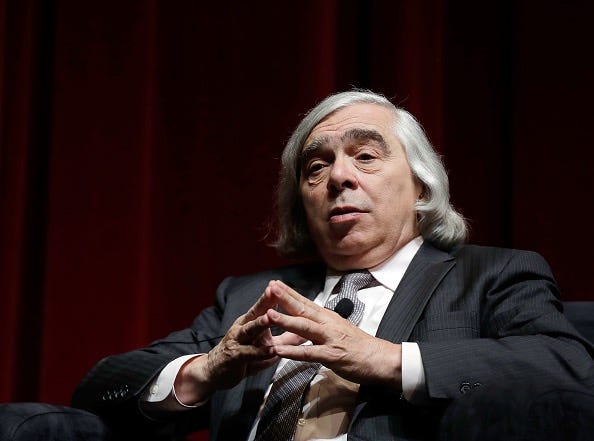
U.S. Energy Secretary Ernest Moniz and the head of Iran’s Atomic Energy Organization Ali Akbar Salehi had a certain affinity for one another. Both were scientists — Moniz was a professor at MIT while Salehi was a student there — and both men served as the technical negotiators during the JCPOA talks. Over five weeks the two men had spent 20 hours alone negotiating not politics but science, namely the technical aspects of Iran’s nuclear program.
The two scientists developed something almost like a friendship. Once, Moniz bought a baby onesie for Salehi’s granddaughter from the MIT gift shop. The pink outfit used elements from the periodic table to spell ‘CuTe’. Moniz also said that “between the two nerds” there was “strong bonding”.
“When [Moniz and Salehi] talked about really tangible issues and trying to find a way around an obstacle, their relationship, I think, really made a difference,” Malley said.
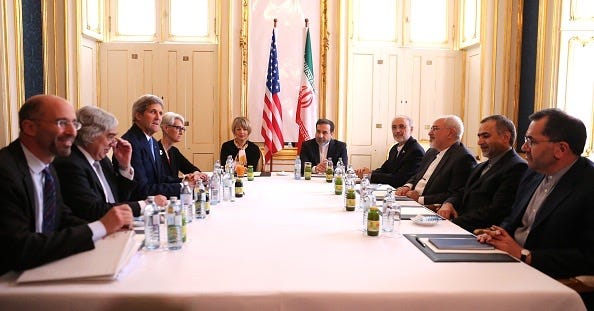
Still, the relationship between the delegations was cautious. The American and Iranian delegations would eat separately, but Malley and Kerry — seeing that the Iranian food was significantly better than the food the American delegation was being served — would often walk around in hopes that they would occasionally get invited for dinner.
“We’d have dinner with [the Iranian negotiators], in large part in order to enjoy the food, but also to relax and make conversation,” Malley said.
But this familiarity was marred by tension and manipulation from both sides.
“[The negotiations] could be professional. There were moments of laughter, but there were also moments of crisis, of tension, where one side would walk out, the other side would scream, and that would happen extremely often,” Malley explained.
Whether the crisis was genuine or not was always in question. Often there were theatrics like when Foreign Minister Zarif stormed out of the negotiations or when Kerry would say that the Iranian delegation was negotiating in bad faith, Malley said.
But ultimately, after years of negotiating, the JCPOA deal was signed. “There was a modicum of faith that we’re in this enterprise, which is trying to make this deal succeed together. Both sides want to succeed. Both sides may have different interpretations to some extent and different interests, but they both are in this somewhat together,” Malley said.
However, after Trump came into power in 2016, he pulled out of the JCPOA — effectively causing the deal to collapse. The sanctions on Iran were not only reimposed but increased, and Iran returned to ramping up its nuclear program. But the U.S. withdrawal caused long term damage to the diplomatic process and the prospect of a future deal.
When Biden was elected in 2020, Malley was tasked with trying to revive the deal. The obstacles on both sides were great: Iran had not experienced the sanctions relief it expected, the deal was not a priority for Biden like it was for Obama, and the failure of the JCPOA left Iran looking for new leverage – namely to ramp up their nuclear program. But perhaps most importantly, after Trump withdrew from the deal in 2018, any trust or confidence Iran had in the U.S. as a negotiating partner had been destroyed.
“If you believe that the other side is going to tear up the deal the next day, or is going to blatantly violate its terms, then why reach a deal in the first place?” Malley said.
Malley believes that talking about trust between the delegations is naive — the differences between the Iranian and American interests is simply too great — but there was some belief that a mutually beneficial deal was possible in 2015. Today, we find ourselves farther than ever from that prospect.
“If I put myself in Iran’s shoes again — the habit that I have — after tearing up the JCPOA, after not once but twice being militarily attacked in the midst of negotiations, it is hard to even have that very, very basic belief that you can believe what the other side is saying to some extent… I don’t even know how you take step one, right?” Malley said.
Editor’s note:
“I want to hear about real people from real people”
By: Maria Gabriella Camboni
Agree with Maria? Subscribe for free today!
THE LATEST NEWS AT THIS HOUR:
By: Oleksandra Poda
IRAN IS COLLAPSING ENTRANCES TO ENRICHED URANIUM STOCKPILES: According to a CNN exclusive, in recent weeks Iran has been mining and destroying access routes to its enriched bomb-grade uranium stockpiles — roughly half a ton of material. Collapsing entrances would likely prevent the U.S. from being able to access the uranium stockpiles in the event of an invasion.
In mid-March, the U.S. military was reportedly preparing a ground operation to seize the nuclear material, but Trump called off the operation at the time. Trump has repeatedly mentioned the possibility of the U.S. seizing Iran’s uranium, either by force or via a deal, but now that Iran has made access to the stockpiles more difficult, this possibility is increasingly less likely.
IRAN: TRUMP SECRETLY AGREED TO UNFREEZE IRANIAN ASSETS: On June 12, Mohsen Rezaei, military adviser to Iran’s Supreme Leader, claimed that “Trump has agreed to the release of part of Iran’s frozen assets, but he is unwilling to announce it publicly,” he said.
Tehran has repeatedly stated that it wants the frozen Iranian assets to be released in two stages: $12 billion immediately after signing an interim agreement, and another $12 billion later.
The White House has previously refused to unfreeze Iran’s assets, fearing this would strip the U.S. of leverage over Iran. In the past Trump was highly critical of the 2018 JCPOA agreement, accusing the deal of financially empowering Iran’s government, but unfreezing Iran’s assets would be a major financial boost for Iran’s government.
At the same time, the Trump administration is considering directing part of Iran’s frozen assets toward compensating Gulf countries that suffered damage from Iranian strikes.
UAE TO TRANSFER BILLIONS TO TEHRAN: According to Reuters, the UAE has agreed to unfreeze around $10 billion for Iran. Of this sum, over $3 billion has already been transferred, according to Reuters sources. It is unknown whether the funds belong to the UAE or are part of Iran’s frozen assets.
The transfer of funds to Iran would be a significant policy shift, as the UAE’s relations with Iran have considerably worsened during the war. Two sources told Reuters that the transfer of funds was in exchange for halting attacks on the country. 58% of Iran’s attacks on the Gulf region were directed at the UAE, until the last attack on May 4. Since then Iran has concentrated attacks on Kuwait and Bahrain.
On June 13, the UAE Foreign Ministry categorically denied the transfer of funds, stressing that no Iranian funds have been unfrozen or transferred.
INDIA PROTESTS AFTER 3 INDIAN SAILORS KILLED HORMUZ STRAIT: On June 13, India’s Foreign Minister summoned a senior U.S. diplomat to formally lodge a complaint after U.S. forces’ hit three ships off the coast of Oman, killing 3 Indian sailors. India stressed that the use of force against commercial vessels was unjustified. “We expect the U.S. to take due note of our protest against attacks on vessels carrying Indian seafarers,” New Delhi stated.
The same day, CENTCOM reported that as part of the blockade on Iran, U.S. forces had already redirected 139 ships that complied with inspection requirements and disabled 9 ships that refused to comply. Overnight, CENTCOM also reported that Iranian forces had launched several attack drones at commercial ships in the strait. All the drones were shot down by the U.S. forces.
Stay safe out there!
Best,
Alessandra
It’s as if he ripped up the “bad” deal in 2018 thinking that it would be easy to make a much better deal. Very good article on this situation, but it is so frustrating to have someone with this kind of power getting out of a deal without caring what the consequences were. And here we are again…Thank you very much for your reporting.
Excellent piece that further supports what a malignant, incompetent clown car the U.S. is under this regime. So embarrassing to be viewed globally in this way.