

At the bottom of this page: Latest news at this hour.
U.S. awaits Iran’s response to the peace proposal… U.S. and Iran continue to clash in the Strait of Hormuz. … Iran war pushes Chinese aluminum exports to reach record highs… Russia and the UAE held talks on the Strait of Hormuz… Iran war pushes global food prices to three-year high.
Editor’s note:
Amid conflict and repression, artists — as voices that often challenge oppression — are increasingly at risk in Iran.
This story illustrates a wider reality through the experience of one filmmaker, revealing a generation of creators working in isolation, where making art itself has become a dangerous pursuit. This is what we aim for: to move beyond headlines and show the human lives behind them.
If you value this kind of reporting, subscribe!
OUR LEAD STORY:
YEREVAN, Armenia – “If you and your kind make things for our channel, people one day will start believing everything you say.” This is what the government investigator told Hamed when he was arrested in 2021 over his documentary series on Iranian folklore music.
Hamed has spent most of his adult life making films in Iran’s capital, Tehran, without a state permit, which filmmakers need to work legally in Iran.
That choice shaped every part of his life.
Over the years, he was arrested multiple times, had equipment destroyed while filming protests, and eventually became afraid to leave his home or carry a phone in the streets of Tehran.
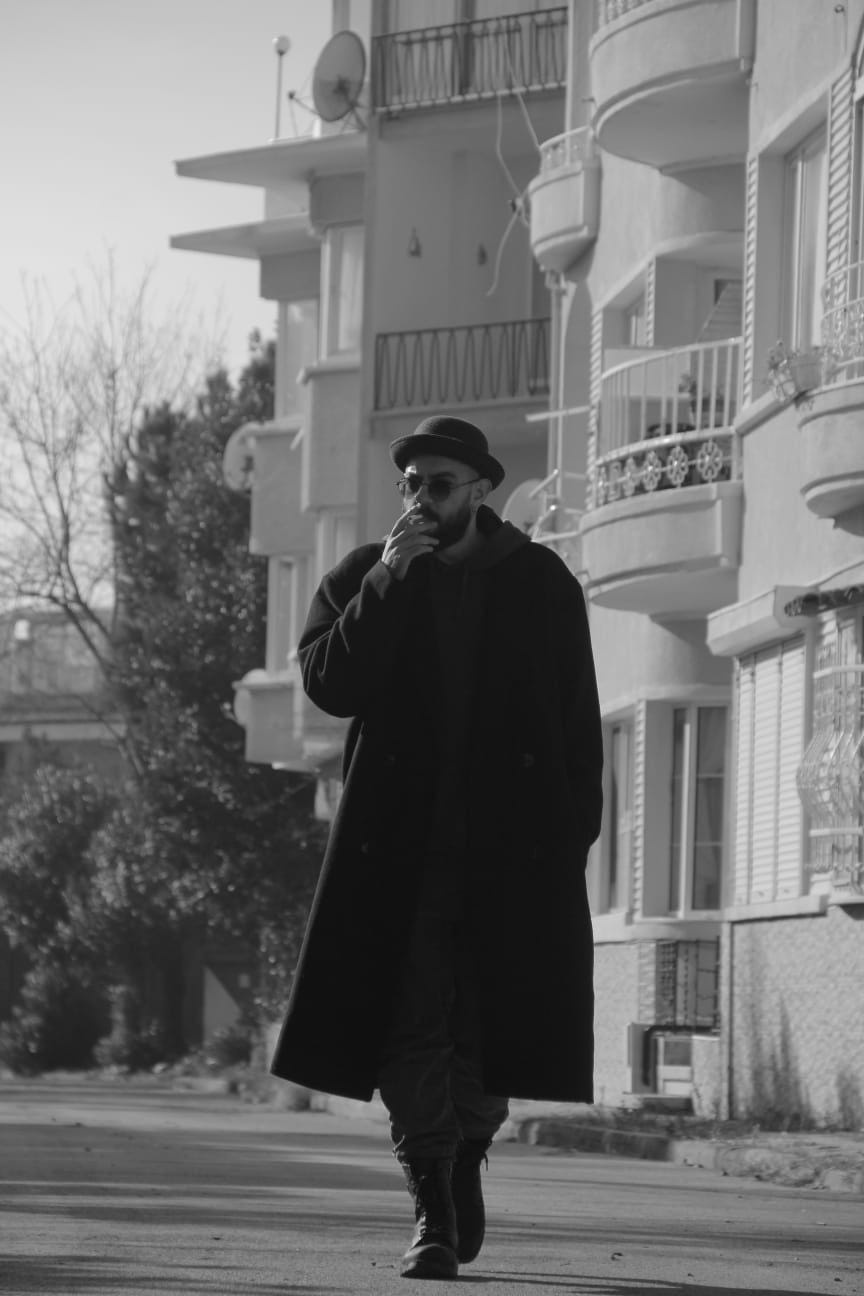
By 2026, after waves of crackdowns, executions, and war, he stopped filming inside Iran. “It became impossible,” he said.
In early April this year, a 28-year-old man, Hossein Ghavi, was arrested for “filming bombed areas” and “communicating with foreign countries.” He was detained by intelligence forces of the Islamic Revolutionary Guard Corps (IRGC) and later died as a result of severe torture while in custody.
In Iran, even carrying a phone or documenting reality has become a risk.
Even internationally acclaimed directors such as Jafar Panahi — whose films have won major international awards — continue to face state pressure, prison sentences, travel bans, and censorship for their work. At the end of March, Panahi returned to Iran despite the risk of imprisonment after years of state persecution tied to his films and public criticism of the government. Despite years of harassment from the government, Jafar Panahi was able to return to Iran safely.
While globally recognized filmmakers, like Jafar Panahi, may have some international visibility and protection, ordinary underground artists have far fewer safeguards.
Hamed, a 34-year-old underground filmmaker from Tehran, has spent the past year trying to make a film in a country where both war and repression have made artistic work nearly impossible.
An ‘underground’ artist is a common phenomenon in Iran — many creators chose to risk their own safety rather than subjecting their work to censorship. This means moving their work from public spaces to indoor and private spaces.
Once in 2017, Hamed was summoned for questioning over a short sketch film.
In the film, a man was endlessly picking the handkerchiefs beneath the sink in a men’s restroom until a massive pile of them covered him. “The progovernmental producers told me the film was about masturbation. I was shocked. And I remember that one of them looked me in the eyes and said: ‘The main character is a sick pervert.’” His intention was to portray a guy stuck in an endless life loop.
From an early age, Hamed was surrounded by art. On his mother’s side, he comes from the Jozani family, known in Iran for its involvement in photography, animation, and film. As a child, he would spend hours in a darkroom with his aunt Ladan, developing photographs.
As a teenager, he spent carefree nights in Tehran with friends, thinking about girls, fun, and films. They would sit for hours in small cafés, arguing about cinema, about directors like David Lynch and Lars von Trier. They were proud, scrappy, young artists, believing that time, small world of conversations, experiments, and late-night plans would eventually turn into something real.
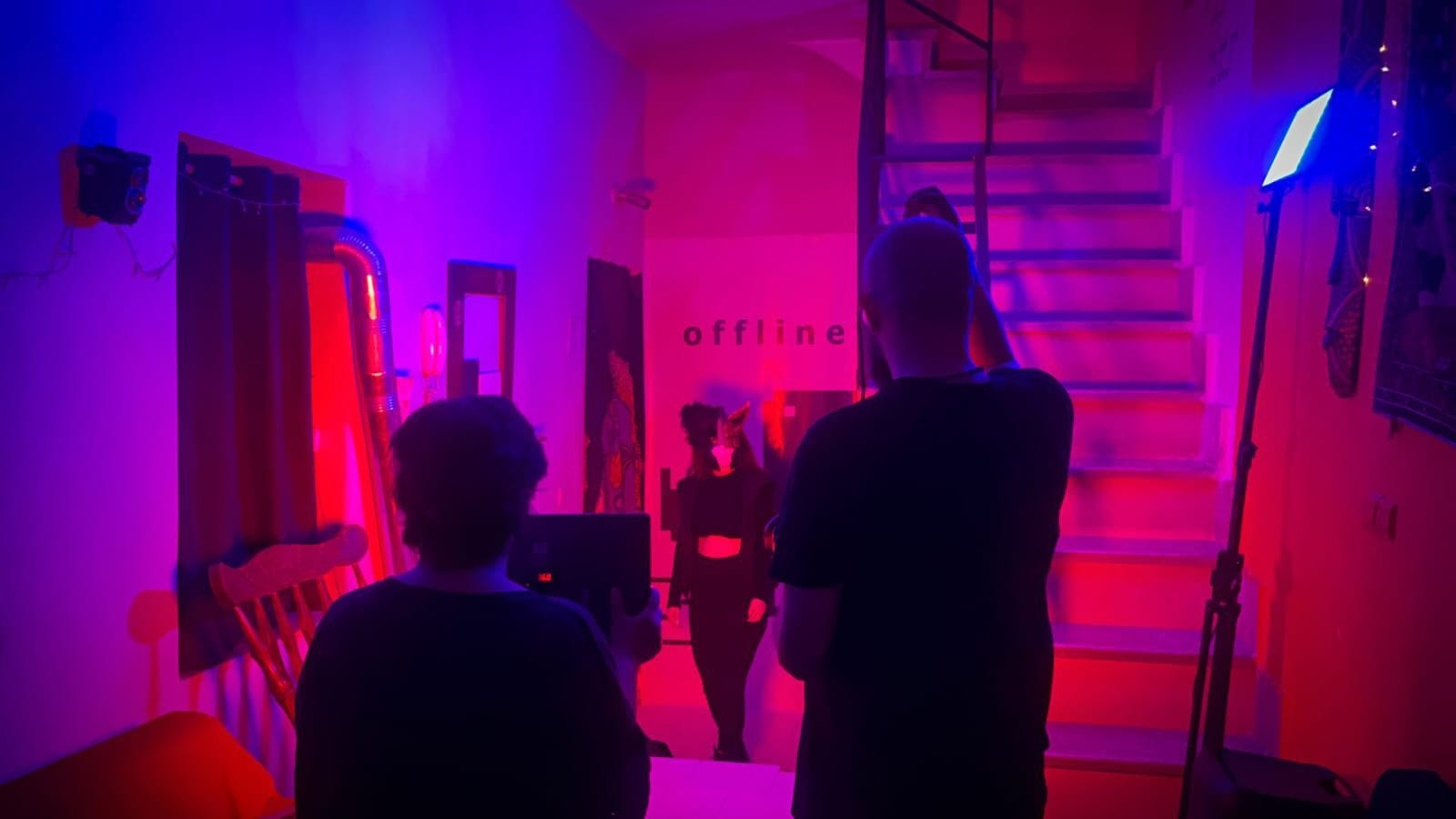
And that sense of freedom didn’t disappear overnight. The restrictions crept in slowly and tightened gradually, so that Hamed and his friends still believed they had time. With the stubborn confidence of youth, they clung to the idea that things could still be changed and that they had enough power to push against the system.
“We were just living,” he said. “We didn’t think it would become like this. Everything changed very fast.”
At 17, Hamed joined his first protest during the Green Movement, which followed the disputed 2009 presidential election of Mahmoud Ahmadinejad. Green was the color of opposition candidate Mir-Hossein Mousavi’s campaign.
That June, millions went onto the streets to protest what they believed was a rigged result. The demonstrations were met with violent crackdowns, mass arrests, and killings. And the video of how Neda Agha-Soltan, a young, female Iranian musician, was shot dead became the movement’s defining symbol.
The Green Movement reshaped a generation of young Iranians, marking the moment when hope for gradual reform collided with the reality of state repression. This moment pushed many Iranian artists, journalists, and filmmakers to create a new underground culture.
“Before that, I had never really experienced something like that — being in the street with so many people, all of them demanding something, all of them believing something could change. I remember the feeling more than anything,” he said. It was something new, something very strong. You feel like you are part of something bigger, like you are not alone anymore. But it didn’t last.”
The security forces moved in very quickly, beating people. Hamed was beaten too. It was chaos.
“That was the first time I saw this side of the system directly, not from far away, not as an idea, but physically.”
Hamed was detained. It was brief, but it was enough to understand how things work.
“I think that was the moment when the real Hamed was born,” he recalled.
After that, Hamed was arrested twice more — one six years later for nude photography and the other one for the documentary series. In one instance, intelligence officers came to his home and took him directly to a police station.
Around the same time, reports of violence and arrests during protests became more frequent. What had once felt distant began to move closer.
But he kept returning to the protests as his sense of purpose began to change: inspired by Abbas Kiarostami and Jafar Panahi, he wanted to document the violent, powerful streets and give a voice to the people chanting within them.
Hamed continued to operate underground with his photography and filmmaking.
“But for us, it was never really an option. Because the moment you accept it, you also accept the limits — what you can say, what you can show, what kind of story you are allowed to tell.”
So he never tried to get permission for his work. Hamed and his friends made whatever they could with the small teams and little equipment they had, with the understanding that it might not ever be shown publicly.
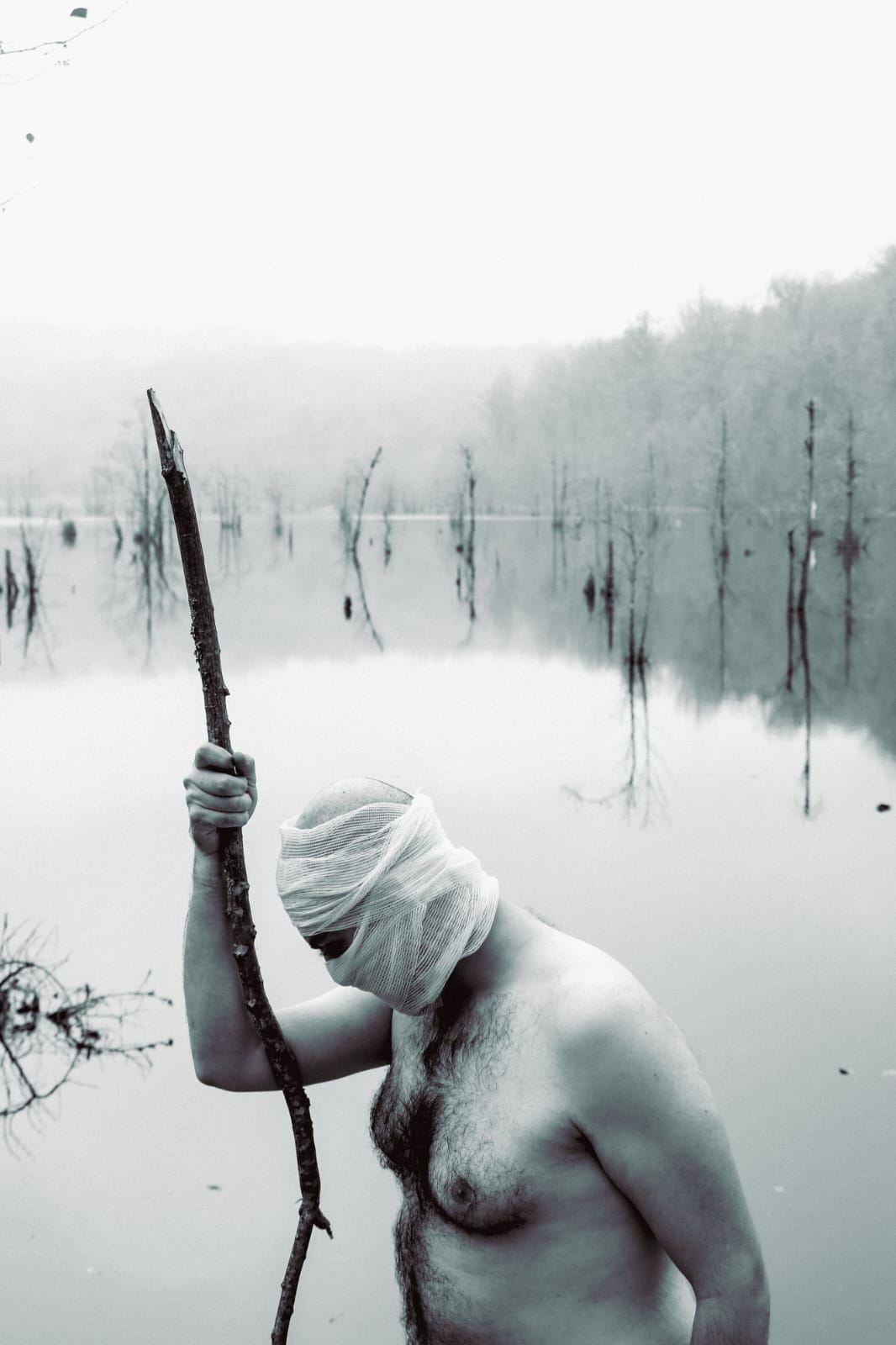
“It was not even a decision at some point,” he said. “It was just the only way to exist as an artist.”
And real art is always a protest, said Hamed.
At one point, he went out to film a protest with a new camera he had saved up for. IRGC forces broke the protest apart after only a few minutes.
In the years that followed, Hamed remained in Tehran, continuing to make films that were being screened outside Iran, primarily at independent and international film festivals.
That was until 2022, when he shortly left for Turkey but had to return after a university arrangement fell through, leaving him without residency.
“Then the first war began — with Mahsa Amini,” he said.
In 2022 protests sparked by the death of a 21-year-old Mahsa Amini, who was allegedly beaten to death for not wearing the hijab properly. Repression intensified across the country. Human rights groups reported hundreds of people killed and thousands detained.
The protests eventually subsided, but the pressure only deepened.
For Hamed, the space to work grew even narrower. He continued making films and worked remotely for a London-based company. But despite the worsening situation inside the country, Hamed decided to begin a new project.
The film followed a painter who had a VPN, which made him one of the few people with internet access in Iran. The painter spent his days trying to connect people inside the country and their families abroad. He helped them send messages, share fragments of everyday life to preserve some sense of connection.
The story was not openly political, but its premise reflected Hamed’s own reality: isolation, fragmentation, and the constant negotiation between visibility and risk.
The project began to take shape at the end of 2025. Hamed caught the attention of a French producer, and for a moment, it seemed the film might move into production.
But the moment did not last.
Nationwide protests, which had begun in late 2025 amid economic crisis, spread across dozens of Iranian cities. Security forces responded with mass arrests, internet shutdowns, and a bloody crackdown on protestors, which ended up killing tens of thousands of civilians, according to rights groups.
By early 2026, the pressure inside the country had already reached a breaking point. Then, on February 28, the situation escalated into war: the United States and Israel launched large-scale airstrikes on Iran.
In the weeks that followed, thousands were arrested and hundreds killed, while airstrikes and retaliatory attacks spread across the region.
“You couldn’t do anything anymore,” he said. “No matter what you did, you could be arrested.”
Over time, he started to lose people he knew. One of them was Soroush Khazaeii, a 29-year-old visual artist, who died in an airstrike.
“I didn’t know him very well. He was very kind to other underground artists. He signed a document saying that he couldn’t make any art in Iran, but he continued. He was very talented,” Hamed said.
It turned out that while Hamed set out to make a film about connection, he found out how disconnected he himself was. In the final days, even leaving the house felt dangerous.
“In those days, I wouldn’t take my phone with me when I left the house. At any moment, the IRGC could stop you and check everything. Even having a VPN could get you into trouble.”
And then there was the strike that hit near his home, the impact of which shattered his windows and left broken glass near the bed where he usually slept until noon. Luckily, on that day, he got up 15 minutes earlier. That moment divided his life into the “before and after.”
On the 1st of April he left for Armenia by bus, where he at least can feel safer. But he never stopped being an underground artist.
“I don’t know if the [film about the painter] will ever be made. But I’m still working on it in another way — by writing, by trying to keep what happened.
Because if you don’t record it, it disappears.
Maybe this is what it means to be an artist — you just keep going, even if nothing can be finished.”
Editor’s note:
Amid conflict and repression, artists — as voices that often challenge oppression — are increasingly at risk in Iran.
This story illustrates a wider reality through the experience of one filmmaker, revealing a generation of creators working in isolation, where making art itself has become a dangerous pursuit. This is what we aim for: to move beyond headlines and show the human lives behind them.
If you value this kind of reporting, subscribe!
THE LATEST NEWS AT THIS HOUR:
By: Oleksandra Poda
U.S. AWAITS IRAN’S RESPONSE TO THE PEACE PROPOSAL: On May 9, Rubio stated that the U.S. expects to receive Iran’s response to the U.S. peace proposal today. Iran was previously expected to respond on Thursday.
This comes despite clashes on Thursday in the Strait of Hormuz when U.S. military vessels repelled Iranian attacks on three U.S. Navy destroyers and launched retaliatory strikes against Iranian military targets along Iran’s southern coast. Iran’s Joint Command said that its forces had launched retaliatory strikes against U.S. ships east of the strait.
On May 3, Trump said that the U.S. might restart its ‘Project Freedom’, the U.S. initiative to guide ships through the Strait of Hormuz. Trump has previously paused this on May 6 citing good progress in peace talks with Iran.
MEANWHILE U.S. AND IRAN CONTINUE TO CLASH IN THE STRAIT OF HORMUZ: U.S. CENTCOM released a video showing an F/A-18 carrier-based fighter jet striking two Iranian tankers, the Sea Star III and the Sevda, for violating the U.S. blockade of Iranian ports.
The aircraft likely used 500-pound laser-guided bombs.
IRAN WAR PUSHES CHINESE ALUMINUM EXPORTS TO REACH RECORD HIGHS: Airstrikes on aluminum smelters in the Persian Gulf have crippled output from the Gulf region, which normally delivers about 9% of the world’s aluminum supply — now buyers have turned to China to fill the gap. Aluminum exports from China rose by 15% in April compared to the same month last year. Bloomberg reported that Chinese aluminum exports will reach record highs and predict a record year for Chinese aluminum exports.
Aluminum is a critical material for the aerospace, automotive, and defense industries. The growth of China’s market share in this sector will have long-term strategic implications.
RUSSIA AND THE UAE HELD TALKS ON THE STRAIT OF HORMUZ: Russian Foreign Minister Lavrov and his UAE counterpart, Sheikh Abdullah bin Zayed, discussed regional issues and the war in Iran on a phone call. The discussion focused on the situation around the Strait of Hormuz, including issues under consideration by the UN, according to a statement from the Russian Foreign Ministry.
Russia is not a party to the Iran conflict, but it is actively shaping the diplomatic context surrounding it, and coordination with the UAE — the largest transit hub between East and West, which has been directly affected by the closure of the Strait of Hormuz — suggests that Moscow is preparing to play a role in the resolution.
IRAN WAR PUSHES GLOBAL FOOD PRICES TO THREE-YEAR HIGH: The UN Food and Agriculture Organization’s (FAO) Food Price Index, which tracks monthly changes in the international prices of globally traded food commodities, rose by 2% in April compared to April of last year — the highest level since 2023. Higher oil prices have increased demand for vegetable oils in the biofuel sector, while wheat prices rose by 0.8% due to rising fertilizer costs caused by the war.
This marks the third consecutive month of growing food prices, and the FAO’s Chief Economist Maximo Torero predicts that this trend will only continue.
Stay safe out there!
Best,
Anya

Thank you for this reporting. With the lack of internet in Iran the outside world doesn’t get to know much from the people. Thank you for bringing this incredible story. Stay safe.