

At the bottom of this page: Latest news at this hour.
Iran rejects Trump's demands to surrender… and pledges to halt Gulf strikes… Drone strike near Dubai airport… Iran bans war footage… Azerbaijan derails Iranian plans… Ayatollahs speed up the announcement of next leader.
Editor’s note:
The news alone can’t capture the full human experience. But by focusing on real people, we at Iran War Dispatches leave room for the nuance and complexity that war coverage deserves.
If you agree, subscribe now!
OUR LEAD STORY:
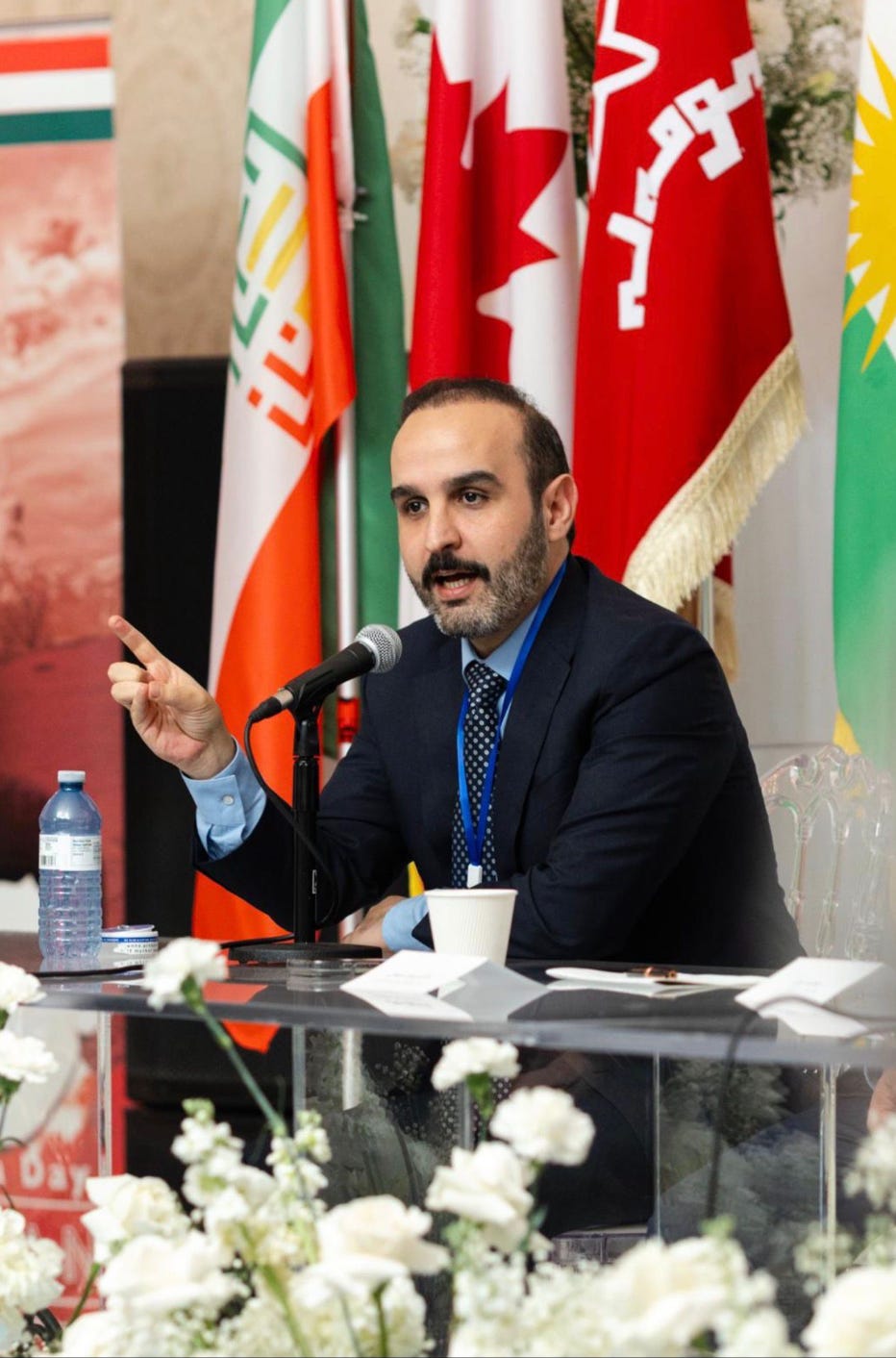
Kako Alyar is living through the busiest time of his life.
He has been travelling constantly, sleeping in airports and often only getting 3 hours of sleep a night. His phone is constantly ringing – the recent record is 120 calls in one day.
Kako has been a member of the Komala Party of Iranian Kurdistan since he was 18, a group that has spent decades fighting for Kurdish self-determination. For the last ten years, he has worked there full-time and currently he is a member of the party’s leadership.
Now, as the war weakens the Iranian state and reports of the U.S supporting the Kurdish groups militarily are circulating – the Kurdish story is at a critical moment: the fall of the regime could be fatal or their making.
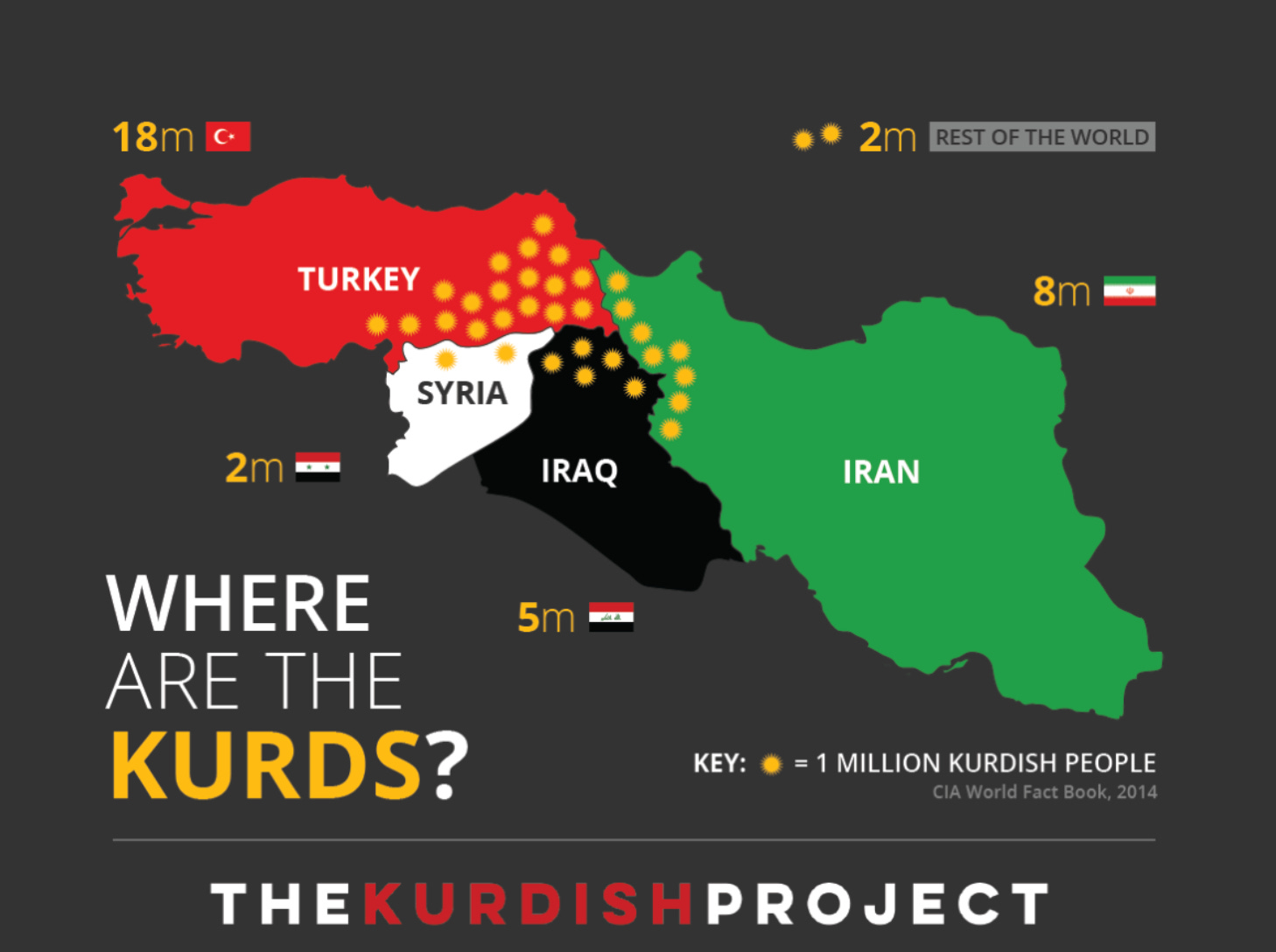
Due to the division of territory by European powers after the Ottoman Empire collapsed in 1922 – the Kurdish people have never had their own internationally recognised state. Today, there are 25 to 45 million Kurdish people scattered around the world, located predominantly in the area between Syria, Turkey, Iran and Iraq, where they’ve been subjected to nearly a century of persecution.
For a few days now, U.S. outlets have reported Kurdish forces in Iraqi Kurdistan being armed by the CIA and even these forces crossing the Iran-Iraq border into Iran’s predominantly Kurdish territory.
The Iraqi Kurdish government has denied these reports, calling them “patently false.” The reality of the collaboration remains unclear.
The Iranian government has prevented the Kurdish people from governing their own territory for decades, but today Iran’s government now finds itself at its weakest point in history. Meanwhile, 5 major Kurdish parties formed a coalition a week before the outbreak of the war and expressed their joint goal of achieving Kurdish self-determination.
The shifting balance of power has opened up the possibility of Kurdish self-governance within Iranian territory.
But the U.S. has a history of partnering with Kurdish forces and leaving them in the lurch with the fatal consequences.
Kako, 41, has devoted his life to the Kurdish cause.
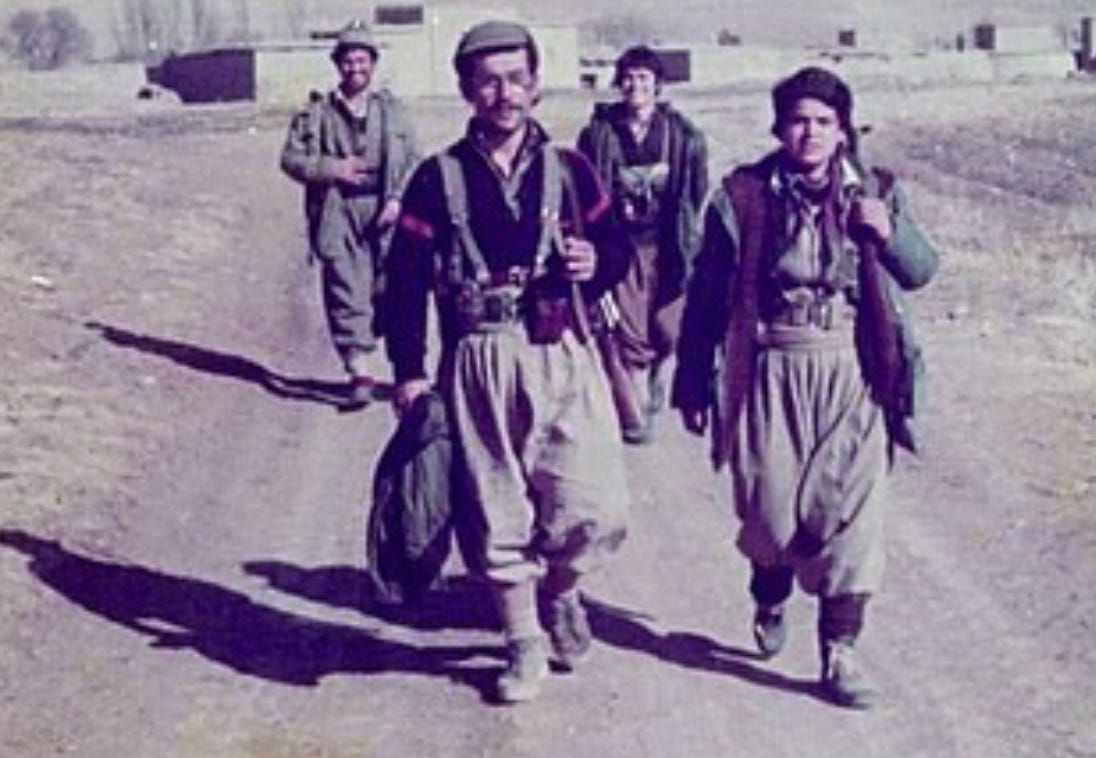
He joined the Komala party, a social democratic party, which became one of the major armed Kurdish movements during the 1979 Islamic Revolution.
The group is defined by its fight for a secular, federal Iran which allows for the existence of Kurdish self-determination.
But now his party is under attack. With the Iranian regime in an existential battle and unable to risk the threat of a Kurdish ground invasion – Kurdish bases in Iraq, including Komala party headquarters, have been attacked.
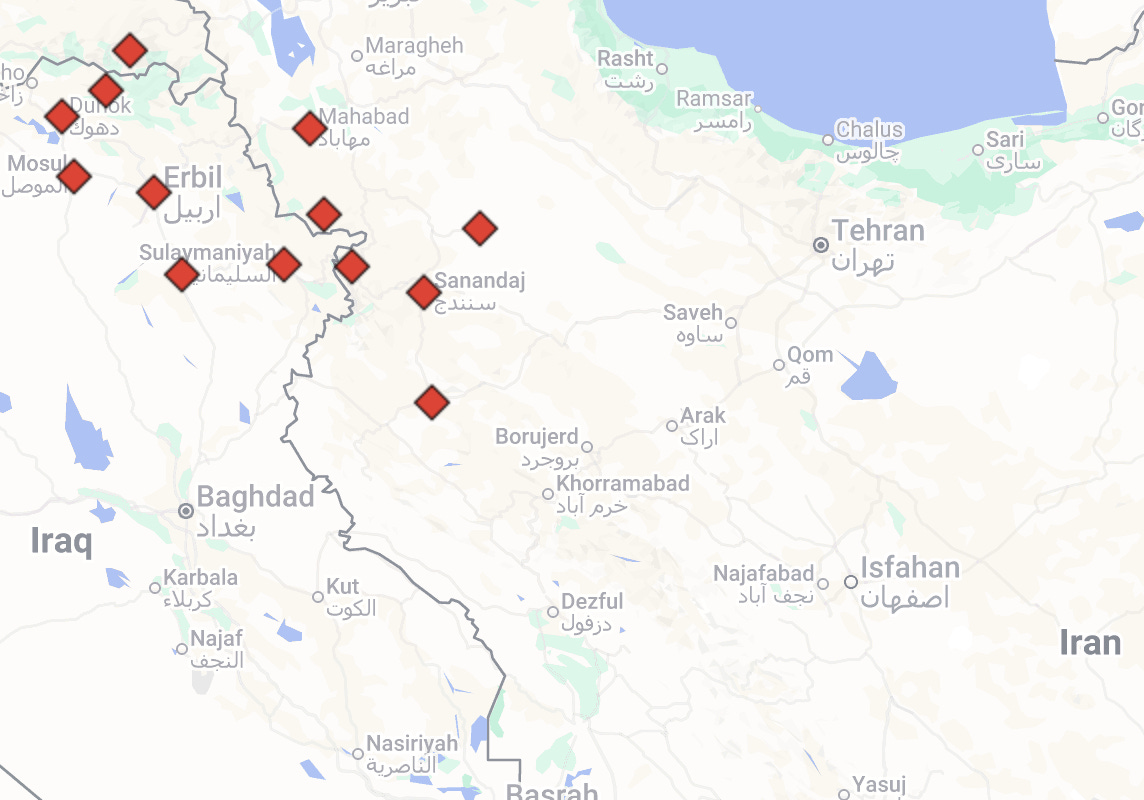
But for Kako, the prospect of being able to return to his native Bokan, a city in a majority Kurdish area of Iran – what many Kurds refer to as Iranian Kurdistan – is enough to keep him going.
Life in Iran became dangerous for Kako, when his family’s involvement in Kurdish politics caught the attention of Iranian authorities. So when he was 16 they escaped to Europe, where he still lives today.
Over the years, Kako has spent a cumulative 10 years in Iraqi Kurdistan. Just across the border from his homeland.
“You are so close but you can’t enter your own country, your own place, your own city. It’s only a few kilometers away but you can’t go. I think it’s inhumane to be denied a return to your country for so many years,” Kako said.
Some of my family was killed due to their association with the party, so I developed a strong relationship with the movement, Kako explained.
After being forced into exile as a teenager, Kako was exposed to the truth of the Kurdish condition from an early age. “For me, it was that we live in Iran, yes, but we are Kurds. We have our own language. Why can’t we govern ourselves? Why are we second-class citizens? Why can’t a Kurdish person be president? Why can’t we be ministers? Why can’t we be important people inside the country?”
On March 4, CNN reported that the CIA is arming Kurdish militias to go into Iran. This was accompanied by a multitude of Kurdish party leaders reporting that they had spoken to President Trump who had encouraged them to rise up against the Iranian government, offering “extensive” military support.
The White House confirmed that he did speak to Kurdish leaders, but denied claims that Trump is planning to arm Iranian Kurdish groups.
Kako who coordinates with different sections of the Komala party, including the military section, and refuses to confirm or deny CIA backing.
But he said that the Kurdish forces would welcome U.S. military support — despite the U.S.’ history of betraying Kurdish partners.
“I know major powers in the world don’t do anything if it doesn’t suit their interest, but, right now, we have a common interest,” Kako said.
In 2017, Iraqi forces, armed with U.S. weapons and training, attacked Kurdish-held territory during a referendum to consolidate Kurdish autonomy. The U.S., who had been backing the referendum, stood by while Iraqi forces took back half of the territory.
In 2019, the U.S. forces, who had been working with the Kurdish-led Syrian Democratic Forces (SDF) to fight ISIS, vanished after Trump essentially approved a Turkish offensive in which the SDF were left vulnerable to the Turkish onslaught.
Just this January, the U.S. did nothing when the new Syrian state forces attacked the SDF, longtime U.S. allies. The Syrian Network for Human Rights documented that at least 22 civilians were killed in the attack.
Kako isn’t blind to these realities: “We are aware that somewhere in the future [a Kurdish partnership with the U.S.] could collapse. If we don’t think like that we are naive.”
Although Kako is hopeful about the future, it’s clear the options for Kurdish people are limited.
“We are a small nation in the Middle East without a country…so when anybody can help us, it’s a good thing,” Kako explained.
When the third round U.S.--Iran nuclear negotiations failed, Kako was elated.
“That’s the moment that I realized a new era has begun,” he explained.
“Those moments were very crucial, I knew that something totally different had started, I had to be prepared, you are facing a new world,” he said.
However, not all Kurdish groups are excited about the possibility of an Iranian Kurdish ground invasion.
Iraqi Kurds have pressed Iranian Kurdish groups not to provoke Iran as last year they reached a delicate peace with the Iranian regime.
Kako acknowledges that despite the excitement, his community is living through uncertain times: “People are excited. But when a war starts, people are, at the same time, scared.”
Editor’s note:
The news alone can’t capture the full human experience. But by focusing on real people, we at Iran War Dispatches leave room for the nuance and complexity that war coverage deserves.
If you agree, subscribe now!
THE LATEST NEWS AT THIS HOUR:
By Oksana Stepura
Good morning to readers; Iran wakes up to another day of war.
IRAN REJECTS TRUMP’S DEMAND TO SURRENDER: Trump demanded Iran surrender in a social media post on Friday. In response, Iranian President Pezeshkian said that Iran’s enemies “must take their dream of the Iranian people’s unconditional surrender to their graves”” Trump has also said some areas of Iran are under consideration for “complete destruction and certain death” due to “Iran’s bad behavior.”
… AND PLEDGES TO HALT GULF STRIKES: Iranian President Pezeshkian apologized to Gulf countries after a week of Iranian strikes and said Iran would stop attacking its neighbors unless attacks against Iran are launched from their territory. He emphasized the need for diplomacy and called Gulf countries “brothers” while warning them not to become “tools of imperialism.” However, even after the announcement, drone interceptions and sirens continued in the UAE and Bahrain.
AZERBAIJAN DERAILS ALLEGED IRANIAN SABOTAGE PLOT: Azerbaijan said it prevented several sabotage plots allegedly organized by Iran’s Islamic Revolutionary Guard Corps, including a plan to attack the Baku-Tbilisi-Ceyhan pipeline, a key oil route between Europe and Turkey. Authorities said the targets also included the Israeli Embassy, a synagogue, and a leader of the Mountain Jews community. This statement comes a day after an alleged incursion by four Iranian drones into Azerbaijan.
IRAN BANS WAR FOOTAGE: Iran’s Intelligence Ministry warned citizens against sharing images or videos of war damage and threatened severe punishment under expanded espionage laws. This warning follows Iran’s approval of harsher sentences for espionage in 2025 — including the death penalty — for cooperation with countries such as the U.S. and Israel.
DRONE STRIKE REPORTED NEAR DUBAI AIRPORT: BBC has verified footage showing a drone strike near Dubai International Airport. While the exact location has not been confirmed yet, the strike appears to have taken place in close proximity to the airport’s concourse A.
AYATOLLAHS URGE SWIFT LEADER ANNOUNCEMENT: Iranian ayatollahs are calling for the quick announcement of a successor to Ali Khamenei. They say naming a new leader soon would help maintain national unity and strengthen support for the country’s armed forces. They also argue that a swift decision would help organize state affairs more efficiently.
Stay safe out there!
Best,
Alessandra
signed up for a paid subscription today. Depressing that I think this war will last more than one year.