

At the bottom of this page: Latest news at this hour.
Iran to respond to U.S. peace proposal on Thursday… U.S. strikes Iranian tanker amid peace push… First Israel strikes on Beirut since ceasefire…Satellite images reveal widespread damage to U.S. military sites in the Middle East… French warship heads to Hormuz.
Featured subscriber comment:
“Interesting details from the lived experience of an ongoing war. You reporters are the one degree of separation between the affected people and us, and we appreciate how difficult that work is. Stay safe out there.”
If you value human-centered reporting from the ground, there’s one way to support it: subscribe — and tell a friend, too.
OUR LEAD STORY:
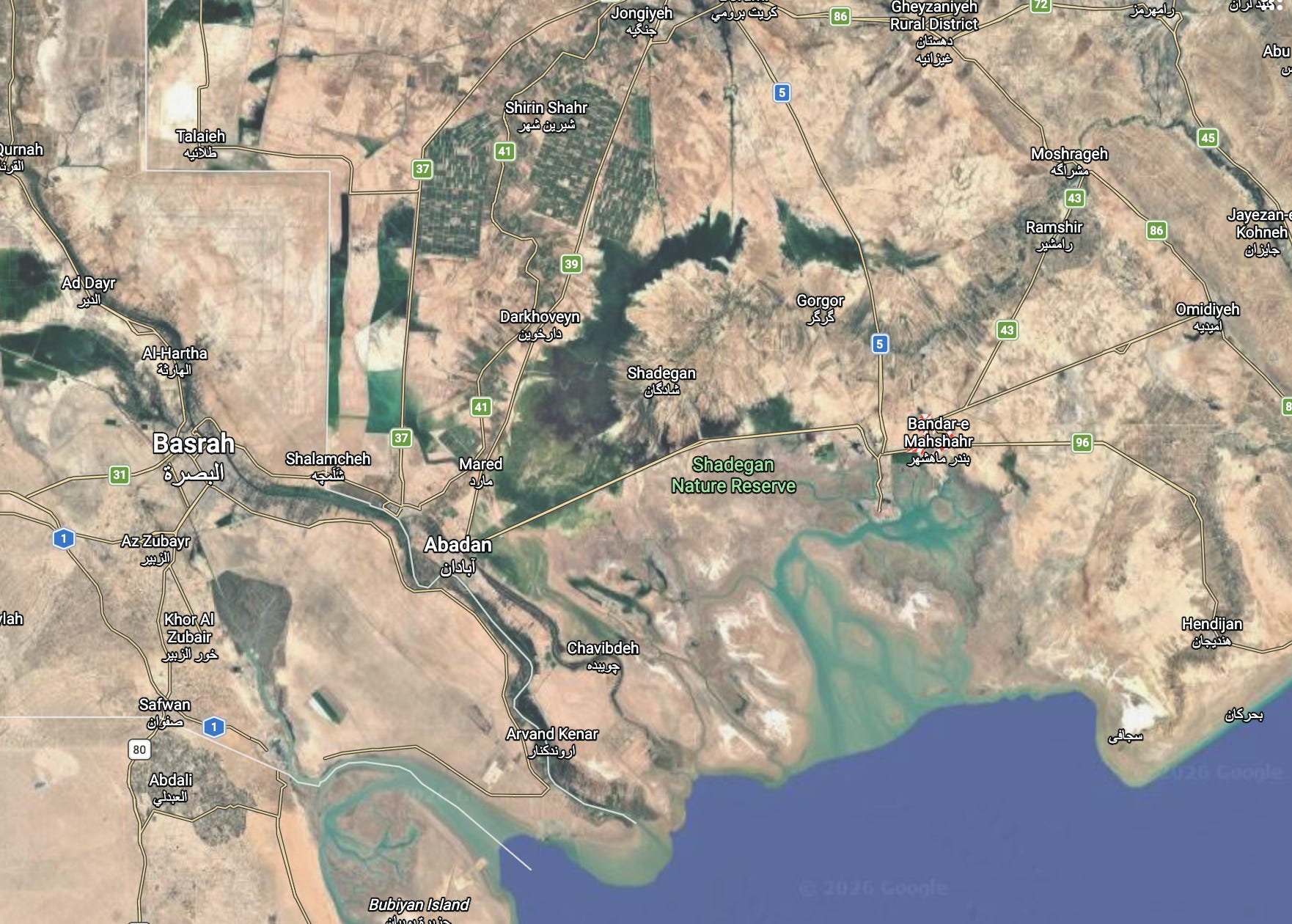
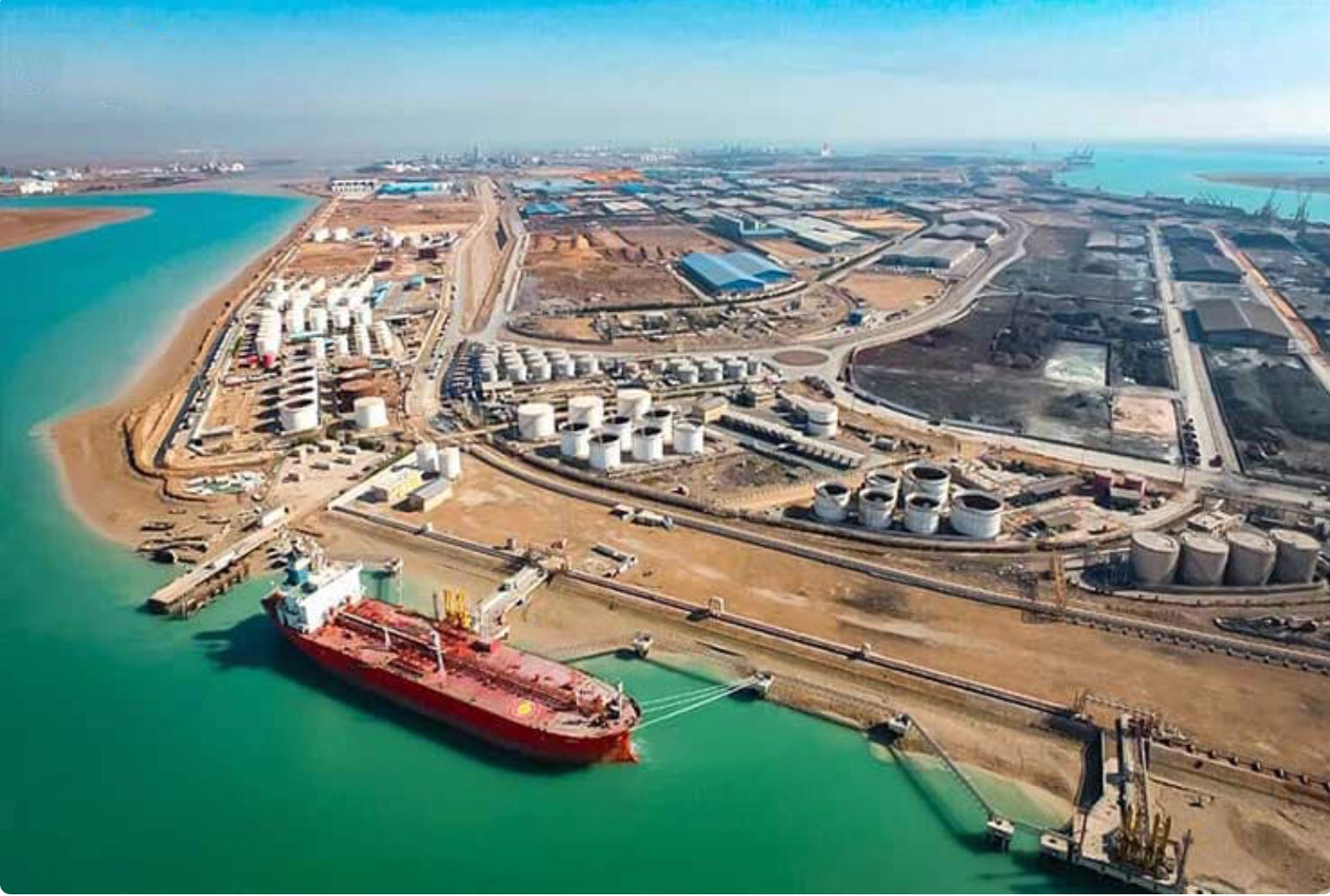
YEREVAN, Armenia – In the far southwest of Iran, where tidal inlets sprawl over hot, muddy plains, lies Bandar-e Mahshahr, often shortened to Mahshahr – a small port city, home to some of Iran’s most important oil infrastructure.
Below the city sits one of the oldest trading ports in the Persian Gulf, which specializes in exporting oil and petrochemical products.
Mahshahr was once an influential trading hub, appearing in famous travelogues since it’s founding in 231 AD, but by the mid-1950s it had largely lost its significance.
But the old city of winding streets transformed when its oil infrastructure was expanded and oil money flooded in during the 1990s.
Entire ‘shahraks’ or mini cities, sprung up to support the workers of the Petrochemical Special Economic Zone, where oil is used to produce 72 million tonnes of petrochemical products yearly, including chemicals and polymers. The complex employs the majority of the area’s 300,000 inhabitants.
Roya*, whose family has been in Mahshahr’s oil industry for generations, grew up in one of these neighborhoods.
Today Roya lives in Yerevan, Armenia, but when she was growing up Mahshahr and her father’s profession provided Roya with an endless stream of luxury. The restaurants they frequented, the local hospitals, the beauty salons, the gyms and even the house she lived in were all funded by the oil industry.
“The best moments of my life were when my dad worked at the oil company,” Roya said.
But Mahshahr’s fortunes have turned dramatically since the outbreak of war.
Lucrative petrochemical hubs that once fueled Iran’s economy have been paralyzed by the recent U.S. naval blockade in the Gulf of Oman, as well as strikes on oil infrastructure that forced Mahshahr’s industrial complex to shut down in early April.
On Thursday, Tehran is expected to reply to a U.S. peace proposal. But Iran is still pushing for one of its main objectives: the end of the U.S. naval blockade choking off its exports.
One oil expert serving on Iran’s Chamber of Commerce put this issue above all else: “The [U.S. naval blockade] is a much more serious threat than even war,” adding that the blockade could threaten Iran’s oil production long-term.
Now, the U.S. maritime blockade has choked off Iranian exports through the Strait of Hormuz, through which 80 percent of Iran’s oil passed. With crude unable to leave Iran via sea, storage facilities are likely to reach capacity, which could potentially force oil production to shut down entirely.
If Iran stops producing oil altogether, Mahshahr will cease to exist as the city it once was, forcing the community built around this industry to reshape itself entirely– exposing the human consequences of an oil industry in collapse.
When Roya’s great-grandfather moved from Shiraz to Mahshahr to work in the oil industry, he couldn’t have known that his descendents would follow so closely in his footsteps.
After the 8-year Iran-Iraq war in the 80s, the Islamic Republic needed to bring in funds and started expanding Iran’s oil infrastructure. Since Iran nationalized its oil industry in the 1950s, the sector has been government-run, providing a key source of revenue for the state.
Like her great-grandfather, Roya’s grandfather, father and uncle all worked in the oil industry. Even Roya herself spent 5 months in an accounting job within the industry.
“The whole routine in Mahshahr depends on oil,” Roya explained.
Roya’s father got a high-level job at the petrochemical complex, so for his children, the generous hand of Iran’s national oil company was never far away.
They ate at the company restaurant for free; Roya took trips abroad with her sports team funded by the company; even after Roya’s father retired, he was able to buy the home they lived in for free at a discounted $2,050 dollars.
Her father’s employer doled out bonuses and rewards on Mother’s Day and other holidays. Fathers got bonuses when they had a child. Life was good working in oil in Mahshahr.
For Roya, the company played almost a parental role. They gave Roya a lump sum of money on her 18th birthday, which was given to all the unmarried daughters of employees at that age.
The logic was that a young man could provide for himself, and a married woman could rely on her husband, but an unmarried woman needed the support, Roya explained.
“From the perspective of the company, the idea was ‘your daughter is my daughter,’” Roya said.
But the life of luxury that Roya’s family enjoyed is gone.
At the beginning of April, Israel attacked Mahshahr’s petrochemical complex, shutting down key facilities supporting the complex, which also provided power to 500,000 people in Khuzestan province, according to an Iranian oil ministry official.
Before the war Iran’s economy was already in crisis, as spiralling inflation caused protests to break out across the country at the end of last year. The war has only made this worse – on April 29, the Iranian rial rose nearly 8% in a single day.
The shutdown of Mahshahr’s oil infrastructure has exacerbated the economic stress, breaking the local economy’s backbone and leaving much of the city unemployed and struggling to survive.
The attacks on Mahshahr’s key industry has slowed everything down. “The friends from Mahshahr that I have spoken to have told me, “we are just surviving, not working, just surviving,” Roya said.
With Iran’s worst internet blackout in history, the conversations Roya has with her parents, who still live in Mahshahr, are infrequent at best and self-censored, as they are forced to use government-run messaging platforms like Rubrica and Bale.
“I can only ever ask how they are. My mother is very sick at the moment, so I just ask about her health, but then that’s it,” Roya said.
But it’s clear the free meals and life of luxury that was Roya’s childhood, now couldn’t be farther from their reality.
“My parents are just constantly saying that prices have gone up and there is no more work in the city anymore,” she explained. Even Roya’s brother, who repairs electrical appliances, said that he barely has any customers anymore, as people are left struggling to pay for basic necessities.
When the U.S. and Israel targeted Iran’s oil infrastructure, the city that provided Roya’s family with so much became a military target overnight – turning it into a prison for Roya’s parents. “My parents say they are forced to stay in Mahshahr because they have a home and all our belongings are there,” Roya said.
Roya was only able to check on her parents through her brother’s friend, who lived in Mahshahr and had a Starlink to contact them. Thankfully, her parents were ok, but as America’s blockade remains in place and the U.S. and Iran struggle to reach a peace deal, the threat of more strikes is far from over.
Mahshahr, a city with two major ports, is also home to a major shipping industry – exporting petroleum products and importing general goods, which are easier and cheaper to access outside of Iran.
But with the U.S. blockade, Iran’s shipping industry has been crushed. This will mean that people in Mahshahr will have to source previously imported goods locally, but this also depends on the rate of local production, Roya explained.
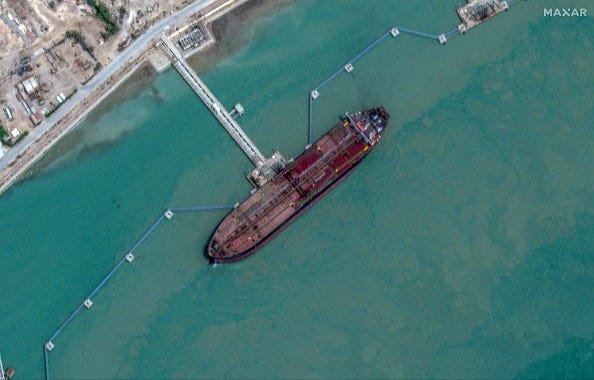
As the U.S. blockade prevents Iran from exporting oil, the country is forced to manage or halt output, as its oil storage facilities will otherwise reach capacity.
Flames and smoke were seen above oil flares in Iran’s oil-rich southwestern Khuzestan region. Iran International reported that this may have come after Iran set fire to the oil as a way to manage oil output.
Iran has also resorted to using old containers and tankers, which stopped being used due to their poor condition. Despite being more costly than sending vessels via ships, Iran has also tried to export oil to China, a major importer of Iranian oil, by rail.
Recently the situation in Hormuz has seen marginal improvements. After the U.S. promised to pause ‘Project Freedom’ – its plan to guide ships through the Strait of Hormuz – on Wednesday May 6, Iran promised to ensure safe transit for ships, although has not provided any details on what this will look like.
Despite the renewed hope for opening the Strait of Hormuz, key obstacles remain in the peace talks between the U.S. and Iran. Trump was reportedly dissatisfied with Iran’s proposal to reopen the Strait of Hormuz, end the U.S. blockade and postpone nuclear negotiations. Trump also told aides to prepare for an extended blockade, the Wall Street Journal reported.
But if Mahshahr’s oil industry stops, what will happen to the city built around it?
“A lot of people will leave…the oil industry is really the main goal for young people in the city,” Roya said.
*Roya’s name has been changed for security reasons.
Featured subscriber comment:
“Interesting details from the lived experience of an ongoing war. You reporters are the one degree of separation between the affected people and us, and we appreciate how difficult that work is. Stay safe out there.”
If you value human-centered reporting from the ground, there’s one way to support it: subscribe — and tell a friend, too.
THE LATEST NEWS AT THIS HOUR:
By: Serafima Melnychuk
IRAN TO RESPOND TO U.S. PEACE PROPOSAL, THURSDAY: Iran is set to respond to a U.S. peace proposal, Thursday May 7, CNN reported.
Trump has said the “good talks” were had between the U.S. and Iran, yesterday. While Axios reported that the U.S. feels prepared to agree on a 14-point memorandum with Iran.
However, on the same day a senior Iranian parliamentary official dismissed the U.S. proposal as a “wish list.”Iran’s Ministry of Foreign Affairs said Tehran would respond officially via Pakistan’s mediation.
Key elements of the deal reportedly include halting Iran’s uranium enrichment, lifting sanctions, and ensuring free navigation through the Strait of Hormuz, XX reported this citing two American officials and two unnamed sources.
U.S. STRIKES IRANIAN TANKER AMID PEACE PUSH: The Gulf of Oman, the area on the opposite side of the Strait of Hormuz, saw rising tension after American forces opened fire against an Iranian vessel carrying oil and heading to an Iranian port, yesterday, according to the U.S. Central Command.
This comes as the U.S. agrees to pause its ‘Project Freedom’, a plan which started on 4th May to guide ships through the Strait of Hormuz, after only two days. After this Iran agreed to ensure safe transit for ships, however provided no details on the new procedures in the strait.
FIRST ISRAEL STRIKES ON BEIRUT SINCE CEASEFIRE: Israel carried out its first strike on Beirut following its ceasefire agreement with Lebanon on April 16 last month in its war with Hezbollah. Israel said it targeted a leader of Hezbollah’s highly trained Radwan Force in the southern suburbs of the Lebanese capital.
CNN reported the strike had been coordinated with the U.S. ahead of time, citing an Israeli source.
During a visit to southern Lebanon, Israel’s Chief of Staff stated that there are “no restrictions on the use of force” in operations against Hezbollah.
SATELLITE IMAGES REVEAL WIDESPREAD DAMAGE TO U.S. MILITARY SITES IN MIDEAST: Iranian attacks destroyed around 228 buildings or items of equipment at U.S. military bases in the Middle East, according to satellite imagery analysis from The Washington Post.
The strikes caused broader damage on U.S. military facilities than the U.S. government has acknowledged.
FRENCH WARSHIP HEADS TO HORMUZ: The Charles de Gaulle, a nuclear-powered aircraft carrier owned by France, is heading south toward the Red Sea past the Suez Canal aiming to reach the Strait of Hormuz, the French Ministry of Armed Forces stated on Wednesday. French President Emmanuel Macron said the deployment is part of preparations for a potential joint French-British mission in the Strait of Hormuz.
Recently, the NATO General Secretary acknowledged that the U.S. was disappointed in the EU’s lack of support for the war in Iran, which the U.S. has made clear since the first days of the war.
Stay safe out there!
Best,
Alessandra
Thank you for letting us see the lives of Iranians living through this war. The story is sad but truth usually is.