

At the bottom of this page: Latest news at this hour.
UAE intercepts Iranian missiles, Tehran silent… Ceasefire in doubt: U.S.-Israel planning fresh attacks, CNN reports… Rubio to visit the Vatican as Trump–Pope rift deepens over Iran war… Iran’s foreign minister to visit China… South Korean-operated ship hit in Hormuz — Seoul weighs joining U.S. Hormuz escort plan.
Featured Subscriber Comment
“ Thanks for the clarity. Thanks for the information. Thanks for the explanation of the implications of the information.”
If that’s the kind of reporting you’re looking for, subscribe.
OUR LEAD STORY:
It took an hour for Nami’s* life to unravel.
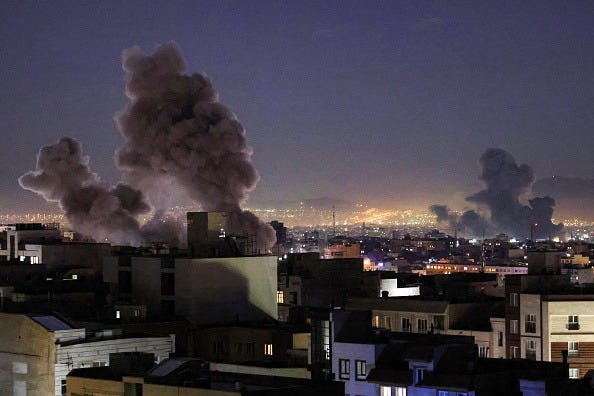
First, Nami, 23, was woken up by explosions from the U.S.-Israeli attacks on Tehran – it was then he knew the war in Iran had started.
He quickly got up and joined his parents and little brother in front of the TV. They were watching the news, while frantically calling friends and family – trying to make sense of what was going on.
That was when the internet went dark. Within an hour of the war, the government had enforced a total internet blackout, Nami said.
It wasn’t long after that he got a call.
The company Nami worked for, which manufactured automotive parts, was shutting down due to war-related security concerns. A few days later he was told he wasn’t going to be paid for the last two months of work either.
Iran entered the war already on the brink: by the end of 2025, the rial had lost more than half its value and was in freefall, shedding another 20 percent in just 20 days.
But the war brought a whole new set of challenges to the crisis.
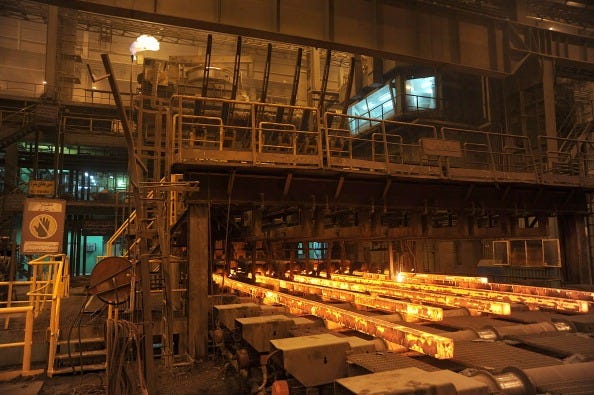
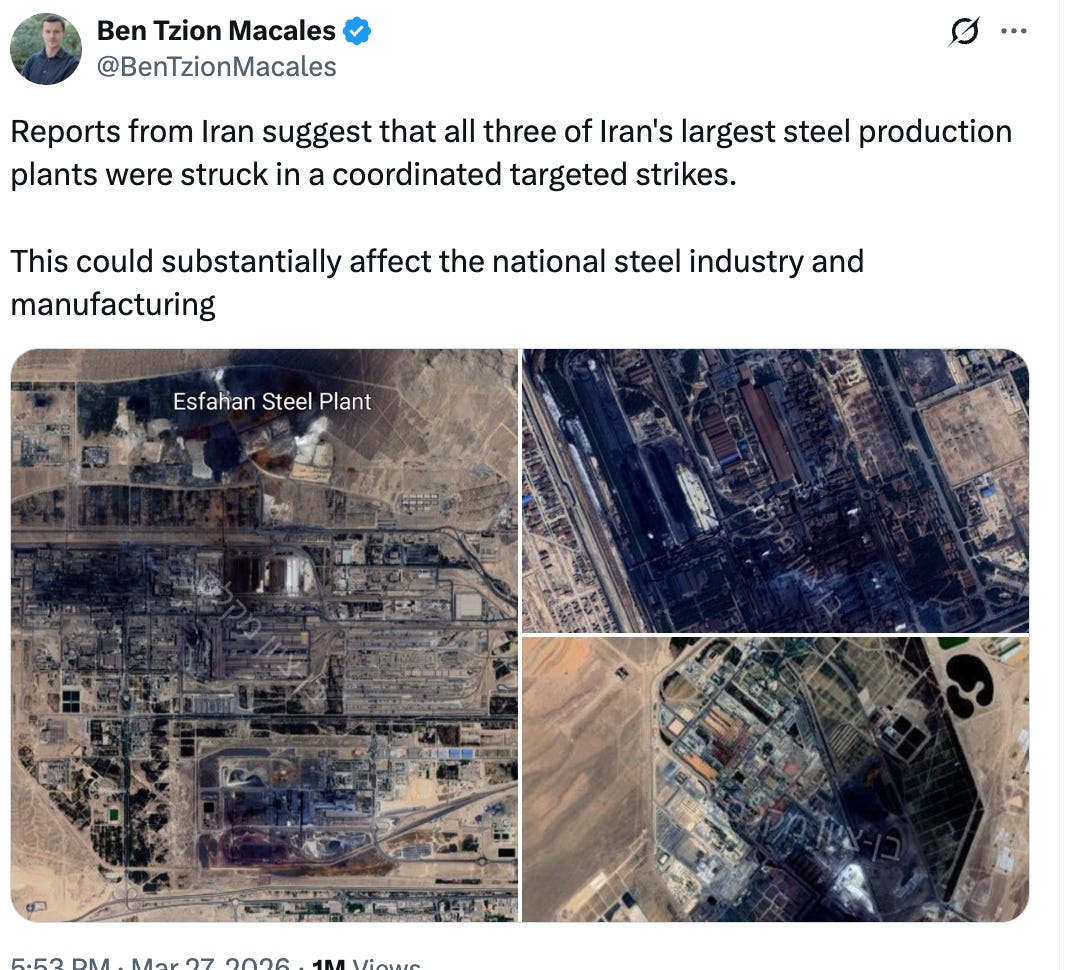
The war has decimated Iran’s industrial base. U.S.-Israeli attacks have targeted 20 industrial parks and over 20,000 commercial and industrial units across Iran, mainly petrochemical and metallurgical hubs. These attacks wiped out up to 30 percent of steel production capacity.
The fallout from these attacks is now becoming clear. Last week on April 27 Iran announced that Iran would stop exporting steel until May 30 – rolling back a major industry which generated $12-13 billion in export revenue in 2024.
The human cost of these attacks has sent shockwaves through Iran’s economy.
The damage to Iran’s industrial base sparked a wave of layoffs across Iran, sending Iran’s unemployment rate skyrocketing. In the first two months of the war 147,000 people applied for unemployment benefits.
For businesses that relied on raw materials, like car manufacturing, the impact was devastating.
But the long-term consequences threaten to reshape Iran’s economy forever, as young people like Nami flee the country to find work.
About a month before the war started, Nami realized that he hadn’t received his salary for the month. He called up his boss, who told him that their company’s production was at an all-time low and they couldn’t afford to pay him until the economic situation stabilized and normal production resumed.
“My boss sounded regretful…but I felt so angry, upset and anxious,” Nami said. “But I knew so many other workplaces had shut down and it would be so hard to find work. I needed the money, so I kept working there.”
When he showed up to work Nami learned that none of the other employees were being paid either. “When you don’t get paid for the work you do, it’s naturally very discouraging. The employees were unhappy with the situation, but we tried to stay positive, talk to each other, and keep our energy up,” Nami said.
Even before the war had started, many of Nami’s friends were forced to choose between leaving Iran and losing their jobs.
At the start of the year, businesses across Iran were not only struggling with the financial stress, but also with an internet blackout.
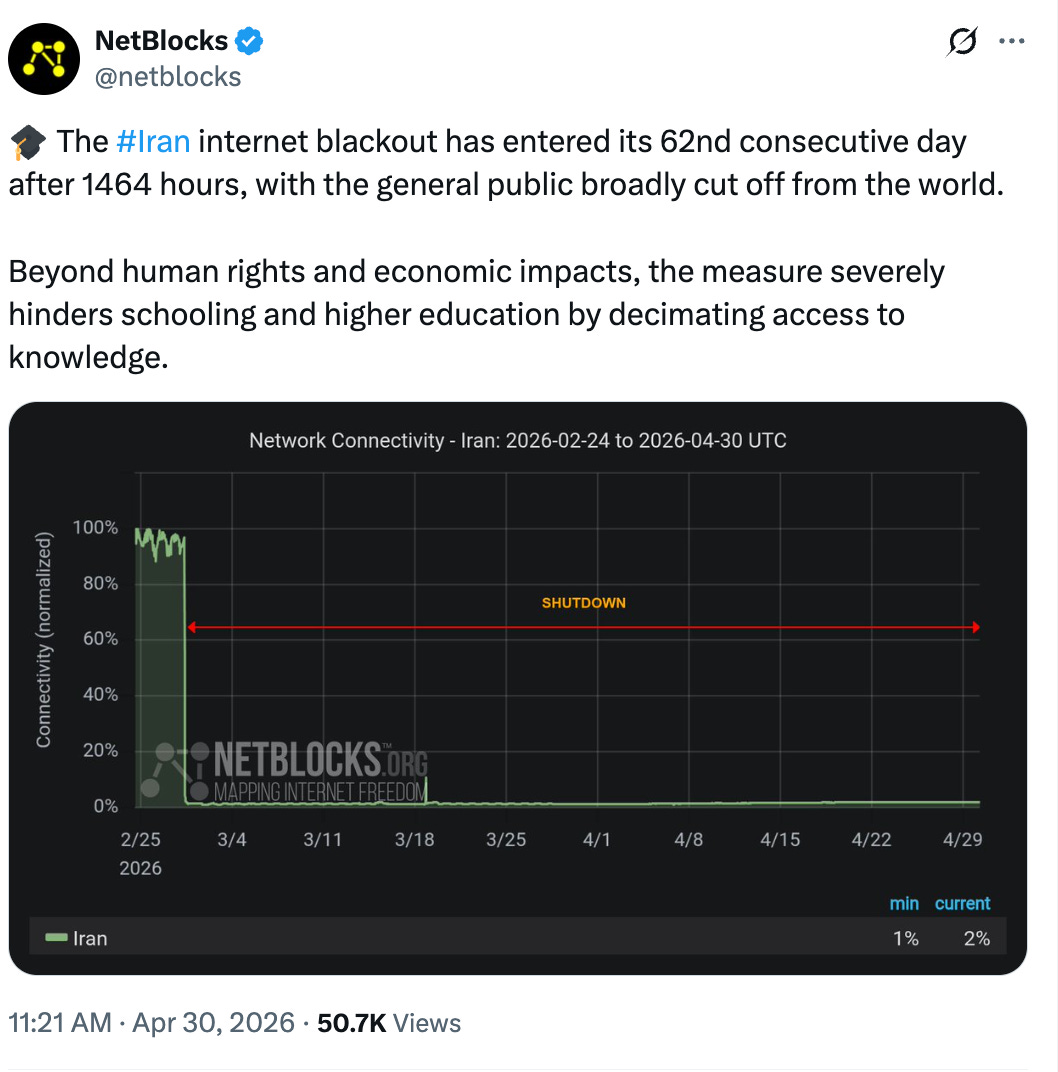
Since the mass crackdown on protests, Iran’s government has plunged the country into a total internet blackout, restricting communication for those inside and outside of Iran, bar those who can afford expensive VPNs or Starlink satellites.
While most businesses rely on the internet in some capacity to work, for people working in the IT sector, the blackout made work impossible. The internet blackout has reportedly caused $1.8 billion in losses in 48 days for businesses in Iran, according to NetBlocks, a global watchdog that monitors the internet.
Many of Nami’s friends who worked in the IT sector left Iran for Armenia in order to avoid losing their jobs. Another woman who spoke to Iran War Dispatches said that while living in Armenia she had taken over her friend’s customer support job. He was still living in Iran and the internet blackout had made doing his job from Iran impossible.
Nami’s workplace survived this first culling, but the attacks on two major metallurgical production sites dealt a much more significant blow to Nami’s workplace.
Nami, who had recently graduated from university where he had studied engineering, had found a job in Tehran, working with CNC machines, a manufacturing tool able to produce specific components, in Nami’s case car parts.
The work was interesting, the salary was good – and Nami loves cars, but it wasn’t his end goal.
Nami had studied engineering because he knew that those technical skills could be easily transferred to other jobs. He had a dream of moving to Germany.
“[Germany has] the strongest economy in Europe…and I am really interested in German cars… I’m really passionate about cars, I can say I truly love them,” Nami said.

Nami’s interest in cars started when he was a child. “I love watching cars, driving them, and even listening to the sound of their exhaust. When I’m driving, I don’t think about negative things,” Nami said.
When he got the call that the company was closing, he was told that the company would reopen when the war was over.
But on March 27, about a month into the fighting, the U.S. and Israel bombed two of Iran’s three major steel producers: Mobarakeh Steel in Isfahan and Khuzestan Steel in Ahvaz. Israel has claimed that industrial sites are “dual use,” providing both military and civilian services.
Since those attacks, the industrial sites have stopped functioning, and Iranian officials have asked businesses to manage their use of raw materials. The loss of the two plants will further cripple Iran’s export capacity—already constrained by a U.S. blockade on its ports—undermining the position of what was until recently the world’s tenth-largest steel exporter.
Iran’s car manufacturing industry – already under strain in an economy with shrinking disposable income – has been pushed to the brink of collapse. Reformist Iranian media outlet, Etemad, wrote that the industry has now entered “a historical turning point and structural crisis.”
The industry couldn’t cope, and waves of layoffs followed. Maral Sanat, a trailer manufacturer based near Iran’s border with Azerbaijan, laid off 1,500 employees, citing a lack of raw materials. But car manufacturers were not alone in their plight: Borujerd, the textile firm, laid off 700 people, and in the city of Rasht 2,000 people were fired from industrial jobs, one person told Iran International.
As a young person without work, money or internet connection, Nami’s life in Iran was a shell of what it once was. “After the war started and most places were closed, we honestly didn’t have many ways to spend our time…normally, I enjoy watching sports, but because of the internet shutdown, even that became almost impossible,” Nami explained.
He was forced to cut expenses and rely on his savings: “Before the war, work was stable and everything was fine, but after it started…people started just staying at home,” Nami explained.
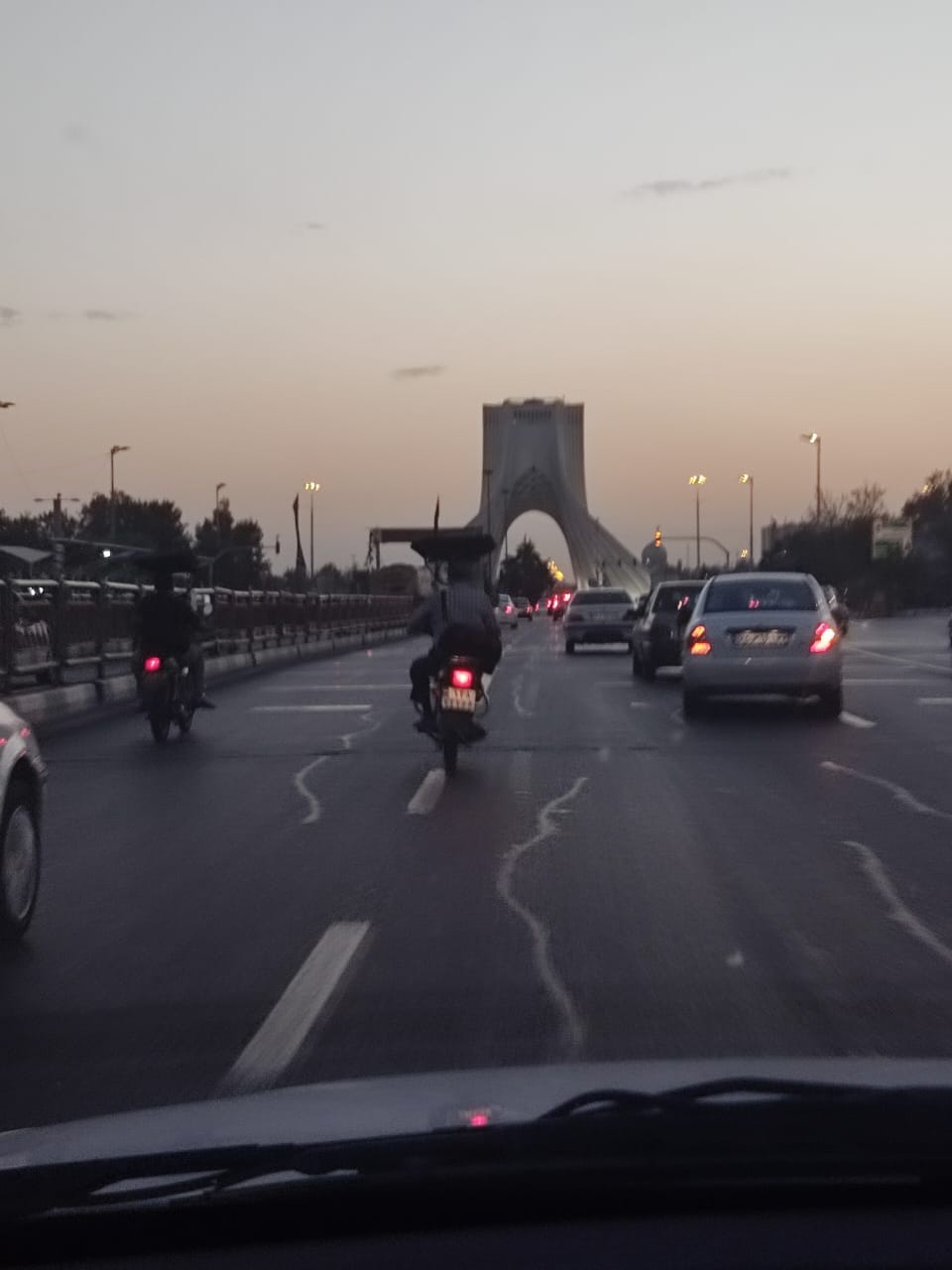
Many nights Nami would watch movies or take sunset drives with his friends about Tehran just to fill the time. “[On the drives] we talked about our goals, how we spent our free time, our language classes or university, and also our plans to immigrate to Germany…sometimes we would joke around with music, singing along or even dancing to it,” Nami said.
Since the U.S. naval blockade in the Gulf of Oman, the economic situation in Iran has only worsened.
After the U.S. blockade started, Nami’s family and friends in Iran spoke about how prices and inflation have only continued to rise. The blockade has also crushed any revenue brought in via exports, meaning it has devastated Iran’s oil industry — the backbone of Iran’s economy.
Nami recently left Iran for Armenia and moved to Yerevan, the capital, where he now lives with 6 of his friends who have done the same. In total, around 20 of his friends have moved from Iran to Yerevan.
With all of them in their early 20s, some of them are avoiding mandatory military service in Iran, while others are students who were attending university before they shut down due to the war, Nami explained.
But almost all of them have the same plan: to move to Germany.
There is a legal pathway for Iranians to move to Germany which requires them to live in a country with a German embassy for at least 6 months – but since the war the German embassy in Iran has closed.
Nami’s father owns a store selling bags and other goods. “It’s a hard time, but the shop is still open…right now in Iran it’s the hardest for young people to find jobs,” Nami said.
His little brother, who is still in school, has a similar plan to Nami. He is only 18, but he is really interested in AI and coding. “His plan is to move to Germany to live with me once I am settled”, Nami explained.
So much of Iran’s young workforce, like Nami, has left Iran – taking their technical skills and abilities with them, and dealing yet another blow to Iran’s battered economy.
“Most young people in Iran are really smart, hardworking, and ambitious. They have big dreams…But because of the [war] and pressure from the government, a lot of these dreams are slowly being destroyed. I’m not an exception,” Nami explained.
*Nami’s name has been changed for security reasons.
Featured Subscriber Comment
“ Thanks for the clarity. Thanks for the information. Thanks for the explanation of the implications of the information.”
If that’s the kind of reporting you’re looking for, subscribe.
THE LATEST NEWS AT THIS HOUR:
By: Katerina Antonenko
UAE INTERCEPTS IRANIAN MISSILES, TEHRAN SILENT: The United Arab Emirates said its air defenses intercepted ballistic and cruise missiles fired from Iran, on Monday. This was the first attack on the UAE since the ceasefire began in early April.
A fire broke out at an oil facility in Fujairah, a city located on the UAE’s eastern coast, following a suspected drone attack. The United Arab Emirates has partially closed its airspace for the first time in several weeks.
CEASEFIRE IN DOUBT: U.S.-ISRAEL PLANNING FRESH ATTACKS, CNN REPORTS: Israel is coordinating with the U.S. for a potential new round of strikes on Iran, CNN reported. Iran’s parliament speaker said the U.S. and its allies have threatened shipping security following a day of attacks by Iran in the Strait of Hormuz. The speaker also warned that the fight over Hormuz had not “even begun yet”. President Trump declined to say whether the ceasefire remains in place when asked directly.
RUBIO TO VISIT VATICAN AS TRUMP-POPE RIFT DEEPENS OVER IRAN WAR: Secretary of State Marco Rubio will visit the Vatican this week amid growing tensions between President Trump and Pope Leo XIV over U.S. policies, including the Iran war. On Thursday, Rubio will meet with the pontiff — the first American to hold the position. The State Department said that the pair would discuss the situation in “the Middle East and mutual interests in the Western Hemisphere.”
IRAN’S FOREIGN MINISTER TO VISIT CHINA: Iranian Foreign Minister Abbas Araghchi will visit Beijing on Tuesday for talks with his Chinese counterpart, focusing on bilateral ties and regional developments. Araghchi recently visited Moscow to hold a similar meeting with Putin, to strengthen bilateral relations between the countries.
The visit comes days before Donald Trump’s first trip to China in nearly a decade — the two leaders are set to meet on May 14. Washington has been pressuring Beijing to help reopen the Strait of Hormuz.
SOUTH KOREAN-OPERATED SHIP HIT IN HORMUZ — SEOUL WEIGHS JOINING U.S. HORMUZ ESCORT PLAN: South Korea is reviewing whether to join President Trump’s plan to help ships transit the Strait of Hormuz, a South Korean official said Tuesday. This comes after a Korean-operated vessel was attacked in the Strait of Hormuz.
Seoul confirmed that President Trump suggested that South Korea join the U.S. ‘Operation Freedom’ which plans to escort ships through the Strait of Hormuz. This move would however require legislative approval. A South Korea presidential secretary also noted that international maritime safety and freedom of navigation was protected by international law.
Stay safe out there!
Best,
Alessandra
Interesting details from the lived experience of an ongoing war. I really feel for the youth these days, they have to navigate our high-tech, unstable, global environment with so few of the resources we take for granted. Iran, Ukraine, Venezuela, Taiwan. You reporters are the one degree of separation connecting them and us, and we appreciate how hard that work is. Stay safe out there.
Very interesting, how the war is effecting ordinary Iranian citizens. Especially young people trying to start their adult lives.