


At the bottom of this page: Latest news at this hour.
U.S. shook by Israel’s fuel strikes on Iran… UK monitors Iran crisis impact… Iran fires another ballistic missile toward Turkey… More U.S. casualties… Israel strikes Beirut targeting Hezbollah-linked sites.
Featured subscriber comment:
“Your reporting is brave, empathetic and provides news that other news organizations don’t offer.”
By Laurel Ann Mathe
For more of this reporting, subscribe now!
OUR LEAD STORY:
Ali went to work on Monday morning. Soon after he arrived, the medical center he works in told employees to go home. Heavy shelling had begun again in Isfahan.
“The windows of my house were shaking in the morning. I tried to stay away from windows and wait until it was over so I could go to work, it was nothing special,” said Ali.
Isfahan has become one of the central targets of the U.S. and Israeli campaign against Iran’s nuclear program. The city is home to a major nuclear facility believed to hold much of the country’s enriched uranium, making it a strategic target as the U.S. considers sending special forces to secure Iran’s enriched uranium.
But for the millions of people who live there, the strikes are not abstract geopolitical maneuvers. They are a daily reality that interrupts work, school, and ordinary routines as residents try to maintain some semblance of normal life while bombs fall around them.
For Ali, an engineer in his thirties, daily life can be interrupted at any moment by the sound of bombs.
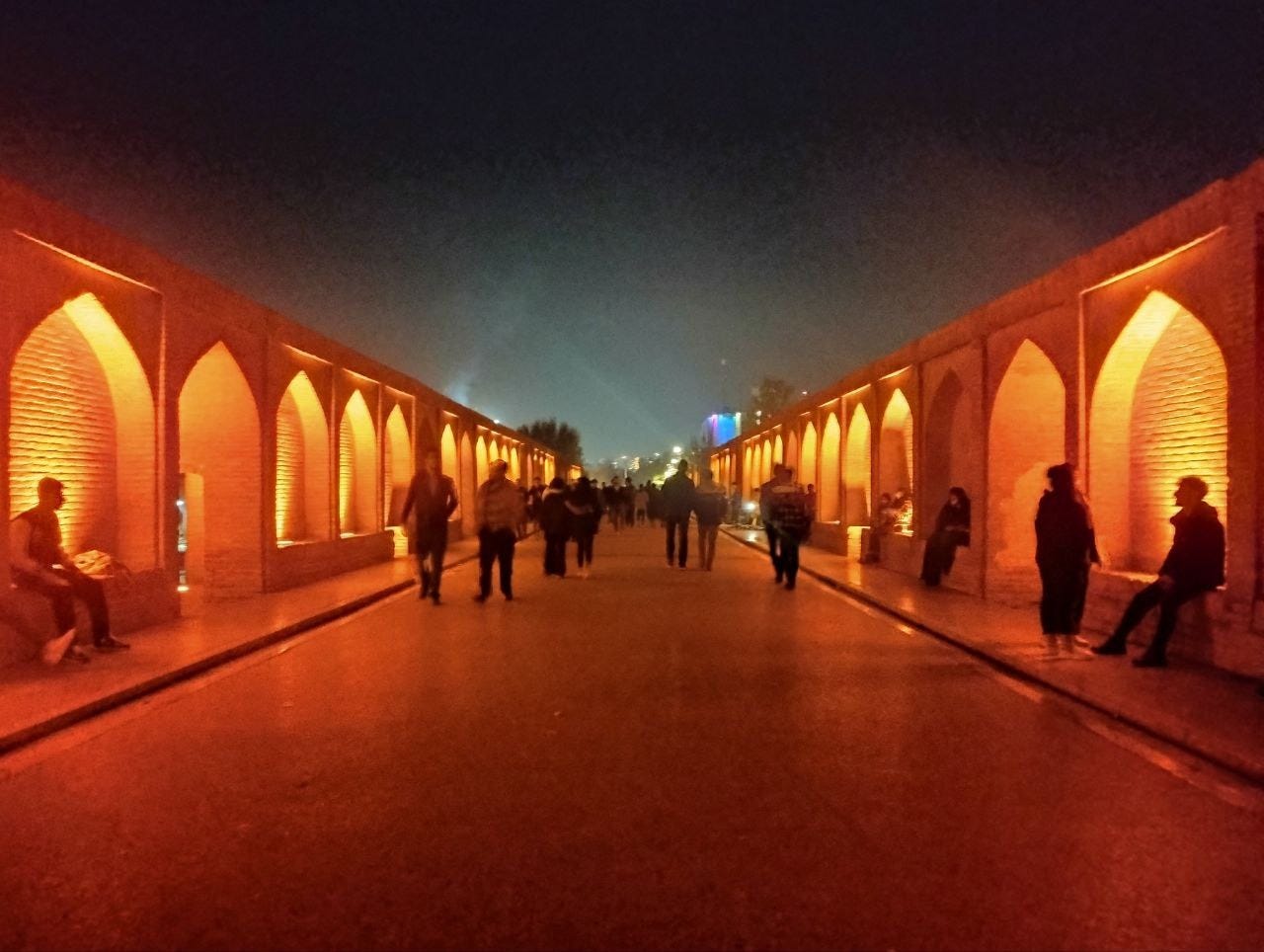
Ali and his friends and family don’t discuss the dangers of living near the Isfahan nuclear center very often. After the first nine days of the war, some parts of his daily routine are intact. He still goes to the supermarkets for groceries, where most of the necessary products are available. People are still driving around the city, but on heightened alert, always cautious about air raid sirens and constantly reading the news.
Other aspects of life in Isfahan have turned around entirely. Classes have been suspended, with schools closed at least until Nowruz, the Persian New Year, which falls on March 21.
His new life reminds Ali of a scene from the film And Life Goes On about the aftermath of an earthquake in Iran. In the movie, he recounts, people set up a television on earthquake ruins to watch a football match.
“That is exactly the situation now,” Ali said.
But at any moment, a catastrophe can snap anyone out of their attempt to preserve normalcy.
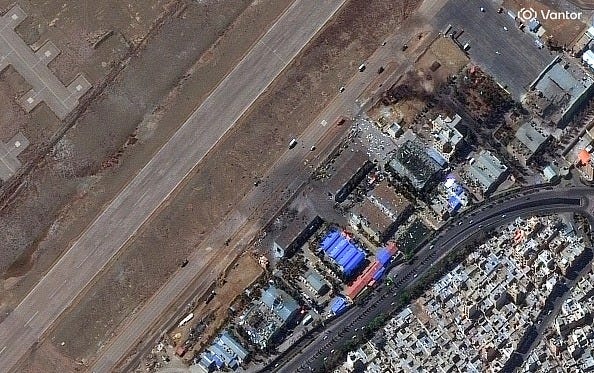
Strikes in Isfahan are not limited to nuclear targets. Israel struck Isfahan Airport during the second weekend of the war, targeting strategic assets including Iranian fighter jets and air defense systems.
Ali’s close friend’s home was destroyed over the weekend.
“I felt sad and happy at the same time—all I thought was that at least they were alive,” Ali said. The family has moved in with relatives as they decide what to do next.
So far, Ali’s own home has not been damaged.
Life continues in strange ways, even as the bombs fall. Internet access is unstable and hard to come by. In Iran, VPNs are expensive but almost essential to bypass widespread government shutdowns or access blocked websites and apps.
One of Ali’s colleagues bought a VPN so he could keep playing video games despite explosions echoing across the city.
Like most of his colleagues, Ali also bought a VPN.
With it, he plans to continue working on his PhD project. “One thing I’m worried about is managing to finish my reports on time,” he said, laughing at his own words, as the area around him shakes from nearby hits.
Last summer, the U.S. launched strikes that damaged enrichment sites but failed to fully bring down its program. At the beginning of 2026, Washington and Tehran held three rounds of negotiations and planned a fourth, but the talks collapsed when the U.S. and Israel launched their first wave of strikes on February 28.
Iran’s current stockpile is enriched up to 60 percent, below the roughly 90 percent required for a weapon, and experts debate how immediate a threat it poses. Iran claims its nuclear program is strictly for civilian purposes, but Trump has occasionally framed the war as an effort to “eliminate the imminent nuclear threat.”
Ali doesn’t believe nuclear weapons were the reason the U.S. and Israel attacked Iran. “The negotiations were still ongoing during the attack, and we are being attacked by a country that has and previously even used nuclear weapons against civilians,” Ali said.

Ali lives with his mother and sister and admires how brave his mother is.
“Even when she is very scared, she is trying to hide her real emotions,” Ali said.
“Too much fear can paralyze us,” he said, remembering the way people adapted to daily life during the 12-day war with Israel. “People just adapted to it,” he said. “This is what happens now too.”
Ali is not planning to leave the country. He hopes the war will end soon and that people will get a chance to look at their problems internally and solve them without any help from outsiders.
Even going into bomb shelters every time air raid sirens ring is not part of the daily reaction to this war according to Ali. “I have never thought about the necessity of bomb shelters,” Ali said. “Maybe we should think about shelters,” he said after a moment of thought, pondering whether shelters are the standard in other countries.
The war, which has now been in action for over a week, is already reshaping political conversations inside the country.
Ali is not a supporter of the late Ali Khamenei, killed on the first day of the attacks, but he also doesn’t support opposition movements. Many people in the Iranian diaspora support Reza Pahlavi, the son of the country’s last monarch, and Ali understands why, but he doesn’t trust him.
“If all the world follows Reza Pahlavi, there’s no way I would follow him. He has never done anything good for Iran. I cannot trust that person,” he said.
At first, some people were calling for war, both inside Iran and in the diaspora. But since the attacks continued, Ali noticed a shift in opinion.
“The night the rumors became true that Khamenei was killed, many people were happy. But after a while, people started to understand it wasn’t something great for Iran, even if you are against the government.”
He described people around him feeling more united, not standing behind a politician but by the fear they are collectively going through.
People in Iran love their country, Ali said, and many are determined to continue their work despite the challenges brought by the war.
“Tomorrow I will go to work again,” Ali said. “Maybe they will send us back home, maybe not. But for now, that’s the plan.”
*Ali’s last name has been redacted to protect his identity.
Featured subscriber comment:
“Your reporting is brave, empathetic and provides news that other news organizations don’t offer.”
By Laurel Ann Mathe
For more of this reporting, subscribe now!
THE LATEST NEWS AT THIS HOUR:
By: Anastasiia Lutsenko
U.S. SHOOK BY ISRAEL’S FUEL STRIKES ON IRAN: U.S. officials were surprised after Israel struck about 30 Iranian fuel depots on Saturday, going further than Washington expected. The attacks mark the first clear disagreement between the allies since the war began eight days ago.
Washington fears strikes on civilian energy infrastructure could rally Iranians around the government and push global oil prices higher.
ISRAEL STRIKES BEIRUT, TARGETING HEZBOLLAH-LINKED SITES: Israel carried out more airstrikes in Beirut, hitting the Al-Qard Al-Hasan office linked to Hezbollah and the Ramada hotel, killing four and injuring ten. The IDF said the attacks targeted Iranian Quds Force commanders and Hezbollah infrastructure supporting attacks on Israel.
U.K. MONITORS IRAN CRISIS IMPACT: The UK is working with the Bank of England and international partners to limit economic fallout from the Iran conflict. Rising oil and gas prices are pushing borrowing costs up, and Prime Minister Keir Starmer said officials are monitoring energy prices and looking for ways to protect households as the conflict continues.
IRAN FIRES BALLISTIC MISSILE TOWARD TURKEY: Iran launched a ballistic missile toward Turkey on Monday, but it was intercepted by NATO air and missile defense systems over the country, Turkey’s Defense Ministry said.
This was the second downed missile in Turkey since the war began. Debris fell in an open area near Gaziantep, with no casualties reported. Ankara warned it would respond firmly to any threats against its territory.
MORE U.S. CASUALTIES: Hegseth said there “will be more casualties” after the seventh U.S. service member was confirmed dead and identified as Army Sgt Benjamin Pennington. He was initially injured at an air base in Saudi Arabia during an attack on March 1, according to U.S. Central Command.
Stay safe out there!
Best,
Jacqueline and Arpine
Thank you for putting a human face on the war in Iran. You, brave journalists, are my heroes.