

At the bottom of this page: Latest news at this hour.
U.S. rewards UAE’s support in Iran war with AI chips; U.S. diplomats return to Mideast; U.S. restricts activity for Egyptian bank in UAE for Iran ties.
Editor’s note:
This is the last human-interest story we’ll publish on Iran War Dispatches — but don’t fret. We’ll continue to keep a close eye on the war, and our original reporting will live on at our sister publication, The Counteroffensive.
If you’re a paid subscriber, you’re the reason we were able to sustain this independent war coverage for six whole months. Look out for an email from us on Monday — we won’t leave you hanging.
OUR LEAD STORY:
YEREVAN, Armenia — At 6 a.m., Mohammad begins his day with exercise, as he has done for most of his life.
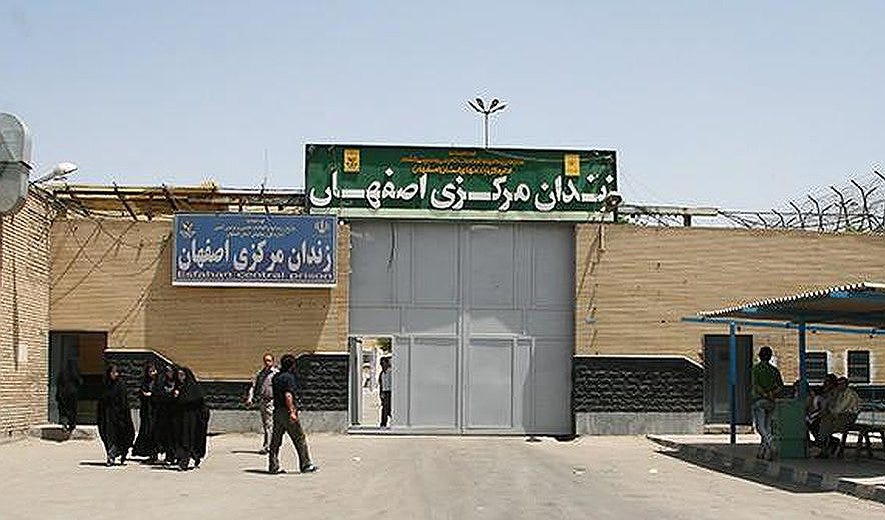
Sometimes he trains alone, and sometimes with the other prisoners of Dastgerd Prison in Isfahan, Iran. There are up to 70 of them exercising alongside Mohammad, many of whom are younger than him. They look up to him. They join the routine of a man who has spent decades practicing martial arts behind bars.
He also teaches martial arts, passing on discipline and stamina. For the young men around him, these training sessions are not simply about staying physically strong — Mohammad believes they preserve their dignity.
He then prays with the other political prisoners. Mohammad talks to them, encourages them, and tries to keep their spirits up. When he is not exercising or praying, he reads.
Executions of political prisoners have escalated in Iran, at least 71 people were executed across the country in July alone, according to Iran Human Rights. In the first seven months of 2026, the group documented at least 444 executions, including 28 protesters and 13 political prisoners. The United Nations has urged Tehran to halt protest-related executions, the families of the prisoners sentenced to death are left waiting for news of their loved ones. For Niki Nikbakht, Mohammad’s sister, that fear is painfully personal: two of her brothers are facing execution, while a third remains imprisoned in Iran. But inside Dastgerd Prison, her brother Mohammad has responded to the threat of death in an unexpected way: instead of giving up, he has become a mentor, a source of strength and, for some, a father figure within the prison walls.
Mohammad Nikbakht is a 48-year-old writer and political activist from Golpayegan in central Iran. He has spent around 15 years of his life behind bars because of his opposition to the Islamic Republic, which has ruled Iran since 1979, when Mohammad was born. He was first arrested in 2004 and sentenced to eight years in prison on charges of “propaganda against the system” when he was an activist during his university years. After his release in 2012, he continued his activism against the regime and was arrested again in January 2018 and sentenced to another two years in prison.
Mohammad grew up as the second eldest in a family of six children. His father was opposed to the Islamic Republic and spent long periods in prison as well, which led to deep financial struggles for the family. From an early age, Mohammad had a strong sense of justice: if he thought something was unfair, he would always stand up for what he believed was right, his mother remembered.
He was also extremely competitive. When Mohammad was in first grade, he received 19 out of 20 on a dictation test. According to his family, after making a single mistake, he became so upset that he climbed onto his teacher’s desk, bit the teacher’s hand, and demanded the missing point. The teacher eventually gave him the 20 he wanted.
His determination later found a more disciplined outlet in karate. Mohammad began practicing Kyokushin karate when he was six, training alongside his older brother Fazlollah.
He had the same drive in love. When he first fell for a girl as a teenager, he came home and said, “I’m in love, and you have to go and ask for her hand in marriage for me,” eventually persuading his hesitant parents to do what he wanted.
But, instead, he married for the first time at the age of 20, choosing a girl who was three years younger than him. Despite his father’s objections, he went ahead with the marriage, and they later had a son named Arash.
By the time Mohammad went to prison in 2004, his first marriage was already under strain, and his eight-year sentence would put further pressure on the relationship. His first wife opposed his political activities and struggled with his imprisonment. Their relationship deteriorated. During one visit to the prison, according to Mohammad and his family, she told him: “I’m glad to see you in prison, and I hope that soon I will see your head hanging from the gallows.” Needless to say, they eventually divorced.
On November 21, 2017, Mohammad was returning home from a mine when the car he was traveling in was intercepted. A gunman approached the vehicle and opened fire on him, remembers his sister. Mohammad was sitting in the front passenger seat.
The first bullet struck his right ear. Other shots hit his arm and abdomen. Blood covered his face, and the attackers left believing they had killed him. The driver rushed Mohammad to a safe place, where a trusted doctor treated him.
That day changed Mohammad’s relationship with his faith.
He had always believed in God, his sister says, but he had never followed a particular religion. After surviving the attack, he began to see his survival differently. He became interested in Christianity, wondering whether his faith in God had played a role in keeping him alive and in shaping his path. Months into his journey of exploring the new religion, he professed his Christian faith.
For Mohammad, the decision carried particular risks. Iran does not legally recognize a Muslim citizen’s right to convert to another religion. The penal code does not explicitly codify apostasy as a crime, but judges may rely on Islamic sources and fatwas in such cases.
Iran has also continued to prosecute Christian converts under other charges. In 2025, USCIRF reported that Christian converts from Islam faced severe government persecution, including imprisonment for religious activity and alleged “propaganda” or national-security offenses.
Today, his sister Niki says, Mohammad prays with other political prisoners and encourages them to hold on to hope, even while he himself remains behind bars.
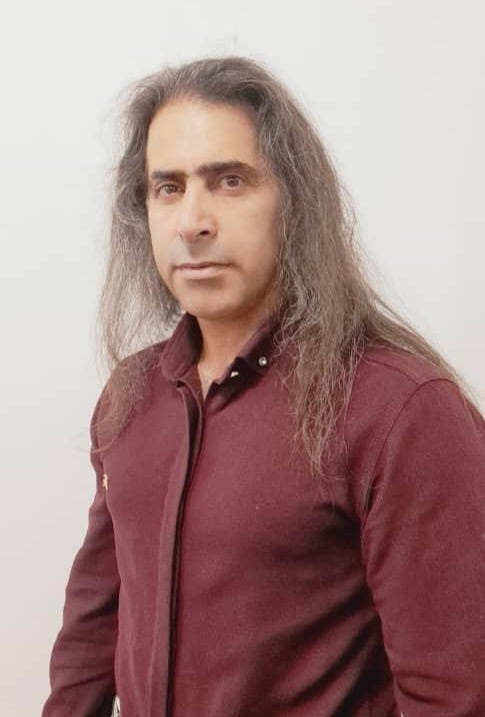
By now, Mohammad had already spent around 15 years of his life in prison, where between 2004 and 2012, he endured physical and psychological torture and had undergone prolonged periods of solitary confinement, according to Niki.
A few months ago, on March 15, 2026, Mohammad was arrested for a third time and transferred to Dastgerd Prison in Isfahan. This time, however, prison would give him a role he had never had before.
In a way, he was doing something he had done since childhood: bringing other boys together. Only now, the playground had been replaced by a prison yard, and games had given way to prayer, exercise, and survival.
Life inside Dastgerd is difficult beyond imprisonment itself, according to Niki. She says prisoners face severe financial pressures, as they must pay for basic necessities, including drinking water and food. Prison rations are insufficient, she says, forcing inmates to pay separately for meals.
Overcrowding is another problem, Niki says: cramped cells and a shortage of sanitary resources contribute to the spread of disease, while access to medical care is difficult. Family visits can also be complicated and time-consuming, making them less frequent.
This is why Mohammad’s routine has become a way for him and other prisoners to preserve a sense of structure.
For Niki, however, Mohammad’s transformation is both a source of pride and a constant reminder of what her family has lost. She now lives in Germany, where she arrived almost two years ago on a student visa to study dance. Today, she teaches children and works as a dancer and choreographer. Her two sisters have also built lives abroad, in the United States and New Zealand.
But three of her brothers remain in Iran, all of them imprisoned because of their political activities. Fazlollah, 50, and Hadi, 46, are being held in Dastgerd Prison and have both been sentenced to death on charges including “corruption on earth.” Mohammad, 48, is held in the same prison.
The distance has left Niki with a painful kind of helplessness. She cannot see what is happening to her brothers, and much of what she knows comes through phone calls and messages from Iran. Every call can bring news she has been dreading. Every notification can make her heart race.
Mohammad is only allowed to make two five-minute phone calls each day, but he is not allowed to contact Niki, and she can only receive news about him through her family. The last time she saw him was about two and a half years ago, before she left Iran for Germany.
The last time she spoke to him was on the evening of 14 March, shortly before his arrest. He called to warn her that he was in danger.
“I am in danger, and they may come for me,” he told her. “If they arrest me, please be my voice and let people know what has happened to me.”
Now, from Germany, Niki is doing exactly what her brother asked. She is speaking for him while he cannot speak for himself.
“When I teach children to dance and create art, part of my heart is always inside a prison in Isfahan,” Niki says.
Her greatest wish, she says, is not revenge. It is freedom: for her brothers, for the other political prisoners, and for the people of Iran.
Editor’s note:
This is the last human-interest story we’ll publish on Iran War Dispatches — but don’t fret. We’ll continue to keep a close eye on the war, and our original reporting will live on at our sister publication, The Counteroffensive.
If you’re a paid subscriber, you’re the reason we were able to sustain this independent war coverage for six whole months. Look out for an email from us on Monday — we won’t leave you hanging.
Latest news at this hour:
By Myroslava Tanska-Vikulova
U.S. REWARDS UAE’S SUPPORT IN IRAN WAR WITH AI CHIPS: The Trump administration recently granted the UAE more access to American AI chips, a move considered to be in response to the UAE’s support for the U.S. in the Iran War, WaPo writes. This comes a year after the UAE and the U.S. decided to join forces on a 5 GW, $30 billion mega-campus for AI.
The Emirates are seeking to shift from an oil-based economy to one based on the export of digital intelligence. Despite missile strikes and Iranian drone attacks on UAE infrastructure, including data centers, the UAE’s AI sector continues to expand at an accelerated pace.
U.S. DIPLOMATS RETURN TO MIDEAST: The U.S. State Department has begun lifting restrictions and returning American diplomats and their families to embassies in Middle Eastern countries after they were made to leave in March due to the war with Iran, according to AP. However, regulations on these orders to evacuate mean that they expire after 6 months and diplomats may risk losing their housing and other job benefits if they don’t return to their posts.
Decisions regarding the scope of each embassy’s resumption of operations will be made on a case-by-case basis, depending on the security situation in the region. In Israel, Qatar, Bahrain and Kuwait, personnel have been allowed to return, however, in the latter two this only applies to people over 18.
U.S. RESTRICTS ACTIVITY FOR EGYPTIAN BANK IN UAE FOR IRAN TIES: The U.S. Treasury Department has initiated proceedings to cut off UAE-based branches of Egyptian Banque Misr’s operations with the U.S. due to their cooperation with Tehran.
This move will cut the bank’s UAE branches off from transacting in dollars and is reportedly the first action taken to put financial pressure on Iran since Bessent promised Iran’s “Economic D-day”. The bank’s UAE branches are a relatively small target, reflecting that the U.S. may be sidestepping bigger targets to avoid further disrupting the global economy.
CIA DIRECTOR’S MOSCOW TRIP FOLLOWED RUSSIAN ASSESSMENT OF U.S. WEAKNESS: CIA Director John Ratcliffe made an unannounced visit to Moscow earlier this week, after U.S. intelligence reported that Moscow believes that the U.S. has been weakened by the war with Iran – leaving Europe and America vulnerable to Russian escalation, the WaPo reports.
During the meeting, the CIA director warned Russia against a large-scale escalation against Ukraine, making it clear that there would be serious consequences for this. At the same time, Trump himself dismissed the threat of direct Russian attacks against NATO allies.
Stay safe out there.
Best,
Anya.
Another terrific story. Thank you for bringing the voices of Iranians, including those now in exile, over the last six months. It's so important that we never forget that our regimes may be evil -- but most of us just want to live in peace.