



Featured subscriber comment:
I appreciate your work and it gives me another perspective on the news. Please continue with the good work and be safe. Thank you.
By: Sassyit
Subscribe to keep an eye on another perspective just as Sassyit does.
Have a friend who might want these roundups, too?
The latest news at this hour:
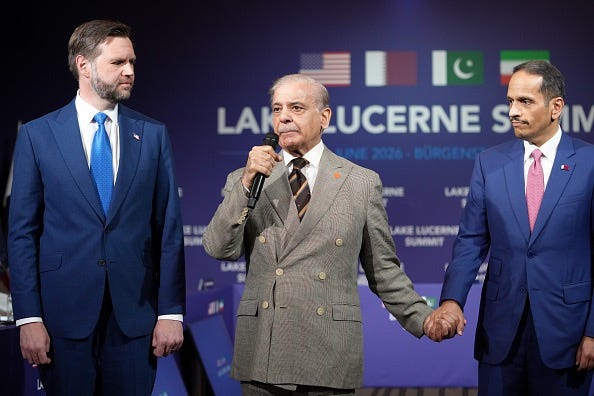
FIRST ROUND OF U.S.-IRAN TALKS ENDS WITH “PROGRESS”: The first round of talks between high-ranking U.S. and Iranian officials concluded in Switzerland on Monday, with more talks to continue next week. The Pakistani and Qatari mediators said that the sides devised a 60-day roadmap toward reaching a final deal.
The mediators and the Iranian foreign minister Seyed Abbas Araghchi mentioned “major progress” had been made towards resolving the Lebanon issue. However, topics which still present major obstacles were reportedly not touched on, including Iran’s nuclear program.
On Saturday, it was unclear whether the talks would go forward after Iran, once again, closed the Strait of Hormuz, citing Israeli attacks on Lebanon. Meanwhile, on Truth Social Donald Trump threatened to hit Iran unless it ends support for its proxies in Lebanon. Vice President JD Vance downplayed the situation in Lebanon, saying “these things are always a little bit messy”.
The oil prices fell to $78.89 a barrel after the talks concluded, according to Reuters.
…BUT TRANSIT VIA HORMUZ STRAIT IS STILL UNCERTAIN: Only 12 vessels crossed the waterway on Sunday, compared to 35 on Saturday, after Iran closed the strait once again on Saturday, Al Jazeera reported citing an analysis done by the maritime intelligence company Windward.
However, CENTCOM denied the closing of the waterway and stated that 55 ships crossed the strait on Saturday. The possible reason for discrepancy between figures from different sources is the reporting of both visible and invisible transits by CENTCOM. Some ships turn off their Automatic Identification Systems (AIS) to avoid being detected by the Iranian military.
VANCE: UN NUCLEAR INSPECTORS ALLOWED TO VISIT IRAN: Vice President JD Vance announced that Iran will allow the International Atomic Energy Agency inspectors into the country, Axios reported.
One of the U.S. goals in the negotiations with Iran was to obtain permission for UN inspectors to visit key nuclear sites in Iran. Vance said that planning for the visit will take place this week, however he did not specify what kind of access the inspectors will be granted.
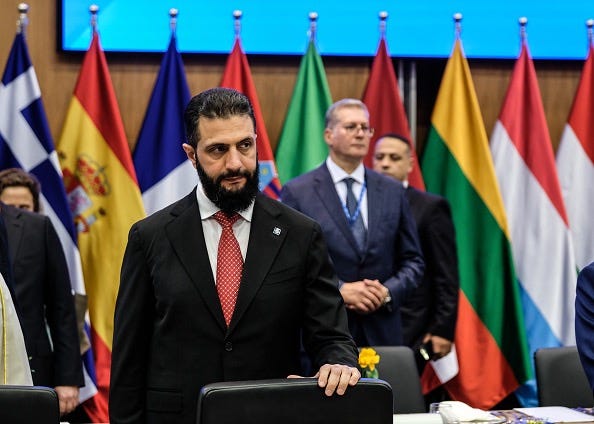
SYRIA OFFERS TO HELP RESOLVE LEBANON ISSUE: Syrian President Ahmed al-Sharaa proposed that Syria could contribute to resolving the conflict in Lebanon by facilitating communication between different Lebanese political factions, including Hezbollah. Ahmed al-Sharaa emphasized that Syria was not intending to participate militarily, according to Al Jazeera.
Donald Trump also considered engaging Syria in resolving the conflict in Lebanon, after being disappointed by Israel’s inability to defeat Hezbollah, saying that it’s overly reliant on military destruction.
Hezbollah was previously involved in Syria, when it entered the Syrian civil war in 2013 and supported the former President Bashar al-Assad’s regime. Ahmed al-Sharaa called Hezbollah a part of a “major Syrian wound”, but agreed to “sit at the same table with Hezbollah if it serves the interests of Syria and Lebanon”.
THE IRAN WAR COST THE U.S. $40 BILLION+: The Iran war cost the U.S. Department of Defense $40 billion, CNN reported, citing analysis from the Center for Strategic and International Studies.
The figure includes the cost of destroyed equipment and damage to bases and munitions — which account for $26 billion of the total sum. Two U.S. government sources also mentioned the Pentagon’s request for $80 billion in supplemental funding.
Meanwhile the U.S. weapons stockpile has been significantly depleted as a result of the war. Approximately half of Patriot air defense interceptor missiles stockpiles and THAAD missiles, as well as almost half of its Precision Strike Missiles have been used by the U.S. in the Iran war so far, according to the CSIS analysis. In response, Donald Trump invoked the Defense Production Act that requires private companies to ramp up weapon production.
Stay safe out there.
Best,
Mariana and Oleksandra.

