

Editor’s note:
These are our weekly news roundups,
which we carefully gather every Monday to keep you informed about the
latest developments across Iran and the Middle East.
Subscribe to stay up to date with the news.
Do you know people who might be interested, too?
The latest news at this hour:
CEASEFIRE EXPIRES BUT IRAN IS PREPARED FOR ESCALATION: The Memorandum of Understanding which Iran and the U.S. signed in mid-June expired this Monday. The Wall Street Journal has reported, citing Iranian and Arab officials, that Iran used the 60-days provided by the MoU to prepare for an escalation in military action.
This included expanding the IRGC’s control over the army, conducting counterintelligence operations and increasing weapons production. Iran also sent advisers to coordinate with allied militia groups in Iraq, Yemen and Lebanon to prepare to potentially launch attacks in the region. The pace at which Iran has rebuilt its infrastructure and restored access to missile bases has exceeded U.S. and Israeli predictions.
Mohammad Hassan Sangtarash, a military expert based in Iran with ties to the Iranian government, said that many in Iran’s government believe that the “main war” has yet to take place. The IRGC’s plans for escalation include attacking undersea internet infrastructure in the region, inciting upheaval in other Middle Eastern countries and attacking Kuwait.
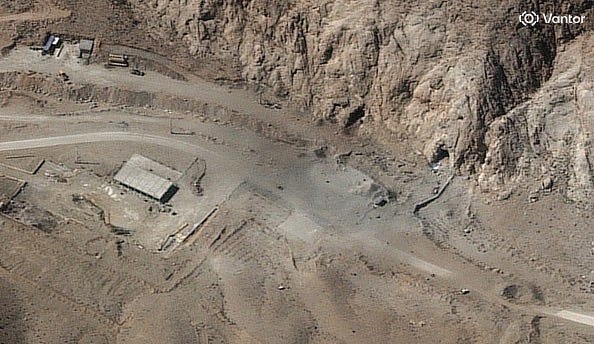
IRAN CLAIMS QATAR HOLDS THREE PILOTS PRISONER: Mohammad Bagherzadeh, Iran’s Brigadier General, wrote a letter to the Red Cross accusing Qatar of holding three Iranian air force pilots captive for six months, according to BBC.
Bagherzadeh said the pilots had gone missing during an Iranian attack on a Qatari military base on 2 March 2026, after the pilots ejected from the aircraft before being captured by Qatar. The body of a fourth pilot was allegedly returned to Iran on the day of the attack.
Qatar has denied the claims, saying they were “surprised by these misleading statements.” Qatar said that they contacted the crew when they were in Qatari airspace but the crew did not respond.
While Bagherzadeh said that an Iranian investigative team had been prevented from visiting Qatar to investigate the incident, Qatar’s foreign affairs spokesperson said Qatar’s search and rescue teams carried out their duties and the Iranian team was invited back in April, but Tehran has not responded.
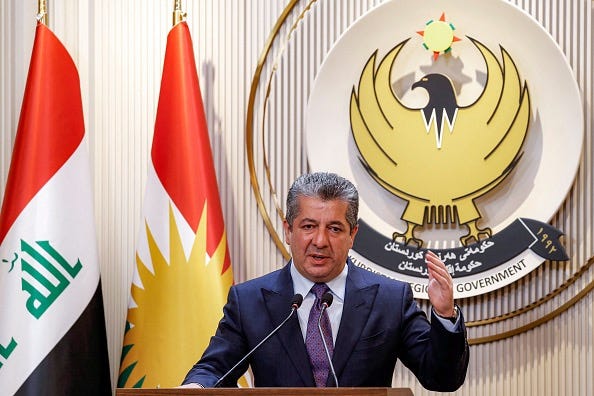
IRAQI KURDISTAN’S PRESIDENT WAS A BACKCHANNEL FOR U.S.-IRAN TALKS: The Trump administration turned to Nechirvan Barzani, the president of the Kurdistan region in Iraq, to establish contact with Iran’s Revolutionary Guard, Axios reported. This has been confirmed by Barzani’s office.
In early May, the White House mediators started to believe their negotiating partners were being pressured by the IRGC to reject the U.S. peace plan proposal, after Iran’s delayed response to a proposal the U.S. believed was in its final stages. As a result, Tulsi Gabbard called Barzani to ask him to contact the IRGC directly.
Barzani has reportedly offered to help the White House restart the negotiations with Iran.
IRAN CRIMINALISES CONTACT WITH FOREIGN MEDIA: This weekend, Iran’s parliament passed a bill criminalising contact with media considered hostile by Iranian authorities, the Reuters reported. The prohibition applies to Israeli and U.S. outlets as well as those financed by these countries.
Communications with hostile media would lead to six months to two years in prison, and the intelligence ministry should still be notified of any contact with foreign media that does not fall into the category of hostile. The intelligence ministry must also give approval for any information provided to foreigners and cooperation with unapproved foreign institutions for scientific purposes is now also limited.
This comes as Iran’s government tightens censorship restrictions and restrictions on foreign influence in the country.
UNDETECTED SHIPPING THROUGH HORMUZ STRAIT PREVENTS OIL PRICE SURGE: The volume of oil shipped by the Middle Eastern oil producers is higher than market estimates – 4 million barrels a day – due to a system of covert ship-to-ship transfers, according to Bloomberg.
Oil from the region is transferred through the Strait of Hormuz to tankers in the Gulf of Oman via ships that manipulate transponders to remain undetected. Oil from the UAE, Iraq, Qatar, and Kuwait has transited the Hormuz Strait, according to data compiled by Bloomberg, Kpler and Vortexa data.
The covert shuttling, which remains high, has kept August oil prices in the range between $80 and $90 per barrel, which contrasts with previous forecasts of $150 per barrel. Other measures such as rerouting transit routes and dipping into oil reserves have also eased global price increases.
However, the covert nature of the ferrying puts ships at risk: Bloomberg’s sources reported that there were more attacks on commercial vessels that were documented.
Stay safe out there.
Best,
Mariana.
