

At the bottom of this page: Latest news at this hour.
Israel approves emergency military funding package… also claims it destroyed Hezbollah command centers… UN warns of mass displacement in Iran… Middle East war derails Ukraine peace talks… Israel faces critical missile interceptor shortage… Larijani alleges plot to frame Iran.
Editor’s note:
As this story publishes, one of our reporters is at the Armenia–Iran border while another is on the way to Iraq.
We’re positioning our team across the region so we can talk directly to the people living through this war.
Don’t miss out on those stories. Subscribe!
OUR LEAD STORY:
ALONG THE IRANIAN-ARMENIAN BORDER—Two weeks ago, on the third day of the war, 21-year-old Hedia, her sister, and parents packed their car in Tehran and drove north.
Not to flee the country, and not to start a new life.
Just to wait.
“I am not fleeing the country,” she said. “Just a short vacation in Armenia.”
When the bombing in Iran began, officials in southern Armenia expected a surge of Iranians to cross into the country, as they had during earlier flare-ups, such as the Twelve-Day War with Israel in 2025.
This time, though, the surge hasn’t come.
Instead, the northern border of Iran is a place of hesitation rather than escape, a sign that the war has shaken daily life but not yet pushed people to abandon it. The number of Iranians who choose to leave or stay could determine whether the conflict turns into a wider refugee crisis across the region.
Hedia and her family stayed in Meghri, a small Armenian town a few minutes from the Iranian border, watching the war from the other side of the mountains, with every intention to go back home soon.
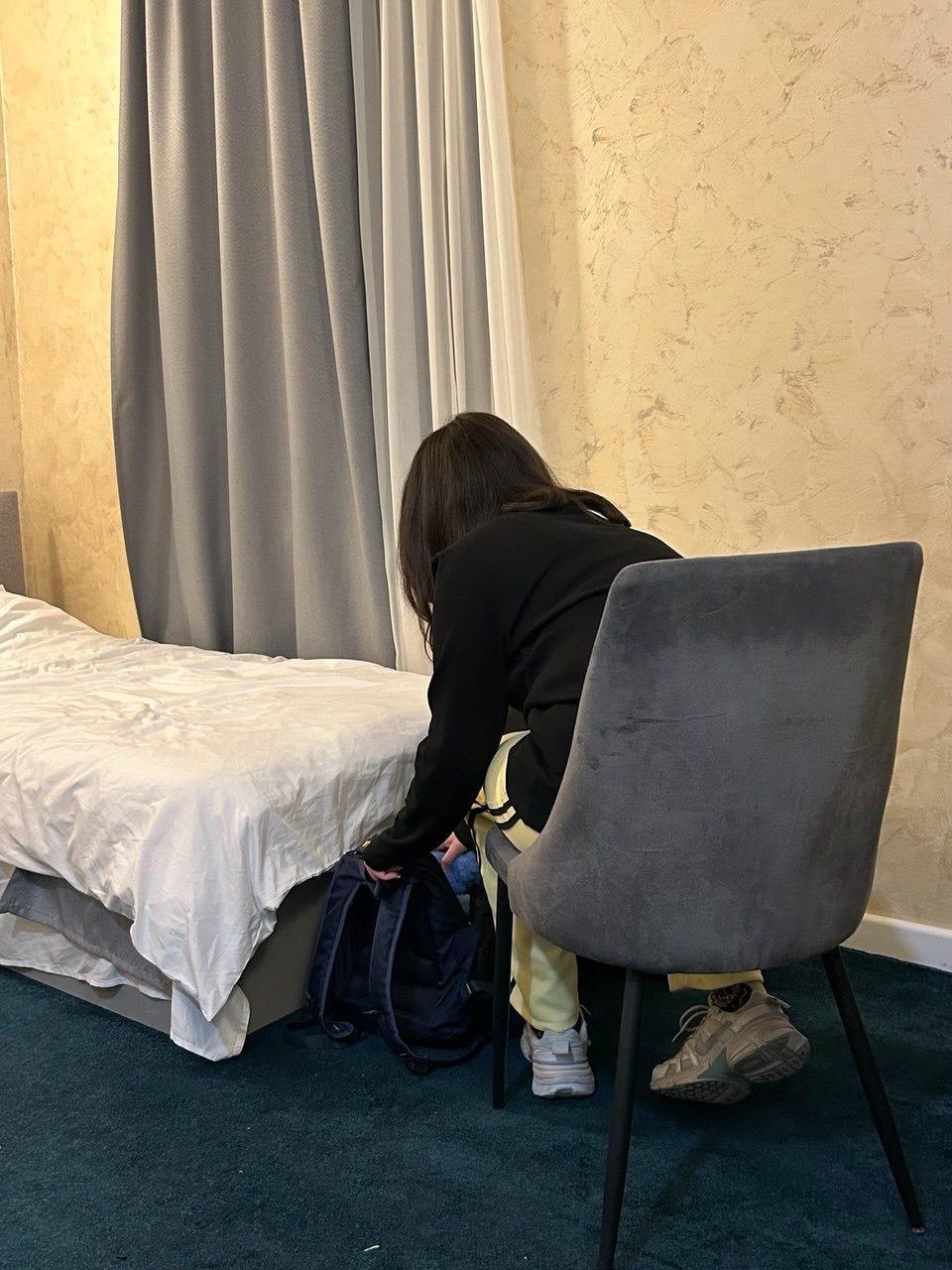
On the first day of the war, Hedia went home and spent hours packing several emergency bags with food, essential supplies, and a first-aid kit. They stayed in Tehran for two more days, filled with stress and fear.
By the second day of the war, the sound of bombs was much closer. She could hear fighter jets overhead, followed by explosions, and see large columns of black smoke rising only a few kilometers away. At that point, she was no longer afraid for herself, but she remained deeply worried about her friends.
The attacks would last for nearly two hours at a time, she recalled, followed by brief periods of silence before the bombing resumed again a few hours later. Tehran became unusually empty as many residents fled to other cities.
“I couldn’t stay home and watch my mother cry because of the war and everything it brought with it, so I left home to drive around in Tehran with friends,” Hedia said. “That is partly why my dad brought us here to Armenia now, so that I am safe.”
During their stay in Armenia, the sisters took a short two-day trip to Yerevan, hoping to distract themselves from the war back home. They walked around the city and shopped, but only briefly. “It’s so expensive here,” they said, laughing. “We couldn’t afford to buy many things for ourselves.”
The graffiti scattered across the streets of Yerevan surprised them, too.
“You would never see this back home, as it is illegal in Iran,” said Raha, Hedia’s 17-year-old sister.
When asked about her time in Armenia, Raha — whose name means “freedom” in Farsi — said the first word that comes to mind is freedom.
“I saw a woman singing in a restaurant,” she said, an act that is prohibited for women in Iran. “I started crying when I saw women singing in public.”
Still, even as they enjoy the quiet of Meghri, their thoughts remain on the other side of the border.
“Our family and friends are there,” Raha said. “We miss them very much.” The lack of internet access in Iran has only made this reality tougher on them, with the country under a near-total blackout that has left many people cut off from the outside world. “We are not even sure which of our friends are still alive. But we choose to go back.”
The sisters were raised in a religious household and grew up reading the Quran. “The ayatollahs destroyed Islam,” Raha said. “They use it to get what they want. But they are lying.”
They insist their criticism is not directed at Islam itself.
Hedia works as a waitress in a cafe and complains about the job, as she doesn’t like wearing her hijab in public places.
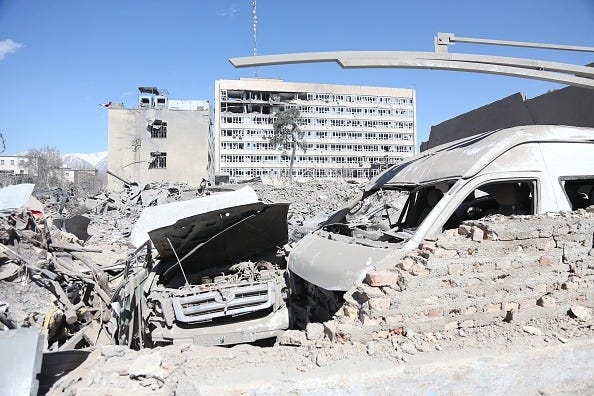
On the way out of Tehran, the girls witnessed some horrors of the war, with destroyed military equipment and dead soldiers in the city of Tabriz.
“Donald Trump says he is coming to save us, but I don’t believe him,” said Hedia, struggling to hold back tears. “He bombed a school where almost 160 children died.”
At the border, people move in both directions; some return to Iran after visiting Armenia, and others arrive from Iran, escaping the war or simply commuting for work.
The Agarak border crossing, through which Heida’s family entered Armenia, is one of Armenia’s two open land borders and serves as an important trade route.
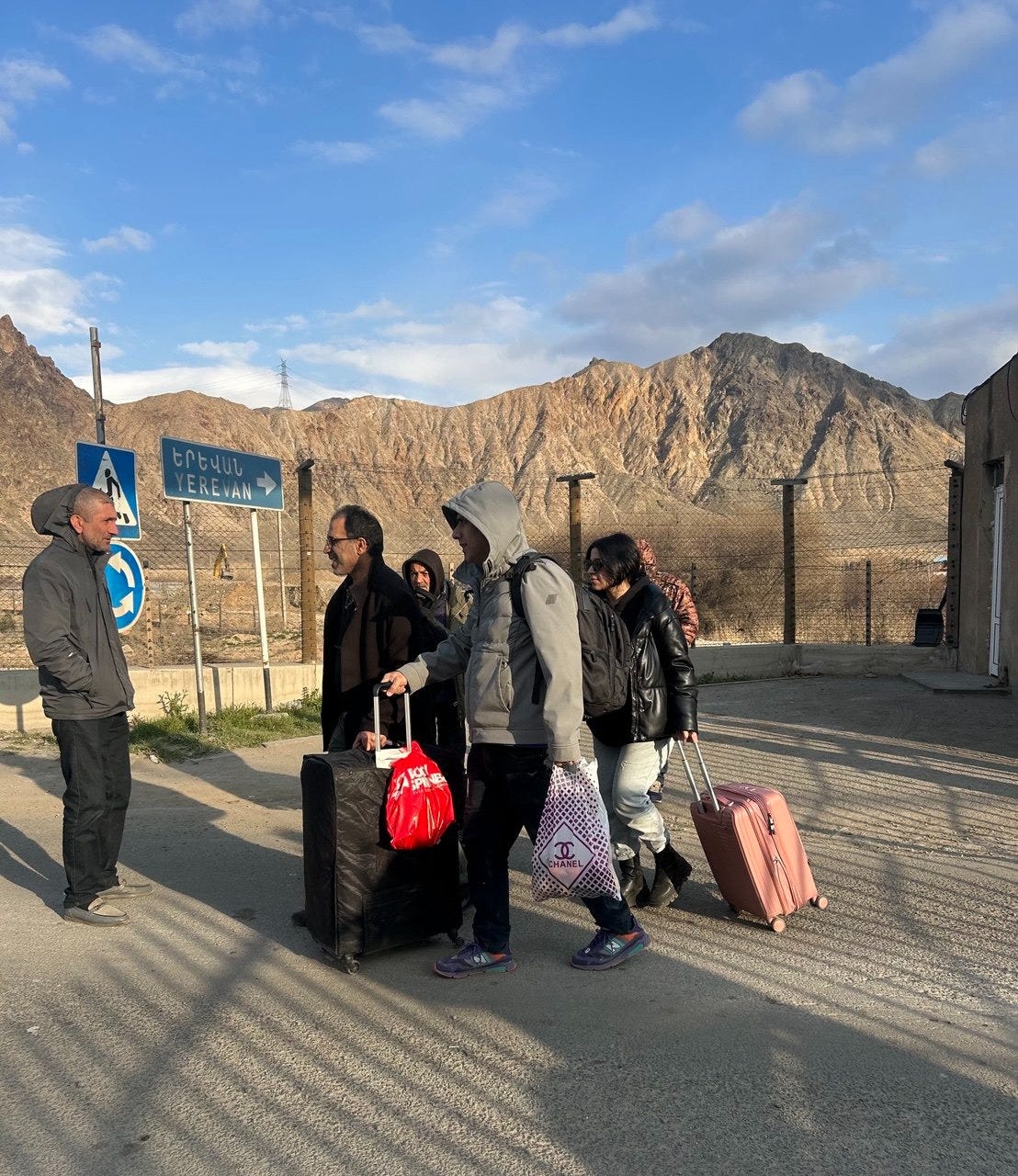
At the checkpoint, lines of taxis sit, waiting for customers. Some drivers are already in touch with arriving Iranians, while others wait nearby hoping to find passengers.
One Armenian man who speaks Farsi approached newly arrived travelers and offered rides for $200, a price roughly equal to the monthly salary many earn in Iran..
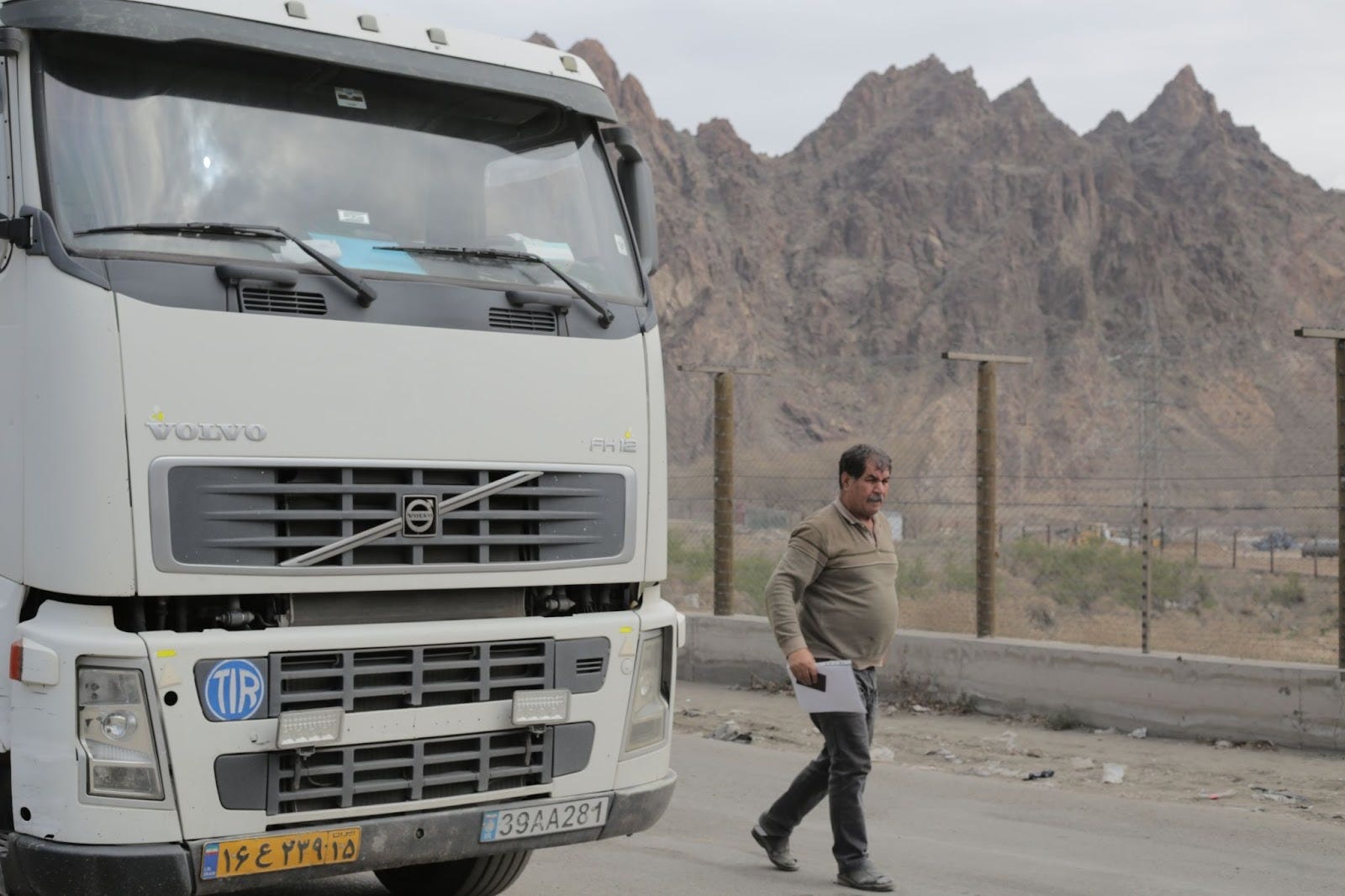
The checkpoint is dusty. Just beyond it, construction crews are working on the 32-kilometer Kajaran–Agarak section of Armenia’s North–South highway, heavy machinery grinding through the earth as travelers cross the border a few meters away.
One man who arrived with his wife said he imports sunflower seed oil from Belarus, which borders Russia and Ukraine, into Iran. He insists the situation in Tabriz is not dangerous.
“Life goes on the way it did before the war,” he said.
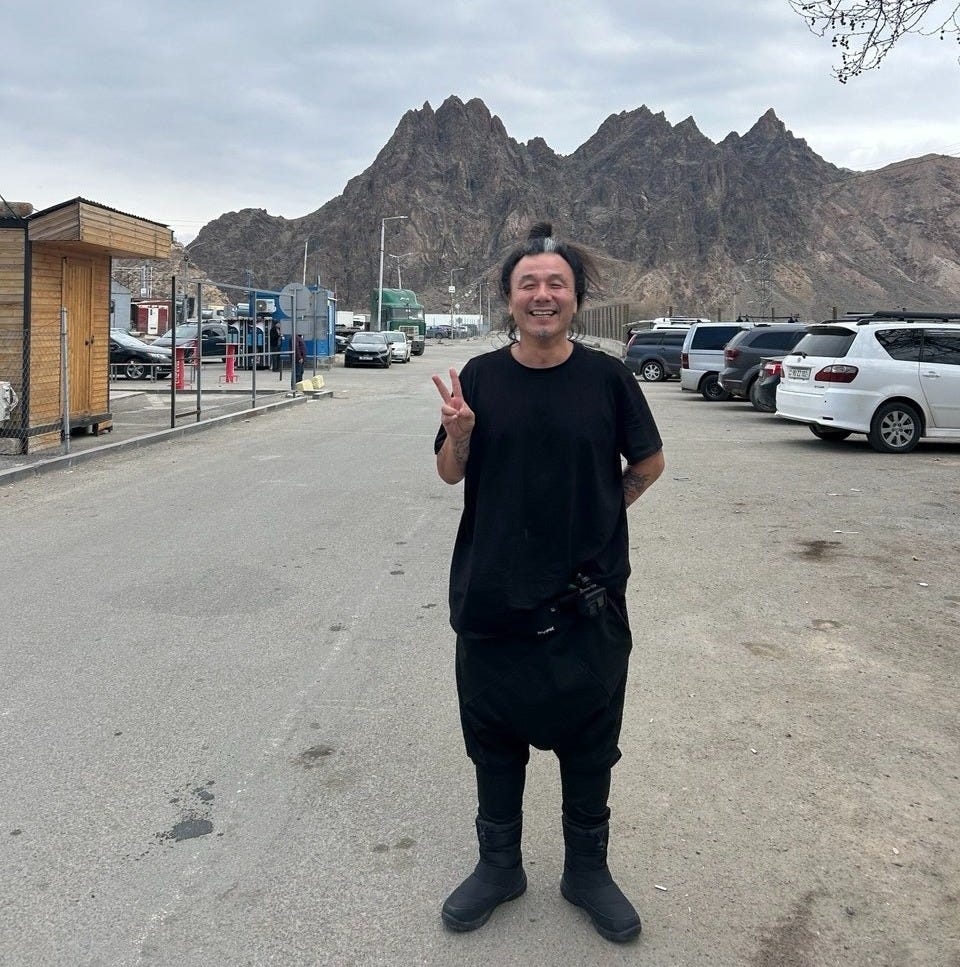
Another man from Japan went to Iran from the Armenian side to help communities impacted by the war.
“If people need help, I try to go,” he said before passing to the Iranian side of the checkpoint.
A group of Iranians and Afghans living in Iran arrived together in visible confusion, children clinging to their parents as they tried to organize their next steps. They hoped to seek asylum in Finland. For now, Armenia will be their first stop.
Once back in Iran, Hedia’s family plans to move to a smaller town, Malayer, the hometown of Hedia’s grandparents, to celebrate Nowruz, the Iranian New Year, and stay away from the bombings in the capital.
“Maybe we will stay in Malayer until the war ends,” said Raha. “Our dad even wanted us to stay in Armenia until the war ends, but we don’t want to.”
Editor’s note:
As this story publishes, one of our reporters is at the Armenia–Iran border while another is on the way to Iraq.
We’re positioning our team across the region so we can talk directly to the people living through this war.
Don’t miss out on those stories. Subscribe!
THE LATEST NEWS AT THIS HOUR:
By Oksana Stepura
ISRAEL APPROVES EMERGENCY MILITARY FUNDING PACKAGE: Israel has approved an emergency budget allocation for military purchases. According to reports, the funds will be used to buy munitions, procure advanced weapon systems, and replenish critical combat stocks.
… AND CLAIMS IT DESTROYED HEZBOLLAH COMMAND CENTERS: Israel claims it destroyed command centers of Hezbollah’s elite Radwan Forces and struck several Hezbollah launch sites. It’s reported that Israeli strikes have killed at least 826 people since the start of the war in Iran.
UN WARNS OF MASS DISPLACEMENT IN IRAN: The International Organization for Migration warned that worsening conditions in Iran are driving large-scale internal displacement as people flee damaged cities and the destruction of basic services. Many are moving to northern provinces they consider safer. Some Iranians are also fleeing abroad despite the closure of many border crossings and airports.
MIDDLE EAST WAR DERAILS UKRAINE PEACE TALKS: U.S.-mediated peace talks are stalling as Trump shifts U.S. attention towards the war with Iran, reducing pressure on Putin. The war in Iran has delayed negotiations, shifted U.S. military resources towards the Middle East, and inadvertently benefited Russia after Trump eased sanctions on Russia. European officials warn that the talks are losing momentum and Putin is showing no willingness to compromise.
ISRAEL FACES CRITICAL MISSILE INTERCEPTOR SHORTAGE: Israel has informed the U.S. that it is running critically low on ballistic-missile interceptors as Iranian attacks strain its air-defense systems. It remains unclear whether the U.S. will transfer or sell additional interceptors to Israel, as doing so could affect American stockpiles.
IRAN WARNS OF STAGED ATTACK BLAMED ON THEM: Ali Larijani, secretary of the Supreme National Security Council of Iran, claimed that remaining members of the network linked to Epstein are plotting to stage a “9/11-like” incident and blame Iran. He said Iran opposes such schemes and has no war with the American people.
Stay safe out there!
Best,
Arpine
