

At the bottom of this page: Latest news at this hour.
U.S. targets Iranian projectiles and air defense… Lebanese president: Iran is using Lebanon as a pawn… Iran war puts 45 million people in food crisis.
Editor’s note:
For three months, we’ve covered the Iran war from a place few outlets can: through the people living it. That hasn’t been easy. Between government surveillance and one of the longest internet blackouts in history, every story has required creativity, persistence, and trust.
Today, we’re taking you behind the scenes to show how we do it.
Now, we need your help to make this work possible. Will you support us by upgrading today?
OUR LEAD STORY:
YEREVAN, Armenia — To the southwest of Yerevan, the city’s tall buildings fall away abruptly at the cliff edge of the Hrazdan Gorge — like stage curtains parting to reveal an open sky and a clear, unobstructed view of Mount Ararat’s snow-capped peak, the enduring symbol of Armenia.
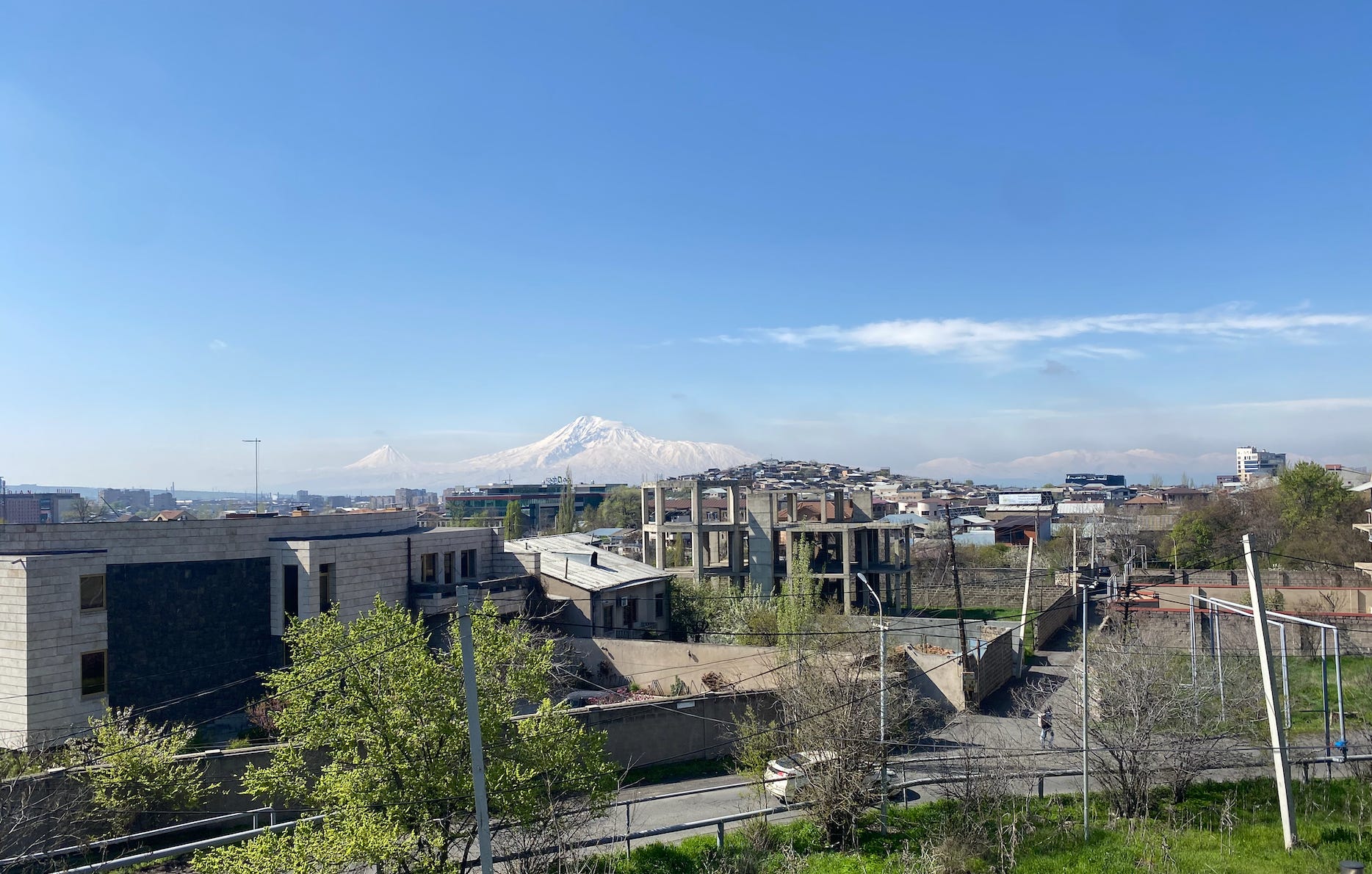
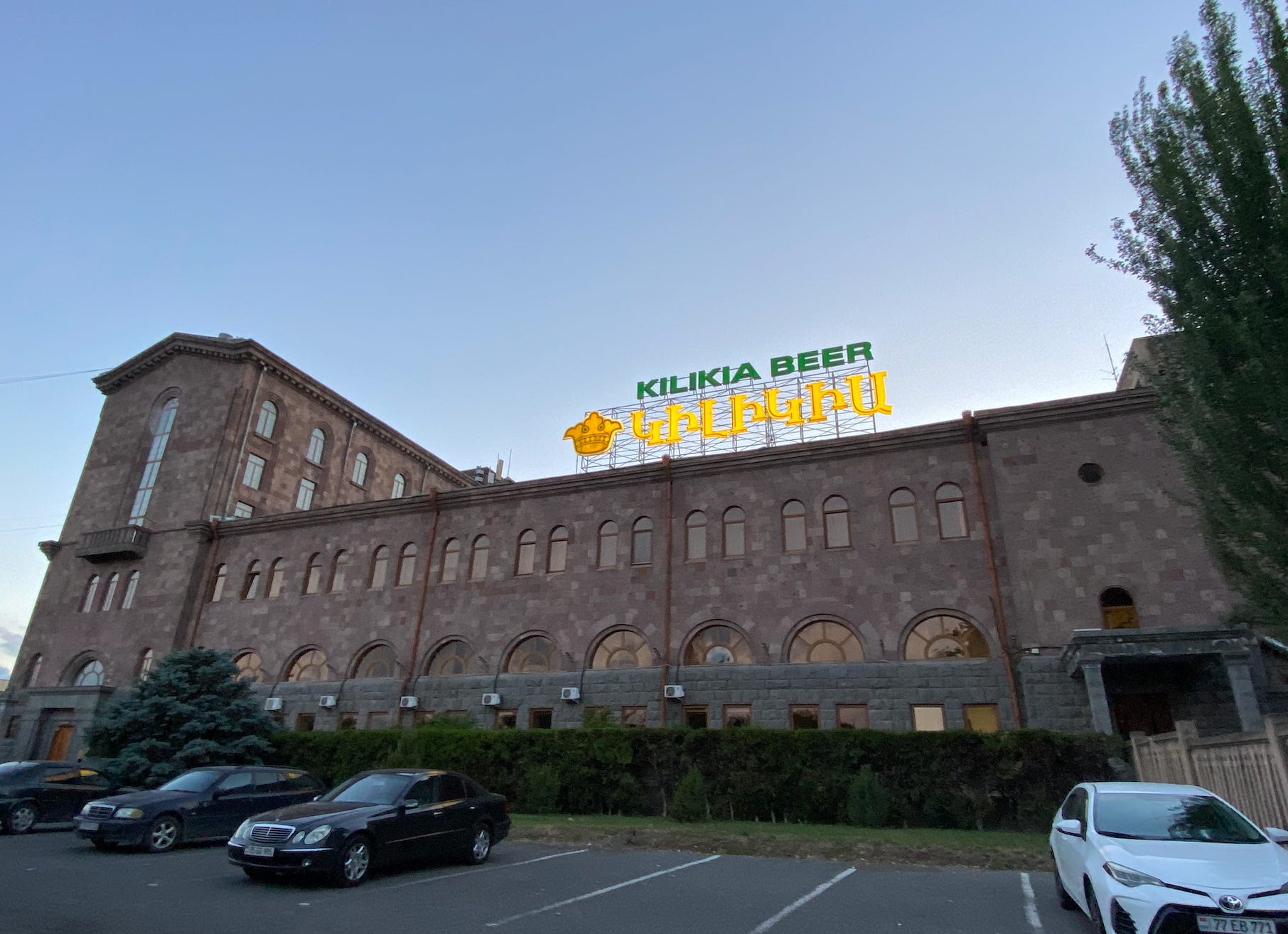
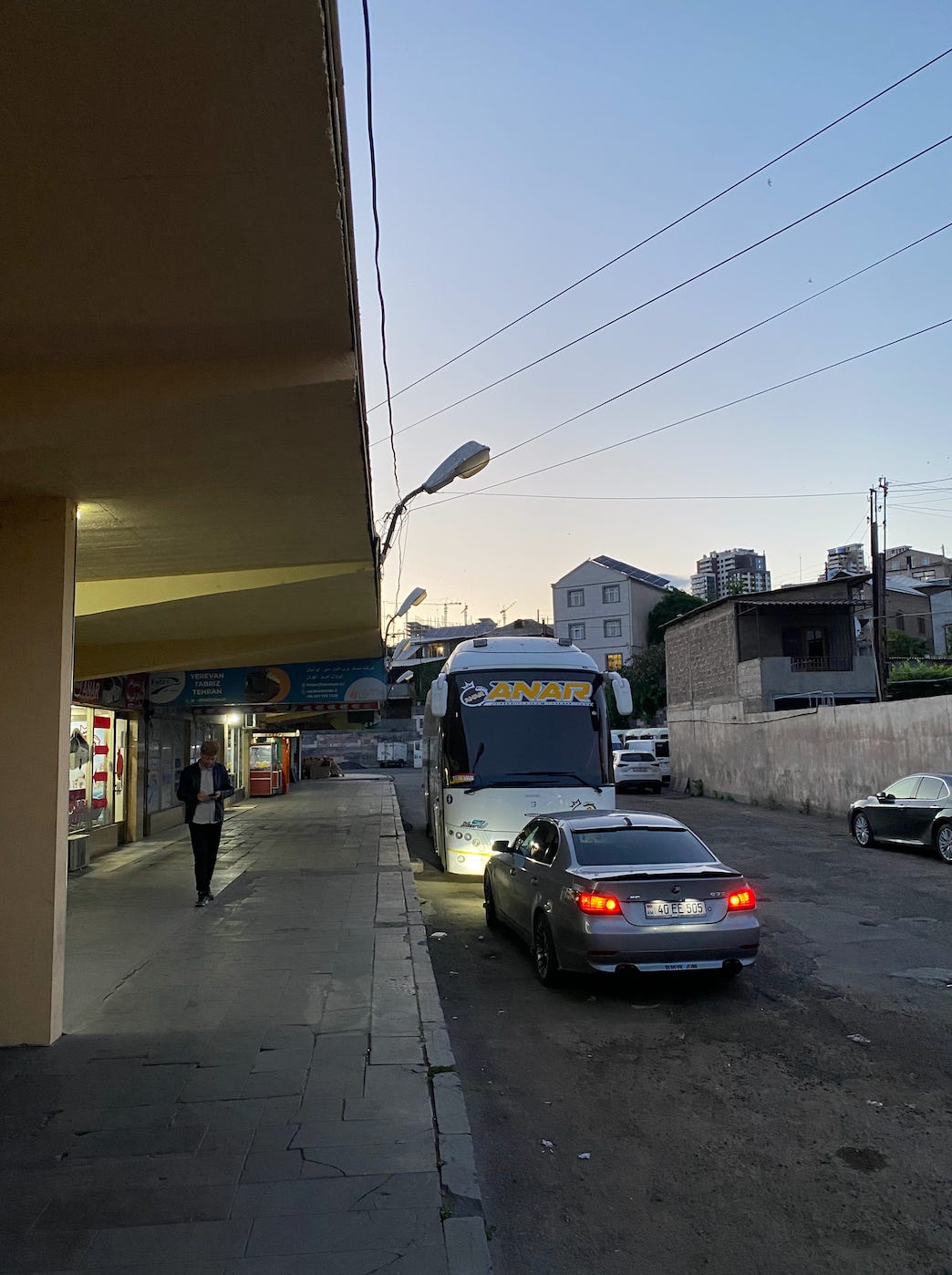
On the other side of the gorge, Yerevan splits open to the world. The city’s bustle compresses into a noisy three-lane highway which eventually branches out, sprawling in all directions — Turkey, Georgia, Iran, and a place where I spent the majority of the last three months: Kilikia station, Yerevan’s main international bus terminal, where at least once a day a bus from Tehran will arrive.
When the bus station, named after the brewery next door, was built in 1959, it was a daring modernist piece of Soviet architecture with an A-frame structure and a glass front wall, which throws geometric shadows onto its granite floor when the sun sets behind Mount Ararat.
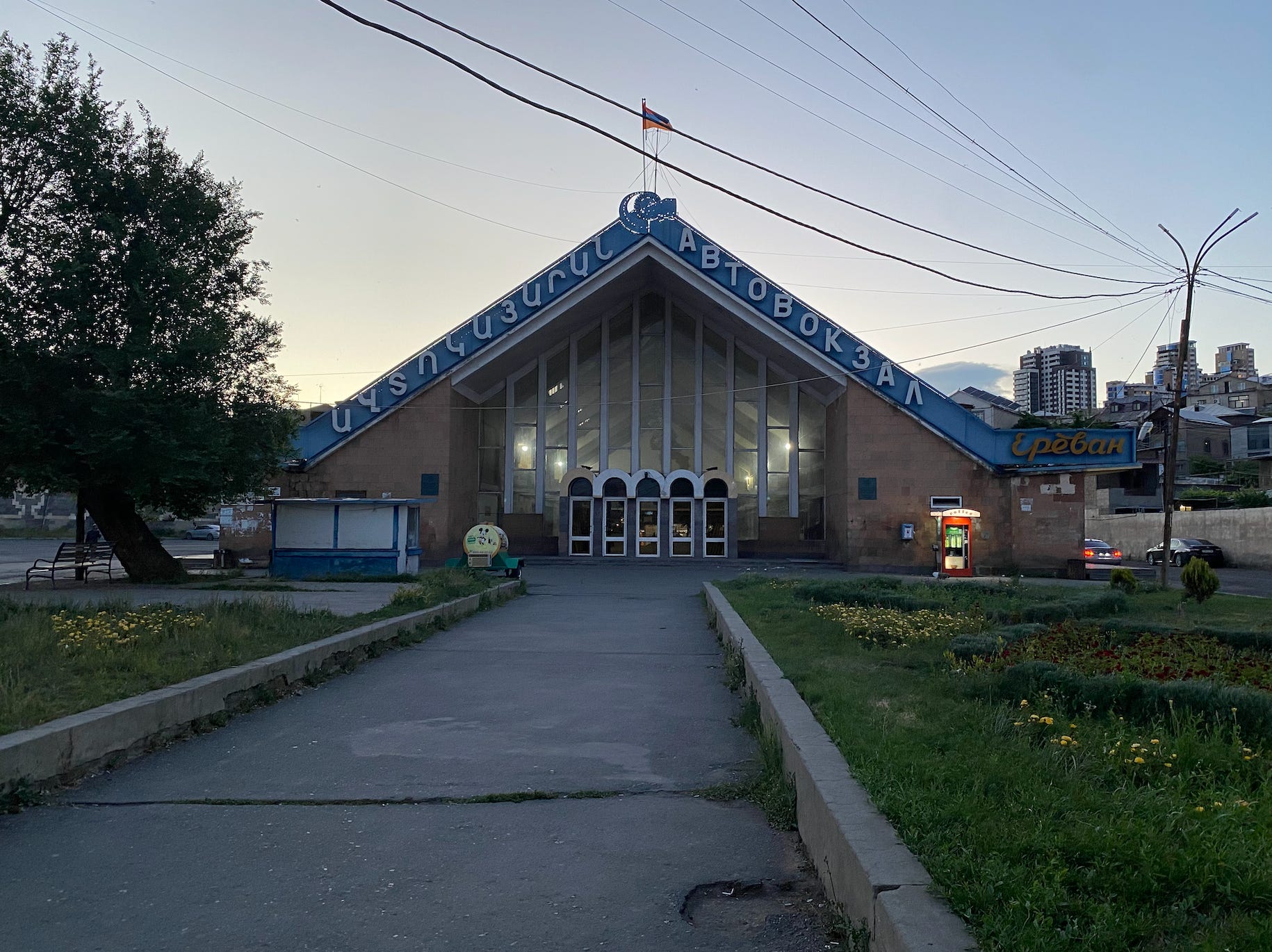
The station was built during Nikita Khrushchev’s Cold War-era campaign to expand travel opportunities, both to improve life for Soviet citizens and to project a positive image of socialism to foreign visitors.
Today, the station looks largely the same, but the world around it has transformed.
Then, Kilikia station was a gateway to the outside world for the shuttered Soviet Union. Today it has become a place of refuge for many Iranians fleeing the war — and, for those returning home, one of the last places they see before being swallowed by the longest internet blackout in history, which has only recently begun to lift.
When I arrived in Armenia, I had a very specific assignment: to find people who would talk to me about life in Iran. In the first week of the war alone, Armenia and Azerbaijan, which border Iran, reportedly received 1,500 refugees from Iran combined.
Between the internet blackout, a highly surveilled authoritarian state and not actually being able to enter Iran, I knew I was going to have to get creative.
I tried several approaches to reach my reporting goals, joining online groups for Iranians in Armenia, walking into Iranian cafes, bars, restaurants, attending protests, and sitting in on song-filled church services for Iranian converts.
By the end of my reporting stint, I had spent countless hours at Kilikia station meeting buses from Iran, butting heads with territorial taxi drivers and hotel touts for the attention of arriving passengers — trying to interview people for Iran War Dispatches.
I arrived on the first day of the war, but three months later, the prospect of an end appears as remote as ever. A ceasefire between Iran and the U.S., brokered by Pakistan in April, has failed to prevent attacks on Iran and other countries in the region. Dialogue between the warring parties has dragged on without a final deal, until recently, when Iran announced its withdrawal from negotiations.
This limbo of uncertainty and instability — the war, Iran’s repressive government, a flailing economy with inflation hitting 87% — has sent many Iranians in search of refuge.
And it is from the margins of that unresolved war — not its front lines — that the most revealing dispatches have come.
For the Iranians I met arriving at Kilikia station, the internet blackout meant they often had just as many questions for me, as I did for them.
One day, two men in their early twenties arrived at the bus station from Iran. Both were young and intelligent — an engineer and a university student. But apart from their over-stuffed camping backpacks, they had come to Armenia completely unprepared. They asked me how they could find a sim card, a place to stay, how to get around the city, and how much it would all cost. They were shocked when I gave them an estimate of the living costs in Yerevan — rent for a single room can be around 200-300 USD. For comparison, in Iran, the minimum monthly wage is 126 USD per month.
For many Iranians, like these men, becoming a refugee during an internet blackout meant there were few ways to prepare for life beyond the border.
For these young men, leaving Iran also meant abandoning their families on the other side of the internet blackout, at best, limiting their communication to short spurts via government-run messaging apps. Despite war, Iran’s crippled economy, and declining quality of life, their families found it difficult to support their decision to leave Iran.
“It’s almost impossible for young people to find employment in Iran right now,” the young engineer told me.
For my reporting, the internet blackout made reaching people in Iran almost impossible. But when I was able to reach them, I got a glimpse of what it was like to live through war without access to the internet.
At the beginning of the war, I was able to contact a man in Tehran over the messaging platform Telegram. He had used some of his last funds on an expensive VPN, buying himself a temporary window to the outer world.
“We aren’t connected to the internet…what is the world saying about the war?” he asked. We texted for a few minutes, but before long his connection was, once again, cut off.
In the weeks that followed, he reached out when he could, but his situation had deteriorated. As a graphic designer, the internet blackout had gutted his work; spiralling inflation ate through his savings quickly, and, on top of everything else, the blackout stopped him from being able to distract himself from his reality.
“Without the internet, we are all going insane,” he wrote.
In recent days, internet connectivity in Iran has been partially restored. My final meetings in Armenia were punctuated by sudden bursts of joy — phones ringing as family and friends in Iran reached their loved ones in Armenia.
But many families are still waiting, as internet connectivity remains restricted or very weak, with restrictions on social media and international news outlets still in place.
One man from northern Iran, who regularly helped me with my reporting, meticulously kept track of how many days had passed since he heard from his family in Iran and would regularly update me.
One day at dinner, he finally got a call. Overjoyed, he showed me a pixelated, choppy video of his niece in Iran. Her weak connection turned her face into a blur almost immediately —but I could just make out that she was waving and smiling.
The internet blackout was not my only challenge — many people flat-out refused to speak with me.
The first obstacle I encountered at Kilikia was not only that the “daily 1 o’clock bus” arrived anytime between 11 am and 4 pm, but that one of the Iranian bus operator’s employees, upon learning I was a journalist, refused to tell me when the bus was arriving and even told me never to come back.
Most people declined an interview due to safety reasons, fearing the consequences of being caught talking to Western media. Those who did agree often placed their phones on airplane mode and spoke in hushed tones.
The war has driven out regime supporters, just as it had political refugees and, now, Armenia carries its own risks.
There were also those who declined a conversation for ideological reasons. More than once people had initially been eager to be interviewed, but on the condition that it “was not an ‘anti-war’ article”. After reading Iran War Dispatches, an independent outlet, some refused to reach out again.
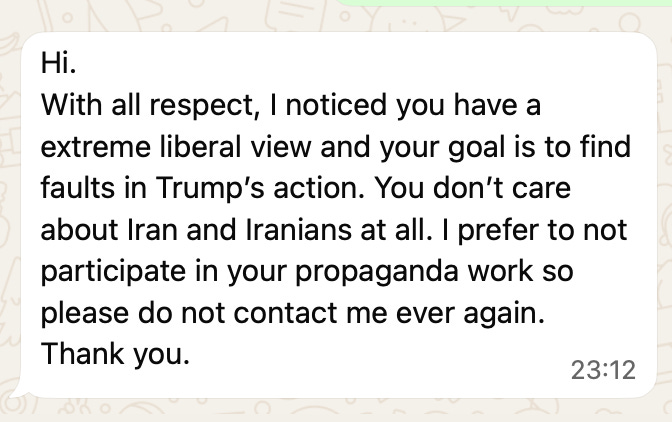
There were also people on the other end of the political spectrum, who also refused to be interviewed by me. One young man turned his back on me when I approached him. When he turned around to pick up a few suitcases, I assumed he was frustrated by the long journey, but then he called after me as I was leaving.
He leaned in and in a low, angry voice said. “Everything bad that has ever happened to Iran comes from Britain.”
This view — that the West, and Britain in particular, is to blame for Iran’s problems — was a recurring theme, cutting across all political persuasions, even those who supported the war. One woman, an Iranian activist in Yerevan, whose cousin had been killed in the January protests, told me she was glad the U.S. was bombing Iran because she hated Iran’s current government. But she too named Britain as the source of Iran’s problems.
For centuries, Britain interfered in Iranian affairs, most notably during the ‘Great Game’ of the 19th and early 20th centuries, when the British and Russian empires vied for influence over Persia and Central Asia. In the decades that followed, Britain continued to exert influence over Iranian politics. Over time, many grievances accumulated, but the 1953 coup against Prime Minister Mohammad Mossadegh remains the most prominent.
After being elected in 1951, Mossadegh, Iran’s democratically elected prime minister, had radically reshaped power in Iran, namely by nationalising the British-run Anglo-Iranian oil company. In 1953, the U.S. and the UK then organised the coup, which put an end to Mossadegh’s reforms and strengthened Shah Mohammad Pahlavi’s power. After the coup, Pahlavi’s reign entered a much more vicious and repressive chapter.
Unlike Mossadegh’s premiership, the Anglo-Iranian company survived, but was rechristened: British Petroleum.
At Kilikia station, I also heard stories of those who had chosen to return home during the war. Many had simply come for a holiday or to work as day labourers in construction. I met one woman in her late 30s, waiting with a small suitcase outside the bus operator’s office. She ran a tour company in Russia, but business had declined since the war in Iran.
She started planning a return trip to Iran from Russia as soon as the ceasefire was announced, hoping to return and convince her family to leave Iran, fearing the ceasefire would end.
Others had built lives abroad and visited Iran during the war — but by the time their visit was over, their lives looked completely different. One Iranian woman living in the UAE had gone home for Nowruz, the Iranian New Year, only to find that she might not be able to return to the UAE — the UAE had started canceling residency visas for Iranians. She had gone to Armenia to try to resolve the issue at the UAE embassy.
As time has passed, the flow of Iranians arriving at Kilikia station has slowed to a trickle.
On quiet afternoons, the station returns to something like its old self — the taxi drivers lean against their cars, small private vendors offering cigarettes and tissues, drift between the occasional customers as Mount Ararat sits, white and immovable in the distance. Designed to open up the world and broaden horizons, Kilikia station now stands at the edge of a war — and an uncertain future.
For three months, we’ve covered the Iran war from a place few outlets can: through the people living it. That hasn’t been easy. Between government surveillance and one of the longest internet blackouts in history, every story has required creativity, persistence, and trust.
Today, we’re taking you behind the scenes to show how we do it.
Now, we need your help to make this work possible. Will you support us by upgrading today?
ISLAM, NEUROSCIENCE & THE IRAN WAR:
THE LATEST NEWS AT THIS HOUR:
By: Oleksandra Poda and Alessandra Hay
U.S. TARGETS IRANIAN PROJECTILES AND AIR DEFENSE: On June 6, CENTCOM announced that U.S. forces intercepted a wave of Iranian missiles and drones launched towards the Strait of Hormuz and the Persian Gulf region. CENTCOM also confirmed that it attacked coastal radar surveillance facilities in Iran. On the same day, the U.S. also intercepted six out of seven ballistic Iranian missiles launched towards Kuwait and Bahrain. Iran said that, in response, it struck the “enemy bases in the region”.
Despite the ceasefire agreed between the U.S. and Iran in April, in the last weeks both countries have increasingly launched attacks, many of which have targeted other countries in the region.
LEBANESE PRESIDENT: IRAN IS USING LEBANON AS A PAWN: Lebanese President Joseph Aoun, in a rare interview with CNN, accused Iran of unjustly using Lebanon as a pawn in negotiations with the U.S. and Israel. “This is not your country, this is our country,” he declared, addressing Iran. He rejected the notion that Iran was standing up for Lebanese citizens: “You are not trying to help us … the people of Lebanon are paying the price … for the sake of your own interest,” President Aoun said.
Lebanon recently agreed to renew the U.S.-brokered peace agreement with Israel, but Hezbollah rejected the peace agreement saying it was equivalent to a “surrender”. Iran also recently threatened to withdraw from peace talks due to Israeli attacks on Lebanon.
IRAN WAR PUTS 45 MILLION PEOPLE IN FOOD CRISIS: A UN World Food Programme report released in March warned that 45 million people could face acute food insecurity, if the regional conflict continued and if the price of oil remained at $100 per barrel. An updated report on June 5 confirmed that the trend was progressing as predicted.
In addition to the 45 million, 2.5 million people in Somalia, 1.3 million in Sri Lanka and 2.3 million in Afghanistan are unable to meet their basic food needs, according to the report.
Iran recently renewed threats to close the Bab Al-Mandeb Strait, a waterway between Yemen and Djibouti which is critical for exporters around the world. This would likely worsen global food insecurity as well as global fuel prices.
IRAN: U.S. MUST RELEASE FROZEN ASSETS AS SIGN OF ‘TRUST’: One of Tehran’s main conditions for signing any deal with the U.S. is the return of funds frozen abroad, Mohsen Rezaei, a military adviser to Supreme Leader Mojtaba Khamenei, said in an interview with CNN. The official framed the release of these funds as a “test of trust” and said that the U.S. must pass the test and then “the path will be opened”.
Iran demanded that $12 billion be immediately released when the interim agreement and the rest would be released later. The official told CNN that the process had reached a deadlock: “Trump must break this deadlock…The ball is in Trump’s court.
However, Trump is committed to signing a deal which is more beneficial for the U.S. than the JCPOA deal signed in 2015 and has emphasized that any deal signed should not bolster Tehran financially, which was a key criticism of the JCPOA agreement.
Trump also recently said that Iran was not agreeing to the deal out of pride. “They are strong, they are proud…they have no choice, and it takes a little while.”
Stay safe out there!
Best,
Alessandra