

At the bottom of this page: Latest news at this hour.
South Asia struggles from war impacts… Trump threatens NATO’s future if they don’t bail him out… Iran intimidates U.S. Navy in Red Sea… Trump demands “treason” charges for media… Israel expands ground operation in Lebanon… major UAE oil hub on fire… California oil pipeline to resume for first time since 2015… Israel destroyed Khamenei’s plane.
Featured subscriber comment:
“I am impressed with the rapidity and thoroughness of Iran reporting—nothing else comes close. Thank you for seeking the truth and accuracy in reporting.”
By Natalie Krasikov
If you agree with Natalie, upgrade now to support our work!
OUR LEAD STORY:
Farzin is four and a half years old. He walks around on his tip toes and loves puzzles and shapes.
But like many other children diagnosed with autism, he struggles with sleep, tantrums and finds it hard to socialize.
Anahit*, an Armenian-Iranian child-psychologist based in Armenia, had been working with him and his parents for around two years.
“After working with him for a long time he started going to a preschool, made friends, and the improvement was really good,” Anahit explained.
But as soon as protests over Iran’s crashing economy and violent crackdowns from the IRGC in Iran started at the end of December, all her work with Farzin was undone. The boy’s tantrums and disrupted sleep started again.
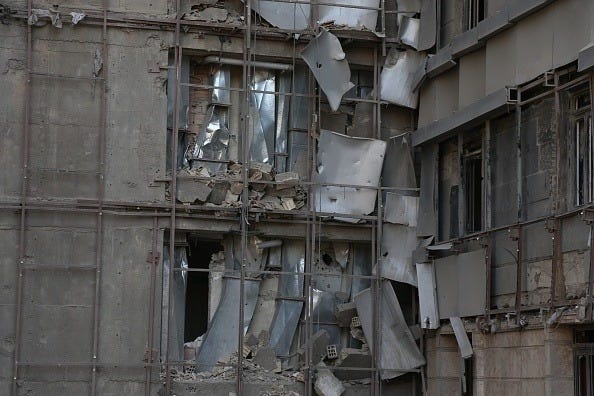
U.S. and Israel’s strikes on Iran are making places meant to protect children — schools and hospitals — increasingly dangerous.
On the first day of the war, a girls elementary school in Southern Iran was attacked, likely by a U.S. tomahawk, possibly relying on out of date intelligence that showed it as an IRGC base. The school was in session and the death toll is around 175.
Iranian regime officials have reportedly been using schools and hospitals for meetings. The hope is that hiding in civilian infrastructure will offer protection from the U.S.-Israeli strikes, but this means these schools are turned into likely military targets.
Anahit’s young patients, like many children across Iran, are now thrown into a completely unknown set of circumstances.
She fears that the war is turning everyday institutions into potential targets, disrupting education, care, and stability for a generation of Iranian children.

The last time Anahit spoke with Farzin’s parents was three weeks ago, before Iran’s internet was plunged into darkness during the war, and his mother said things were worse than ever.
Even without an explicit understanding of the implications of war, children are really perceptive, Anahit explained. As parents get more nervous, children pick up on their anxiety and tantrums can worsen.
Farzin’s mother, who he is very attached to, said that she was so anxious, she was desperate to prevent a tantrum, but sometimes her tactics to do so threw off her son’s routine even more.
Often when parents are really struggling with a child, they will just put a phone in front of him, Anahit explained. Really, this is the worst thing you can do for a child with autism that already struggles with socializing.
Preschool had been a really important part of Farzin’s progress, but as schools move online, his social development is set back even further, Anahit said.
But when Farzin’s family’s asylum application to go to Canada was rejected, the situation spiraled out of control. They couldn’t take the tantrums anymore and had started yelling at their child, once again, only making tantrums worse.
But Anahit doesn’t judge them: “I feel their pain. I’m nervous about all the same things, we are all in the same situation.”
Anihat observed this cycle of regression before during Iran’s 12-day war with Israel in 2025 — Farzin’s tantrums spiked and his sleep pattern was completely disorganized.
Anahit also explained that the most important thing for a child like Farzin is building a routine, but if they are displaced from their home and unable to go to school, their behavior will very likely worsen.
As of March 12, 2026, about 3 million people were already displaced inside Iran since the beginning of this war, according to the U.N. refugee agency.
Mothers in Iran are desperately trying to help their children through this hard time.
Anahit got a text from a mutual friend. Her daughter had started bed-wetting in the last ten days after strikes on Iran began.
Usually, Anahit would know a lot more about a patient before helping them, but because of the internet blackout, she only knows close to nothing: the girl is five, and she has no previous physical issues. She has to work with the limited information that she has.
“If she doesn’t have any biological problem and it’s occurred [during the war], it’s because of stress,” Anahit said.
In different circumstances, the girl’s parents would go to the hospital, but since the protests over Iran’s spiraling economy erupted in January, those spaces have become increasingly unsafe.
When the hospitals were flooded with injured protesters in January, reports of armed IRGC members coming into the hospitals firing off tear gas, shotguns inside hospitals and beating the staff and patients with batons.
One 17-year old, Sam Afshari was rushed to hospital after being shot during the protests. He was alive when he arrived at the hospital, but he took his last breaths through a breathing tube when IRGC officials came through the hospital and shot him dead.
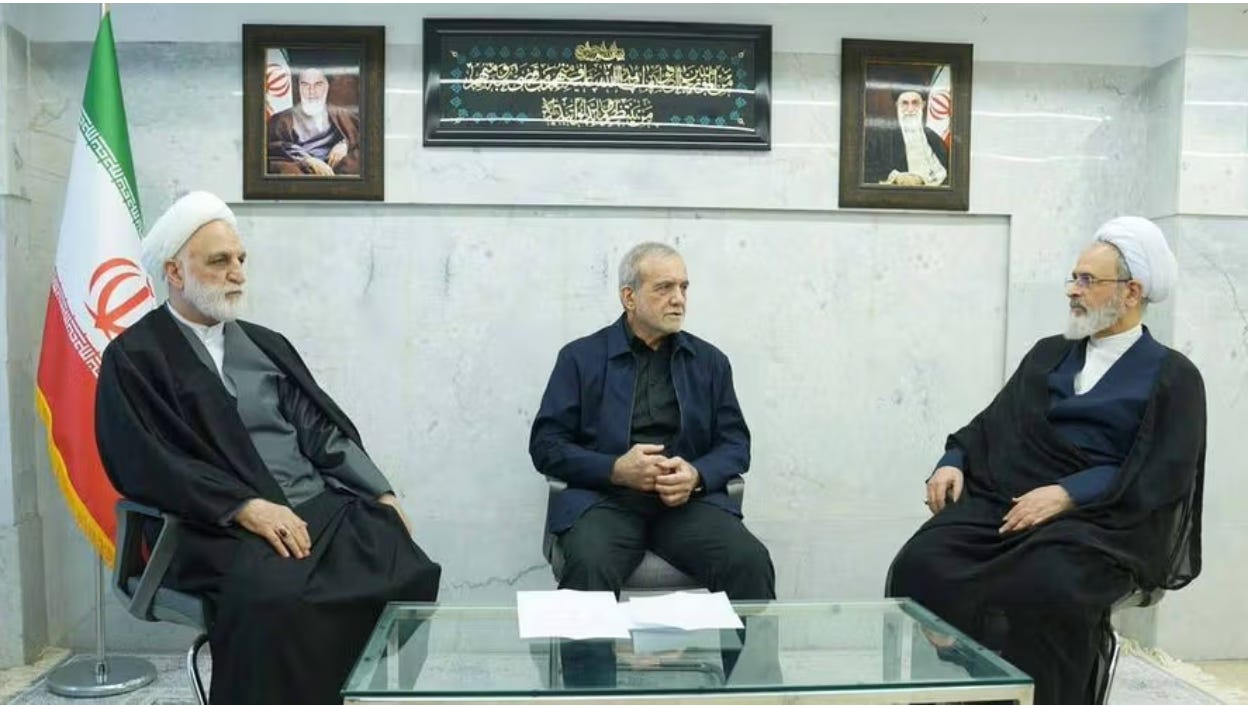
Since the start of the war, healthcare workers have reported that hospitals have become sheltering places for the regime. Some even claimed that Iran’s leadership council convened at Tehran’s Arman Hospital.
After the 12-day war was over, Anahit and her colleagues had a feeling that this was not the last war — they needed to prepare for it to happen again. They started a reading group looking at literature from Anna Freud and Donald Winnicott about the impact of war on children during World War II, Anahit explained.
She said that as a mother, it’s important to recognize the moment that a child realizes that a war is going on. They often won’t talk about it, Anahit said, but there will be signs —- they might start looking at the sky or hiding. That’s when it’s important to address the situation.
Anahit has found herself in this situation with her own child, too.
She was in Iran during last year’s 12-day war. When she heard the first explosions, Anahit told her 7-year-old daughter that people were just celebrating the end of Ramadan, Eid-al-Fitr.
“But after the first day passed, the bombing got worse and we needed to secure all the windows with tape,” Anahit said. Her daughter realized that something was wrong, “but to be honest, I didn’t know how much information to give her,” she said.
Then, her daughter saw the attack on the Parchin nuclear site in Tehran.
The attack was huge and involved Israeli bunker-buster bombs which broke through the concrete sarcophagus.
When Anahit’s daughter started to cry, she realized it was time to acknowledge that the situation wasn’t normal.
“I don’t know what that was, it was really scary. But you know our family is together and we are safe…but if you are scared and you want to cry, you can cry.” she told her daughter.
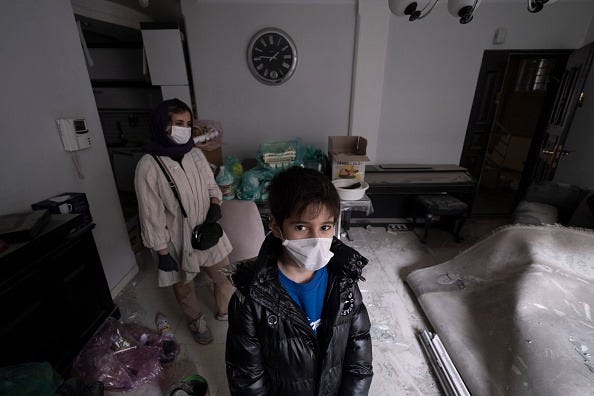
But the way you talk to a child about war really depends on the age of the child.
“If they are under seven they don’t need to know who is right and who is wrong. They just need to feel safe,” Anahit explained.
When explaining the war to her own daughter, she used the analogy of a fight at school – the countries are attacking each other because they can’t agree on something.
“But then I told her – if you are far from this fight, then you will be safe,” she said.
*Anahit and Farzin’s names have been changed for their confidentiality.
Featured subscriber comment:
“I am impressed with the rapidity and thoroughness of Iran reporting—nothing else comes close. Thank you for seeking the truth and accuracy in reporting.”
By Natalie Krasikov
If you agree with Natalie, upgrade now to support our work!
THE LATEST NEWS AT THIS HOUR:
By: Oleksandra Khelemendyk, Anastasiia Lutsenko
SOUTH ASIA STRUGGLES FROM WAR IMPACTS: Indian restaurants have stopped deep-frying food, and crematoriums lack gas to burn their dead. In Bangladesh, universities shut down and exams were cancelled, while Pakistani civil servants are working four days a week and cutting on electricity use, including the Prime Minister.
As gas and oil become increasingly scarce in different parts of the world after the closure of the Strait of Hormuz, South Asia is one of the most affected regions, largely dependent on fuel from the Gulf.
TRUMP THREATENS NATO FUTURE IF THEY DON’T BAIL HIM OUT: Amid the energy crisis, Donald Trump urges the allies to reopen the Strait of Hormuz, which remains under the control of Iran. He warns of “a very bad future” for NATO if they do not help to unblock oil shipping in the region, but no countries have committed to sending warships yet.
Iran criticized the U.S. for such a claim and said that the Strait of Hormuz is “not closed” but operating under “special conditions.” Iranian foreign ministry spokesperson Esmaeil Baghaei said that the US, Israel and their allies “should naturally not be able to use the Strait of Hormuz to strike Iran.”
IRAN INTIMIDATES U.S. NAVY IN THE RED SEA: The Iranian military threatened U.S. facilities in the Red Sea, marking them as “potential targets.” These targets include the aircraft carrier Gerald R. Ford, as well as logistical and service centers which support the Navy operations.
The Red Sea gained critical value as Saudi Arabia has increased oil shipments through the port of Yanbu, while the Strait of Hormuz remains closed.
TRUMP DEMANDS “TREASON” CHARGES FOR MEDIA: In an overnight Truth Social barrage, he said that those media outlets pushing “Fake News” about an American aircraft carrier should be charged with “TREASON for the dissemination of false information.”
The aircraft carrier was not struck by Iranian forces, and the Iranian regime has been the main disseminator of false information about this. But Trump lumped in this false information with the Wall Street Journal’s true reporting about five American refueling planes that were damaged.
“The fact is, Iran is being decimated, and the only battles they ‘win’ are those that they create through AI, and are distributed by Corrupt Media Outlets,” Trump raged overnight.
ISRAEL EXPANDS GROUND OPERATION IN LEBANON: Israel has deployed troops to new areas in southern Lebanon targeting Hezbollah.
Over 800 people have died, and 800,000 have been displaced. Israeli forces now control Khiyam and are moving west toward the Litani River.
The military calls the operation a defence against daily Hezbollah attacks. Two Israeli soldiers have been killed, and ceasefire talks with Lebanon are expected but unconfirmed.
MAJOR U.A.E. OIL HUB ON FIRE: An oil facility in the UAE’s Fujairah Oil Industry Zone, which hosts the largest storage capacity for refined products in the Middle East, caught fire after a drone attack.
As a global hub for trading oil outside the closed Strait of Hormuz, the area had been targeted before, so oil-loading operations there were temporarily halted.
CALIFORNIA OIL PIPELINE TO RESUME FOR FIRST TIME SINCE 2015:
President Donald Trump has resumed offshore drilling of the oil pipeline along California’s coast, previously opposed by the state.
The renewal of the Santa Ynez Unit and its pipeline network is intended to stabilize the oil market and reduce America’s reliance on foreign oil, but experts say it would have little impact. The pipeline, shut since an oil spill in 2015, can produce approximately 50,000 barrels of oil a day, while the U.S. needs about 20 million.
ISRAEL DESTROYED KHAMENEI’S PLANE: The Israel Defence Forces said they damaged the plane that belonged to Ali Khamenei and other Iranian leadership at the Mehrabad airport in Tehran. It was used to facilitate weapon procurements and support relations with Iran’s allies.
The IDF warned that it would continue to target the objects of Iranian armed forces across the country.
Stay safe out there!
Best,
Alessandra